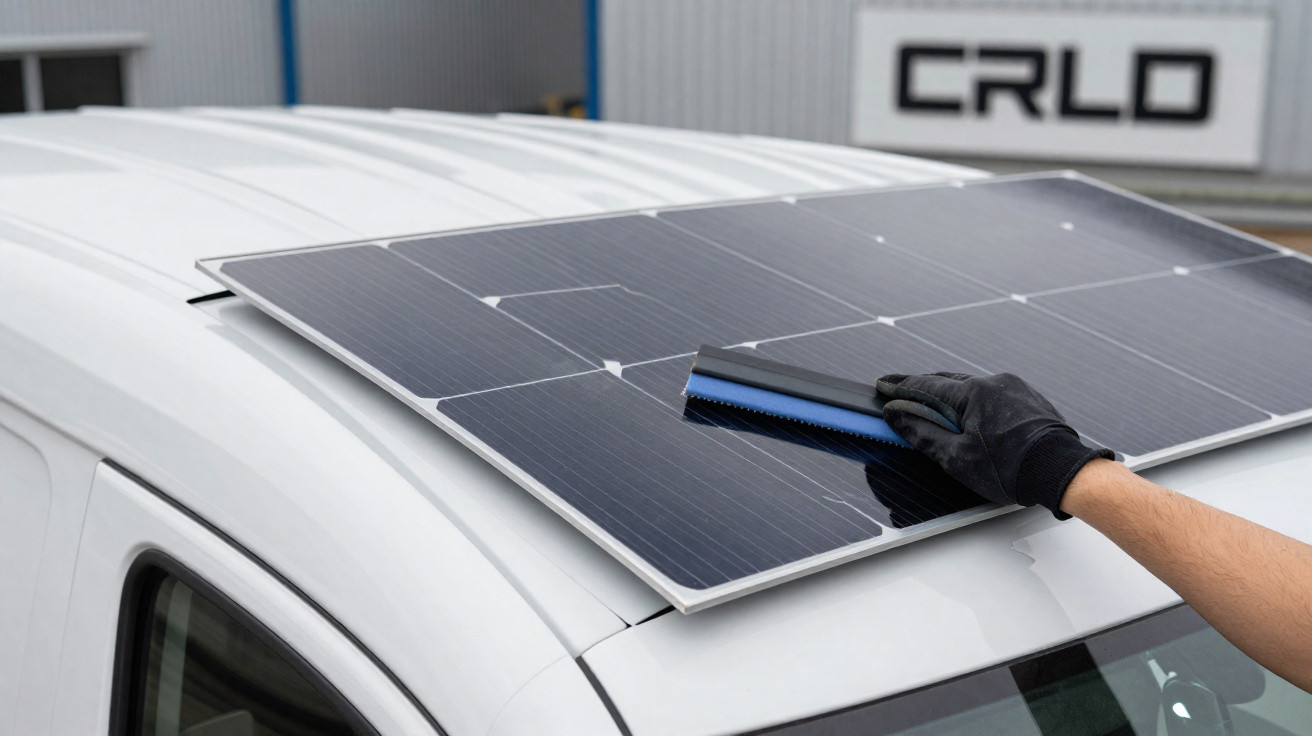
Rigid, glass-fronted solar panels work well on many homes and commercial roofs, but they are not the answer for every surface. Curved canopies, lightweight roofs, vehicle bodies and modular units can be difficult to fit with conventional framed modules - either because of their shape, their limited load capacity or the need for a very low-profile finish.
Ultra-thin photovoltaic laminates, often called solar foil or flexible solar sheets, offer a possible alternative. The key benefit is not that they are simply thinner: it is that a suitably specified laminate may be bonded to a compatible curved surface, allowing solar generation where raised panels and rails would be impractical.
What solar foil is - and what it is not
Solar foil is a flexible photovoltaic product made from several protective and electrical layers. Unlike a typical solar panel, it may not have a glass face, aluminium frame or mounting rails. Instead, it is designed to sit close to the surface beneath it.
Some products use high-efficiency cell technologies, including cells with electrical contacts on the rear. This can leave more of the light-facing surface available to collect sunlight. However, a headline cell-efficiency figure should not be confused with the output of a complete installation.
The finished system's performance depends on far more than the cells themselves, including:
- usable area;
- direction and angle of the surface;
- shading;
- temperature;
- wiring and inverter losses;
- dirt and maintenance;
- the condition of the structure underneath.
A flexible laminate is not a universal replacement for standard modules. Framed panels remain a sensible, robust and often cost-effective option for straightforward roofs with adequate structural capacity.
Flexible solar works best when it solves a specific design problem: an awkward shape, a strict weight limit or a need for a flush finish.
Why low weight and flexibility can be useful
Every roof and vehicle has limits. On a conventional building, these may relate to structural loading, wind exposure, roof warranties, drainage and safe access. On vehicles and portable buildings, added weight can also affect payload, handling or energy use.
A thin bonded solar product may offer several practical advantages:
- Low profile: it sits close to the host surface, rather than being raised on a rail system.
- Less added mass: this can be useful on lightweight structures, subject to proper assessment.
- Compatibility with gentle curves: some products can follow curved forms that rigid modules cannot.
- Fewer penetrations: bonding systems may reduce the need to drill through the outer surface.
- Discreet appearance: a flush installation can be less visually intrusive than a raised array.
These advantages do not remove the need for design work. Bonded solar can create different risks, particularly around substrate compatibility, heat build-up, edge lifting and future repairs.
Where flexible solar may be worth considering
This technology is generally more relevant to commercial, industrial and specialist projects than to a typical domestic roof. It can be useful where there is valuable sunlit area but conventional mounting is difficult.
1. Curved roofs and canopies
Barrel-vaulted roofs, arched canopies and shaped roof sections can be awkward to cover with rails and rectangular modules. A compatible solar laminate may follow a gentle curve, but the roof finish, seams, drainage routes and expected movement all need checking first.
A curved roof also faces more than one direction. This may spread generation through the day, with east- and west-facing sections producing at different times, rather than delivering the single peak associated with an ideally orientated plane.
2. Vehicles and mobile equipment
Solar laminates can be considered for commercial vehicles, marine equipment, specialist machinery and mobile units where roof area is limited and added weight matters.
The electricity may help support auxiliary loads such as monitoring equipment, lighting, refrigeration controls or battery charging. It should not be assumed that the available area will meet propulsion demand or power every onboard appliance.
Vibration, flexing, impact, road dirt and cable protection are especially important on mobile installations.
3. Modular and lightweight buildings
Portable cabins, modular classrooms, temporary facilities and lightweight roof systems may have restrictions on point loads. A low-mass solar option may be considered where a conventional array is unsuitable - but only after the structure and roof covering have been assessed.
4. Remote equipment and off-grid assets
Remote sensors, agricultural enclosures, communications equipment and monitoring stations may benefit from solar integrated into an outer surface. These systems need properly matched batteries, charge controllers, isolation and weatherproof electrical connections.
Installation is not a ‘peel and stick’ job
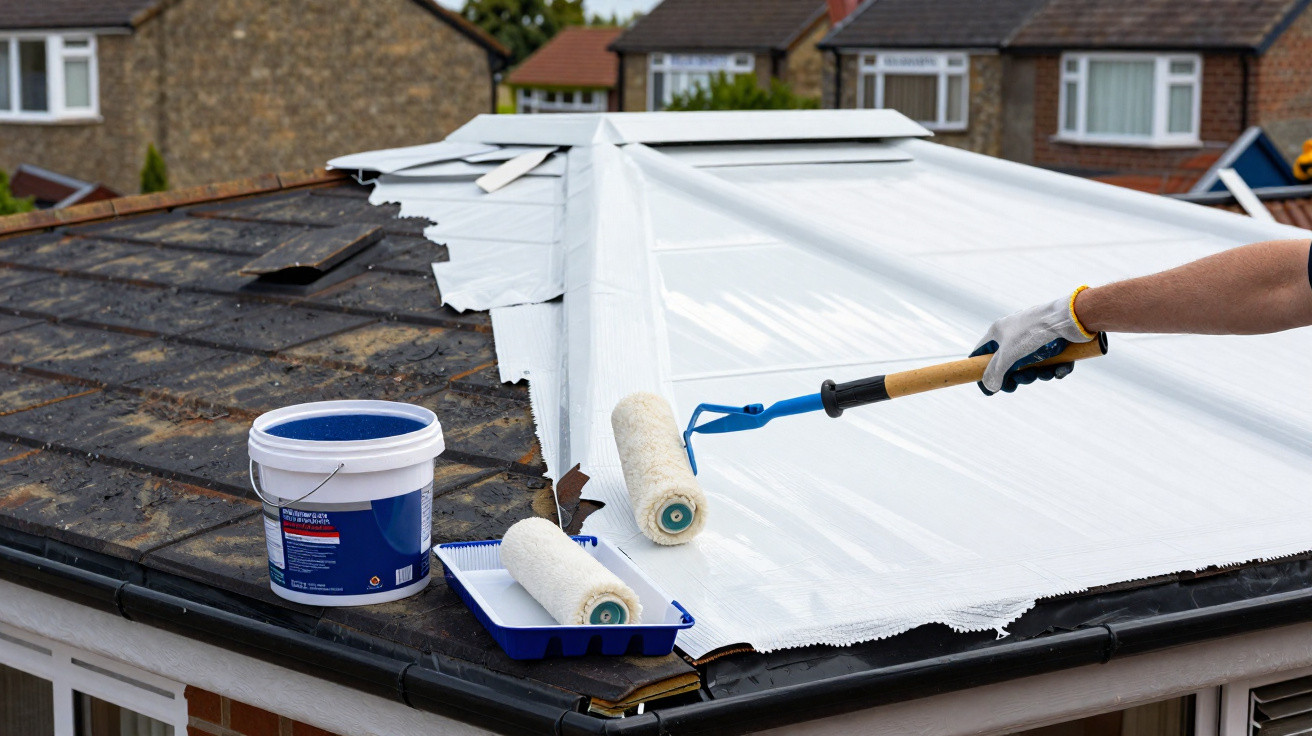
A bonded solar surface can look simple once finished. The preparation and electrical design behind it are not. Adhesive failure or poor cable routing can be expensive to put right, especially on a roof or vehicle.
1. Check the host surface
The substrate must be sound, clean and compatible with the approved bonding method. A competent installer should assess:
- material type and surface coating;
- age and condition of the roof or bodywork;
- corrosion, loose paint, cracks and failing membranes;
- movement, vibration and thermal expansion;
- standing water, drainage and dirt traps;
- access for installation and future inspection.
Solar foil is not a repair for leaks, rust or a deteriorating roof covering. Deal with these problems before anything is bonded down.
2. Survey sunlight and shading
A site survey should consider trees, rooflights, parapets, nearby buildings and equipment that may cast shade. In the UK, low winter sun can make shading particularly significant.
Cable routes should be planned before installation. Cables need suitable support and protection from abrasion, UV exposure, water and accidental damage. They must not obstruct drainage routes or create trip hazards on access areas.
3. Use the specified bonding system
Follow the product manufacturer's instructions for surface preparation, temperature limits, primers, adhesives, edge sealing and curing time. Do not assume an adhesive is suitable for every painted metal roof, composite panel or roof membrane.
Moisture, oil, dust and unsuitable temperatures can affect bonding. A sample installation or adhesion test may be sensible for an unusual substrate, but it is not a substitute for the approved installation method.
4. Design the electrical system at the same time
The active laminate is only one part of the system. Depending on the project, the design may also require junction boxes, power electronics, isolators, inverters, batteries, monitoring and suitable protective devices.
For fixed systems connected to a UK building, use competent electrical and solar professionals. Grid-connected work must meet the applicable electrical and network requirements, and the relevant Distribution Network Operator process may be needed before or after installation, depending on the system design.
What an efficiency figure cannot tell you
Cell efficiency is measured under controlled test conditions. It is useful for comparing technologies, but it does not predict how much electricity a particular roof or vehicle will produce over a British year.
Real-world yield varies with weather, daylight hours, surface temperature, soiling, shade and system losses. A dark laminate fixed directly to a warm roof may run hotter than a ventilated framed module, and hotter solar cells generally produce less power.
Ask for a project-specific generation estimate rather than relying on a percentage quoted for the cells. The proposal should make clear its assumptions about shade, orientation, usable area and likely annual consumption.
Think of flexible solar as a carefully engineered surface finish with an electrical function, not as a like-for-like substitute for every standard panel.
Common mistakes to avoid
- Choosing it for appearance alone. Compare expected generation, installed cost, maintenance needs and repair options.
- Bonding over a failing surface. Solar cannot compensate for corrosion, water ingress or a poor roof membrane.
- Ignoring curvature limits. Tight bends, joints and surfaces that flex in use may be unsuitable.
- Blocking drainage. Avoid edges, cables or detailing that trap water and debris.
- Forgetting maintenance access. Plan how the surface, cables and connections will be inspected safely.
- Treating the electrical design as an afterthought. Isolation, cable protection and compatible equipment must be included from the outset.
- Assuming all roof warranties allow it. Check warranty terms and obtain the property owner's written agreement where necessary.
Safety, fire and cleaning considerations
Roof work carries obvious risks. Do not work at height without suitable access arrangements, fall protection and a safe weather forecast. Wet, icy and windy conditions can make roof work hazardous, particularly during a British autumn and winter.
Photovoltaic equipment can generate electricity whenever it is exposed to daylight. Never cut, drill, pierce or modify a solar laminate unless the manufacturer explicitly allows it. If there are lifted edges, damaged cables, overheating, visible water ingress or a burning smell, keep clear, isolate the system only if it is safe to do so and contact a qualified professional.
For cleaning, follow the manufacturer's instructions. Avoid abrasive pads, harsh solvents and pressure washers unless they are specifically approved for the product and installation. Never mix cleaning products; in particular, bleach must never be mixed with acidic cleaners or ammonia-containing products.
Fire safety should be considered early on larger projects. Keep access routes, roof hatches, drainage paths and any required clear zones clear, and make sure emergency information is available for those responsible for the building.
Is it the right option for your project?
For a sound, accessible pitched roof with enough capacity for conventional modules, framed panels will often remain the simplest choice. They are familiar to installers and can be easier to inspect, replace and upgrade.
Flexible solar becomes more compelling when an otherwise unusable surface is curved, weight-sensitive or visually constrained. Start with a structural and substrate assessment, followed by a shading survey and electrical design. Before committing, ask for predicted annual generation, a maintenance plan, details of compatible materials and clear warranty responsibilities.
The practical aim is not to put solar on every available surface. It is to use the right technology where it can turn a difficult but suitable area into a useful source of electricity.









Comments
No comments yet. Be the first to comment!
Leave a Comment