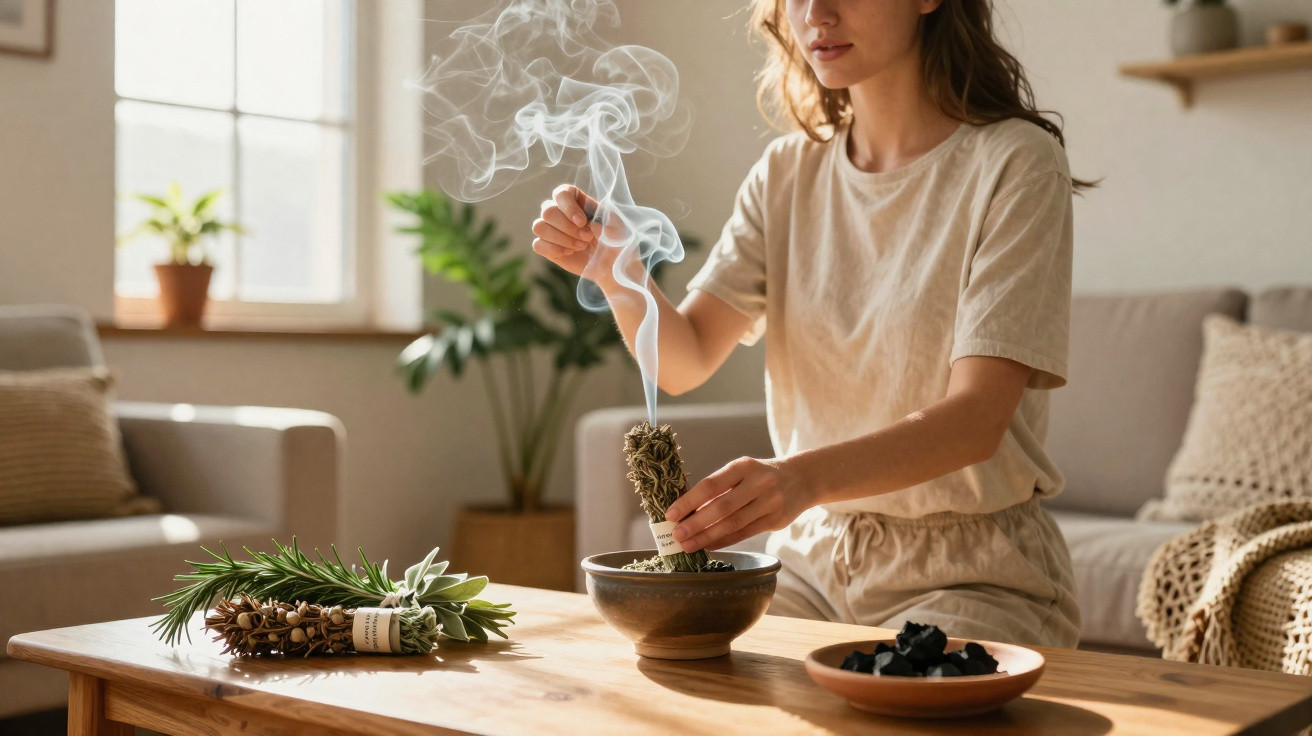
Carrying out herbal smoke cleansing at home is a popular practice associated with symbolic cleansing, refreshing the surroundings and creating a sense of comfort. In many traditions, the scent of plants is used to mark transitions, bring calm to the home and create a caring ritual.
Smoke as a ritual of renewal
Across different cultures, smoke cleansing is used to scent a space, purify it symbolically and prepare the surroundings. The act generally involves intention, quietness and awareness of the space.
The herbs selected differ according to family or regional traditions. Some are linked with protection, while others are associated with relaxation, prosperity or a lighter feeling at home.
- Rosemary: commonly used to refresh a room and bring a sense of energy.
- Rue: featured in traditions connected with the home’s symbolic protection.
- Lavender: valued for its gentle fragrance and calming effect.
- Ventilation: keeping doors and windows open makes the practice safer.
Each room in the home has its own meaning
Herbal smoke cleansing is often carried out in living rooms, entrances, hallways and bedrooms, always with care. These areas are chosen because they are used for movement through the home, rest or spending time together.
In popular tradition, starting at the entrance represents making way for new energies. In bedrooms, meanwhile, the practice is usually gentler, using lightly scented herbs that produce little smoke.
Care comes before fragrance
Safety must take priority over any ritual. Use only a small amount of dried herbs, keep the space ventilated and place everything in a heat-resistant container, away from curtains, paper, fabrics and furniture.
Smoke requires constant attention
Never leave smoke cleansing unattended
Avoid doing it near children, pets, people with asthma, respiratory allergies or sensitivity to strong smells.
Once finished, fully extinguish any embers and make sure the container has cooled before storing it or disposing of the remains.
Anyone living in a small flat should take extra care with ventilation and the amount of smoke produced. In some cases, scented sachets, natural sprays or diffusers may provide gentler alternatives.
Herbs most commonly remembered in tradition
Rosemary is associated with energy and freshness. Rue is linked with symbolic protection, while lavender, chamomile and lemongrass are more often chosen to create a restful atmosphere.
Some people also use bay leaves, basil and sage in home rituals. It is best to choose only a few plants at a time, pay attention to the scent and avoid very strong blends in enclosed spaces.
An old custom that remains present
Smoke cleansing remains popular because it brings together fragrance, memory, folk spirituality and the feeling of caring for the home. For many people, it marks endings, fresh starts and moments of pause.
Ultimately, carrying out a simple herbal smoke cleansing is less about smoke and more about intention, awareness and respect for the surroundings. When practised safely, it can become a symbolic ritual for renewing the home.
If this topic would appeal to someone who enjoys herbs, a fragrant home and folk traditions, share this content.
















Comments
No comments yet. Be the first to comment!
Leave a Comment