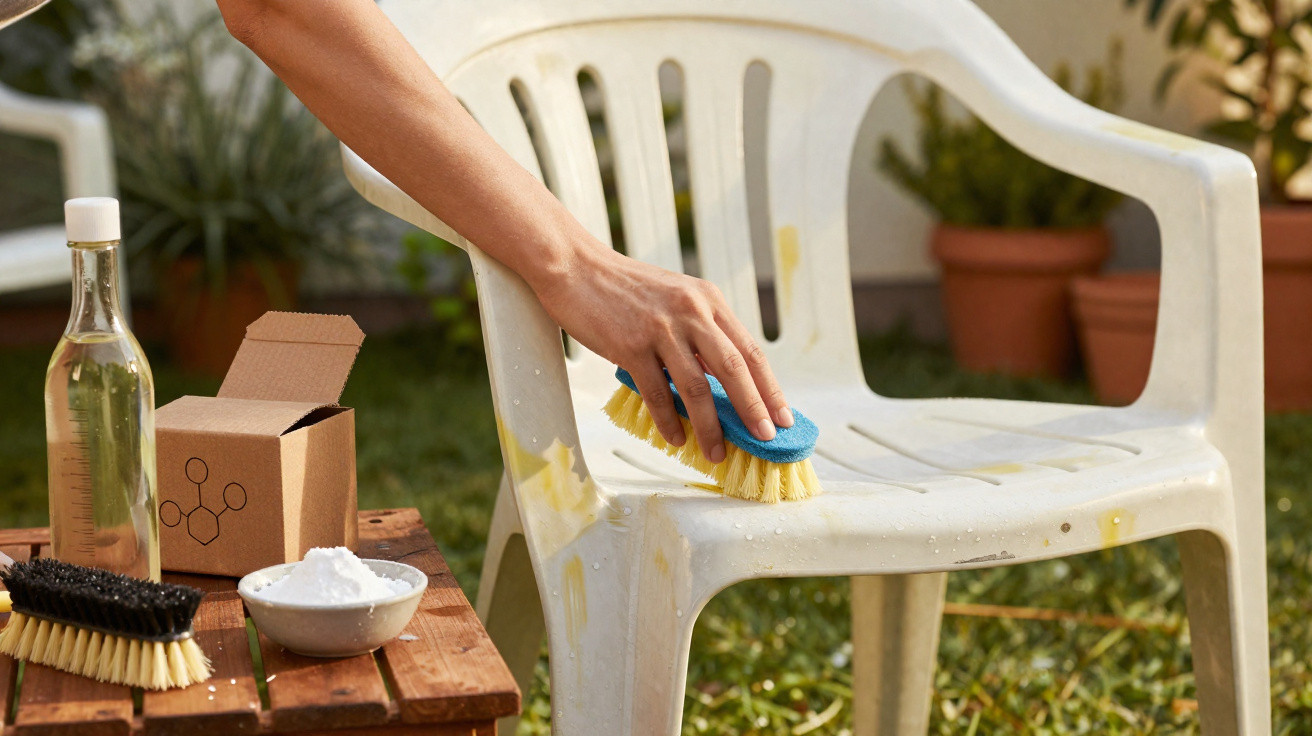
When you open the patio door in spring, the sight is often familiar: the table is stained, the chairs have turned grey, and the plastic looks dull and aged. Many people immediately consider buying replacements. Yet an impressive before-and-after result can be achieved with ingredients found in almost every kitchen.
Why plastic garden furniture starts looking old so quickly
Plastic garden furniture has long been one of the most popular choices for balconies and patios. It is lightweight, inexpensive and, at first glance, appears to need very little maintenance. After a few summers of sunshine and rain, however, that lack of care begins to show.
Three factors are particularly hard on the material:
- Sunlight: UV radiation attacks the surface, leaving it rougher and more brittle.
- Dirt and pollen: Wind carries fine dust, flower debris and soot particles, which settle into the material.
- Moisture: Rain and dew create a grey film and encourage deposits to build up.
Over time, the plastic becomes more porous. Dirt then adheres more firmly, while the original colour appears faded. White furniture in particular can take on a yellowish tint, while colourful pieces lose their brightness.
Metal, wood and polyrattan also age, but in different ways: metal rusts when its protective coating is damaged, wood turns grey and needs oil or stain, while woven materials do not cope well with prolonged dampness. Plastic has one advantage here: provided nothing has broken, it can often be refreshed surprisingly effectively.
First impressions are often misleading: what looks ready for bulky waste can frequently remain usable for several more seasons with a considered cleaning routine.
The two-stage plan for plastic garden furniture: deep clean first, then use a kitchen mix
Before using a special cleaning mixture, the furniture set needs a thorough basic clean. Otherwise, the cleaner works only on the layer of dirt rather than on the material itself.
Step 1: Remove loose dirt
Begin with a dry cleaning stage. A hand brush, soft broom or duster is enough to remove cobwebs, leaves and loose debris. More dirt than expected often collects in grooves and beneath seat surfaces.
Then carry out an initial wash:
- Fill a bucket with warm water.
- Add a little mild washing-up liquid.
- Wipe everything thoroughly using a soft cloth or sponge.
This step removes grease, surface dirt and old pollen residue. Keep abrasive scouring pads in the cupboard, as they scratch the surface and make the furniture more vulnerable over time.
Step 2: The kitchen mix for grey and yellow discolouration
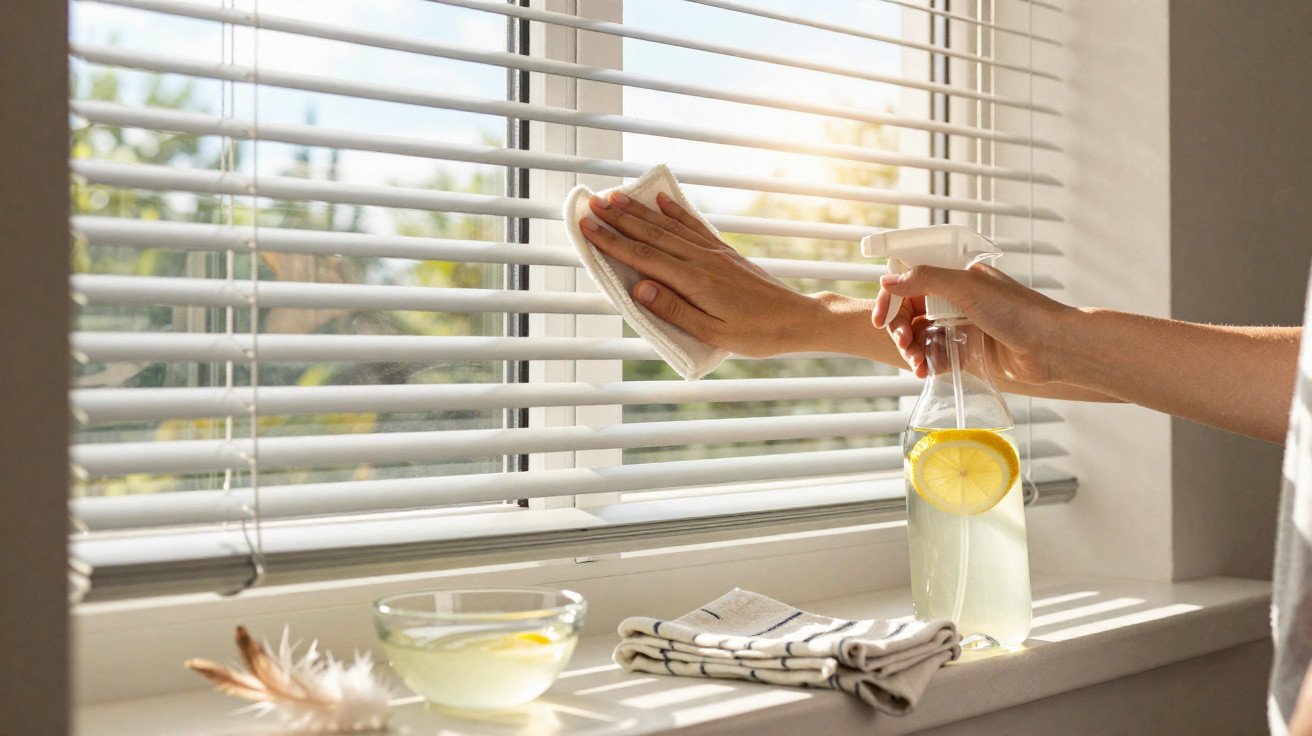
Now comes the main trick. A mixture of warm water, household vinegar and bicarbonate of soda can noticeably revive a dull surface. All you need is a simple spray bottle.
Prepare the mixture as follows:
- 500 ml warm water
- 1 tablespoon colourless household vinegar
- 2 tablespoons bicarbonate of soda
- a small squirt of washing-up liquid
Add everything to the bottle carefully, swirl it gently and avoid vigorous shaking so that pressure does not build up.
How to use it:
- Spray the cleaned furniture generously while it is still slightly damp.
- Work the mixture in with a soft sponge or microfibre cloth.
- Leave it to act for several minutes.
- Rinse afterwards with plenty of clean water.
The combination of mild acidity and fine particles lifts surface discolouration without aggressively attacking the plastic – a clear advantage over harsh chemical cleaners.
What helps with stubborn stains
Some marks will not shift with the kitchen mix alone: old rust splashes, dried-on barbecue sauce or black scuff marks from chair legs. These need a more targeted approach.
On white furniture, a specialist mineral-based cleaning stone can help. These products combine fine powders, soap and conditioning ingredients. Dampen a sponge slightly, pick up a little product, rub gently over the affected area and then rinse thoroughly again.
Take particular care with coloured surfaces. Too much abrasion can leave pale patches. Always test the product first in an inconspicuous place: underneath the seat, on the back of a chair leg or around the inside edge of the table.
If stains remain despite every attempt, this is often more of a visual issue than a technical one. The furniture's structural stability is unaffected, provided the material has not become brittle or cracked.
Safety first: when plastic furniture really needs to be thrown away
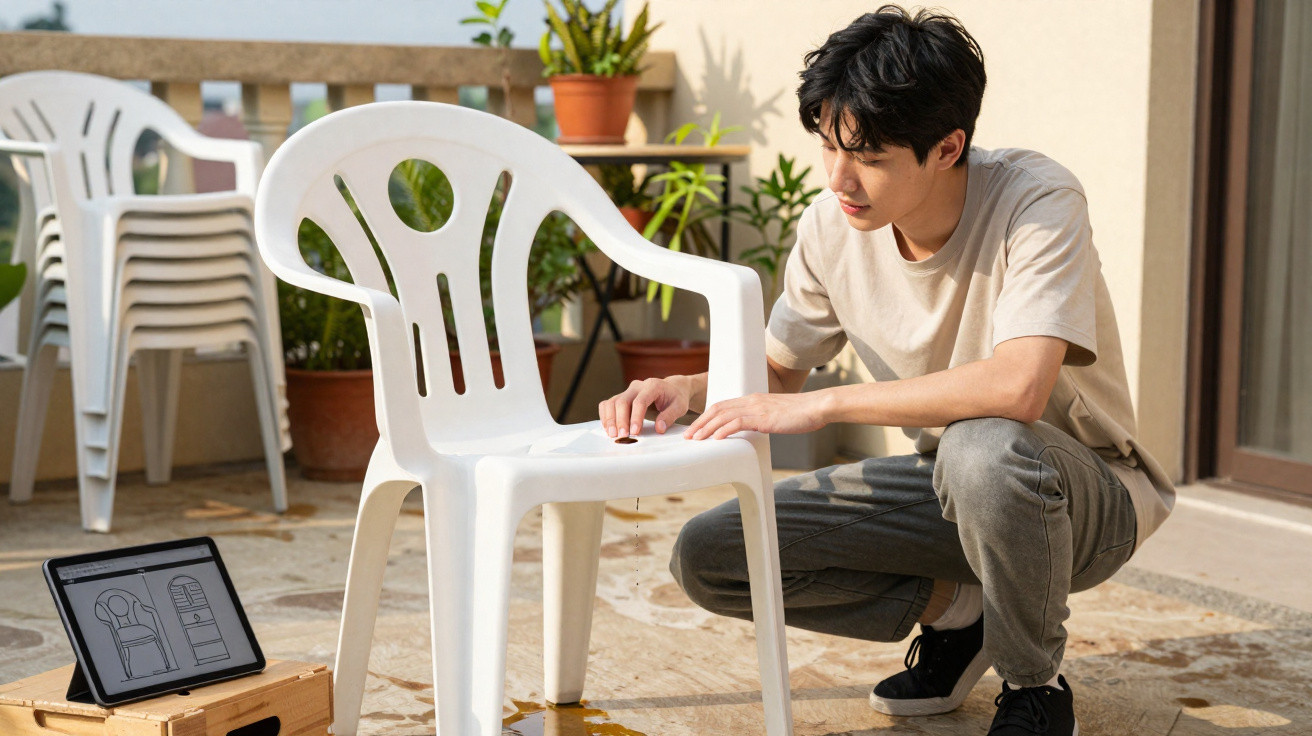
Before scrubbing with full effort, it is worth carrying out a safety check. Older chairs in particular may have weak points that are not immediately obvious.
| Warning sign | What it means | Consequence |
|---|---|---|
| Clear cracks in the seat or legs | The material is brittle and its load-bearing capacity is reduced | Better to remove it from use; there is a risk of falling |
| White fracture lines when bent | The plastic has become brittle | Do not place under heavy load; replace if in doubt |
| Broken supports or armrests | The structure has been interrupted | Repairs are usually not lasting; disposal is the better option |
A few scratches and dull areas are purely cosmetic. Actual breaks and deep cracks, by contrast, have no place in everyday use. A chair collapsing beneath a guest during a barbecue is no laughing matter.
When restoring is worthwhile: sanding and a fresh coat of paint
If the furniture is still sturdy but its patchy appearance is bothersome, there is another option: a subtle “facelift” using sandpaper and suitable paint.
A makeover can be done like this:
- Allow the surfaces to dry thoroughly after cleaning.
- Lightly sand them with fine sandpaper, at around 120 grit, only until the shine has disappeared.
- Wipe away all dust carefully.
- Use paint or spray paint that is explicitly approved for plastic.
A fresh colour can look remarkably modern, especially on simple designs such as classic stackable chairs or rectangular tables. Matt shades including anthracite, sage green and warm beige work well with current patio trends.
How to keep plastic furniture looking good for longer
Once the set looks presentable again, the next question is how to avoid repeating the same process next year. A few regular habits can make a substantial difference.
- Look for UV protection when buying: Many manufacturers state whether protection against sunlight is built in.
- Plan winter storage: Furniture ages much more slowly beneath an overhang, in a garage or under a breathable protective cover.
- Avoid oily care products: Oil attracts dirt and can make plastic softer and more porous over time.
- Clean gently on a regular basis: Wipe it down with washing-up water once a month rather than tackling a major clean only once a year.
Small care routines spread across the season prevent the big shock on the first sunny day of spring – while protecting both your budget and the environment.
Why household remedies are often the better choice
Shops offer countless specialist cleaners for garden furniture. Many work powerfully, but leave behind a strong smell or irritate the skin when used without gloves. The mixture of warm water, household vinegar and bicarbonate of soda is comparatively mild, inexpensive and generally harmless for most drains.
Even so, it is sensible to consider potential risks briefly. Anyone with very sensitive skin should wear gloves. Delicate surfaces such as natural stone can occasionally react to acids. In these cases, it is better to clean the furniture on grass or another hard-wearing surface, then rinse it thoroughly.
At its core, this simple cleaning recipe shows how significantly the lifespan of an apparently “cheap” plastic chair can be extended. Anyone who reaches for a sponge and spray bottle before heading straight to the furniture shop saves resources, money and a considerable amount of bulky waste – while still having a visually refreshed garden furniture set ready for the first barbecue of the year.










Comments
No comments yet. Be the first to comment!
Leave a Comment