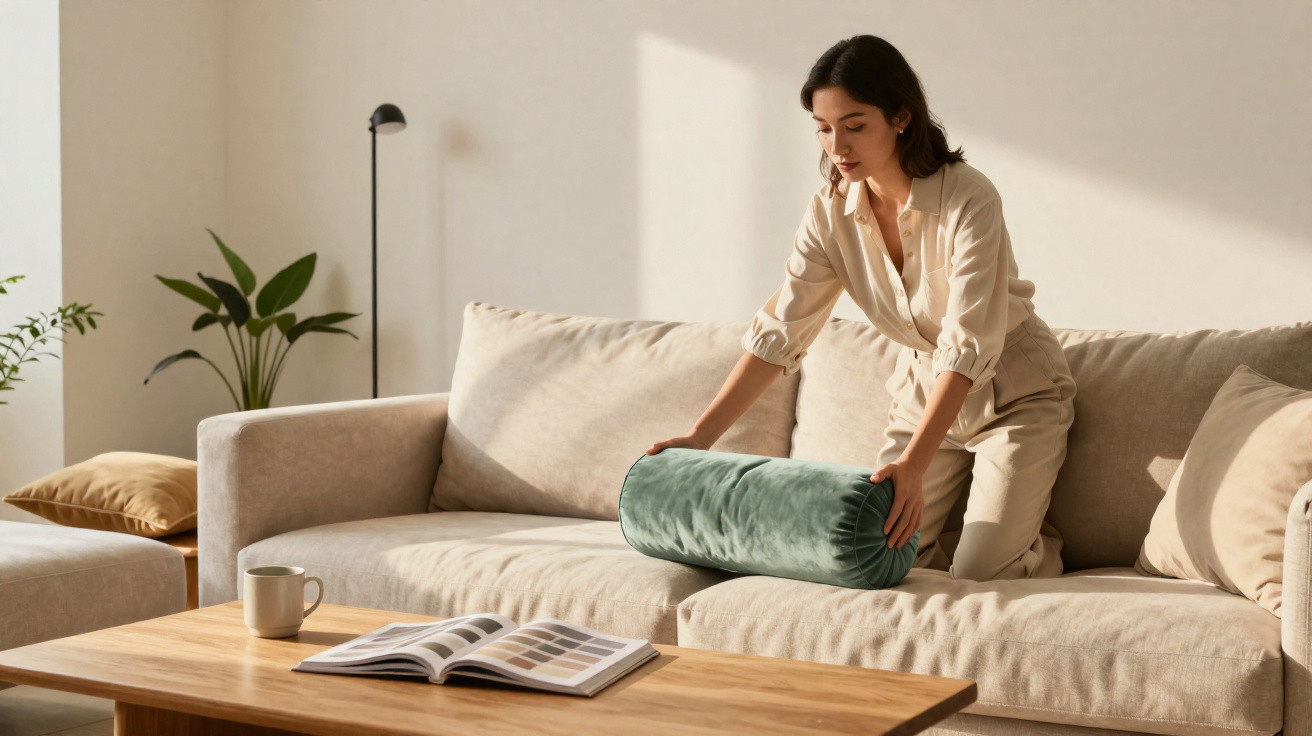
Many people feel that their living room always looks untidy, even when there is no actual mess anywhere. The reason is often sitting right on the sofa: too many cushions, colours that clash and pillows that have been squashed out of shape. A change of direction is now emerging in the current interiors scene, inspired by luxury hotels and premium design schemes. Rather than creating a whole mountain of cushions, 2026 is all about one bold statement piece.
When sofa cushions become a source of stress
For years, the unspoken rule in the decorating world was that more cushions meant more comfort. Different sizes, exuberant patterns, fringes and faux fur – the key was simply to have lots of them. In everyday life, however, this “more is more” approach is increasingly proving to be a burden.
Anyone with children, pets or simply a busy life will know the issue: the cushions may look reasonably neat in the evening, but by the following morning they are crushed and scattered across the living-room floor. They are plumped up and rearranged, only for the same cycle to begin again.
Too many textiles on a sofa create visual noise – making a room seem more unsettled and cluttered than it truly is.
Interior professionals refer to this as “visual overstimulation”. The eye can no longer find a point of rest when colours, fabrics and shapes are all competing for attention. At a time when many people are craving retreat and clarity, this cushion clutter suddenly feels out of date.
There is also the practical side: numerous covers need washing, while fillings must be replaced or refluffed regularly. That takes time, patience and money. It is little surprise that demand is growing for durable, low-maintenance and pared-back solutions.
The new favourite: an elegant sofa cylinder
This is exactly where a trend from luxury hotels and high-end lounges is now making its way into private living rooms. Instead of numerous small cushions, the focus is shifting to a long cylindrical bolster, usually made from refined velour.
Anyone who has sat in a stylish hotel lobby or on a designer bench will recognise the element: a firm, elongated bolster running across the full seating area or along the sides. On a sofa at home, it performs several functions at once.
- Holds its shape: The cylinder retains its form instead of becoming flat like a soft square cushion.
- Better for your back: It supports the lower back more effectively and evenly.
- A tidier look: One clean line replaces a mixture of mismatched cushions.
- A sense of luxury: Its appearance recalls high-quality hotel and spa settings.
Velour has a key role to play here. The fabric softly diffuses light, feels warm and inviting, and has a pleasantly soft texture – exactly what is wanted on the sofa on a winter evening.
One high-quality velour cylinder can provide the same comfort as five or six sofa cushions – while looking far more assured.
Minimalist without feeling cold: how the new sofa look works
The appeal of this development is that nobody needs to buy a new sofa or plan major changes. In most cases, it is enough to reduce the existing number of cushions substantially and replace them with one or two clearly defined shapes.
The two most popular options at a glance
- One continuous cylinder: This runs across almost the entire width of the backrest, emphasising the sofa’s horizontal line. The room appears longer, calmer and more contemporary.
- Two cylinders at the sides: Positioned against the armrests, these are ideal for anyone who likes to sit leaning sideways or occasionally stretch out across the sofa.
Those who prefer an especially pared-back look can use just one piece. Anyone wanting a little more volume can combine both approaches, while deliberately limiting the arrangement to no more than two or three elements overall. This gives the sofa structure without making it feel overcrowded.
Colours particularly sought after in 2026
The current colour palette for these cylinders follows distinct moods intended to convey calm and a sense of security:
- Deep forest green or midnight blue for a muted, elegant drawing-room character.
- Warmed earth tones such as terracotta or a golden ochre shade for greater brightness and homeliness.
- Sand, cream and pale beige for those who favour Scandinavian, nature-inspired looks.
| Colour palette | Effect in the room | Particularly suited to |
|---|---|---|
| Deep green / midnight blue | calm, refined, slightly dramatic | dark wood furniture, brass, dark sofas |
| Terracotta / ochre | warm, welcoming, lively | beige sofas, natural materials, wool-look rugs |
| Sand / cream | light, soft, minimalist | Scandinavian interiors, white shades, pale woods |
How changing the sofa transforms the whole room
Anyone replacing numerous cushions with a few selected elements often notices the effect within minutes: the eye suddenly has space. The lines of the sofa, coffee table and rug become visible again. Proportions look clearer, and the room feels more generous.
Less decoration does not mean less comfort here – but a different kind of comfort: calmer, more grown-up and more defined.
It is striking how strongly this detail can affect personal behaviour, too. Many people say that they begin using their sofa more consciously again. There is no longer a need to push through cushions before sitting down. Guests instinctively know where to take a seat. The living area feels welcoming without appearing overfilled.
The switch can also make financial sense. Anyone investing in one or two high-quality cylinders rather than continually buying changing collections of decorative cushions avoids seasonal impulse purchases. The look lasts for several years, while smaller updates can be made with throws, candles or wall art.
Practical tips for making the change in your living room
Anyone intrigued by the idea can take it step by step. Nothing has to look completely different straight away.
- Try it before buying: First remove every cushion from the sofa. Place a rolled-up throw or a firm neck-roll pillow against the backrest as a temporary cylinder. This lets you see whether you like the reduced look.
- Take measurements: Measure the width of your sofa, then decide whether one continuous cylinder or two shorter models would work better.
- Choose the fabric: Velour looks particularly elegant, but it is not the only choice. Households with pets may be better served by tougher blended fabrics or specialist upholstery textiles that can be vacuumed easily.
- Test colours: Hold fabric samples or textiles in potential shades against the sofa to check contrast and their appearance in daylight.
One important practical point is that the cylinder should be neither too firm nor too soft. If it is overly hard, it will barely be used for leaning against in daily life. If it is too soft, it will quickly lose its defined shape. Many manufacturers offer medium-firm fillings that provide support while still giving slightly.
How the trend can be combined with other interior ideas
Anyone who already favours clean-lined furniture, a small number of decorative objects and restrained colour palettes will be able to incorporate this sofa style with ease. Yet the cylinder can also work in more playful homes, where it deliberately becomes a calm counterpoint to pictures, plants and accessories around the room.
It becomes especially interesting when the sofa is used as the starting point for generally reducing visual overload: decorate one open shelf less heavily, hang wall art more selectively and choose rugs with quieter patterns. The living room can quickly feel new without requiring major purchases.
At the same time, there is still room for personal touches. A single patterned throw, an artwork above the sofa or a striking coffee table stands out more strongly because it no longer has to compete with a sea of cushions.
The underlying idea is simple: one deliberately chosen accessory replaces many arbitrary ones. That is precisely what seems to resonate in 2026 with many people looking to reorganise their home – clearer, more relaxed, yet still cosy.








Comments
No comments yet. Be the first to comment!
Leave a Comment