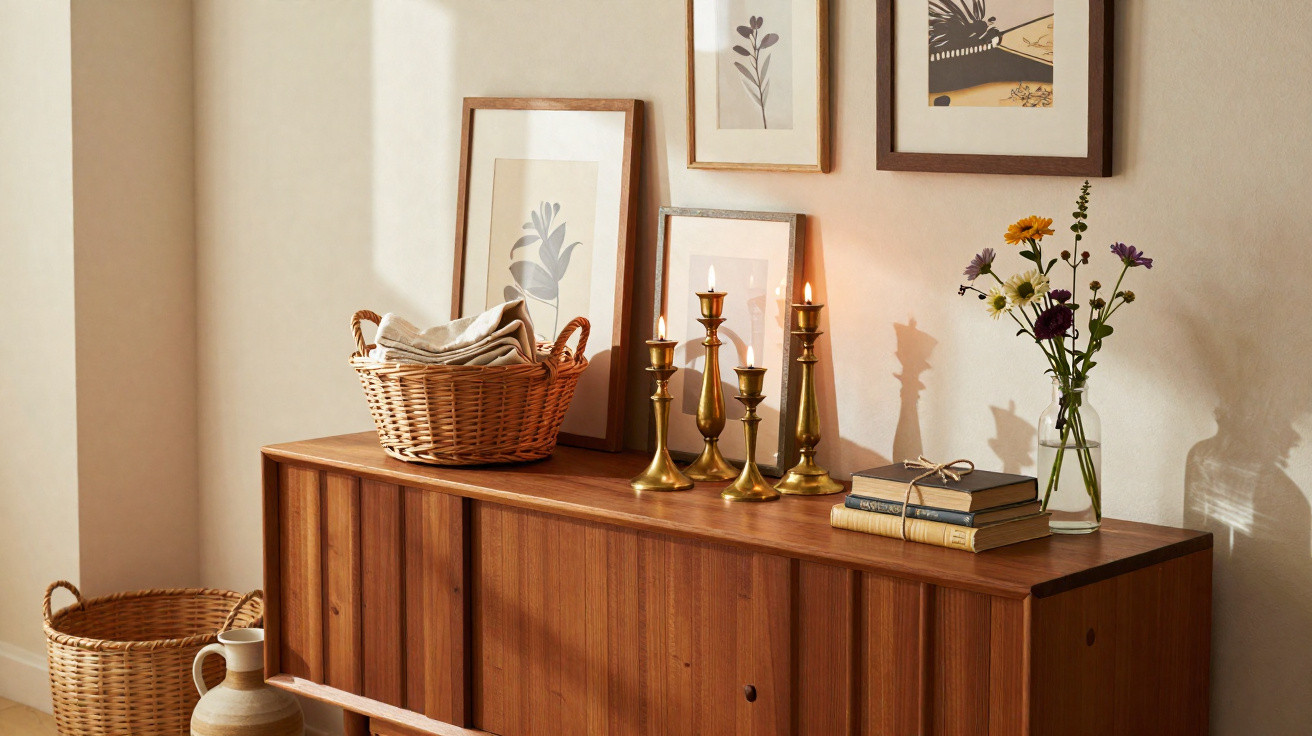
Anyone looking to refresh their home can quickly run into steep prices for furniture, décor and accessories. Yet it is entirely possible to create a stylish home on a small budget. The secret lies in vintage pieces from flea markets: they add character, history and texture to a room, often for less than 10 euros. In the end, these small objects create the difference between “quite nice” and “wow, someone with taste lives here”.
Why flea markets are a paradise for décor lovers
Flea markets, house-clearance sales and second-hand shops have long been regular sources for many interiors professionals. Interior designers, creatives and décor bloggers browse them repeatedly for one-off finds that are either no longer available in shops or cost considerably more there.
“Flea markets are the quickest shortcut to a home that does not look as though it came straight from a catalogue – and they cost next to nothing.”
Their greatest advantage is the patina, minor imperfections and history that these finds carry. This is exactly what gives a room warmth and personality. With an open mind, 30 or 40 euros can improve several areas of a home at once, from the living room and hallway to the bedroom.
Natural-material baskets: storage that instantly looks premium
Baskets made from rattan, raffia, seagrass or other natural materials are an especially useful insider find. Many professionals use them to keep spaces tidy while introducing texture to a room.
- as a laundry basket in the bedroom
- for throws and cushions beside the sofa
- for magazines in the living room
- for toys in a child’s bedroom
- as a planter cover for large plants
These baskets appear at flea markets all the time, often for 5 to 10 euros. One tip: it is better to spend a few euros more on a sturdy basket in good condition than choose the very cheapest one, only for it to break after two months.
Brass candlesticks: small focal points with a big effect
Brass candle holders and candlesticks are classics that turn up in almost every box of “old stuff”. Many shoppers pass them by because they look dull or tarnished. That is precisely what makes them interesting.
A little metal polish, or simply a soft cloth, can restore their shine. Alternatively, leave them deliberately matt when a vintage look is the aim. A single plain candlestick looks refined on a windowsill, while several mixed pieces in varying heights can make a dining table resemble an expensive styling feature from an interiors magazine.
“Just two or three brass candlesticks costing under 10 euros can turn a simple wooden surface into an atmosphere reminiscent of a boutique restaurant.”
Hardback books: décor rather than reading matter
Old-fashioned hardback books are pure working material for many décor professionals. It does not really matter whether the novel is good; the appearance is what counts.
How books work as décor
- stack three to five books and use them as a plinth for a vase
- group attractive spines by colour, such as beige, brown or green tones only
- remove old, damaged dust jackets and decorate with the plain cover alone
- arrange small stacks as “islands” on a console table
At many flea markets, entire boxes of books are available for only a few euros. With a little time, it is possible to find titles with harmonious spines that bring structure to a shelf. The important thing is not to overcrowd it: style half a shelf deliberately rather than overfilling every compartment.
Flea-market picture frames: art without art-market prices
New picture frames from furniture shops are often surprisingly expensive. At flea markets, however, wooden frames, metal frames and gilded mouldings can be found on tables for a few coins. Anyone looking for solid-wood or metal versions can save a considerable amount.
It becomes especially interesting when a frame is used for more than photographs:
- frame pressed leaves or dried flowers
- display a beautiful piece of fabric, linen or old lace
- mount a postcard or a holiday find
- use old sheet music, maps or drawings
A mix of different frames quickly creates a small gallery wall. Older frames with slight damage are particularly charming when combined rather than matched perfectly.
Glass and crystal: affordable finds with plenty of light play
Stalls selling glasses, bowls and dishes are often underestimated. Anyone prepared to look more closely can find quality pressed-glass pieces, or even crystal, sometimes for under 10 euros.
“Old glasses, bowls and dessert dishes make a dining table look as though everything came from a stylish concept store – just without the prices.”
Ideas for using them include:
- deliberately mixing different wine glasses instead of choosing a matching set
- using small glass bowls for nuts, olives or dips
- placing a heavy crystal bowl filled with fruit or flowers as a centrepiece
- setting coloured glass on a windowsill so that light shines through it
When buying glass, briefly run a finger around the rim to check for cracks or sharp edges. Minor scratches are fine, but pieces with deep cracks are best left behind.
Vases and jugs: character pieces for every corner
Ceramic vases and old jugs are objects that regularly feature in interiors magazines, yet they are often costly in shops. They reach flea markets when households are cleared or someone changes their style.
Especially appealing are:
- hand-thrown vases with irregular glaze
- stoneware jugs with printed details or dates
- simple, single-colour designs in muted tones
They can stand alone on a sideboard, be filled with branches or dried flowers, or serve as a “sculpture” on a shelf. Several jugs in different sizes look like a small collection when grouped together, which is ideal for anyone adding to it gradually.
Where to look – and how to stay under 10 euros
Alongside traditional town flea markets, it is worth looking at:
- garage sales in residential neighbourhoods
- community or school bazaars
- second-hand shops and social-enterprise furniture stores
- bric-a-brac markets in smaller towns
A simple approach helps keep within the spending limit:
- Have a rough list in mind beforehand, such as “2 baskets, 3 frames, 1 vase”.
- Walk around once first, compare prices and decide afterwards.
- Take loose change to make haggling easier.
- When buying several items from the same stall, politely suggest a bundle price.
What to check when buying vintage finds
As tempting as the prices may be, not every item is worth buying. A quick inspection prevents disappointment.
| Object | What to look for |
|---|---|
| Baskets | No broken strands, no musty smell, sturdy rim |
| Brass candlesticks | Stable base, no sharp edges, removable wax residue |
| Glasses | No cracks, smooth rim, base not badly chipped |
| Frames | Glass intact, backing present or easy to replace |
| Ceramics | Hairline cracks only on the outside, no leaks in vases |
Why small vintage pieces shape a style more than large furniture
When furnishing a home, many people focus on the sofa, bed and dining table. These items form the foundation, but they reveal little about who lives there. Character comes through details: an old jug from a grandparent’s region, a stack of yellowed books or a group of imperfect glass vases.
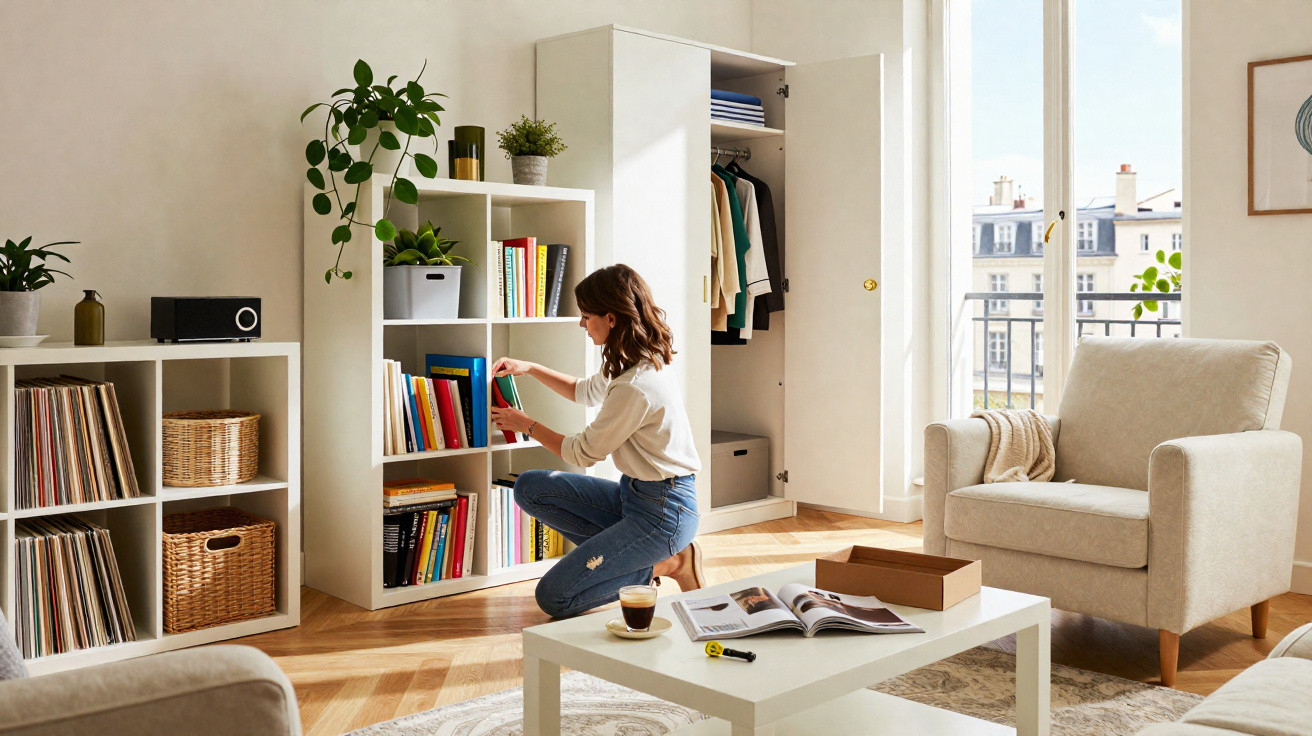
Vintage objects are particularly effective when mixed with modern furniture. A simple Ikea shelving unit immediately feels more grown-up when an old ceramic jug or brass candlestick sits alongside boxes and pictures. The result is a style that is almost impossible to buy ready-made, because it is assembled from individual finds.
Practical examples for a 30-euro mini makeover
A brief walk around a flea market can be enough to transform an entire corner. One possible combination is:
- 1 large natural basket (8–10 euros) for throws beside the sofa
- 2 brass candlesticks (3–5 euros each) for the coffee table
- 3 hardback books (2–3 euros altogether) as a plinth
- 1 ceramic vase (5–8 euros) for fresh flowers
This can turn a bare corner containing only a sofa and table into an area that looks consciously designed within an hour. There is no need for expensive designer pieces, only second-hand finds and a little styling instinct.
Anyone who enjoys it can gradually expand the idea: visit a bric-a-brac market once a month, allow only 10 to 20 euros, and look specifically for pieces that suit the existing style. The interior will then grow slowly and organically, while the home tells more and more stories of its own.



Comments
No comments yet. Be the first to comment!
Leave a Comment