The racket began before dawn.
A lorry first reversed with its warning alarm sounding, followed by boots crunching across gravel and metal striking metal. In a peaceful cul-de-sac bordered by rose bushes and children’s swings, a crane extended its arm like a machine from an industrial estate rather than a drowsy suburb.
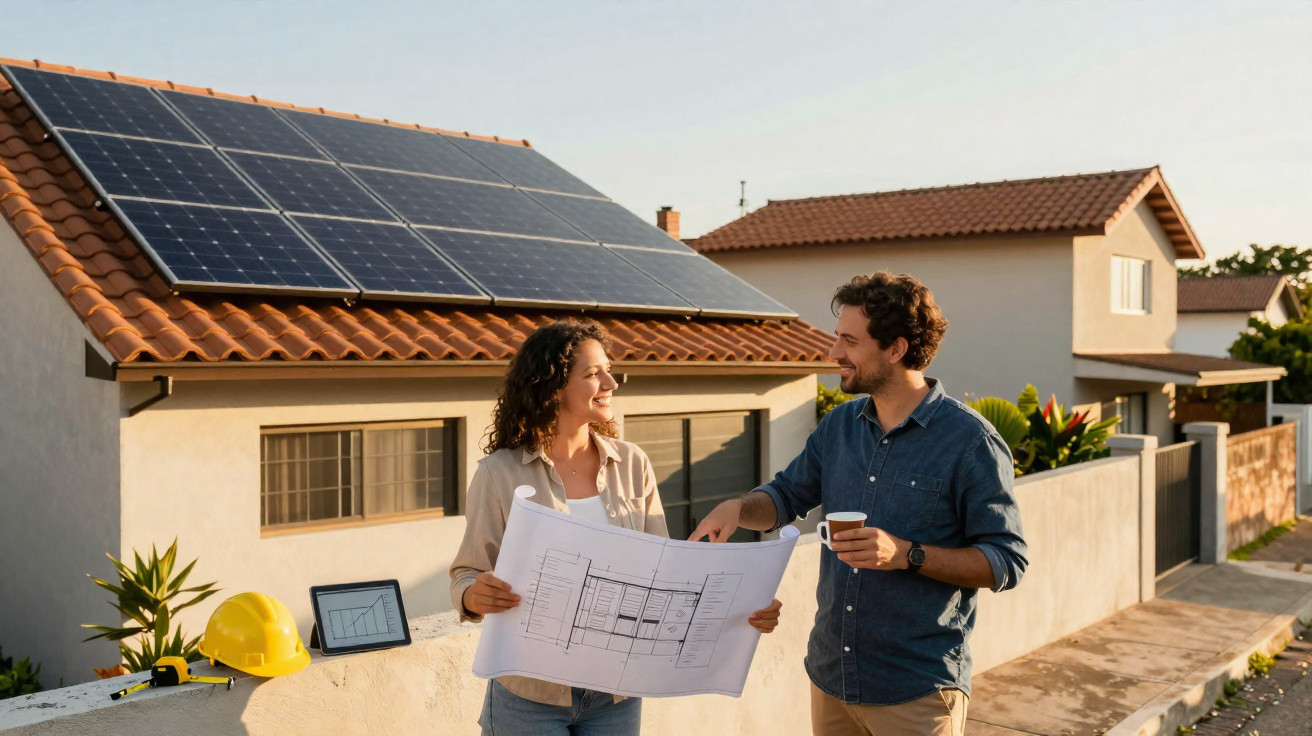
By 8 a.m., the Johnsons’ roof - previously a tidy stretch of grey tiles - resembled a building site overtaken by black glass rectangles. Some neighbours peered from behind their curtains, while others filmed openly from their front steps. Someone murmured, “There goes the neighborhood.”
Inside the Johnsons’ kitchen, however, the atmosphere over cups of coffee was almost euphoric. Lower bills. A cleaner conscience. Less guilt about using the air conditioning in July.
Two worlds sharing one roof.
When green dreams land in the wrong backyard
From the pavement, rooftop solar once seemed like an eccentric novelty: the sort of thing spotted on the eco-enthusiast’s house at the end of the road. Today, it is everywhere. Sales representatives call at doors as routinely as pizza deliveries, drones survey rooftops, and local Facebook groups are packed with before-and-after photographs.
What appears admirable from afar can feel jarring once scaffolding rises next door. Suddenly, a bedroom looks out onto a field of panels. A skyline of pitched tiles becomes a mosaic of black reflective squares. Children on scooters thread their way around electricians’ vans.
The clean-energy dream does not arrive as a soft breeze; it arrives with a team in high-visibility vests drilling above your sitting-room ceiling.
On a tree-lined road in Phoenix, Arizona, an HOA president produced a folder stuffed with printed complaints. Light reflecting into nurseries. An “industrial” appearance. Threats to property values. Solar firms “lying about the noise.”
A few houses away, though, Diana, a 34-year-old teacher, proudly ran her hand along the edge of her new array as if presenting a new car. In one month, her electricity bill had fallen from $230 to $48. Her teenage son boasted at school that their home was “basically a mini power plant.”
The strain was not visible in a spreadsheet. It appeared in the forced smiles exchanged at letterboxes, with every neighbour convinced they were protecting the future.
At the centre of this dispute are two truths that seldom meet. First, rooftop solar cuts emissions and can genuinely reduce costs in many areas. Second, roofs do not exist in isolation - they form part of streets, skylines and shared views to which people become quietly attached.
Urban planners discuss “visual coherence” and “neighborhood character”. Solar companies focus on payback periods and carbon offsets. What is missing is language that respects both a cleaner electricity grid and the human desire not to feel steamrollered in one’s own cul-de-sac.
Beneath the panels and contracts lies the real test: how much neighbours are prepared to accommodate a collective benefit installed directly on somebody else’s roof.
How to go solar without starting a street war
There is a calmer route to ambitious solar installation: begin the conversation well before a ladder reaches the gutter. Many disputes start because a neighbour’s first warning is drilling on a Monday morning. A five-minute conversation on Sunday afternoon can prevent resentment lasting for weeks.
Visit with a simple sketch of the planned roof arrangement. Explain where the panels will go, where the inverter may make a low hum, and what the installers will be doing during those few days. Ask whether someone works night shifts, has a sleeping baby or values the view from a particular window. This is not about seeking permission; it is about demonstrating consideration.
That modest act can change “What are they doing to our block?” into “Oh right, she told me about this.”
The next consideration is a design that suits the street as well as your finances. Solar installers naturally want to use every sunlit square metre, but the future you may regret a spacecraft-like appearance from the pavement.
Ask directly: could the panels be centred, lined up or confined to a less prominent slope, even if that slightly reduces output? Can you avoid the single panel that would resemble a black patch above the front window? Honestly, nobody consults an optimisation spreadsheet every day just to extract the final 3% of possible savings.
A tidy, balanced array will often cause less friction than a technically “perfect” but disordered layout scattered across every roof angle.
Interpersonal skills matter just as much as the equipment. Speak to your installer about acting as a considerate visitor in the neighbourhood, rather than merely a contractor working against the clock.
“I tell my crews: you’re not just installing panels, you’re walking into people’s daily lives,” says Marco, a foreman who has spent 12 years climbing roofs from San Diego to Sacramento. “If we park like jerks or blast music, that’s what the neighbor remembers, not the fact that we just helped cut emissions.”
- Ask the team to avoid obstructing driveways and letterboxes wherever possible.
- Give next-door neighbours the installation timetable so the noise does not feel like an ambush.
- Schedule the noisiest tasks, including drilling and cutting, away from early mornings and late evenings.
- Offer to protect a neighbour’s car or patio if dust or debris could drift across.
- Once the work is complete, call at each nearby home, thank people for their patience and show them the finished result.
That final five-minute round of thanks can clear away many hard feelings that might otherwise linger for years.
Living under the same sun, with different limits
What is happening on roofs from Texas suburbs to German villages concerns less the silicon than the way people negotiate visible change alongside those living nearby. Solar panels visibly show that somebody has chosen to act, invest and place a bet on another future. Some neighbours find that inspiring; others experience it as a judgement they never invited.
Most people know the feeling: a familiar place quietly changes - an extension appears, a tree is felled, or a car park replaces a field. Solar is certainly gentler than a retail development, but it still redraws the emotional map of a street.
The difficulty is that climate urgency urges faster action, whereas community harmony often favours a slower pace. Between those competing speeds is an unspoken negotiation: how much visual change can a street accept before residents begin digging in their heels?
Some cities already encourage that balance. Design guidance favouring consistent panel placement, incentives for shared solar on apartment buildings, and neighbour-consultation requirements that go beyond a box-ticking exercise are all small measures that can ease the conflict. They do not entirely settle arguments at the garden fence, however. That depends on something more complicated and less legal: whether you regard the person opposite as an obstacle or as a partner in living beneath the same blazing sky.
| Key point | Detail | Value for the reader |
|---|---|---|
| Talk early, not after the scaffolding | Share plans, timelines and layouts with neighbours before installation day | Limits surprise, frustration and opposition fuelled by rumours |
| Prioritise street-friendly design | Align panels, avoid awkward placements and consider less visible slopes | Preserves neighbourhood aesthetics while retaining solar benefits |
| Manage the “human” side of the install | Contractor conduct, noise scheduling, small courtesies and follow-up | Changes a possible flashpoint into a story of cooperation rather than conflict |












Comments
No comments yet. Be the first to comment!
Leave a Comment