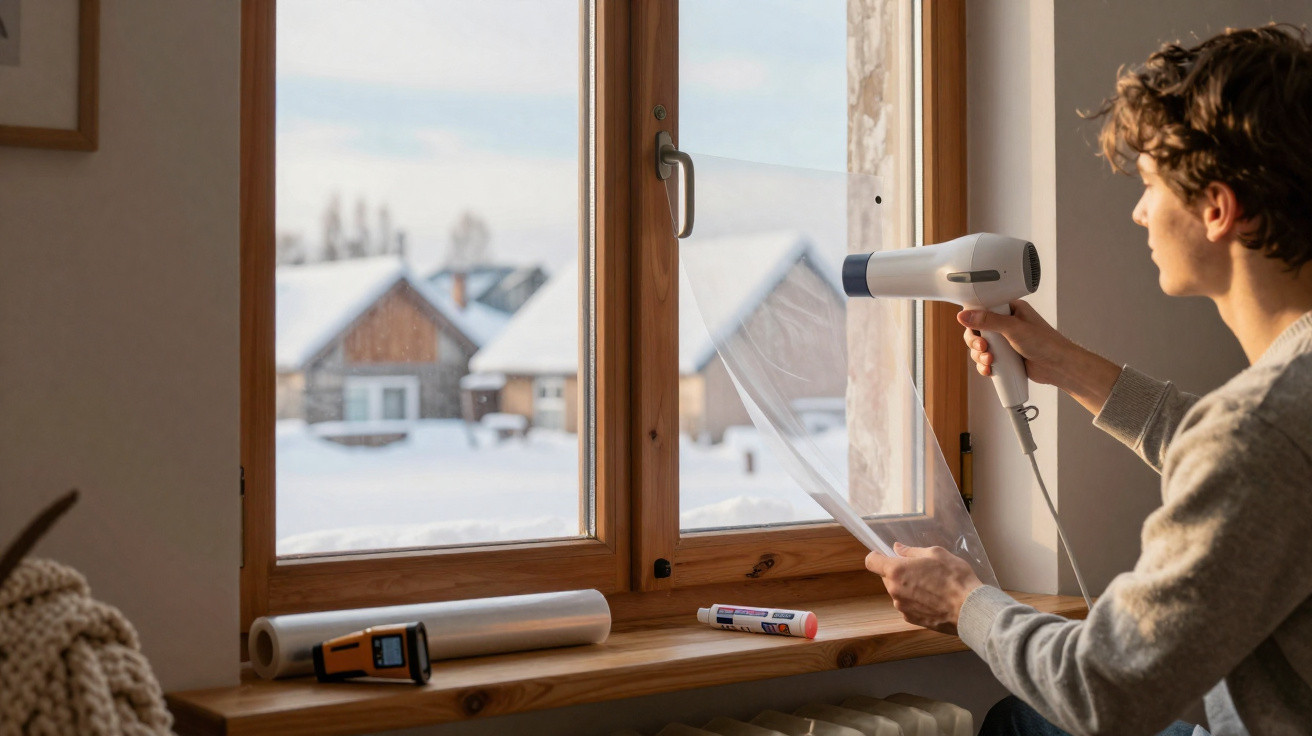
Many radiators are working flat out, yet rooms can still feel damp and draughty. The real culprit is often hidden quietly in the window frame: tiny gaps that act like an open passage for cold air. This is why many households in Northern Europe rely on a simple but remarkably effective trick using an everyday item from the kitchen.
Why windows lose so much heat
Windows are a traditional weak point in a building’s thermal envelope. Even modern units allow considerably more heat to escape than a well-insulated wall. With older frames, the issue tends to worsen over time.
- Seals become brittle and shrink.
- Joints between the frame and masonry begin to crack.
- Window fittings move out of alignment, meaning the sash no longer closes tightly.
The result is invisible air movement that can cool a room within minutes. Many people only notice it when their feet become cold or the radiator seems unable to keep up.
How to find draughty windows in minutes
A few simple checks can reveal exactly where cold air is entering, without the need for measuring equipment.
- Hand test: Move your hand slowly along the frame, joint and seal. If you can feel a draught, that area is leaking.
- Candle or lighter test: Hold a small flame close to the frame and seal. If it flickers noticeably, air is passing through there.
- Feather or strip of paper: Lightweight materials respond readily to moving air and can reveal even a faint draught.
“Every small leak works like a mini chimney in winter – warm air disappears and cold air takes its place.”
The Scandinavian trick: a transparent shield against draughts
In countries such as Sweden and Norway, homeowners have long looked for practical answers to biting cold. One approach has become common in many flats because it is quick, inexpensive and surprisingly effective: placing a simple plastic film along the window track.
How the plastic film method works
Rather than replacing the entire window straight away, many Scandinavians place a thin film where the most cold air enters: along the tracks and joins of sliding windows or movable sashes. The film forms an extra flexible barrier.
In practical terms, the process is as follows:
- Clean and dry the window thoroughly, especially the tracks and the area in which the sash moves.
- Cut a piece of thin plastic film, using, for example, a freezer bag, cling film or purpose-made insulation film.
- Lay the film on the track or inside the gap so that it interrupts the route between the frame and sash.
- Close the window so the film is lightly compressed and creates a temporary seal.
The film is almost invisible once in place, can be removed again whenever necessary and has very little effect on normal use. With sliding windows, however, it is worth checking where it will not interfere with movement.
“Just a few minutes of work creates an invisible barrier to the cold – ideal in rented homes, where major alterations are not an option.”
Flexible sealant: the second simple measure
Alongside plastic film, many households in the North use another low-tech solution: flexible sealant. It is suited to narrow cracks around the frame, where cold air is especially likely to creep in.
The method is straightforward:
- Identify cracks and gaps around the frame.
- Carefully remove any loose old sealant with a scraper.
- Apply flexible sealant or window putty into the gap.
- Smooth it down and allow it to cure – done.
The difference can often be felt immediately: the room warms up more quickly, the heating does not need to run as much, and the indoor atmosphere suddenly feels calmer and cosier.
Long-lasting solutions for greater thermal comfort
Anyone seeking to save money over the longer term and improve comfort should consider structural upgrades. In older homes in particular, these can significantly reduce heating costs.
Double and triple glazing
Modern windows generally contain two or three panes, separated by a layer of air or gas. This layer substantially slows the transfer of heat.
- Double glazing: a good balance between cost and energy savings for many existing properties.
- Triple glazing: particularly relevant for new builds or extensively refurbished homes where the rest of the building envelope is also well insulated.
People upgrading from single glazing to modern glazing usually notice the difference on the first winter day: no more feeling of cold directly beside the window, less condensation and a noticeably calmer indoor climate.
Brush seals and window-bottom seals
Brush seals are particularly suitable for sliding windows and older casement windows. Their fine plastic bristles fill uneven gaps and also follow slightly warped sashes.
Another quick option is a window or door draught excluder, often known as a “draught stopper”. These are placed on the windowsill or on the floor directly in front of the leak, mechanically blocking the airflow.
“Combining several small measures – plastic film, sealant and brush seals – can often achieve almost the effect of a new window.”
How draughts affect health and household bills
Many people underestimate the impact of constant cold and draughts indoors. The heating may be set to level 5, but you still feel permanently chilly. The body is placed under stress, colds occur more often, and both sleep quality and concentration suffer.
Heating costs rise at the same time. Every leaking joint sends valuable warm air outside. Even a few tenths of a degree less heating performance can create noticeable additional costs over an entire season. Sealing windows not only reduces the bill, but also lowers overall energy use.
Practical examples: where the Scandinavian trick is especially useful
The plastic film technique is particularly useful wherever extensive refurbishment is not an option:
- Rented flats with old sliding windows, where the landlord has no plans to replace them.
- Holiday homes used only seasonally, where simple reversible measures are needed.
- Top-floor flats with Velux or hinged windows that are prone to draughts in windy weather.
Anyone trying the method will often quickly discover which windows are the real problem areas: the windows where the film makes the biggest difference are those with the largest leaks.
What must not be overlooked with all these measures
Despite all sealing work, a building still needs air exchange. Windows sealed too tightly can encourage condensation and mould growth. Anyone sealing gaps should ventilate deliberately: air rooms briefly and fully several times a day, rather than leaving windows tilted open for hours.
The key is balance: stop draughts while allowing fresh air in under controlled conditions. This keeps rooms warm, the air fresh and heating costs lower. The Scandinavian approach demonstrates this in a very practical way: major alterations are not always necessary – often, a piece of plastic film and a little attention to the window frame are enough to keep the worst of the winter cold outside.
















Comments
No comments yet. Be the first to comment!
Leave a Comment