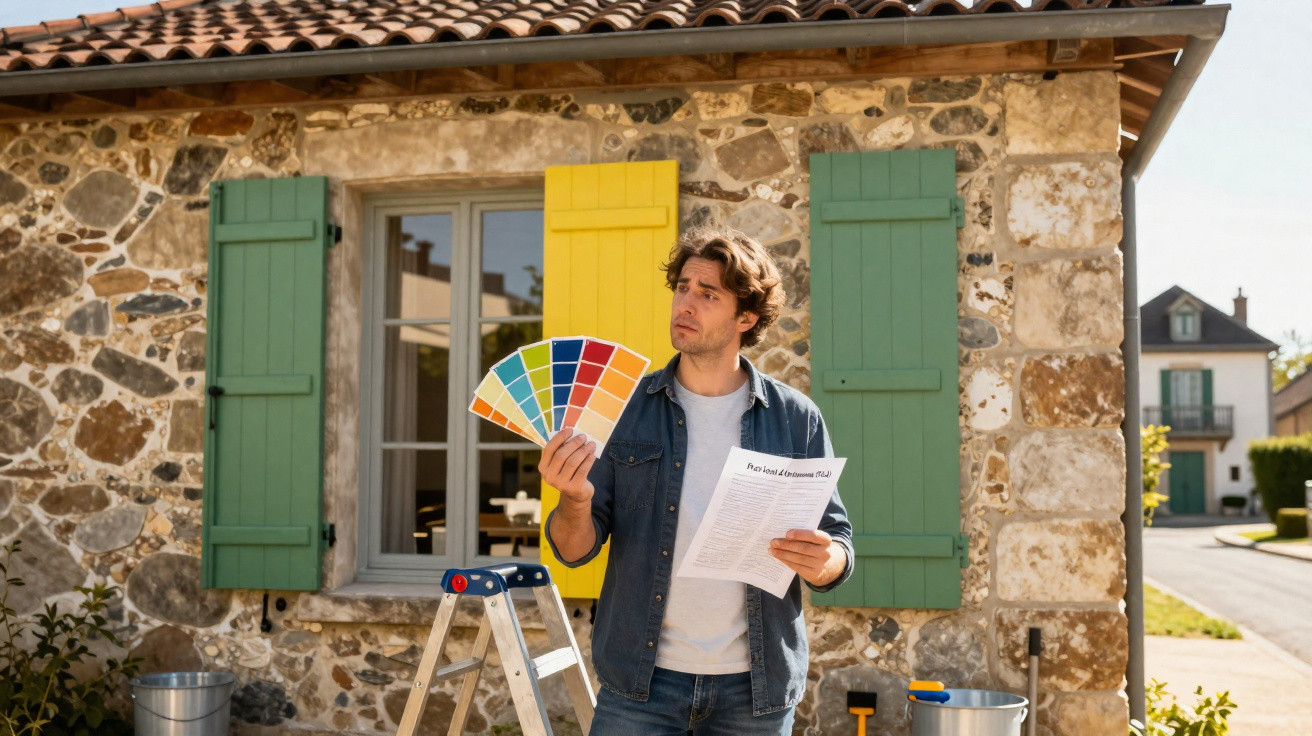
When temperatures rise, the season for minor home improvements begins in many parts of France. Sanding shutters, repairing the façade and applying a fresh coat of paint may sound harmless. Yet these seemingly routine jobs can prove extremely costly for property owners who overlook their local authority’s strict rules.
Spring home maintenance: where the real trouble starts
Homeowners who simply refresh wooden shutters in their existing colour usually have little to worry about. The issue arises as soon as the building’s visual appearance changes: with a new shade, a different finish or a contemporary colour in a village shaped by historic character.
France regulates the external appearance of homes far more strictly in many areas than many German owners may expect. These rules do not apply solely to monuments or town centres; ordinary residential neighbourhoods can also be affected. Local councils define colour palettes intended to suit the character of the area, and they now enforce them with considerable consistency.
Anyone who paints according to personal taste without checking the local authority’s documents is effectively risking a four-figure fine.
Strict colour palettes: why shutter colours are prescribed
The central rules are contained in the Plan local d’urbanisme (PLU), the local planning scheme. It sets out not only what may be built and where, but frequently also how a house must look externally, including the permitted colour shades.
Typical requirements include:
- only muted, traditional colours, such as specified shades of green, blue or grey
- a ban on neon colours, extreme contrasts or metallic paints
- consistent colour requirements across a street or neighbourhood
- additional conditions near historic buildings or within protected areas
In sensitive locations, the architects responsible for historic buildings may also become involved. They assess whether proposed colours suit the architectural setting. A fashionable anthracite shade may quickly be judged “too modern”, while a vivid blue may be considered “disruptive to the village character”.
How local authorities justify these rules
The reasoning is that streets and villages should retain a harmonious overall appearance. In the authorities’ view, individual departures become visual distractions. This can apply even where an owner moves only slightly away from the existing shade.
In practice, events often unfold like this: a homeowner cheerfully paints their shutters, neighbours notice the colour change, someone reports it to the council, and a letter arrives several weeks later.
Fines of up to €6,000 for incorrectly painted shutters
Breaching the PLU requirements in France does not result in a merely symbolic penalty. Depending on the seriousness and persistence of the breach, fines can range from €1,500 to €6,000. In many cases, that is not the end of the matter.
Authorities often demand not only payment of the fine, but also restoration to the permitted condition. In other words, the shutters must be sanded down and painted again, this time in an approved colour. Depending on the size of the house, the cost of materials, possible tradespeople and time can rapidly add several thousand euros more.
The harsh reality for many owners: pay first, then paint everything again – simply because nobody checked the local authority’s documents beforehand.
The problem particularly affects those acting in good faith but without experience of French planning law, including Germans with holiday homes in Provence or Brittany. They follow preferences from home and walk straight into a regulatory trap.
Where checks take place – and who decides
Inspections are not always systematic, but they often follow reports from neighbours or occur during other site visits. The local planning and public-order authorities are responsible, with heritage bodies additionally involved in protected areas.
The PLU is always the decisive reference point. It specifies:
| Regulatory area | Typical content |
|---|---|
| Colours | permitted and prohibited shades; requirements for shutters, doors and façades |
| Materials | wood, metal, plastics, roof-tile types and render finishes |
| Zones | particular restrictions in historic districts or landscape-protection areas |
Without paperwork, a fresh coat of paint quickly becomes risky
Anyone changing the appearance of their house in France can rarely avoid an administrative step: making a prior declaration of works to the local authority. This also applies to repainting shutters when their colour or appearance is changing.
The rule is clear: the form must be submitted to the mairie before work begins, in practice around one month in advance. The administration checks whether the intended colour complies with the PLU requirements. Only once approval, or tacit acceptance, is in place is the owner on legally secure ground.
The short wait before painting can often prevent months of back-and-forth with the planning authority.
How property owners can proceed lawfully
Anyone wishing to avoid risk should follow these steps before making the first brushstroke:
- Check the PLU: Review the permitted colours and materials at the town hall or, in most cases, online.
- Observe neighbouring properties: Use houses that have clearly been approved as a guide, such as new-build homes or recently renovated façades.
- Clarify colour samples: If unsure, speak to the mairie and ideally present colour charts.
- Submit the declaration: Complete the prior declaration of works form and file it by the required deadline.
- Wait for the decision: Do not start painting until there is no longer a risk of objections.
This procedure takes a little time, but it protects owners from far greater financial and emotional strain.
What German homeowners in France should pay particular attention to
For many Germans with a holiday property, the French system initially appears excessive. In practice, a change of perspective is worthwhile: the rules are intended to protect tourist postcard locations, established village layouts and historic streets from visual outliers. Those who accept this can plan modernisation work more calmly.
A classic practical example is a newly purchased stone house in a village of pale pastel shades. The new owner wants modern anthracite shutters and black metal railings. That might not cause an issue on a new-build estate. In a historic lane, however, the administration may clearly reject the look, even if the finished result appears high quality.
Another scenario involves an owner replacing wooden shutters with low-maintenance plastic units in a slightly altered colour. Here too, the council may intervene if the material and shade do not meet the requirements. Often, only a high-quality wood substitute with a similar appearance will be permitted.
Risks and opportunities for property value and sale
Owners who comply with the requirements strengthen their property’s long-term value. A house that fits the local streetscape visually and can show all approvals is generally easier to sell. Buyers avoid properties where they may have to pay for remedial work themselves at a later date.
Conversely, unauthorised colour experiments can trigger a chain of consequences: discussions with the council, disputes with neighbours and, in extreme cases, legal proceedings. All of this deters prospective buyers and reduces the price.
Those who plan properly at an early stage, make clear colour choices and involve the local authority ultimately save money and stress – and can genuinely enjoy their newly painted shutters later, rather than becoming anxious whenever a council officer walks past the window.
















Comments
No comments yet. Be the first to comment!
Leave a Comment