While many people instinctively turn up the thermostat in autumn, one woman has not switched on her radiators for three years. Her flat is in an ordinary period building, with no high-tech retrofit and no heat pump in the basement. Yet she does not feel cold. Her approach relies on thorough draught-proofing, carefully chosen textiles and a different way of organising daily life.
The real cold culprit: stopping draughts and hidden gaps
When people feel chilly in winter, they usually focus first on the thermostat setting. In many flats, however, the issue is less the air temperature than constant draughts. Even a narrow gap beneath the front door can draw warm air out and cold air in. Experts estimate that, in poorly sealed homes, doors can account for up to 15 per cent of heat loss.
The tenant therefore began by methodically checking for draughts. The test is straightforward: hold a lit candle or a strip of paper near doors, windows and sockets; they will move wherever air is flowing. If the flame tilts, there is a leak.
Her next purchase was small but crucial: a simple fabric draught excluder, often called a draught stopper, costing less than €15. Positioned tightly against the front door, it blocks the continual flow of cold air from the communal hallway.
But she did not stop there. Gradually, she turned the entrance door into a kind of mini airlock:
- self-adhesive foam or rubber sealing strips around the frame
- a brush seal at the base of the door where it meets the hallway
- silicone V-seals fitted into the gaps around the door frame
- a thick curtain hung directly behind the door, acting as an extra wall
“Every draught that is stopped not only saves energy; it also makes an immediate difference to comfort: the cold current in the hallway disappears, and the flat feels calmer and more evenly heated.”
Textiles as a secret weapon: turning a fridge-like hallway into a cosy home
She then turned her attention to the windows. Glazed areas are often the weakest point in winter. Even modern glazing radiates cold, while old timber windows do so even more. Rather than relying on the installed radiators, she makes extensive use of fabric.
The living room now has heavy, multi-layered thermal curtains. They reach the floor and overlap the walls slightly at each side. A still layer of air forms between the fabric and the window, creating a simple yet effective insulating barrier. As soon as dusk falls outdoors, she closes the curtains so that warmth collected during the day cannot escape again.
During daylight hours, however, she still lets sunshine into the room. At that time, only thicker semi-sheer curtains remain in front of the windows: they provide privacy and block most of the cold while allowing the sun’s rays through.
Cold feet? Use rugs rather than bare floors
Tiles and thin laminate are another vulnerable area. Mineral floors seem to draw body heat straight from the feet, making the whole flat feel colder. A jumper will not solve that problem; a different surface is needed.
The resident has covered every heavily used area with rugs: the living space, the area in front of the sofa, beneath the dining table and beside the bed. Thick wool rugs or deep-pile synthetic options work particularly well. Anyone without the budget for designer pieces can combine inexpensive runners with a felt underlay.
The result is striking: feet stay warm, people are more willing to sit on the floor, and the perceived room temperature rises noticeably even though the thermometer reading remains unchanged.
Reflectors: directing warmth back into the room
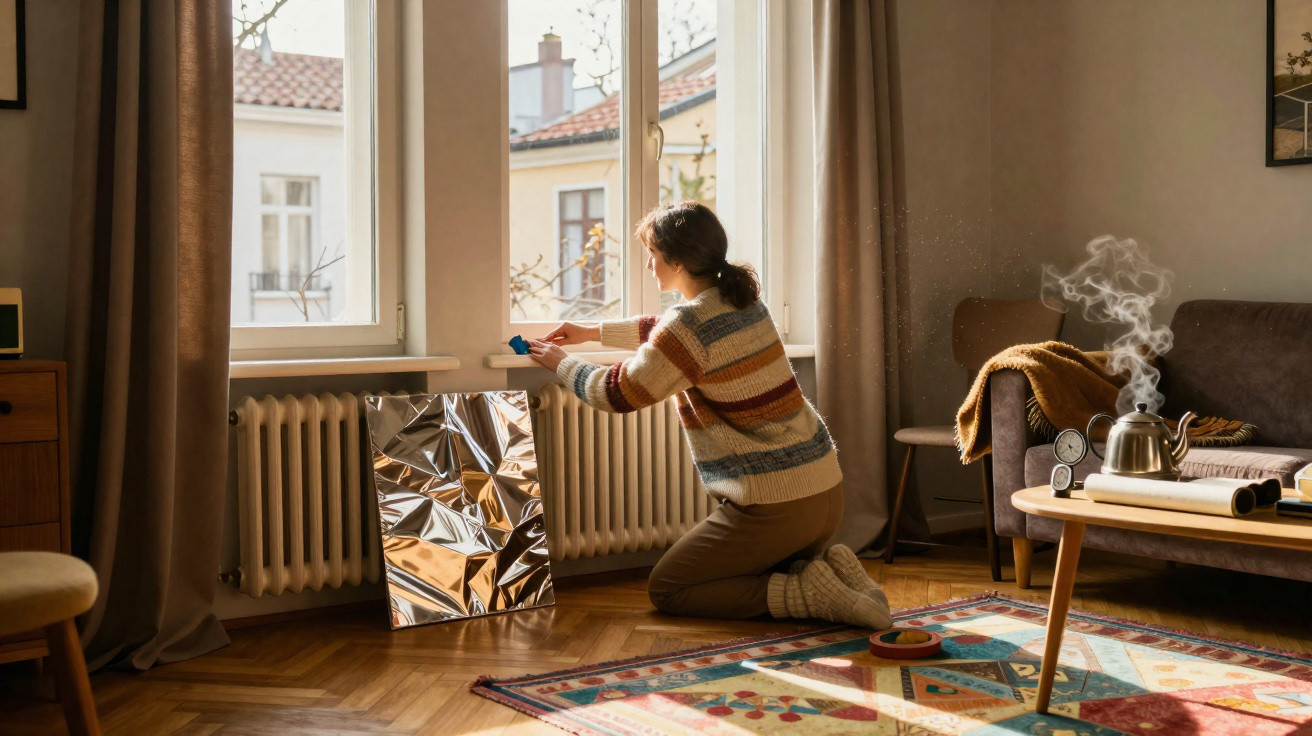
External walls are a frequently overlooked heat trap. They can feel ice-cold and absorb part of the infrared heat radiation in a room. Simple, thin reflective panels with an aluminium layer can help. Although originally designed for fitting behind radiators, they also work behind sofas or chests of drawers placed against external walls.
The tenant has installed these panels behind the radiators that remain switched off and behind several pieces of furniture. This sends some radiant heat back into the room rather than into the wall. The result is a more even temperature distribution, and the dreaded “ice wall” becomes far less intimidating.
Following the sun: adapting everyday life to warmth
Living without heating does not mean spending all day in the thickest possible jumper. The woman has deliberately adapted her daily routine around natural heat sources. The south-facing room is central to her approach. It is where she spends most of her time: working from home, reading, making phone calls and even doing short exercise sessions.
When the midday sun shines into these rooms, she leaves their doors open so that the warmed air can spread. Once the sun moves on, she closes the doors again to retain the heat gained.
“The flat becomes a small map of movement: briefly in the kitchen in the morning, in the sunny room at midday, and in the best-insulated area in the evening – rather than heating every room uniformly.”
Cooking, showering, living: every heat source matters
She makes particularly effective use of the hob and oven. Casseroles, bread and roasted vegetables appear on the menu much more often during winter. Once cooking is finished, she leaves the oven door slightly ajar to allow the residual heat into the room. This does not replace heating, of course, but it provides a few extra degrees during the evening.
The same principle applies in the bathroom. After showering, she leaves the door open so that warm, humid air can move into the hallway and neighbouring rooms. Only once the air has cooled noticeably does she air the space thoroughly for a few minutes, reducing moisture and the risk of mould.
Together with sealed doors, heavy curtains and rugs, this creates a form of “passive” heating strategy. The flat retains every free degree of warmth for as long as possible instead of immediately losing it to the outdoors.
How much can realistically be saved – and who is this suitable for?
Whether conventional radiators can be avoided entirely depends heavily on the location, the building fabric and an individual’s sensitivity to cold. In well-insulated flats in mild regions, this strategy may be almost sufficient for some households. In old, draughty buildings, it cannot replace heating, but it can reduce consumption substantially.
Experience reports and energy advice services indicate that consistent draught-proofing and smart use of textiles can often save 15 to 30 per cent of heating energy. Reducing the thermostat temperature by one degree as well saves roughly five to seven per cent on top.
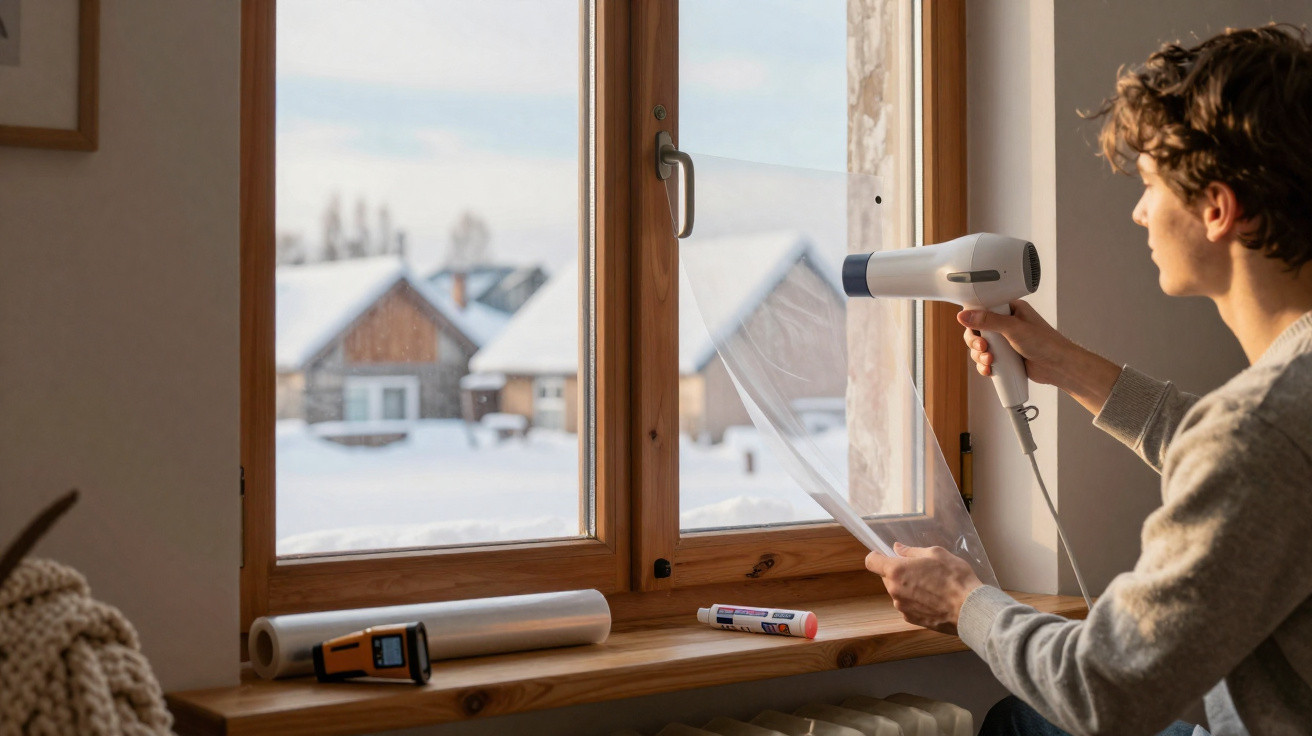
One important point: anyone with very old windows or moisture damage in their home will ultimately need professional measures, such as new seals, a ventilation plan or even replacement windows. Otherwise, mould and structural damage may result.
Practical ways to begin a “gentle heating mode”
Anyone who does not want to avoid fully turned-up radiators for three winters straight away can start on a smaller scale. One possible plan is:
- Draught-proof one flat entrance door using a fabric draught excluder and seals.
- Fit thermal curtains in at least one frequently used room.
- Lay rugs over exceptionally cold areas of flooring.
- Choose a sunny room and spend as much time there as possible during the day.
- Deliberately let heat from the oven and shower flow into nearby rooms.
After one to two weeks, it becomes fairly clear how much this changes personal heating needs. Those who wish to can then lower the heating temperature gradually, one degree at a time, and test the effect again.
Risks, limits and sensible combinations
Living entirely without heating is not appropriate for every household. Older people, young children and people with certain medical conditions are more sensitive to cold and humid air. For them, safety clearly takes priority over saving money. In very damp homes with mould problems, it is also essential to allow enough ventilation periods, even if some warmth is lost in the process.
Combining the measures described with simple technical aids is useful: room thermometers, hygrometers to guard against excessive humidity and timers for individual radiators help people keep track and heat only where necessary. Most of these measures can be carried out in a rented flat without major alterations and taken away again when moving out.
Above all, the story of the woman who has left her heating off for three winters shows that the greatest opportunity often lies not in an expensive package of technology, but in noticing the small places where heat escapes – and in being willing to reshape everyday winter life consciously.













Comments
No comments yet. Be the first to comment!
Leave a Comment