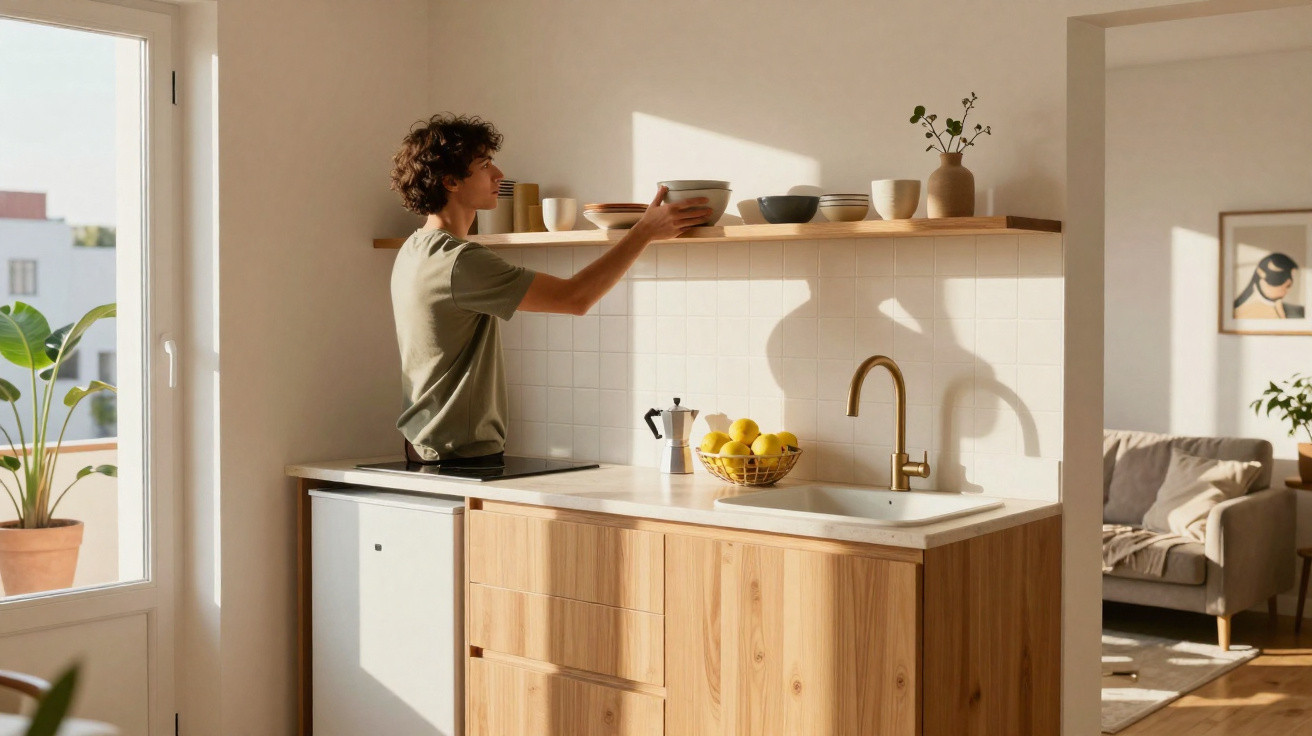
Wall cabinets were once seen as the best way to make use of kitchen space, but interior design is evolving. In compact homes and flats, designers are favouring lighter, more functional and integrated options, such as the mini kitchen, to make the room more attractive, practical and easier to keep organised.
Why have wall cabinets become less popular in home designs?
Wall cabinets can make a room feel visually heavy, diminish the impression of space and make the wall, splashback and worktop harder to clean. In today’s kitchen, the demand for comfortable movement, natural light and order has led many homeowners to reconsider traditional fitted cabinetry.
Designers note that smaller rooms require smarter bespoke furniture, including deep drawers, low niches and tall storage units. This shift particularly benefits the mini kitchen, especially in flats where the kitchen is open to the living and dining areas.
How does a mini kitchen enhance compact spaces?
A mini kitchen makes the most of every centimetre by combining a worktop, sink, cooktop, appliances and base units in one compact arrangement. The outcome is a practical area with a clean appearance and more efficient use of the floor plan.
Before replacing the cabinetry, it is worth considering which ideas will genuinely improve everyday household routines. Some choices make the room flow more smoothly while helping to maintain daily organisation:
- Deep drawers for pans, containers and utensils;
- Tall units for pantry storage and appliances;
- Retractable doors to conceal the food-preparation area;
- Clear worktops for cooking, placing items and serving.
What do designers recommend instead of wall cabinets?
Designers suggest replacing some wall cabinets with lower and vertical alternatives, such as drawers with organisers, sliding doors and made-to-measure panels. These options give the wall a lighter look while making room for paint, tiles, occasional shelves or decorative lighting.
For those wishing to update their home without sacrificing storage, the cabinetry should complement the property’s style. The most common choices in residential projects include:
- Floor-to-ceiling cupboards along a single wall;
- Open shelves reserved for attractive, frequently used items;
- Smooth, handleless fronts to create visual continuity;
- Recessed lighting above the food-preparation worktop.
What makes a kitchen more attractive and functional?
A kitchen works better when its organisation reflects how the household uses it. A clear worktop, an easy-clean splashback, effective ventilation, well-placed sockets and safe circulation all make a difference when preparing meals.
Wall cabinets can still work in certain designs, but they should be used in moderation. In many cases, a scheme combining drawers, low niches and a side tower unit produces a more contemporary look without compromising comfort, practicality or storage.
When does a mini kitchen suit Brazilian homes?
A mini kitchen suits small flats, studios, beach houses, outdoor entertaining areas and open-plan rooms. It also appeals to people who prefer minimalist décor, with fewer objects on display and greater ease when cleaning the floor, worktop and wall finishes.
Ultimately, designers and homeowners are looking for the same thing: a warmer, more attractive and more practical home. By cutting back on excess, choosing bespoke furniture and prioritising circulation, the kitchen becomes more than a place for food preparation and forms part of the home’s décor.






Comments
No comments yet. Be the first to comment!
Leave a Comment