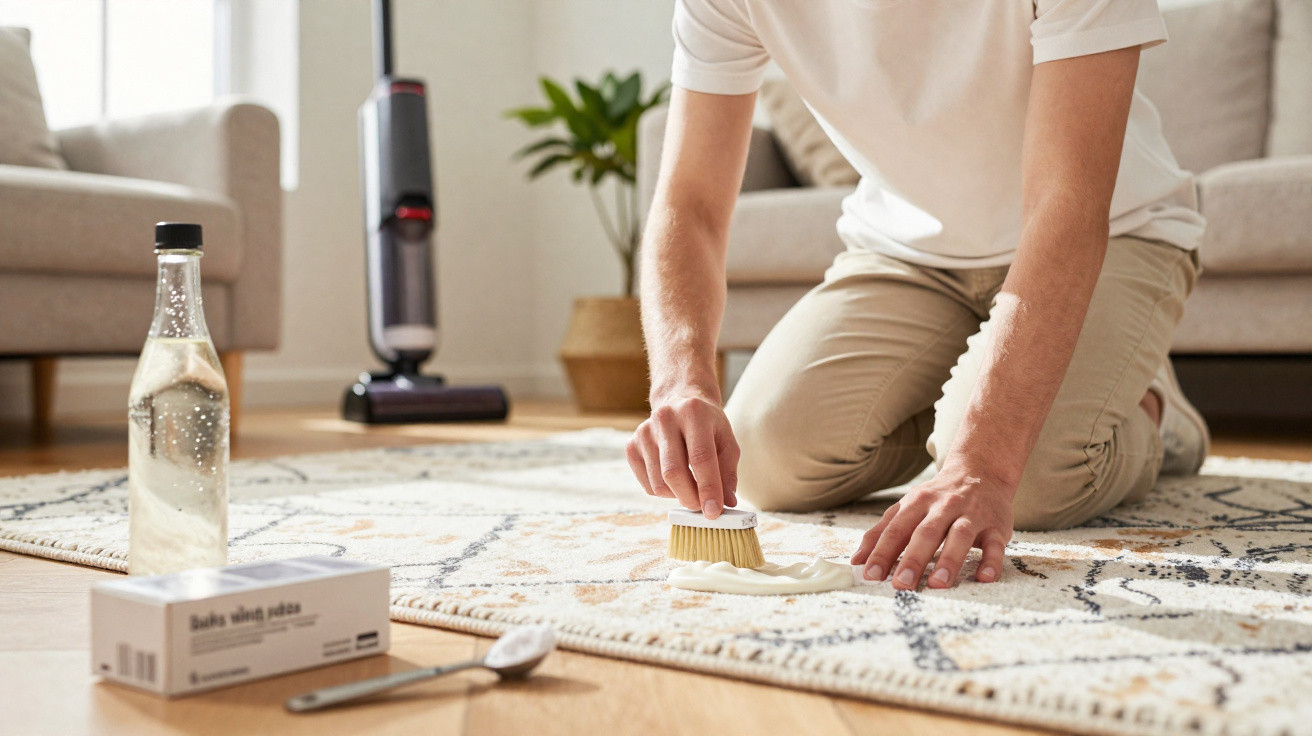
Before putting expensive specialist cleaners in the trolley, it is worth checking the kitchen cupboards. They will usually already contain everything needed to lift stains, draw unpleasant smells out of the fibres and visibly revive colours – without straining the budget.
Why household remedies work so well on carpets
Bicarbonate of soda (sodium bicarbonate, commonly sold as baking soda or bicarbonate of soda) and ordinary white household vinegar are classic cleaning-cupboard staples. When combined, they fizz, loosen ingrained dirt and neutralise odours that may have settled into the pile over months.
“When used correctly, the combination of bicarbonate of soda and vinegar can replace many shop-bought carpet cleaners – especially on synthetic carpets.”
The advantage is that the ingredients cost only a few pence per use, are easy to measure and do not leave an aggressive chemical cocktail lingering in the air at home.
The basic mixture: making the cleaning paste
The key is a lightly foaming paste applied directly to the affected areas. It takes only seconds to mix.
Recipe for the carpet paste
- 2 tablespoons bicarbonate of soda (baking soda)
- 1 tablespoon clear white household vinegar
- Optional: a little hot water
- Optional: one drop of mild washing-up liquid for grease stains
Put the bicarbonate of soda into a small bowl first, then add the vinegar. The mixture will begin to fizz immediately – and this reaction is what helps release the dirt.
For grease marks or old high-traffic trails, mix in a drop of washing-up liquid and a small amount of hot water. The finished mixture should be thick but spreadable. It must not run off the spoon.
“The paste needs to stay on the fibres and must not soak the carpet – only then can it work properly.”
Applying it safely: step-by-step carpet cleaning
Many carpet-cleaning mishaps happen because too much water or pressure is used. The bicarbonate of soda and vinegar method relies on patience rather than force.
Preparing the carpet
- Vacuum the carpet thoroughly, ideally moving slowly in both directions.
- Remove all loose crumbs and sand.
- For fresh liquid spills, carefully blot with a cloth rather than rubbing.
Only once the surface is genuinely free from loose debris is it worth applying the paste.
Applying the paste correctly
Use your fingers or the soft side of a sponge to spread a thin layer of paste over the stain. Always work in the direction of the fibres and avoid scrubbing. The aim is to draw dirt up to the surface, not force it deeper into the pile.
Leave the paste on the carpet for around 15 to 20 minutes. During this time it will dry slightly and may often change colour a little. This indicates that it is binding to the dirt.
Then carefully lift away the residue with kitchen roll or a mop, and allow the area to dry completely. Finally, vacuum thoroughly again to remove dried bicarbonate of soda residue.
“Those who are patient are usually rewarded after just one treatment with visibly brighter fibres and a neutral smell.”
When the whole carpet looks tired: full treatment for small runners
With synthetic bathroom or kitchen runners, treating individual spots is often not enough. In that case, the paste can be used across the full surface.
How to refresh the whole surface
Small synthetic carpets that are particularly suitable include:
- Bath mats
- Kitchen runners
- Inexpensive polyester or polypropylene rugs
Rather than applying the paste to isolated areas, spread it in a very thin layer across the entire surface, preferably using the soft side of a sponge. After a few minutes, the carpet will have absorbed some of the mixture; remove the remainder with a cloth.
This step lifts the grey film from high-traffic areas and makes colours appear stronger again, without leaving the carpet soaking wet.
No stains? Dry-clean with bicarbonate of soda alone
Some carpets have no visible marks but smell musty or simply look a little “tired”. In this situation, plain bicarbonate of soda used as a dry powder is often enough.
Refreshing a carpet with the powder method
- Vacuum the carpet.
- Sprinkle over a thin, even layer of bicarbonate of soda.
- Work it in gently with your hand or a soft broom.
- Leave it for at least 30 minutes, or overnight for strong odours.
- Vacuum carefully.
The powder absorbs moisture and odours while also lifting the fibres slightly. Pet smells, cigarette smoke and cooking odours can therefore become noticeably less intense.
When buying bicarbonate of soda in bulk is worthwhile
Small supermarket packets are intended for occasional baking, rather than a thorough carpet treatment. Anyone who cleans with it regularly is better off choosing larger packs.
Chemists and household stores often sell 1 kg bags, which are considerably cheaper per kilogram than standard small packets. Online retailers even offer 5 kg bags, packaged much like washing powder.
“Anyone who uses bicarbonate of soda not only for carpets but also for cleaning, laundry or removing fridge odours can save noticeable money with bulk packs.”
Common mistakes with the bicarbonate of soda and vinegar trick – and how to avoid them
Although the paste is effective, there are a few pitfalls. Most problems can easily be avoided by knowing the most common mistakes.
Using too much water
The biggest mistake is mixing the paste too thinly. The carpet then becomes saturated, risking drying marks and yellowish edges. It is better to begin with one teaspoon of water and slowly adjust towards the right consistency.
Rubbing too hard
Vigorous scrubbing pushes dirt further into the fabric. As a result, the stain becomes larger and more difficult to remove. A light spreading motion is sufficient; the reaction between bicarbonate of soda and vinegar does the rest.
Forgetting to vacuum
If the carpet is not vacuumed before application, dust and crumbs become mixed into the paste, creating a kind of dirty sludge. The residue must also be removed from the fibres after treatment, otherwise a fine coating remains on the carpet. Always vacuum before and after treatment.
A risky combination for delicate fibres
Wool carpets, Oriental rugs, viscose designs and other delicate natural fibres can react badly to vinegar. The surface may become dull, while colours can darken or turn patchy. In the worst case, the vinegar can act like a mild chemical burn.
“The vinegar and bicarbonate of soda paste is intended for synthetic carpets – polyester, polypropylene and most bathroom or kitchen rugs. Delicate natural fibres are better cleaned by a professional.”
How to tell whether your carpet can handle the method
If in doubt, test the mixture on an inconspicuous corner, such as beneath a piece of furniture. Apply a little paste, let it dry and check: has the colour changed? Do the fibres look dull? Are there any hard patches?
If everything remains unchanged or even looks better, there is little reason not to clean the rest of the surface. This preliminary test is particularly worthwhile for inexpensive synthetic carpets before spending unnecessary money on specialist cleaners.
Practical additions for keeping carpets fresh every day
Anyone using the bicarbonate of soda trick regularly can establish a simple routine: a dry treatment with bicarbonate of soda once a month, plus a paste treatment two to three times a year for heavily used areas such as walkways or the space in front of the sofa.
Households with pets should also act as quickly as possible: blot fresh stains dry immediately, then apply the paste to the affected spot. This prevents odours from working their way deep into the fibres in the first place.
Checking carpet labels helps with choosing the correct method. Where the label states “synthetic fibres” or names materials such as polyester and polypropylene, the paste can deliver its full benefits. For hand-knotted pieces made from natural materials, a gentle professional clean should be preferred.











Comments
No comments yet. Be the first to comment!
Leave a Comment