On a Saturday morning, the light falls at an angle across the bathroom floor and suddenly that is all you can see: those greyish, sometimes almost black, tile grout lines that make the whole room look neglected. The tiles are clean, the towels are folded and the mirror shines… yet the lines between the tiles tell a different story. We all know that moment when we wonder whether regrouting is the only answer. In fact, a very simple mixture, left to work for a few minutes and used without scrubbing frantically, can transform the appearance of a floor or shower. The outcome is often more striking than expected.
Why grout becomes dirty much faster than tiles
Grout has one subtle weakness: it is slightly porous. It holds on to moisture, soap residue, dust settling on the floor and everyday splashes, particularly in kitchens or around the shower. Over time, its original colour fades without us really noticing. Then one day, after moving a bath mat or cleaning a neglected area, the contrast becomes obvious. The tiles look dull even though they are not dirty. It is the grout that visually tires the room, rather like marked windows in an otherwise tidy house.
In a family bathroom, floor grout can darken within a few months when the room has poor ventilation. One reader said she had assumed the marks in her shower were ingrained mould before trying a homemade paste on a small hidden section. In under ten minutes, the change was clear: the grout had not been artificially whitened, but had simply regained its pale beige shade. That small detail alters everything. The difference between a floor that looks old and one that looks well maintained can sometimes come down to a few cement lines made clean again.
The problem often lies with products that are either too harsh or used too quickly. Bleach, for instance, can give an immediate impression of whiteness, but may weaken certain grout over time, while its smell quickly fills small rooms. Deposits do not always disappear through force: they lift more easily when a product has time to soften them. The most effective cleaning method is not necessarily the one with the strongest smell. Above all, it helps to identify what needs removing: grease, limescale, dried soap or damp marks.
The quick paste that refreshes tile grout
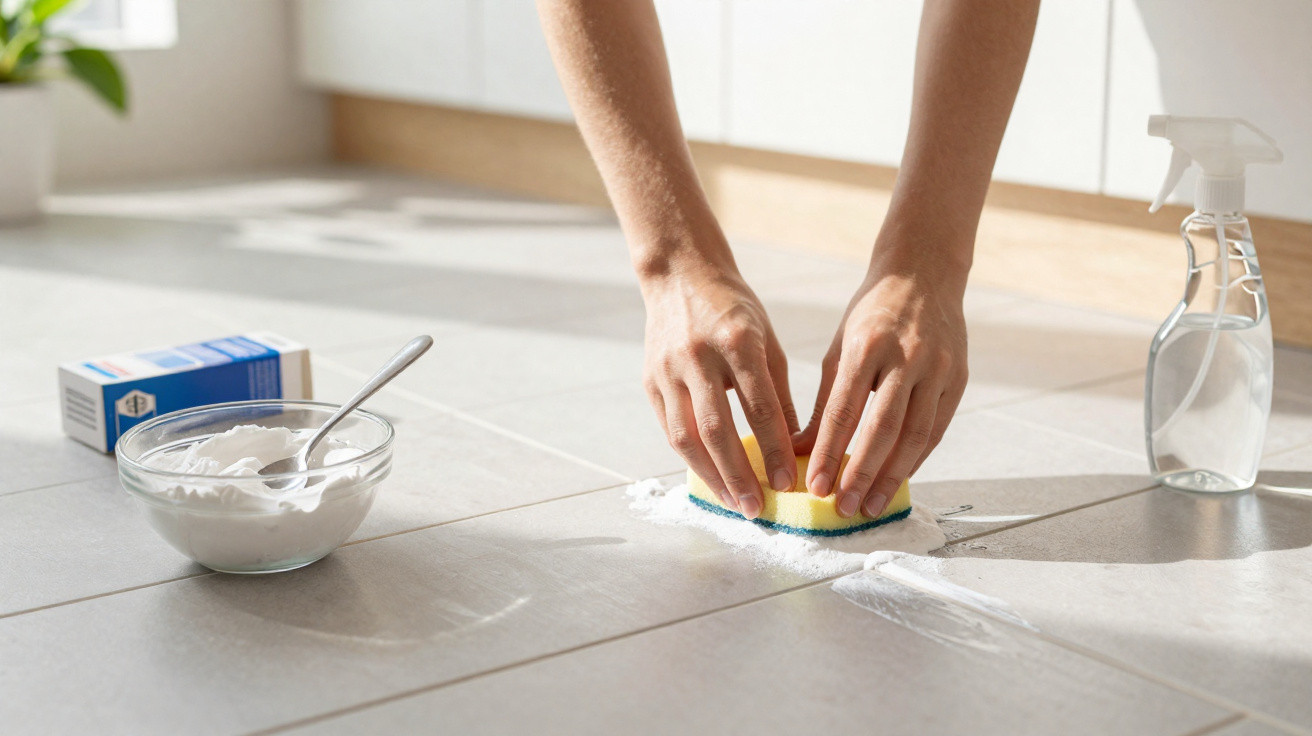
The easiest method is to mix bicarbonate of soda with just enough warm water to make a thick paste that can be applied easily to the grout. Spread it using an old toothbrush, a small household brush or even the back of a spoon in narrow areas. Leave it for five to ten minutes, without letting the paste dry completely hard. Then scrub with short movements and rinse with clean water using a well-wrung sponge. On lightly soiled grout, the improvement is almost instant.
For older marks, a few drops of washing-up liquid added to the paste can help loosen greasy film, especially between tiles on a splashback or near the hob. There is no need to empty half the cupboard beneath the sink: too much product leaves a coating that is difficult to rinse away. Let us be honest: nobody really does this every day. The right routine is usually a quick refresh as soon as the grout starts turning grey, before the job begins to feel like a major Sunday project.
White vinegar can also help with limescale, although it is not suitable for every surface. On natural stone, marble, travertine or some fragile grout, it is better avoided in favour of soapy water or a pH-neutral product. Always test a small area, especially if the tiling is old.
“Clean grout does not need to be whitened at all costs: it should regain its colour without being damaged.”
- Make a thick paste using bicarbonate of soda and warm water.
- Leave it for a few minutes, not for a full hour.
- Scrub gently with a soft brush.
- Rinse thoroughly to prevent powdery residue.
Small habits that stop grout turning grey again
Once the grout has been revived, the hardest part is simply keeping that clean look. After showering, quickly using a squeegee on the walls limits water marks and slows the formation of dark marks in corners. On the floor, an overly wet mop can sometimes leave behind more moisture than it removes. It is better to wring it out properly and air the room for a few minutes. These are not dramatic actions, but they prevent that “tired” bathroom appearance that can develop without warning.
In the kitchen, grout near the worktop deserves particular attention. Splashes of oil, sauce or coffee settle into the recesses and become sticky over time. A quick wipe with a sponge after preparing a meal is often enough to prevent the worst. Regular care is better than heavy-duty stripping, especially on older grout. Nobody wants to kneel for an hour with a toothbrush, and there is no need to when small marks are dealt with at the right time.
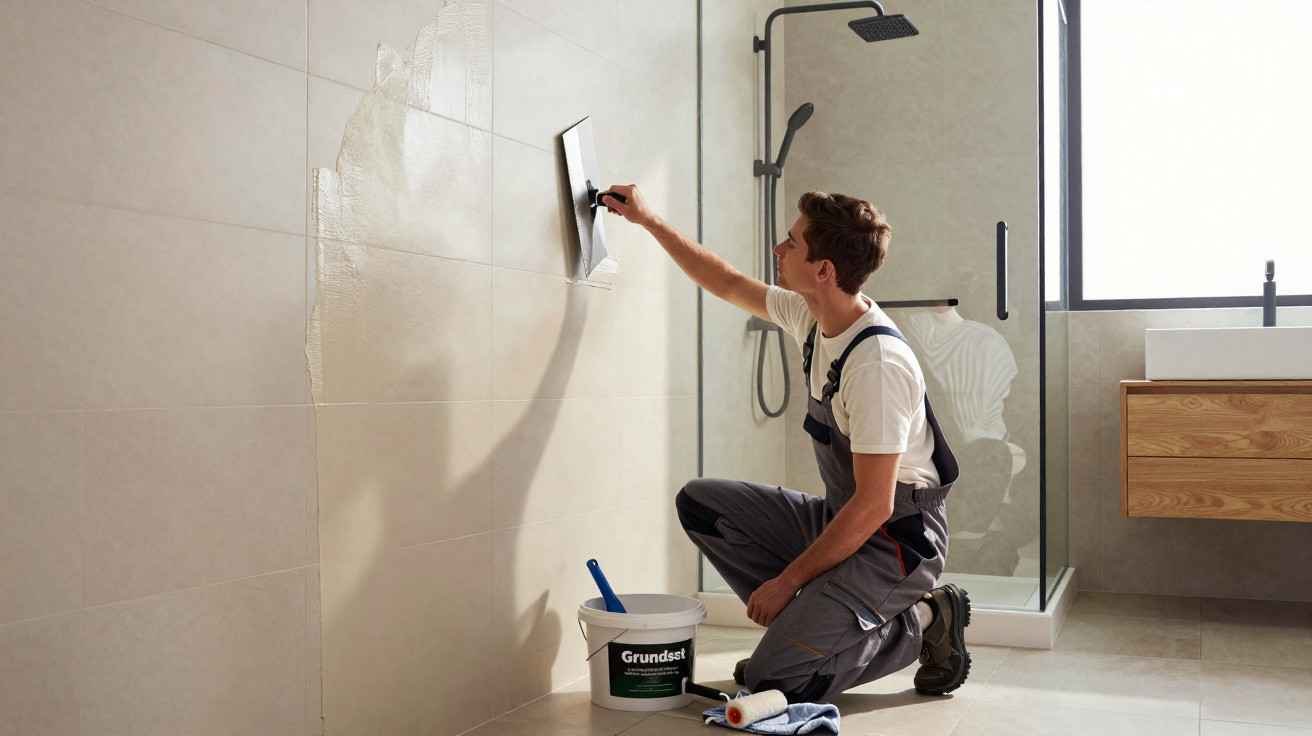
There is also a limit worth accepting: if grout crumbles, becomes hollowed out or remains black despite several cleans, it may no longer need a miracle product but a repair. Damaged grout allows moisture to get behind the tiles, potentially causing damage that costs more than a simple touch-up. In that case, removing the friable section and regrouting the area is often the wiser option. The bicarbonate of soda trick works brilliantly on dirt; it cannot replace a material that has genuinely reached the end of its life.
| Key point | Detail | Benefit for the reader |
|---|---|---|
| Bicarbonate paste | Bicarbonate of soda and warm water, applied for 5 to 10 minutes | An accessible solution for quickly reviving dull grout |
| Gentle brushing | Use a soft brush or an old toothbrush | Prevents damage to grout while lifting deposits |
| Light maintenance | Ventilation, a squeegee and a sponge after splashes | Reduces the need for intensive cleaning |












Comments
No comments yet. Be the first to comment!
Leave a Comment