Heat, dry air and unused plumbing quickly upset the balance in household drains. Unpleasant smells can then emerge, sometimes alongside rising damp or gases. One straightforward trick helps prevent this, without harsh chemicals or tools.
Why your sink smells after a few weeks
The cause lies beneath the plughole: the trap. Its bend holds a small pool of water known as the water seal. This liquid barrier stops sewer gases and odorous particles from coming back up. During summer, water evaporates faster. In a dry flat at 28–32 °C, the water seal can dry out within two to three weeks. Powerful mechanical extract ventilation or draughts increase water loss further through a drawing effect.
As the water seal gets lower, airflow from the pipework becomes dominant. Smells can travel upwards, sometimes accompanied by a faint whistling sound or “gurgling” when a toilet is flushed elsewhere in the home. Domestic traps usually provide a water seal of around 50 mm. Once that depth has gone, there is no longer any odour barrier.
Aim before leaving: prevent evaporation and retain at least 50 mm of water seal in every trap.
Signs that the water seal has evaporated
- A smell of eggs, cellar damp or sewer gas near the sink or shower.
- Suction noises in the pipes when another appliance drains.
- Small flies gathering around the plughole, particularly in the kitchen.
The clever, low-cost glass and paper method
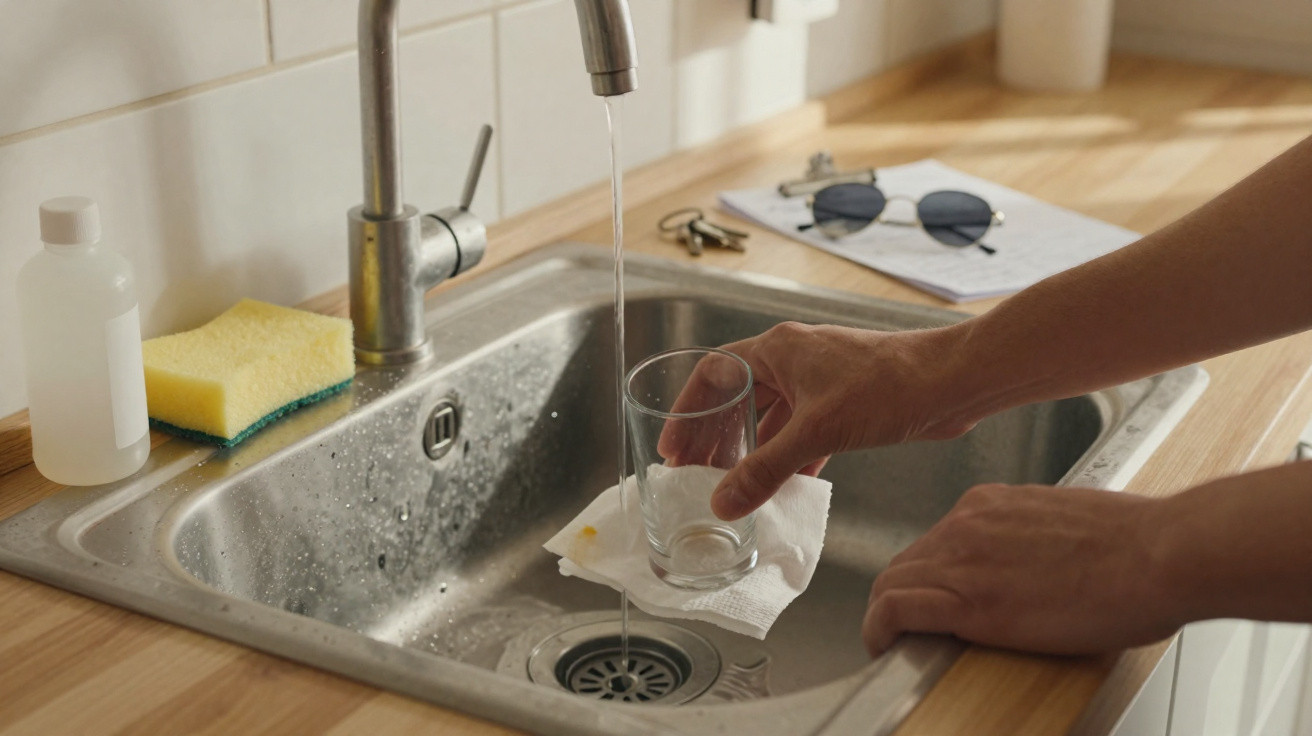
This is a physical barrier that effectively places the sink under a cover. Before you leave, dampen a sheet of kitchen roll, lay it over the plughole and turn a glass upside down on top. The wet paper sticks in place and restricts air exchange. The enclosed air beneath the glass quickly becomes saturated with water vapour, greatly slowing evaporation from the trap.
This arrangement costs nothing, takes a second to remove and does not damage the plughole. It works for kitchen sinks, bathroom basins and bidets. For showers with a grate, an upside-down bowl or small washing-up bowl works just as well.
Two minutes of preparation, no products, and reduced evaporation for 2 to 4 weeks depending on the ambient temperature.
Step-by-step instructions
- Refill the trap: run warm water for 10 to 20 seconds to restore the water seal.
- Clean the plughole: remove debris and grease that could ferment while you are away.
- Dampen a sheet of kitchen roll and place it flat over the opening.
- Put a clean glass upside down over the paper. Make sure it is stable.
- Do the same at every water outlet: kitchen sink, basin, shower, bath and overflows included.
How the method actually works
It affects convection and the humidity gradient. By limiting airflow around the plughole, fewer water molecules from the trap escape into the atmosphere. The air beneath the glass becomes saturated, reducing the vapour pressure that drives evaporation. The water seal therefore stays at the right depth for longer, even in very hot weather.
Other quick jobs before locking the door
For a lengthy absence or particularly dry rooms, combine the “cover” with other easy measures. Some steps extend the protection with little effort, while others freshen the inside of the pipework.
- Add one tablespoon of oil to the plughole: it floats on the water and reduces evaporation underneath.
- For longer periods away, use mineral oil or glycerine: these liquids are less likely to turn rancid than vegetable oils.
- Rinse with white vinegar the day before: use 200 ml per sink, leave it to work, then add a small flow of hot water. Never mix it with bleach.
- Clean the plughole basket and seal: organic matter at the surface is the most common source of odours.
- Leave the dishwasher and washing-machine doors slightly ajar: this slows mould growth in the seals.
- Do not overlook basin and sink overflows: an upside-down cup can protect these too.
- Fit silicone caps to rarely used plugholes: useful in second homes.
| Method | How to apply it | Estimated protection | Caution |
|---|---|---|---|
| Glass + damp paper | 2 min per plughole | 2 to 4 weeks | Keep the glass stable and avoid knocks |
| Tablespoon of vegetable oil | Pour in after running water | 3 to 6 weeks | Risk of rancid smells after 6–8 weeks |
| Mineral oil/glycerine | 1 to 2 tablespoons | Up to 2 months | Use food-grade products |
| Silicone cap/cling film | Place directly over the dry plughole | Several weeks | Remember to remove it before use |
| Trap primer | Installed by a plumber | Long-lasting | Installation cost |
What to avoid
- Mixing vinegar and bleach: this releases dangerous gases.
- Pouring in “powerful” caustic products before a long trip: they sit in the pipes and can damage seals and metals.
- Leaving food or soap residue in the plughole: fermentation is inevitable.
- Forgetting floor traps in the garage, utility room or walk-in shower: they are ideal entry points for smells.
Treating every drain in the home, including those that are hardly ever used, prevents a single source of odour from undoing all the effort.
How much water really evaporates during summer
Here is a useful estimate: a trap often holds 150 to 300 ml of water and has a water seal of roughly 50 mm. In a room at 30 °C with 40% humidity, 5 to 10 ml may evaporate each day, depending on local ventilation. Over 15 days, that amounts to a loss of 75 to 150 ml, enough to remove the barrier. A “cover” combined with a thin oil layer reduces this loss several-fold.
Adapting the method to your home
Kitchen sink: this is the most common source of smells because grease tends to cling there. Clean the plughole, then use the glass-and-paper arrangement. Add one tablespoon of oil if you will be away for more than three weeks.
Basin and bath: pay attention to overflows. A syringe of water with a little vinegar added can fill this channel before placing a cup over the main opening.
Channel-drain shower: place a bowl or lightweight washing-up bowl over the grate, with damp paper underneath. Check that no programmed drainage, such as a water softener or appliance drain cycle, will occur while you are away.
If smells remain when you return
- Run 2 litres of very hot water through every sink and shower.
- Pour in 200 ml of white vinegar, leave it for 30 minutes, then rinse.
- Unscrew and clean the trap if access has been designed for this.
- Check the primary venting: a house without vented soil stacks can develop negative pressure and lose its trap seals.
When to call a professional
Persistent smells despite a full water seal, repeated suction noises, water backing up into a shower when the washing machine starts draining, or a trap that empties itself can all indicate an incorrect pipe gradient, a deep blockage or missing stack ventilation. A professional assessment avoids repeated makeshift fixes and provides a lasting solution for the drainage system.
Useful preparations for your next trip
Do a “dress rehearsal” the day before: fill the traps, position the glasses, check the overflows and switch off appliances that drain automatically, such as lifting pumps and dehumidifiers. Make a note of the date. When you return, remove the protections, run water for 30 seconds and air the rooms for 10 minutes.
A neighbour can visit once a week and run water at every outlet for 10 seconds. This simple check is enough to maintain the water seal. In very hot homes, leaving a container of water in the room keeps the air more humid, which slows evaporation from the traps.









Comments
No comments yet. Be the first to comment!
Leave a Comment