The estate agent’s heels made a quiet tapping sound across the boards as she said, almost with reverence, “These are original oak, hand-finished. The owners only use a natural cleaner imported from Italy.”
The buyer immediately brightened. Natural. Italian. Exclusive. It sounded like a wellness treatment for flooring: a luxury ritual packaged in a spray bottle.
But stay for another ten minutes and a less polished picture would emerge. A fine white film gathering by the windows. A lifeless area beneath the bar stools. The housekeeper scrubbing ever harder while the “natural” cleaner claimed to “nourish” the timber and “protect the investment.”
That costly, all-green, ultra-stylish wood floor cleaner was gradually reversing everything its owners believed they were protecting. One spray at a time.
Why rich people’s “natural” wood cleaner is secretly ruining their floors
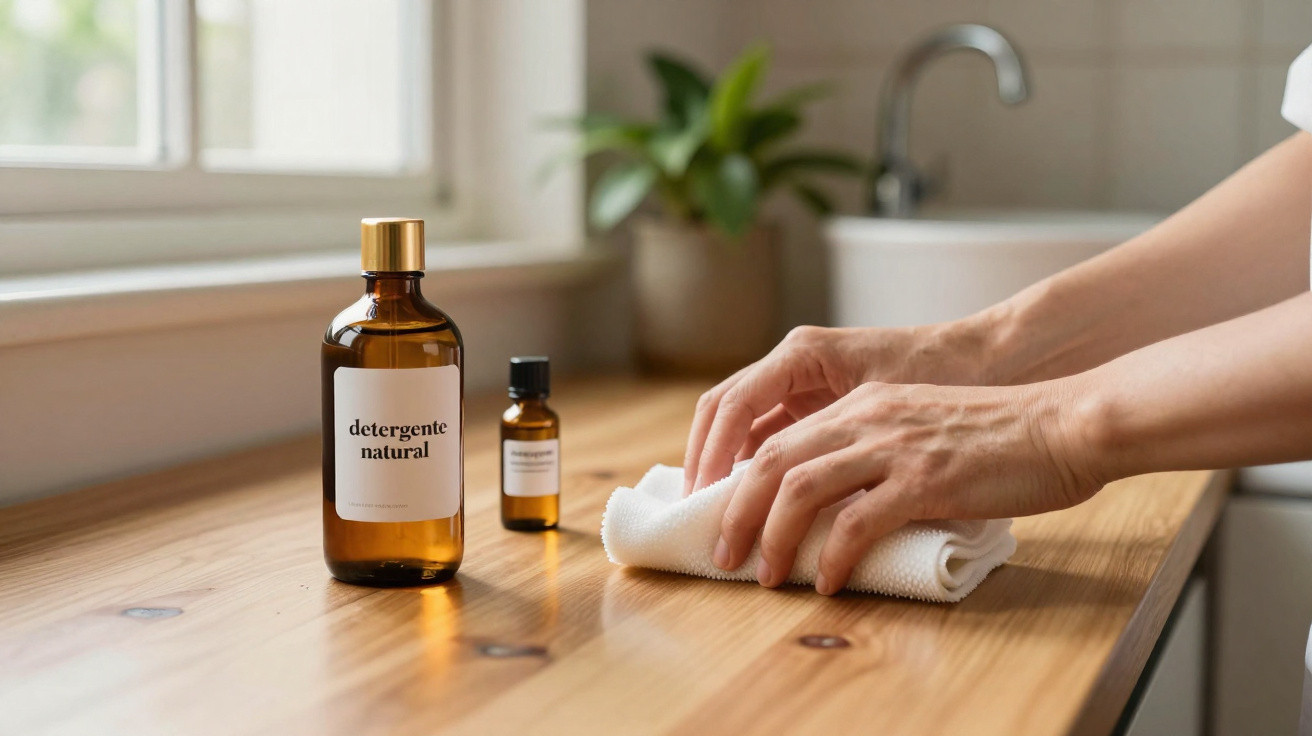
Frosted glass, a muted beige label, phrases such as “botanical blend” and “artisan care for fine woods”. It sits beneath the sink beside linen-fragranced washing-up liquid and £40 hand cream. Its message is tempting: a mild, plant-based elixir that treats your boards like a spa would.
At first glance, the flooring appears perfectly fine. There is a faint citrus-and-rosemary fragrance in the room. The bottle promises pH-balanced, non-toxic, child-safe and pet-friendly care. Its branding quietly suggests that you are different: a considerate homeowner who treats timber as though it were skin.
However, each week, the product deposits something the advertising never discusses. A subtle, unseen coating steadily forms between your feet and the floor’s finish.
Speak to any floor refinisher working in affluent areas and you will hear the same account. A concerned owner rings about “premium European oak” that has suddenly become hazy, streaked and worn-looking. They insist they have done everything “right”: no steam mops, no bleach, only the premium product from the interiors boutique that the showroom recommended.
The specialist then gets down beside the floor, runs a finger along the grain and finds it: the faintly sticky layer created by oils, soaps or wax-like “natural” additives that never properly leave the surface.
With time, this residue catches dust like Velcro. It traps fine scratches, yellows in sunlight and becomes matt where the surface ought to have a satin sheen. The wealthy, conscientious owner assumes the floor is “aging”, or that the timber “just does that”. In truth, neither the oak nor its finish is to blame. The problem is a long-running attachment to a cleaner that nourishes too much and cleans too little.
What is really behind that glossy “green” label
Most people take “natural” to mean safe, pure and harmless. When it comes to timber floors, it can often mean the reverse. Many high-end natural cleaners rely on soaps, oils or plant waxes. They are promoted as products that “feed the wood”, a reassuring, almost maternal idea. Yet a modern floor is not an untreated salad bowl. It is a finished surface with delicate chemical requirements.
The key point that glossy brochures rarely spell out is this: you are not washing the timber itself. You are cleaning the protective finish above it - polyurethane, oil-based varnish, hardwax oil or factory-applied coatings. These finishes are made to remain sealed and stable. They do not require feeding. When a cleaner introduces oily or soapy components, they remain on top of the finish instead of bonding to it.
Each pass of the mop leaves a microscopic layer behind. Initially, it produces the “rich glow” so popular on Instagram. Then the drawbacks begin to appear. Residue becomes uneven around busy areas. It can make stairs as slippery as an ice rink. In kitchens, cooking vapours cling to it, creating a greasy veil.
The surface then becomes more difficult to clean, prompting people to apply even more product. The cycle continues. The finish underneath is effectively smothered, resulting in the familiar question: “Why do my expensive floors look dirty even when I’ve just cleaned them?”
How to clean wood floors like a professional without slowly damaging them
The professionals who restore these floors usually rely on unexciting products in plain bottles. There is no elegant typography or eucalyptus woodland on the packaging. Instead, they use a basic pH-neutral cleaner formulated for finished wood and diluted with water. Two ingredients rather than twelve. No oils, soaps or shine-enhancing “polymers”.
The technique is almost underwhelmingly simple. Vacuum or sweep before anything else. Combine the cleaner with cool water in a bucket or spray bottle. Dampen a microfibre mop lightly - it should be barely moist, never dripping - then mop in the direction of the boards.
The important part is what you avoid doing. Do not soak the floor. Do not pursue a mirror-like gloss immediately after mopping. Do not repeatedly spray one area simply to make it smell “cleaner”. Allow the surface to dry by itself within a few minutes.
For floors carrying a heavy, sticky coating, a one-off deep clean might be necessary: use a stronger, but still finish-safe, product and plenty of clean microfibre pads. Replace the pads frequently so that you remove the residue rather than merely spreading it elsewhere.
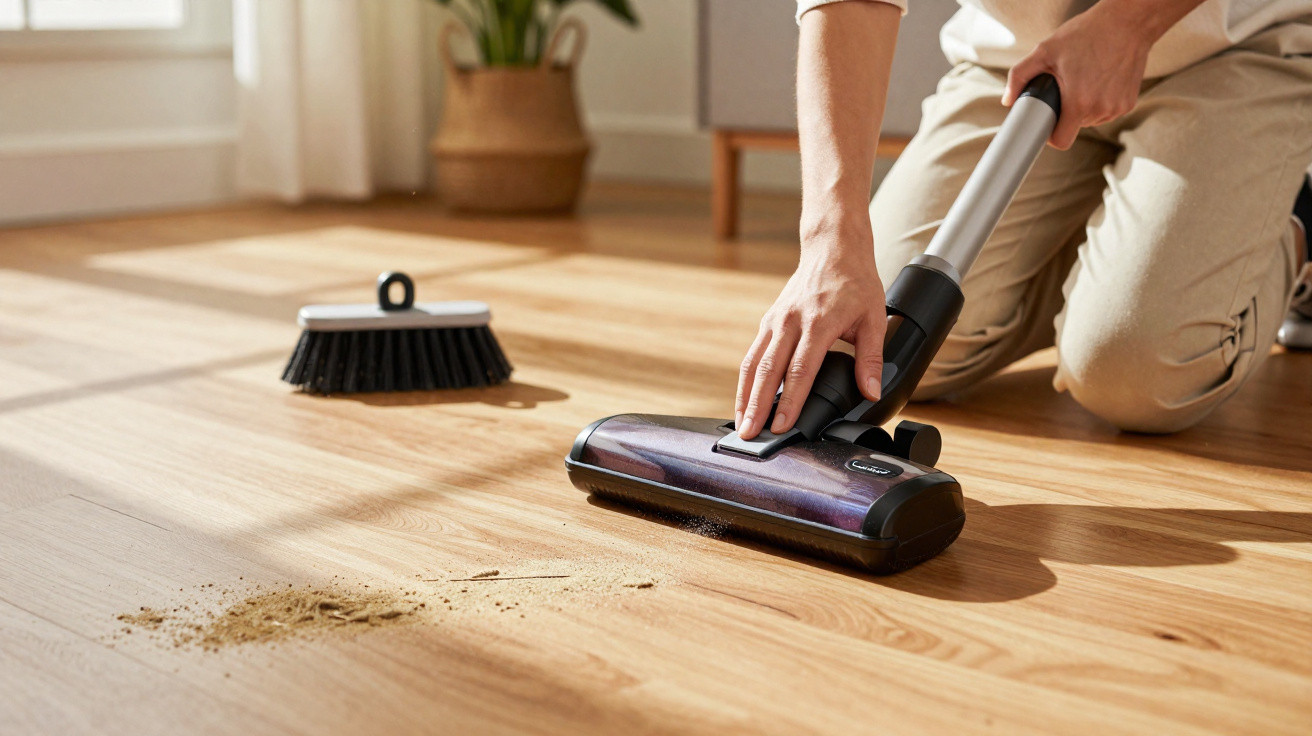
For everyday care, the least glamorous approach is usually the most effective. Vacuum more regularly with a soft-brush attachment and mop less frequently. Concentrate on dust and grit, which are the true enemies of a floor finish. As for that expensive “nurturing” spray bought from the concept shop, try it on a test board in the garage rather than across the whole sitting room.
Luxury natural cleaners contain a subtle emotional snare. They are not only selling cleaning products; they are selling virtue. You are not merely wiping the floor, but showing care, environmental awareness and a commitment to doing the “right” thing for your home. It appeals to the same part of the mind as organic food shopping and small-batch coffee. Using it makes you feel like a better person.
That is why it becomes so irritating when the flooring begins to look worse. You are doing “everything right”, paying more and studying every label. Then the finish starts to turn hazy or peel, and the refinisher bluntly explains that your cherished cleaner is the cause.
On a personal level, it can feel like a betrayal. You were trying to choose something gentle, only to cause gradual damage. We rarely acknowledge the quiet embarrassment of discovering that our supposedly “good choices” have backfired in our own homes.
Psychologically, many of us treat “natural” as synonymous with “forgiving”. We assume that a plant-based cleaner will be gentler, even when we use too much of it too often. Wealthy homeowners can be especially susceptible to this pattern: when a floor appears dull, they simply purchase a more premium answer. More artisanal, more organic, more exclusive.
Let us be honest: nobody truly does this every day - reads labels like a chemist, tests small sections and monitors residue over several months. We choose what feels right and what looks attractive on the worktop.
“Modern wood finishes are like a good raincoat,” explains one veteran floor contractor I spoke to. “Your job isn’t to moisturize the raincoat. Your job is not to pour salad dressing on it.”
That observation stayed with me because it is amusing, but also because it clears away the haze created by branding. The goal is not to “feed” or “hydrate” timber every week. It is to keep abrasive grit away from the finish and prevent fresh layers accumulating on top. Viewed this way, the entire cleaning routine becomes unexpectedly easier.
There is no need to pursue an endless ritual of shine. You simply need consistent habits and a cleaner that does not try to act like a skincare serum for floorboards.
- Choose a genuine pH-neutral wood floor cleaner - not soap, vinegar or oil blends.
- Vacuum or sweep more often than you mop; grit poses a greater risk than the occasional spill.
- Try every “natural” or luxury cleaner in an inconspicuous area and observe it for several weeks.
- Treat products promising shine, nourishment or “conditioning” with suspicion.
- If the floor becomes tacky or cloudy after cleaning, stop using the product at once.
The hidden cost of a beautiful bottle beneath the sink
A few years into home ownership, there is often a moment when you realise how many small choices have been shaping the house. The candles burned close to curtains. The habit of leaving windows slightly open in winter. The mop chosen after a spill. None seems significant on its own, but together they determine whether a space ages gracefully or otherwise.
Floor cleaners belong firmly in this unseen group of decisions. The rich, the nearly rich and those who “just wanted something nice from the boutique” can all make the same mistake: they regard the floor as a lifestyle accessory rather than a technical surface. The packaging flatters, the wording entices and the fragrance reassures. So the spraying continues - and the floors quietly absorb the cost.
What makes the issue surprisingly universal is that you do not need a mansion to be caught out by a poor “natural” cleaner. The same residue capable of ruining a £60,000 parquet floor can haze the laminate in a rented flat or the engineered oak in a small apartment. Chemistry does not care about income. It only reacts to what is applied, week after week.
A simpler routine rarely feels glamorous. There are no imported essences or poetic tales of Tuscan groves. Only a neutral cleaner, a decent vacuum and a mop that is not saturated with water. Still, this quiet and slightly dull discipline gives floors the kind of ageing that money cannot imitate: the slow, honest patina of a surface that has been lived on rather than smothered in “care”.
Often, that is the most luxurious quality a home can have: not what you add to it, but what you stop doing to it.
| Key point | Detail | Why it matters to the reader |
|---|---|---|
| Residue from “natural” cleaners | Oils, soaps and waxes leave a sticky film on the finish | Explains why floors can appear dull or feel sticky despite being cleaned |
| What modern finishes really need | Finishes do not need to be “nourished”; they only need gentle cleaning | Helps avoid marketing-led products that cause long-term damage |
| A simple professional routine | Vacuum + pH-neutral cleaner + a lightly damp microfibre mop | Provides a durable, economical and floor-friendly method |












Comments
No comments yet. Be the first to comment!
Leave a Comment