The cupboard door bangs closed, and you could have sworn something toppled over behind it.
There it goes again: the soft clatter of plastic bottles bumping together, with bleach and lemon cleaner creating that unmistakable under-sink-chaos scent. You squat down and open the door to find spray bottles on their sides, half-used sponges and a lone dishwasher tablet rolling about as though it is on a break.
Shift one item and three more tumble down. Cleaning spray has seeped on to the wooden cabinet base. A cloth you assumed had disappeared last year suddenly turns up. It is a small cupboard, but somehow it still swallows absolutely everything.
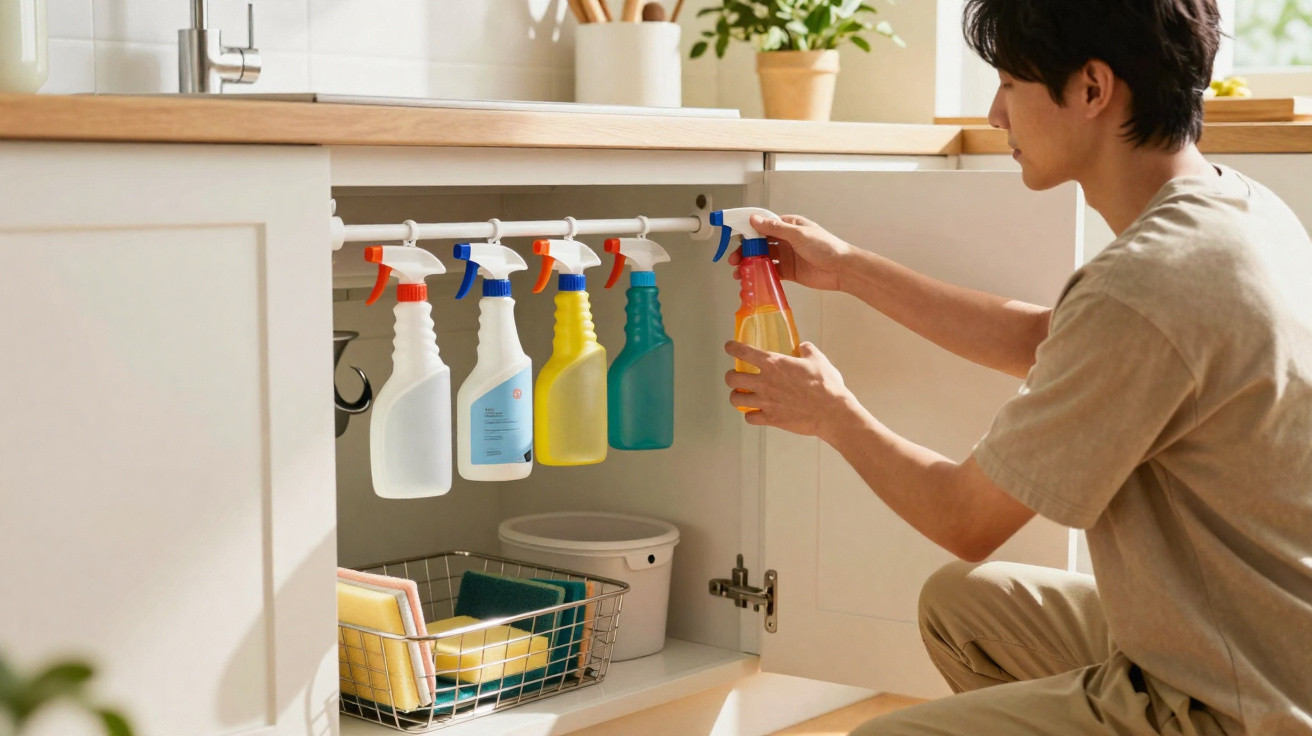
Then, while browsing a home forum, you spot it: a photograph of a basic tension rod fitted across a cabinet, with bottles neatly suspended from their triggers and a clear, peaceful floor beneath. One inexpensive bar completely transforms the scene.
That is the understated brilliance of an extra rail you never realised you could use.
The under-sink clutter we all pretend not to notice
Open ten kitchen cupboards beneath the sink at random and you will likely see a familiar picture: mess, wasted vertical space and a small measure of guilt. We drop things in there “just for now”, then quickly shut the door. If it closes, that means it is tidy, doesn’t it?
The problem is not necessarily owning too many cleaning products. It is the awkward shape of the space. Pipework takes up the centre, the cabinet base can be a little damp, and all that height above goes unused. As a result, everything gets piled on the bottom like a lost-property box.
Viewed that way, the tension rod idea feels less like a novelty and more like the piece that was missing.
On a suburban road in Leeds, a young couple tested the idea one Sunday afternoon. They picked up an inexpensive white tension rod from the bathroom aisle, fairly sure it would drop down within a day. Within five minutes, though, every spray bottle they owned was hanging in an orderly line, resembling a miniature cleaning army.
They snapped a photograph, shared it online and thought no more of it. Quietly, the post collected thousands of likes. The response came from people in compact city flats, large family houses and student homes. Their circumstances differed, but the under-sink issue was the same.
One reply was especially memorable. A woman living in a studio flat said that clearing that small area of cupboard floor finally gave her room for her recycling caddy, rather than having to trip over it in the hallway each morning. A €6 rod had altered how she moved around her own home.
There is something almost cunning about this solution. A tension rod is simply a spring-loaded bar, like one normally used to hold up a shower curtain. There is nothing ground-breaking about it. Put it under the sink, however, and it becomes a second tier: a small mezzanine for cleaning bottles.
Suspending spray bottles from their triggers lifts them into the unused upper half of the cupboard. This immediately leaves the base available for heavier products or anything likely to leak. Rather than knocking everything over, gravity starts working in your favour.
It is calming to look at, too. Opening the cupboard to see bottles arranged in a line tells your brain “order”, rather than “dumping ground”. You can locate what you want more quickly. You are less likely to buy duplicates “just in case”. Gradually, that overlooked area begins to feel like part of the kitchen once more, rather than an embarrassing corner you choose to ignore.
How to install a tension rod under the sink without creating more mess
The appeal of the tension rod trick is that, provided you do not make it overly complicated, it takes under ten minutes. First, empty the cupboard entirely. That means every spray bottle, old cloth and mysterious object you cannot even recall purchasing.
Give the cabinet base a quick wipe. It does not need a thorough deep clean; the aim is simply to refresh the area. Next, take your tension rod and extend it inside the cupboard, positioning it just below the sink bowl or a little lower. Twist it until it is firmly wedged between the side panels. It needs to be level, with no dip in the middle.
Now for the rewarding bit: hang each spray bottle over the rod by its trigger. Add heavier cleaning sprays, glass cleaner and disinfectant. As the cupboard floor appears beneath them, little by little, you can suddenly see the cabinet base itself. That alone can feel surprisingly luxurious.
This is where people often overdo it and become disappointed. They attempt to suspend everything, including huge bleach containers and bottles with awkward shapes. The rod begins to bend or even slide down, and the whole method appears to have failed.
Take a breath. The rod does not need to be a superhero; it is simply a practical rail. Hang products with suitable triggers that you use regularly. Think multi-surface cleaner, bathroom spray, glass cleaner and perhaps degreaser. Larger, weightier bottles are more secure on the cupboard floor.
Should the rod slip, tighten it with another twist or raise it a few millimetres until you find a point where the cabinet sides are completely parallel. If you have a particularly wide cupboard, opt for a thicker and sturdier rod. Let’s be honest: nobody wants to keep fixing a flimsy rod after it has fallen down twice.
There is an emotional aspect to this small home hack that does not always get mentioned.
“I thought it was just about storage,” a reader told me. “But when I opened that cupboard and didn’t feel embarrassed for the first time in years, I realised it was about control. About not living in a house that constantly felt ‘temporary’.”
One uncomplicated extra rail can make room not just for bottles, but for a little mental breathing space. Practically speaking, it also allows you to organise storage in layers that suit your actual routine, rather than some flawless Pinterest ideal.
- Hang: commonly used trigger spray bottles.
- Floor: bulk products, refills, heavier containers and a shallow basket for sponges.
- Sides/door: small hooks or pockets for gloves, cloths and dishwasher tablets.
On a difficult day, an organised under-sink cupboard will not put the world right. Still, it can offer a quiet reminder that some parts of life really are under control.
How a small tension rod can change the feel of your whole kitchen
When we picture a kitchen transformation, we often imagine major work: replacement cupboards, new worktops or retiled walls. But the day-to-day feeling of a room is more often shaped by small, nearly invisible adjustments. A concealed rail beneath the sink is hardly glamorous, yet you notice its benefits every time you clean up a spill or rinse a plate.
Once the bottles are suspended, something changes. You no longer dread opening that cupboard. Children can clearly identify where safe products belong and which items are off-limits. Guests searching for bin bags are not confronted with a muddle of bottles and damp cloths. The cabinet stops functioning as a black hole and becomes a useful system you understand.
On a quiet evening, as you wipe the worktop and reach under the sink for spray cleaner, you are met with a tidy arrangement rather than a pile of clutter. That feeling can spread elsewhere. You start viewing the difficult area above the fridge, the hallway corner and the back of the bathroom door in a different way.
Perhaps you will send a photograph of your under-sink setup to a friend who always says they do not have enough storage. They may try it themselves, or perhaps improve on it. That is how these ideas spread: from one weary, slightly overwhelmed household to another. No dramatic reveal or television makeover is needed. Just a rod, a few bottles and the quiet satisfaction of opening a door to order rather than chaos.
| Key point | Detail | Benefit for the reader |
|---|---|---|
| Create a suspended rail | Use a tension rod beneath the sink to hang spray bottles from their triggers | Immediately frees cupboard-floor space without tools or renovation work |
| Use wasted height | Turn the unused upper area into a functional storage level | Increases storage capacity in a frequently overlooked space |
| Simplify the routine | Keep the most-used products visible and within reach in one movement | Saves time, reduces visual clutter and eases everyday stress |













Comments
No comments yet. Be the first to comment!
Leave a Comment