The sound is subtle, yet it stings: a glass or toy being dragged across the wooden table in the living room.
Then comes the scratch, fine and pale, right where the morning light hits hardest. You run your hand over it, trying to “smooth it out” as though your finger could erase the damage. It cannot. It remains there, reminding you of haste, carelessness and everyday life rushing over even the furniture you love most.
We have all been there: the moment you notice that the sideboard inherited from your grandmother has acquired another little mark. It is small, but persistent. You do a quick Google search and find remedies involving countless products, mixtures, sandpaper and professional varnishes. You close your phone and think: “I’m not doing any of that today”. Let us be honest: nobody does that every day. Yet there is an unexpected shortcut in your kitchen that can change the situation.
A product you probably have at home right now can help disguise light scratches in wood within a few minutes.
The quiet frustration of scratches in wood
You only notice the scratch when the light catches it from the side. In the morning, sunlight comes through the window, glides across the living-room table and there it is: a pale line, almost like a cat scratch. Viewed head-on, nobody sees it. From the side, though, it looks like a spotlight trained on the flaw. The wood that looked smooth yesterday suddenly seems worn out today. So you start moving objects around, pulling a vase forwards and shifting a photo frame sideways, attempting to hide the damage rather than deal with it.
At Ana’s home in Campinas, this became routine. She has a dark wooden dining table that her mother gave her as a wedding present. Between the children’s online lessons, working from home and rushed meals, the table became everything: an office, a classroom and a place to set down shopping bags. One day after lunch, she noticed a trail of pale scratches where her son dragged his plate every day. It was not a refurbishment disaster; it was simply everyday use. Still, it hurt as if it were.
A quick look through interior-design groups shows just how widespread this annoyance is. There are people renting furnished flats and trying to look after furniture that is not even theirs. There are couples who bought a solid-wood media unit in 10 instalments, only for it to gain marks from remote controls, toys and glass tumblers. Wood is alive: it reacts, wears down and tells stories. Yet there is a very fine line between the appealing story of a well-used piece and furniture that looks neglected. It is in that space that household tricks and little fixes come in, making everything look more presentable even without professional restoration.
The unexpected product: toothpaste on wood?
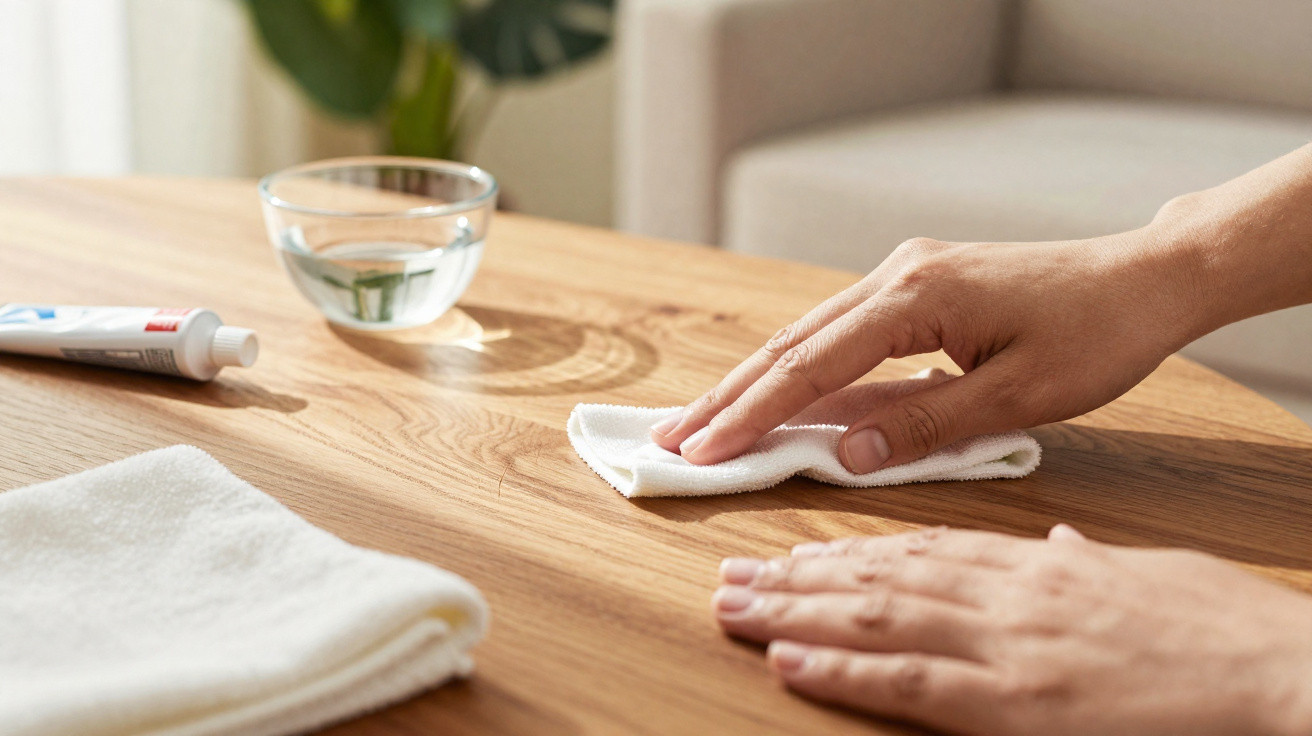
Yes, the “unlikely hero” here is toothpaste. The same stuff in a tube that you use twice a day without thinking much about it. The reasoning is straightforward: provided it is white and contains no exfoliating microbeads, toothpaste has a mild polishing effect and can visually fill the mark. On superficial scratches, particularly on varnished or glossy-finished wood, it may soften the appearance of the damage and restore a little lost shine. It is not a structural miracle, but it can make a visible difference.
The method is almost ridiculously simple. First, clean the area thoroughly with a slightly damp cloth, removing dust and grease. Then dry it. Next comes the trick: place a tiny drop of white toothpaste on a soft cloth or polishing cloth and gently rub it over the scratch in circular motions, without using brute force. Around 20 to 30 seconds is enough. Afterwards, remove any excess with another clean, dry cloth, always following the wood grain. The scratch will not disappear from existence, but it will often become far less obvious.
There is no magic involved; it is physics and optical illusion. The toothpaste fills microscopic grooves, helps distribute light more evenly and, in some cases, removes a little embedded dirt from the edges of the scratch. The visual change tends to be more striking on darker woods because the contrast of the pale mark is reduced. On matt or highly porous surfaces, the result is usually very subtle. It works best as an emergency trick: a quick finishing touch for anyone wanting to make the house presentable before visitors arrive, without embarking on a refurbishment.
How to use toothpaste without damaging your wooden furniture
Before rubbing toothpaste over the entire table, the smartest move is to test it on a concealed section first. This could be behind the piece, on an inner side panel or in a corner nobody sees. Apply a tiny dab, rub gently, clean it off and observe carefully. If it has not stained the surface, removed varnish or altered the colour in an unwanted way, then it is worth trying on the scratch bothering you. It is much like doing a strand test before colouring all your hair.
When applying it, less is more. A pea-sized drop is generally enough for a short scratch. Choose plain white toothpaste, without vivid dyes or those little “exfoliating” beads that could create even more scratches. Do not use a toothbrush, abrasive sponge or rough cloth. Your ally is a soft cloth, such as cotton from an old T-shirt or a polishing cloth. Use short, circular motions and a light hand. If you feel the spot getting too warm, stop for a moment. Wood does not respond well to excessive friction.
The most common mistakes stem from overconfidence. Some people apply coloured toothpaste to pale wood and then complain about staining. Others decide to rub hard, believing that more pressure will make the scratch vanish more effectively. Instead, the varnish loses its shine, leaving a dull patch around the mark. Another pitfall is allowing toothpaste residue to remain in corners, where it later hardens and gathers dust. The unspoken rule is simple: apply it, rub lightly and remove everything. As a restorer I spoke with in São Paulo said:
“An internet trick does not replace restoration, but it helps buy time and gives furniture a more dignified appearance.”
- Always test on a hidden area: this prevents surprises on sensitive furniture.
- Use plain white toothpaste: this lowers the chance of unwanted staining.
- Keep movements light and short: this protects the varnish and original finish.
- Remove all excess: this prevents residue building up and attracting future dirt.
- Keep this trick for light scratches: deep scratches require a different kind of care.
When the toothpaste trick works better than expected
There is something curious about this kind of household solution. It is not only about the scratch on the table. It is about the feeling of regaining a little control in your own home. Rather than looking at that scratch every day and sighing, you take a cloth, some toothpaste and five minutes of attention, then make a small adjustment to the scene. Even if imperfect, it is still a gesture of care towards something that has been with you for years.
Of course, this does not replace proper professional polishing, reapplying varnish or complete restoration when the damage is extensive. However, most everyday scratches do not fall into that category. They come from a forgotten key, a dragged glass, a child’s toy or a heavy laptop. The toothpaste trick sits precisely between “I cannot bear looking at this any longer” and “I am not calling a restorer right now”. It offers visual relief and a quick recovery of the furniture’s appearance, without fuss or high cost.
Perhaps, after reading this, you will look differently at that little mark on the coffee table. Perhaps you will tell someone in an ordinary conversation that there is a quick way to soften scratches in wood using the most everyday product in the bathroom cabinet. And perhaps, on some morning while your coffee is still cooling in the cup, you will test the trick in a hidden corner and realise that not everything that appears “damaged” is beyond saving. At home, sometimes it is these small, quiet gestures that change how we see our own space.
| Key point | Detail | Value to the reader |
|---|---|---|
| Using toothpaste | White toothpaste without granules, applied with gentle movements | A quick, inexpensive way to soften light scratches |
| Testing on a hidden area | First application on an unseen part of the furniture | Reduces the risk of staining or damaging the finish |
| Limitations of the method | Works best on superficial scratches and intact varnish | Helps the reader set expectations and avoid disappointment |
FAQ:
- Question 1 Does it work on every type of wood? This technique tends to work best on furniture with a varnished or sealed finish. On bare, highly porous or rustic wood, the effect is usually subtle and there is a greater risk of staining.
- Question 2 Can I use gel or coloured toothpaste? It is not recommended. Ideally, use traditional white toothpaste without strong dyes or exfoliating microbeads to avoid stains and new scratches.
- Question 3 Does it fix deep scratches? No. Toothpaste helps disguise superficial scratches that affect the varnish more than the wood itself. Deep scratches require filler, colour touch-up and sometimes sanding and varnish.
- Question 4 How often can I repeat the process? If it is done with a light hand, there is no issue with repeating it from time to time. Frequent overdoing, with too much friction, may wear down the varnish over the years.
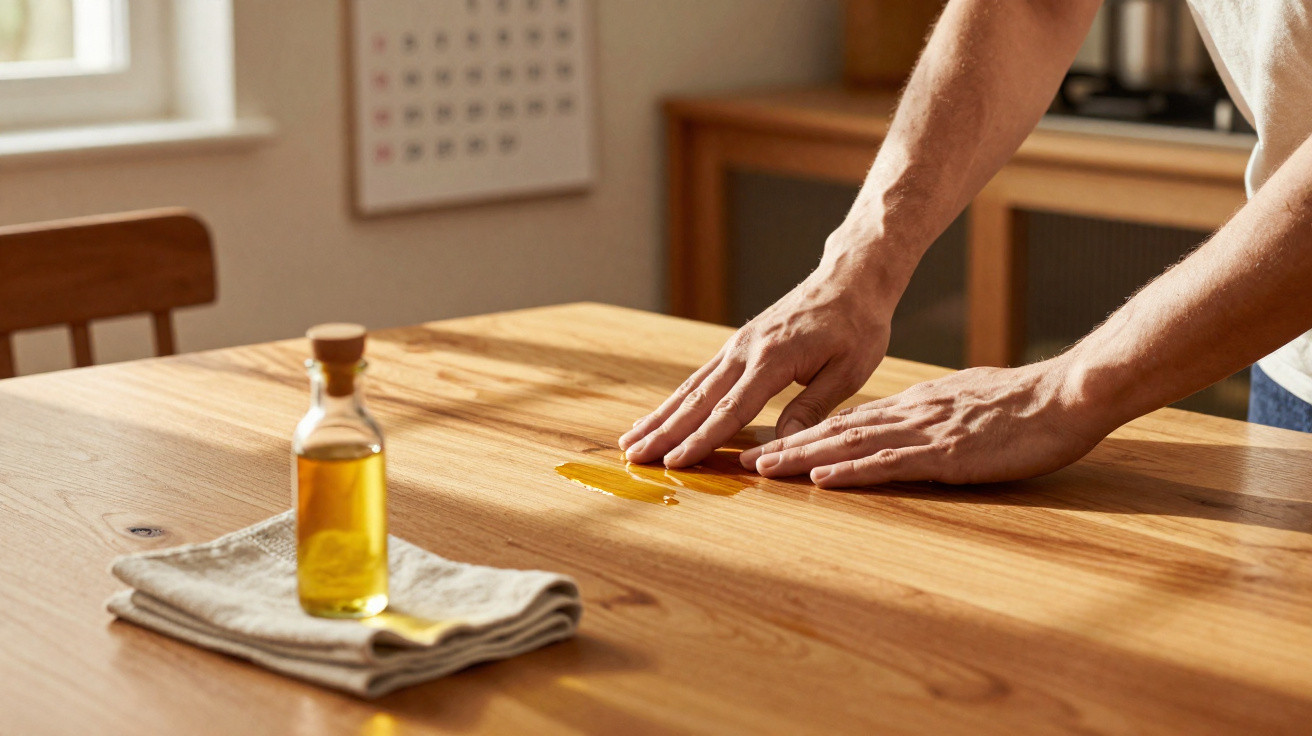
- Question 5 Can I use oil or wax after the toothpaste? You can, as long as the surface is thoroughly clean and free from toothpaste residue. A little hardwood oil or a wood-specific wax can help make the shine even more uniform.








Comments
No comments yet. Be the first to comment!
Leave a Comment