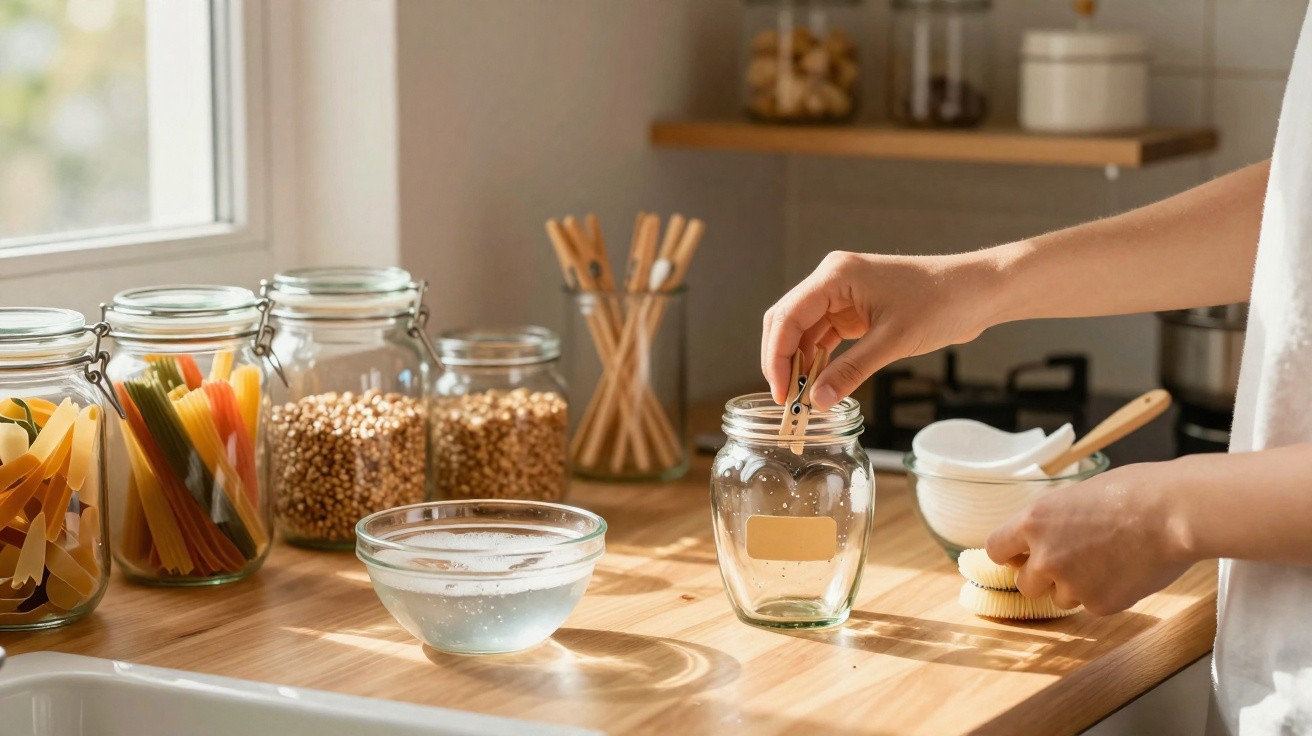
Glass jars from hearts of palm are sturdy, clear and ideally sized for organising various areas of the home. Rather than throwing them away, these containers can become practical items for the kitchen, bathroom and utility room, cutting waste and making everyday tasks easier at virtually no cost.
Why keep glass jars from hearts of palm?
Glass does not absorb odours as readily, is easy to wash and lets you see what is inside without removing the lid. These qualities make a hearts of palm jar suitable for storing small objects, dry ingredients and everyday products.
Its tall shape also makes good use of narrow spaces on shelves, in cupboards and on worktops. Once properly cleaned, the jar no longer looks like reused packaging and instead becomes an unobtrusive organiser for daily household routines.
How should you clean and prepare the jars before reusing them?
Before using them for anything, remove all food odours and take off the label completely. Doing so prevents stains, glue residue and smells from transferring to other items.
- Wash with water and washing-up liquid: scrub the glass and lid thoroughly.
- Soak the jar: warm water helps loosen the label and adhesive.
- Dry it fully: trapped moisture can create unpleasant odours.
- Inspect the lid: throw it away if it is rusty or misshapen.
- Personalise it if you wish: add a simple label to identify the contents.
What are the 3 ways to reuse them in the kitchen?
In the kitchen, the jars are particularly useful for arranging dry ingredients and small items that often end up scattered around. The key is to store only completely dry foods and keep the containers away from heat and damp.
- Store pulses, seeds, nuts, oats or short pasta.
- Keep tea bags, coffee filters or sealed seasonings in them.
- Set up a jar for everyday cutlery on the worktop.
- Turn one into a holder for cocktail sticks, string or pegs.
- Label stored food with its name and expiry date.
How can they be used in the bathroom and utility room?
In the bathroom, glass jars can hold cotton wool, cotton buds, hair ties, small brushes and bath salts. As this room is often humid, keep the lid on and avoid placing the jar where it will be splashed directly.
In the utility room, they are useful for sorting pegs, buttons, needles, screws, wall plugs and small cleaning accessories. If a jar is used for non-food items, label it clearly so that it is not later reused in the kitchen.
How do you choose the best idea for each room?
The most suitable reuse option depends on what creates the most clutter in your home. In the kitchen, glass makes ingredients easy to identify; in the bathroom, it keeps small items together; and in the laundry area, it separates pieces that can easily disappear into drawers and shelves.
For an attractive, practical result, choose jars of the same size whenever possible, keep the lids clean and avoid mixing purposes. A simple hearts of palm jar can then become an organiser, reduce waste and improve your household routine at no cost.








Comments
No comments yet. Be the first to comment!
Leave a Comment