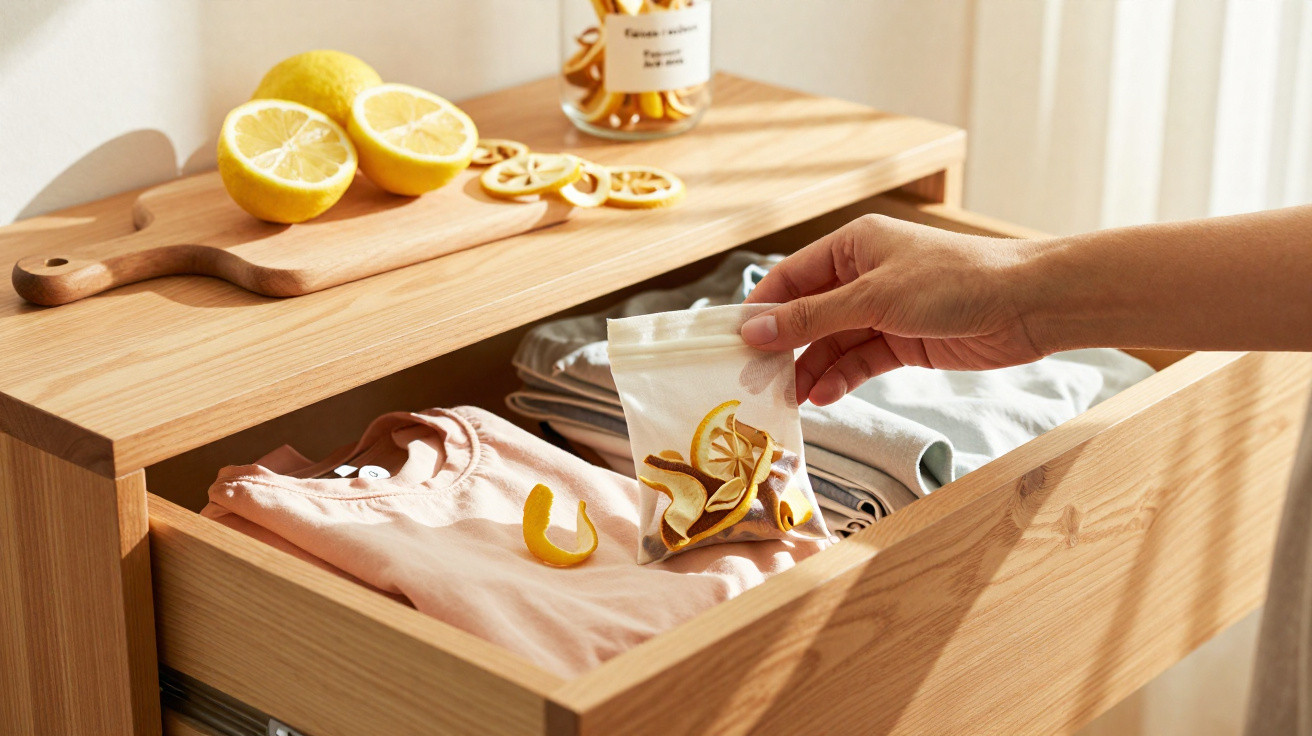
Many people keep dried lemon peel in drawers for a practical reason: this straightforward solution helps keep the space fresher, pleasantly scented and less appealing to insects, making use of essential oils that remain in the peel even once it has dried.
Why so many people use dried lemon peel in drawers
Dried lemon peel is placed in drawers to neutralise odours, provide a mild repellent effect and give the area a fresh feel. Its citrus fragrance is often linked with cleanliness, making it useful in drawers containing clothes, towels, tea towels and even documents.
The oils in the peel release a gentle scent that may deter certain insects, including ants and moths, making the area less attractive to them. To prevent marking and excess moisture, many people use small bags made from fine fabric or gauze, which also protect more delicate belongings.
How to prepare dried lemon peel correctly for use in drawers
For the peel to work effectively, wash the lemon under running water using a small brush, then dry it with a clean cloth. Next, remove the peel in thin strips, avoiding the white pith, as it takes longer to dry and may hold moisture, encouraging mould.
Spread the strips over a clean surface without overlapping them, then air-dry them or place them in a low oven until they are firm and brittle. Once they are completely dry to the touch and have a rigid texture, they can be kept in sealed jars in a dry place until needed.
Where to place lemon peel and how often to replace it
Putting small amounts of peel around the drawer distributes the fragrance more evenly than placing it all in one spot. Cotton, tulle or mesh bags allow the scent to circulate while preventing small pieces of peel from becoming mixed in with clothes or other fabrics.
Some particular places tend to benefit most from this simple household tip:
- Drawers for underwear, socks and T-shirts;
- Drawers containing tea towels and tablecloths;
- Wardrobe shelves, close to blankets and bed linen;
- Kitchen utensil drawers where odours build up;
- Small bags placed inside clean, dry shoes.
As a rule, the peel should be changed every 2 to 4 weeks, depending on how humid the surroundings are. Replace it when the citrus scent has almost completely faded or the peel becomes overly dark; in damp places, check it weekly and discard any piece that develops mould.
Other household uses for dried lemon peel
As well as being used in drawers, dried peel can scent areas around the home when placed in open bowls on shelves, sideboards and worktops. Combined with cloves or cinnamon sticks, it makes small fragrant sachets for living rooms, bathrooms and entrance halls, helping to soften odours without ready-made sprays.
It can also be steeped in white vinegar to make a cleaning solution with a light citrus scent, for use on floors and tiles after it has rested and been strained. In laundry baskets and near indoor bins, the peel can help with odour control, always alongside regular cleaning, ventilation and organisation.















Comments
No comments yet. Be the first to comment!
Leave a Comment