There is a very particular pang of guilt that arrives when you spot a new scratch on a wooden piece of furniture you genuinely love.
It may be the dining table you spent ages saving for, or the coffee table that has followed you since your first shared flat. One moment it is simply sitting there, minding its own business; the next, your keys, a toy car or somebody’s belt buckle has left a pale, glaring line across the top. Your heart drops. You begin searching for “refinishing”, “repair kits” and “is this ruined forever?”, while also wondering why a bit of wood matters so much to you.
Most of us have tried rubbing at the mark with a thumb, as though it were dirt that could be wiped away, before stepping back to find that absolutely nothing has changed. That is generally when visions of sanding, staining, varnishing and perhaps weeping over a table covered in a tarp in the lounge begin to form. But before any of that, there is a far smaller and rather odd thing to try. It is probably in your kitchen cupboard, perhaps in the fruit bowl, and it looks remarkably like something you would eat.
The day a bowl of walnuts rescued my table
When I first heard that a walnut could be rubbed over scratched wood, I laughed. It sounded like one of those online “hacks” involving toothpaste being applied to everything from phone screens to jewellery, followed by great surprise when it fails to transform anyone’s life. Yet one Saturday morning, while looking at a long mark on my oak coffee table left by a visiting nephew and his plastic dinosaur, I remembered it. Walnut. Rub. Fix it somehow?
I went into the kitchen and stood by the bowl of nuts, debating it with myself. One half of me was certain I would only leave the table oily and strange. The other half was sufficiently desperate to attempt anything that did not require power tools. So I cracked open a walnut, felt faintly silly, and rubbed the nut meat over the light scratch in the direction of the grain, exactly as some internet stranger had once advised. The table made no sound, the room suddenly seemed unusually solemn, and all I could hear was walnut moving softly over wood.
Initially, there was no visible change. But when I gently wiped away the surplus with my sleeve, the scratch simply… softened. Its hard white line became warmer and browner, blending into the surrounding timber. It had not vanished, nor had it been magically removed as if by CGI, but it was suddenly difficult to notice unless you crouched down and deliberately searched for it. I stepped away and felt that quiet, slightly absurd happiness that comes when a small thing, which mattered more than it ought to, works out in your favour.
The table remains in my lounge today. Whenever I walk past it, I remember that a walnut costing 20p achieved for that scratch what a £30 repair kit claimed it could do after three days. It made me realise that the most pleasing household “fixes” can be the ones that feel like tiny rebellions against purchasing yet more things.
Why a walnut works on wood - and why it seems a little magical
There is some science beneath this bit of kitchen sorcery. Walnuts contain plenty of natural oil, and that oil has a broadly warm, brownish colour similar to many standard furniture finishes. Rubbing the nut carefully over a shallow scratch allows those oils to enter the exposed wood fibres. They darken the pale mark and bring it closer to the colour of the surrounding surface, much like a miniature edible staining brush.
The rubbing itself also has a purpose. Friction gently warms the oils, helping them spread and absorb more readily. Pressure can push minute walnut particles into the scratch too, filling tiny gaps so the light does not catch the damage quite as harshly. You are not repairing the timber itself; you are disguising the injury. It is closer to concealer than surgery, which is perfectly adequate for superficial marks.
Naturally, a walnut cannot work miracles if a scratch is deep enough to catch a fingernail or a section of wood has broken away. No nut anywhere will replace missing timber or repair a gouge caused by hurriedly shifting an entire wardrobe. The trick is at its best in the frustrating middle ground: damage that is minor but irritating, which catches your eye whenever you pass it, while the prospect of professional refinishing makes your bank balance protest.
Using food to look after furniture is strangely grounding. Your hands take on a faint nutty scent, the wood appears refreshed, and you are reminded that the things we use every day do not always require plastic bottles or elaborate instructions to be cared for properly. Sometimes they just need a tiny bit of oil and a few minutes of undivided attention.
How to use a walnut on scratched wood without feeling foolish
The simple two-minute method
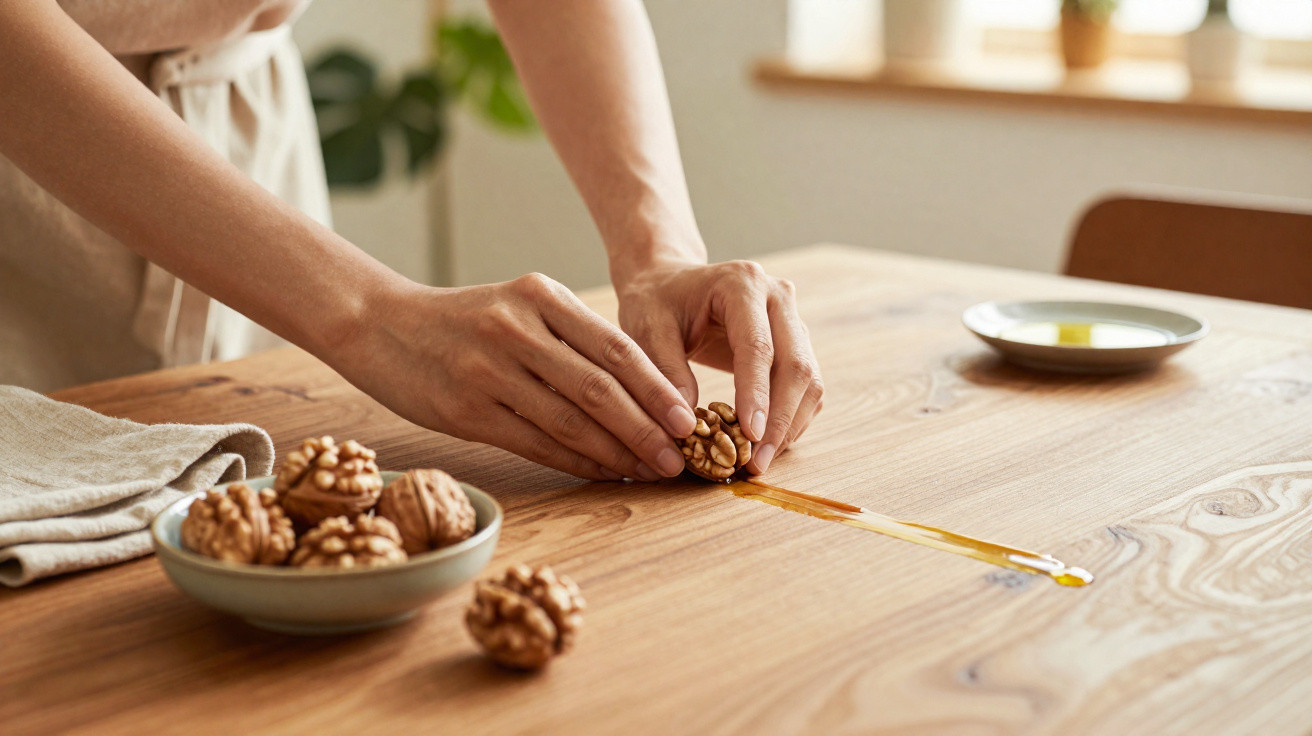
If you decide to test this out, there is no need to make it complicated. First check that the surface is dry and clean; a brief wipe with a soft cloth that is only barely damp will remove crumbs and dust. Crack a walnut open and remove the meat. You only need a reasonable piece that you can grip before it crumbles. Avoid salted or flavoured walnuts, unless you would like your furniture to smell of barbecue seasoning.
Rub the walnut across the scratch with gentle but steady pressure, moving in the same direction as the wood grain. Pass over it several times, as though you were colouring with an extremely buttery pencil. Some oil will leave a shine on the surface, which is exactly what you want. Leave it for one or two minutes while you attempt to be patient and composed rather than checking it every few seconds. Next, lightly buff the spot using a soft cloth or even a clean section of your T-shirt.
Then take a step back. This is the revealing moment. Often, the scratch will appear far less conspicuous, as if someone has lowered its brightness. It may remain visible when you know precisely where it is, but it will no longer pull the attention of anyone casually looking at the furniture. Usually, that is all we are after: not flawless wood, but some relief from a constant visual annoyance.
When it does not “work” immediately
The first attempt can sometimes make little difference, particularly on pale wood or beneath a thick varnish. Before deciding that the internet has deceived you, try another pass. Press a little more firmly, allow the oils another minute to absorb, then buff again. The improvement may be understated: a softened blur rather than a dramatic disappearance.
With very light woods, including pine and beech, a walnut can make the scratch slightly warmer without blending it in completely. That is expected, as you are effectively putting brown-tinted oil onto naturally pale timber. Even so, the result is often preferable to the stark white line of a fresh scratch. If it still bothers you, you can always consider more substantial repairs later. The walnut has not harmed anything; it has simply made an attempt.
In truth, nobody does this daily. You are not likely to make an evening routine of wandering around the house and affectionately nut-polishing every minor mark. This is an occasional solution for the moments when you think, “ugh, I can’t unsee that”. For those times, a low-effort option that does not involve going shopping can feel surprisingly empowering.
The emotional life of a furniture scratch
The practical value of this method is one aspect; the emotional side is another. A mark on furniture is often less about the timber than the meaning we attach to it. The first dent in a new table can feel like a personal failing. You paid good money, told yourself you would take care of it, and now there it is: proof that your life is untidy and human.
Sometimes, the marks carry people with them. There is the coffee ring left by the friend who never remembers coasters; the faint line from a child pulling a toy across the surface while imagining an epic battle; the chipped corner from a party that became a little too lively. We flinch when they first appear, then years later run a finger over them and recall who we were at the time.
That is why the walnut method feels unexpectedly kind. It does not delete the story; it takes away some of its sharpness. It says that, yes, this happened, but it need not demand attention whenever you enter the room. It lets furniture grow older alongside you, with fewer harsh edges and fewer cold flashes of regret.
There is a modest truth in that. We live in a world that encourages replacement as soon as something stops being perfect. A scratch is treated as an excuse to buy, rather than a reason to stop and consider what could be repaired. Taking a walnut from the kitchen to soften a mark on the table feels, in a small sense, like choosing care over consumption. It will not change the world, but it may alter how you view the possessions already in your home.
When a walnut is enough - and when it is not
It is easy to become over-enthusiastic and hope that one little trick can solve every problem. A walnut may help with minor surface scratches, especially on darker wood that has been stained or finished with oil. It works particularly well on slim whitish lines left when something has only grazed the top layer. It can also give dry-looking areas a little extra life, providing a touch of sheen that makes the wood seem less weary. For minor offences, it is remarkably effective.
Deep gouges, water damage, flaking varnish and heat stains are another matter entirely. Those situations lead into the territory of sanding, wood filler, stains and finishing products. You may have to accept that a table has had a hard life and needs a proper revival, or at least use a runner to conceal the worst area. Asking a walnut to solve that is like expecting a plaster to mend a broken bone: a kind thought, but insufficient.
The finish also matters. Highly glossy surfaces with heavy lacquer allow very little through, walnut oil included. In such cases, the scratch often sits in the transparent topcoat rather than the wood underneath. There is no real harm in trying the nut, but keep expectations realistic. Sometimes, the most useful result of an attempt is learning what degree of repair is actually required.
And if you choose to live with the scratch rather than begin a full weekend refinishing job, complete with dust everywhere and varnish lingering in the curtains, there is no shame in that. Not every flaw has to be “dealt with”. Some simply need to be turned down from a shout to a whisper. Walnuts are very good at doing precisely that.
A small act of care in a busy home
There is something almost traditional about giving furniture a slow, considered moment of attention. Life moves so quickly now: meals are eaten over laptops, emails are answered on the sofa and laundry lands on the bed in piles. Wood becomes scenery. The table is merely what sits beneath a takeaway, and the sideboard is only where the post accumulates. When you pause, crack a walnut and bend over a scratch, you are saying that this matters, if only briefly.
You see the grain again, along with the fine shifts in colour and the way light travels over the surface at a particular hour. You recall why you selected the piece in the first place, why you hauled it up a flight of stairs or waited six weeks for it to arrive. You think of the conversations, rows, quiet mornings and late evenings it has silently accommodated. That is a great deal of life for one piece of wood to carry without collecting a few scars.
Perhaps that is the true appeal of this peculiar little remedy. It does more than conceal a blemish. It encourages a gentler connection with your home, where repair is ordinary and modest efforts have value. You are not waiting for a miracle product or for a professional to arrive and save the day. You are saying: I can do something, right now, with what I have.
The next time a bright, provoking scratch appears across your favourite wooden surface, pause before reaching for your phone or wallet. Go to the kitchen, find a walnut and let it have a chance. At worst, you have used up one snack. At best, a few peaceful minutes can turn a small stab of guilt into a private, satisfying win - while your table looks a little more loved rather than merely used.

















Comments
No comments yet. Be the first to comment!
Leave a Comment