As temperatures soar as early as May, some households still have no air conditioning. Fortunately, we can take inspiration from earlier generations, who knew how to keep cool in extreme conditions without air conditioning.
In some areas, installing an air-conditioning system is almost a given; elsewhere, this is far from the case. In northern France, households are generally more likely to spend on heating for the long winter months. Yet when a heatwave arrives, cooling down can be difficult.
“How did our grandparents manage without air conditioning?” Many French people have probably asked themselves this question in recent days, as temperatures have set fresh records across France. Although heatwaves are more common today, older generations still have valuable advice to offer.
The power of cross ventilation
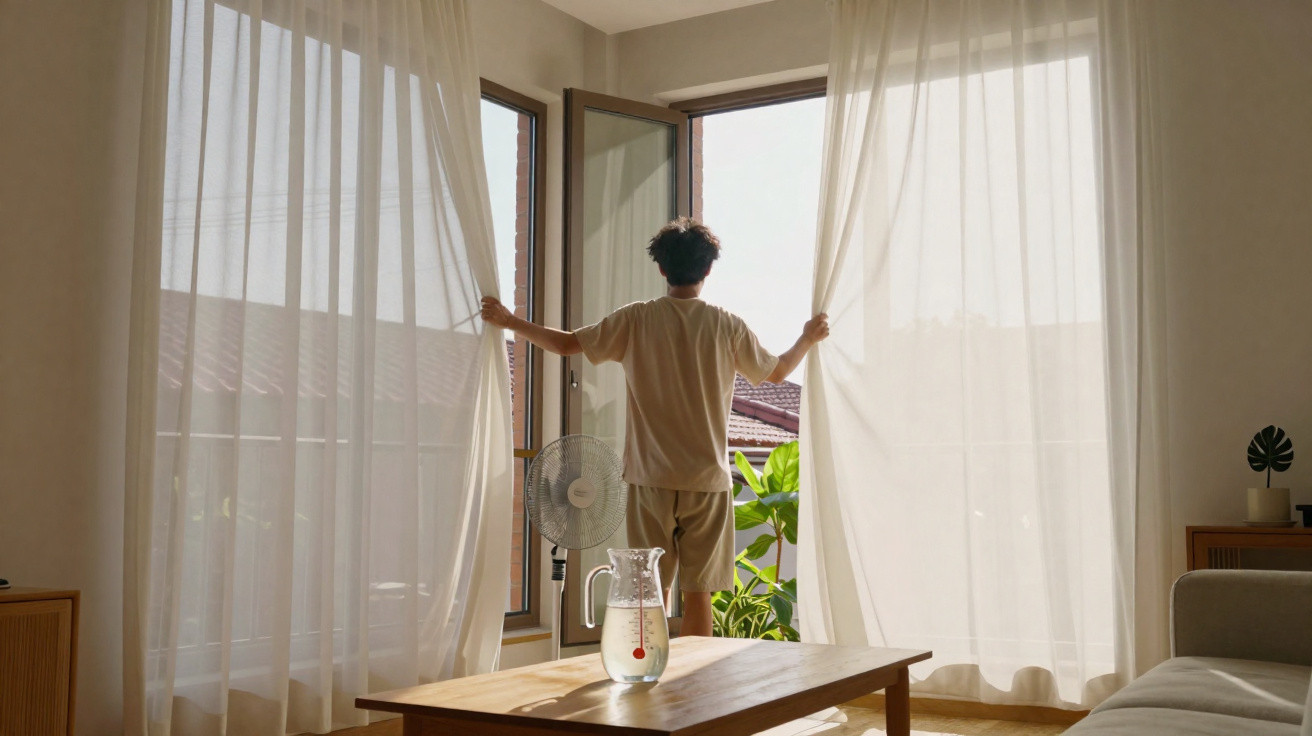
Of all the practical tips passed down through the years, cross ventilation is undoubtedly among the easiest and most effective to use. The aim is to arrange the home's ventilation so that a natural draught flows through its rooms. This replaces trapped warm air with a cooler breeze. Traditional builders designed homes with this in mind, positioning openings strategically on opposite or perpendicular façades to encourage air movement.
In practical terms, this approach is based on three key rules:
- Open windows wide in the evening, especially those opposite one another or on opposing sides, so cooler night air can circulate and clear the heat built up during the day.
- Close shutters and windows on the sun-facing side first thing in the morning to prevent heat from entering the home.
- Keep only a few openings on the shaded side open, maintaining gentle ventilation without drawing in hot air.
In Mediterranean villages, these morning routines can still often be seen: curtains closed, louvred shutters left slightly ajar, and homes kept in semi-darkness until evening. This age-old habit remains highly relevant as heatwaves become increasingly frequent.
How cross ventilation keeps a home cooler
Cross ventilation works by making use of the temperature differences and air-pressure changes that naturally occur between outdoors and indoors. Night-time coolness lowers the temperature of walls and floors, which store that cool air and release it throughout the day, slowing the rise in indoor temperatures. Meanwhile, closing openings on the sunny side keeps hot air outside.
Air conditioning and increasingly intense heatwaves
While authorities are questioning air conditioning for economic, environmental and health reasons, these methods could become worthwhile alternatives. However, heatwaves sometimes become so intense that cooling homes overnight is no longer easy. In southern France, temperatures did not fall below 30 degrees in the middle of the night. Without air conditioning, it is difficult not to suffer from the heat.













Comments
No comments yet. Be the first to comment!
Leave a Comment