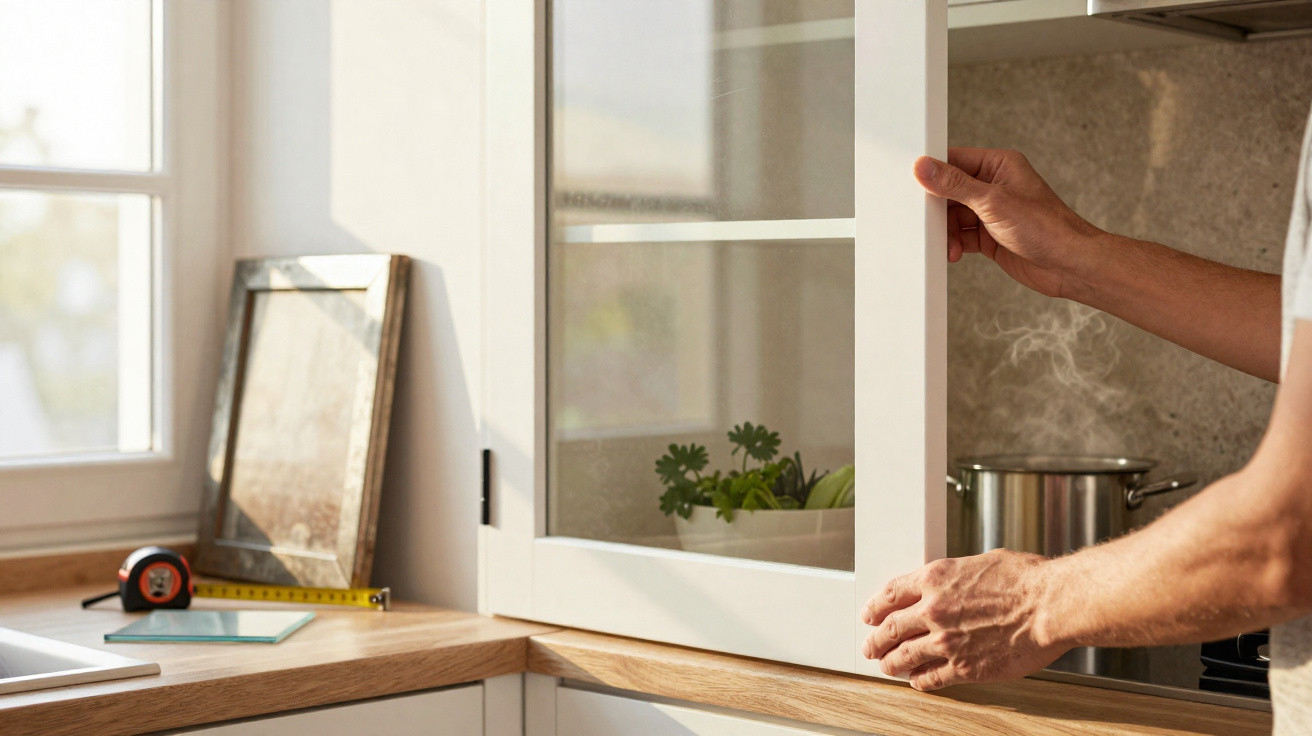
Aluminium kitchen doors were once widely used because they withstand moisture well and require little maintenance. Today, in more contemporary fitted kitchens, toughened glass is emerging as a more elegant alternative for cupboards, larders and internal partitions, offering a smooth finish, a lighter look and quick day-to-day cleaning.
Why are aluminium doors becoming less popular?
Aluminium doors remain practical, yet their metallic appearance can make a kitchen feel colder or more dated, particularly on wall cupboards and highly visible fronts. In newer designs, the preference for uninterrupted surfaces and subtler finishes has reduced the use of exposed aluminium.
A further consideration is appearance. Wide profiles, prominent tracks and excessive shine can overwhelm small kitchens. For this reason, many cabinetmakers now use toughened glass, reflective glass, reeded glass or frosted glass in doors fitted with more discreet hardware.
Which material is the best replacement for aluminium in the kitchen?
Toughened glass is one of the main alternatives to aluminium kitchen doors when the aim is to combine durability, moisture resistance and a more up-to-date finish. It does not rust, swell from steam or absorb grease in the way porous materials can.
In practice, glass doors can be specified in several styles to suit the kitchen design:
- Clear toughened glass for cupboards containing neatly arranged crockery.
- Reflective glass to partly conceal the contents of the unit.
- Reeded glass to add texture and disguise stored items.
- Frosted glass for a brighter kitchen with a visually cleaner appearance.
- Smoked glass for dark cupboards, industrial kitchens or schemes featuring black metal.
Why does toughened glass cope better with moisture?
Toughened glass does not rust because the door has no exposed iron in its composition. In a kitchen affected by steam, splashes from the sink and regular cleaning, this helps prevent oxidation marks and keeps the surface stable for longer.
However, the fittings must also be selected carefully. Hinges, handles and profiles should have moisture-resistant finishes, such as stainless steel, anodised aluminium or high-quality powder coating, so that the whole door assembly lasts longer.
How do you choose the right kitchen door model?
The right choice depends on the door’s position, how often it will be used and how visible the cupboard interior should be. For wall cupboards, reflective and reeded glass work well because they make the unit appear lighter without fully revealing plates, jars and food supplies.
Before replacing aluminium doors, it is worth checking several design details:
- Choose toughened glass with a thickness suitable for the door size.
- Use safety film where there is a risk of frequent impacts.
- Opt for discreet handles or a recessed handle system for a cleaner look.
- Avoid completely clear glass on very full cupboards.
- Check that the unit structure can support the weight of the new doors.
Can they be replaced without renovating the entire kitchen?
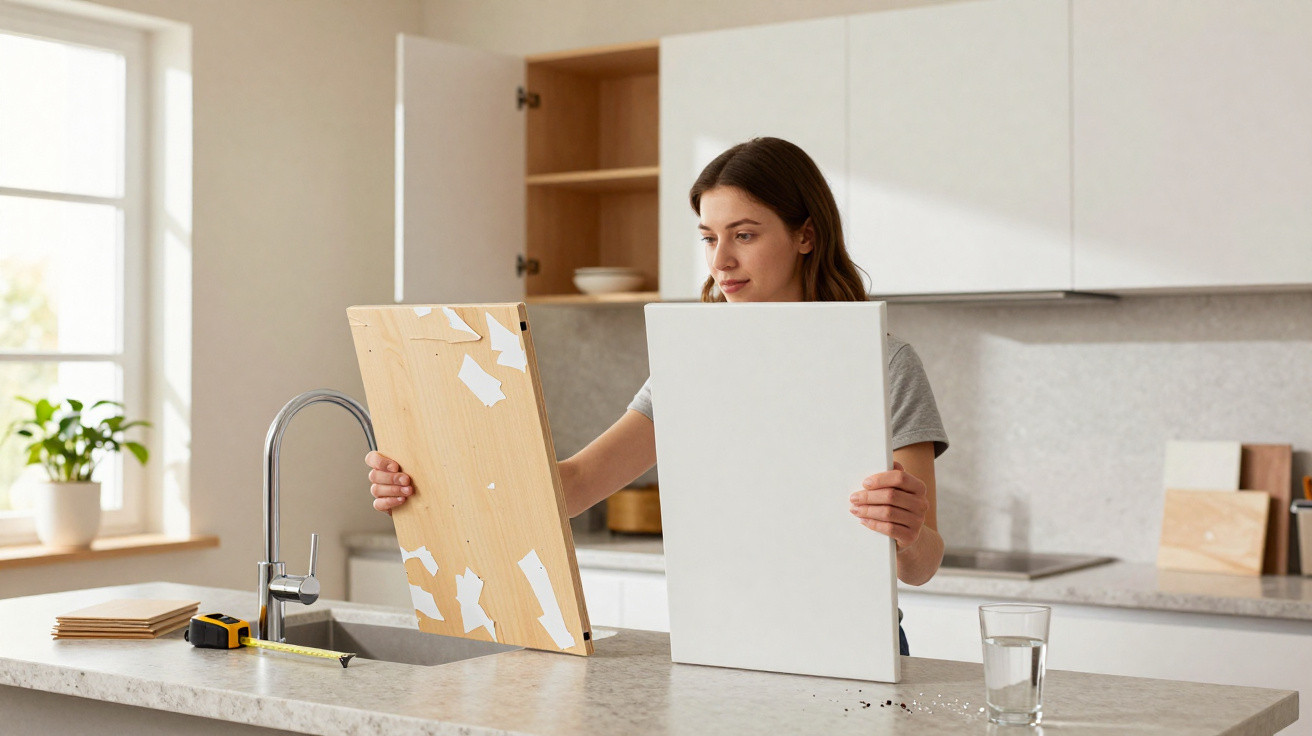
In many cases, only the old fronts can be replaced with toughened glass doors, while retaining the existing carcasses, shelves and part of the cabinetry. The cabinetmaker will need to measure the openings, check the alignment of the units and adapt the hinges or tracks to accommodate the new door weight.
The cost is usually higher than that of a basic aluminium door, especially for specialist glass such as reflective, reeded or smoked glass. Even so, the replacement can modernise the kitchen without lifting the floor, changing wall finishes or rebuilding every cupboard, leaving the room brighter, moisture-resistant and easy to clean.













Comments
No comments yet. Be the first to comment!
Leave a Comment