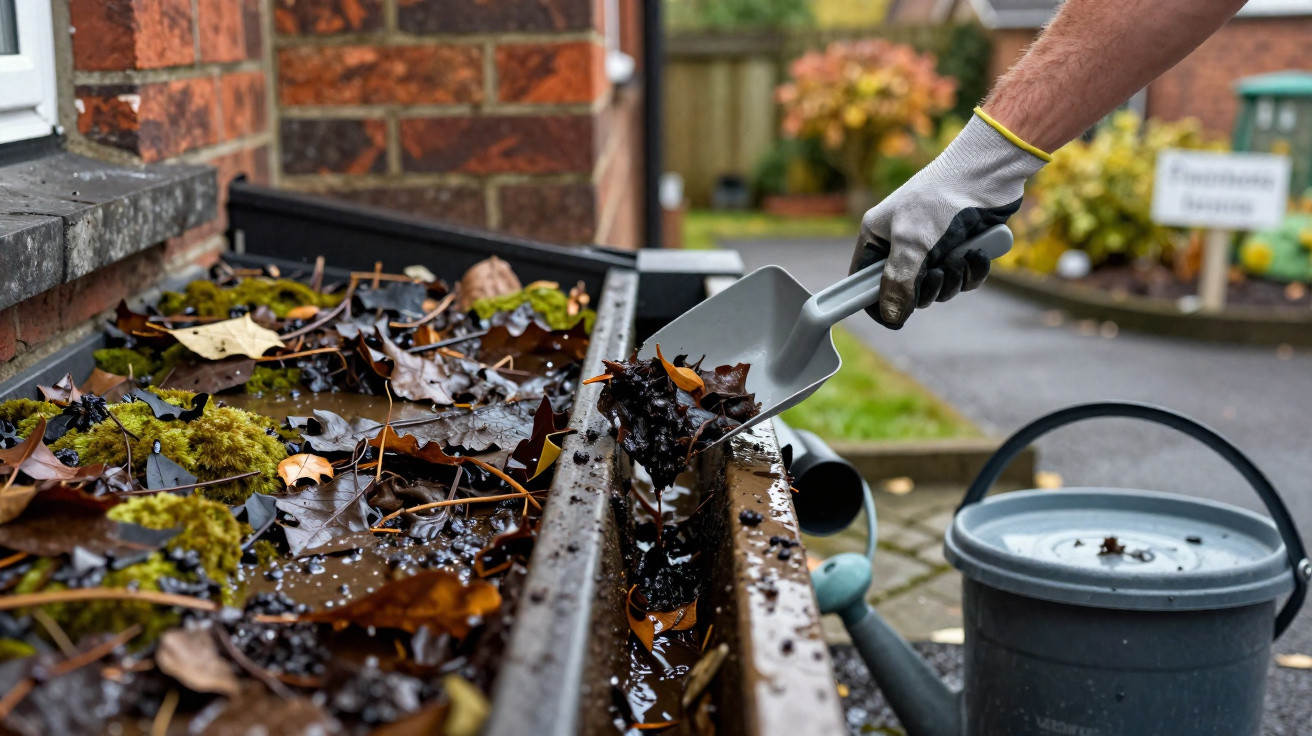
Most gutters look perfectly innocent from the garden - until the first sustained autumn rain sends water over the edge. By then, dry leaves, roof grit, moss and pollen may have formed a dense, wet layer that stops rain reaching the downpipe.
The useful check is not just looking for obvious leaves. It is noticing whether a muddy patch or puddle remains after the rest of the gutter has drained. That can point to trapped debris, a blocked outlet or a gutter section that is no longer falling towards the downpipe.
A gutter does not need to look spotless. It needs a clear channel, a free outlet and a route for water to leave the house safely.
What settles in gutters during summer
Summer is not a break from gutter maintenance. Wind carries in dust, pollen, seeds and small twigs, while bits of moss can wash down from the roof. Birds may also leave nesting material, feathers and droppings behind.
At first, this material is dry and easy to overlook. After a few showers it becomes a damp, compacted sludge, particularly around the outlet leading to the downpipe. Shaded sections can stay wet for longer, encouraging moss to grow and catching even more debris.
Look for:
- brown or black sediment along the gutter base;
- leaves wedged around the downpipe outlet;
- moss growing from one persistently damp area;
- staining below the gutter on the fascia, soffit or wall;
- water marks where the gutter has overflowed;
- a visible dip that appears to hold rainwater.
A check in autumn is sensible because falling leaves and wetter weather can turn a minor build-up into a blockage quickly.
Why a partial blockage matters
When rainwater cannot reach the downpipe, it will spill over the front or back of the gutter. It may soak timber fascias, splash repeatedly onto brickwork or collect close to the base of a wall.
One overflow does not necessarily mean there is serious damage. Repeated soaking, however, can put pressure on gutter joints, fixings and vulnerable external finishes. Frost can also worsen existing cracks or loose fittings during cold spells.
A blocked gutter can affect a water butt, too. Leaf litter may clog the diverter or make the stored water unpleasant to use for garden jobs. Keeping the gutter outlet clear makes a rainwater collection system easier to maintain.
Start with a ground-level inspection
Do not begin by climbing a ladder. Gutters are often awkward to reach, and falls from ladders can cause serious injury. Start from the ground, where you can identify many problems without taking unnecessary risks.
Walk around the property after rain, if it is safe to do so. Binoculars or a phone camera can help you inspect upper sections from below. Look for water spilling over, a bowed gutter run, dripping joints or a downpipe that remains dry while water is visibly overflowing elsewhere.
A sensible first check
Choose dry, calm conditions. Do not inspect or clean gutters in rain, high winds, icy weather or poor light.
Look at the downpipe outlet. Check for leaves and moss where the gutter enters the downpipe. Only remove debris if the area can be reached safely from ground level or from a properly secured access platform.
Watch for an obvious dip. Gutters should have a slight fall towards the outlet. A sagging middle section or a raised section near the downpipe may need attention.
Check after rainfall. Once the rain has stopped, look for standing water or persistent drips. Do not lean out of an upstairs window to get a closer view.
Inspect the bottom of the downpipe. If water is not leaving at ground level, the blockage may be lower down. Do not force drain rods or tools into old plastic pipework, as joints can split or come apart.
If you can see detached fittings, cracks, a badly sagging section or water running behind the gutter, contact a competent gutter or roofing professional.
Clearing debris safely
For low, easily accessible gutters on a bungalow, cleaning may be manageable with suitable equipment and secure footing. For most two-storey homes, properties with conservatories, uneven ground or difficult access, arranging professional cleaning is usually the safer choice. Gutter-vacuum services can be useful where ladders are unsuitable.
If you are working at low level, wear sturdy gloves, long sleeves and eye protection. Gutter debris may contain sharp grit, animal droppings, insects and decaying material. Wash your hands afterwards and keep children and pets away from the area.
Use a plastic scoop or small plastic hand trowel rather than metal tools, which can damage painted finishes or plastic guttering. Put debris straight into a bucket instead of dropping it onto paths, drains or flowerbeds.
Leaf and moss waste can usually go into a home compost bin in modest amounts, provided it does not contain plastic, roofing fragments or general rubbish. If you are unsure, add it to garden waste instead.
Never rest a ladder against plastic guttering or rely on the gutter itself for support. It is not designed to take your weight.
How to spot a gutter that is holding water
A thin sheen of water immediately after rainfall is normal. A distinct puddle that remains in one place after the rest of the run has drained is worth investigating.
First, have the channel and outlet cleared. A compacted plug near the downpipe can make water collect further along the gutter, so the puddle may not be directly above the blockage.
If water continues to sit in the same section after cleaning, the likely cause could be a sagging bracket, a shifted joint or an incorrect fall. Take photographs from the ground and note the location. This will help a professional assess the issue without guesswork.
Do not attempt to bend brackets by pushing or pulling on the gutter. It can crack plastic components, loosen the fascia connection or destabilise a ladder.
Keep a water butt cleaner
A water butt works best when the gutter and downpipe above it are kept clear. Before winter, check that the diverter is not clogged and that the butt lid fits securely.
Useful measures include:
- fitting a removable leaf trap or filter at the downpipe connection;
- emptying guards and traps regularly during leaf fall;
- checking that overflow is directed away from walls and paths;
- keeping the water butt covered to limit debris and insect access;
- clearing the diverter after a storm if flow appears reduced.
Stored rainwater is best used outdoors, for example on ornamental beds, containers and established plants. Do not use water from a butt for drinking, cooking or personal washing.
Common mistakes to avoid
The biggest mistake is waiting until water is pouring over the gutter before checking it. By that point, the outlet may be tightly blocked and nearby surfaces may already have been repeatedly soaked.
Other common errors include:
- placing a ladder on gravel, soft soil, sloping paving or other unstable ground;
- working alone where ladder access is involved;
- flushing a heavily blocked gutter with a powerful hose before lifting debris out;
- pushing leaves into the downpipe rather than removing them;
- fitting mesh guards and never checking underneath them;
- trying to seal a wet, dirty gutter joint without identifying the cause of the leak;
- cleaning with harsh chemicals when a brush, water and manual removal would do.
Never mix bleach with vinegar, acidic cleaners, limescale removers or ammonia-based products. Dangerous fumes can be produced. Chemical cleaners are rarely needed for routine gutter maintenance.
A realistic seasonal routine
For many homes in the UK, a visual check in late spring and another after the main leaf fall is a practical routine. The exact timing depends on local weather and nearby trees. Homes beneath mature decididuous trees, conifers or in exposed coastal areas may need more frequent checks.
After exceptionally heavy rain or a named storm, inspect from ground level for fresh overflow, drips and loose components. Leave repairs until conditions are dry and safe.
A few minutes spent checking what has collected at the bottom of a gutter can prevent an unpleasant surprise in the next downpour. Clear what you can safely reach, make sure water has a route to the downpipe, and bring in a professional whenever height, damaged fittings or persistent standing water are involved.
















Comments
No comments yet. Be the first to comment!
Leave a Comment