The twice-yearly clock change can feel like a small irritation: a lost hour in spring, a welcome extra hour in bed in autumn. But the bigger question is not only whether Britain should stop changing the clocks. It is which time the country should keep.
The central point is simple: keeping Greenwich Mean Time (GMT) throughout the year would put more of winter’s limited daylight at the start of the day. It would not make winter days longer, but it would mean earlier sunrises by the clock than permanent British Summer Time (BST). For people getting children ready, travelling to work or starting school early, that timing can matter.
GMT, BST and what changing the clocks actually does
The UK uses two clock settings:
- Greenwich Mean Time (GMT) in winter;
- British Summer Time (BST), when clocks are one hour ahead of GMT.
Under the present system, clocks normally go forward on the last Sunday in March and back on the last Sunday in October. The debate about ending these changes has three distinct options:
- Keep the current seasonal clock changes.
- Keep BST all year.
- Keep GMT all year.
Permanent BST is sometimes described as giving people “more daylight”. It does not, of course, create an extra hour of sun. It moves an hour of daylight, by the clock, from the morning to the evening.
The question is not how much daylight Britain has in winter, but whether the available daylight arrives when people are most likely to need it.
Why winter mornings are the sticking point
Light is one of the main cues that helps regulate the body’s daily sleep-and-wake rhythm. Daylight in the morning helps signal the beginning of the active part of the day, while bright light later in the evening can make it easier to remain awake later.
That does not mean every person responds in exactly the same way. Sleep is shaped by work patterns, age, health, household routines and personal habits. Still, a darker start can make the morning feel harder, particularly for people whose schedules are fixed.
A later winter sunrise under permanent BST could affect people such as:
- pupils walking, cycling or catching buses to school;
- parents doing the school run before work;
- commuters waiting at stations or bus stops;
- people working early shifts;
- overnight workers travelling home;
- anyone who already struggles with dark mornings.
The concern is not that a different clock setting would transform everyone’s sleep overnight. It is that regularly starting the day well before dawn may add pressure to routines that are already demanding in winter.
Britain’s geography makes the trade-off sharper
Winter daylight is not evenly shared across the UK. In northern Scotland, days are much shorter in December and January than they are in southern England. No choice of clock can change that.
It can, however, change when sunrise appears on the clock. If Britain stayed on BST all year, sunrise would be one hour later by the clock across the country. Where dawn is already late, that could mean more school and work journeys taking place in darkness.
For some households, a later sunset may still be more useful. It could make an after-work walk, an outdoor activity or a trip to the shops feel more possible. But the benefit is not experienced equally: someone leaving home at 7.30am may value the earlier daylight more than someone with a flexible working day.
A practical way to judge the options
Rather than imagining only long summer evenings, test the idea against an ordinary January weekday.
- Check the typical sunrise time for your area in December and January.
- Note when your household usually gets up and leaves home.
- Consider whether an hour of earlier morning light would be used.
- Ask whether a later winter sunset would genuinely change your evening routine.
For many people, the answer will depend on their location, work and family commitments. That is why a national time policy involves real compromises rather than an obvious universal winner.
What can reasonably be said about sleep and timing
Sleep and circadian-rhythm specialists often raise concerns about permanent daylight-saving time because it shifts winter mornings later by the clock. Standard time is more closely aligned with the sun’s position than a clock that is kept an hour ahead all year.
Research on light exposure, sleep timing and daily performance is complex. It is not possible to attribute mood, school results, accidents or productivity to the clock alone: weather, commuting, housing, shift patterns and many other factors also matter.
Even so, the underlying concern is straightforward. If people must rise early while natural light arrives later, they may find it more difficult to get light at the beginning of the day and maintain a regular sleep routine.
Teenagers deserve particular consideration. During puberty, many young people naturally become sleepy later in the evening while still needing to start school early. A later clock-time sunrise could make already dark school mornings feel more difficult.
Ending seasonal clock changes and choosing permanent BST are separate decisions. A country could stop changing the clocks and choose either GMT or BST.
The case for lighter evenings is still valid
The argument for permanent BST is not trivial. Lighter evenings can be enjoyable and useful for walking, sport, gardening, social plans and errands. Some people would also welcome a single year-round clock setting simply because it removes the disruption of the spring and autumn changes.
Those preferences should be part of any public discussion. The difficulty is that a choice that feels attractive in June may have a different effect in January.
A fair debate should therefore compare all three possibilities: the current arrangement, permanent GMT and permanent BST. Asking only whether people dislike changing clocks does not establish which permanent time setting they would prefer once winter sunrise times are considered.
What a change would need to consider
Any future decision on UK time would need careful assessment across regions and occupations. The effects of a later winter sunrise would not be the same in Cornwall, London, Belfast, Cardiff and the north of Scotland.
Areas worth considering include:
- morning journeys and road safety;
- school opening times and travel arrangements;
- early and night-shift work;
- public transport timetables;
- the needs of rural communities;
- household energy use and evening activity.
Schools and employers can also make dark mornings more manageable without waiting for a national policy change. Where practical, this might mean reviewing unnecessarily early starts, allowing flexible arrival times in suitable roles, and ensuring indoor spaces are adequately lit in the morning.
At home, regularity is usually more useful than trying to create a perfect routine. Keep wake-up and bedtime reasonably consistent, open curtains soon after getting up, and try to spend a little time outdoors during daylight when practical.
Common mistakes in the clocks debate
Calling evening daylight “extra” daylight
Moving the clocks changes the label attached to an hour; it does not lengthen the day. A later sunset by the clock comes with a later sunrise by the clock.
Judging the policy by summer alone
Summer evenings make permanent BST appealing, but winter morning darkness is the central trade-off. Any proposal should be tested against the shortest, darkest part of the year.
Assuming identical routines across Britain
A person working from home with a flexible start has a different experience from a teenager catching an early bus or a nurse beginning a dawn shift. Regional daylight differences matter too.
Treating indoor lighting as a full replacement for daylight
A well-lit room can make a morning more comfortable, but it is not the same as being outside in daylight. Avoid staring into very bright lamps. If using a specialist light device, follow its instructions carefully and seek professional advice first if you have an eye condition or concerns about changes in mood.
Forgetting the clock-change weekend
While the current system remains, check alarms, ovens, heating controls, cars and analogue clocks. Phones often update automatically, but it is sensible to confirm the time before an early shift, train or flight.
A practical plan for darker mornings
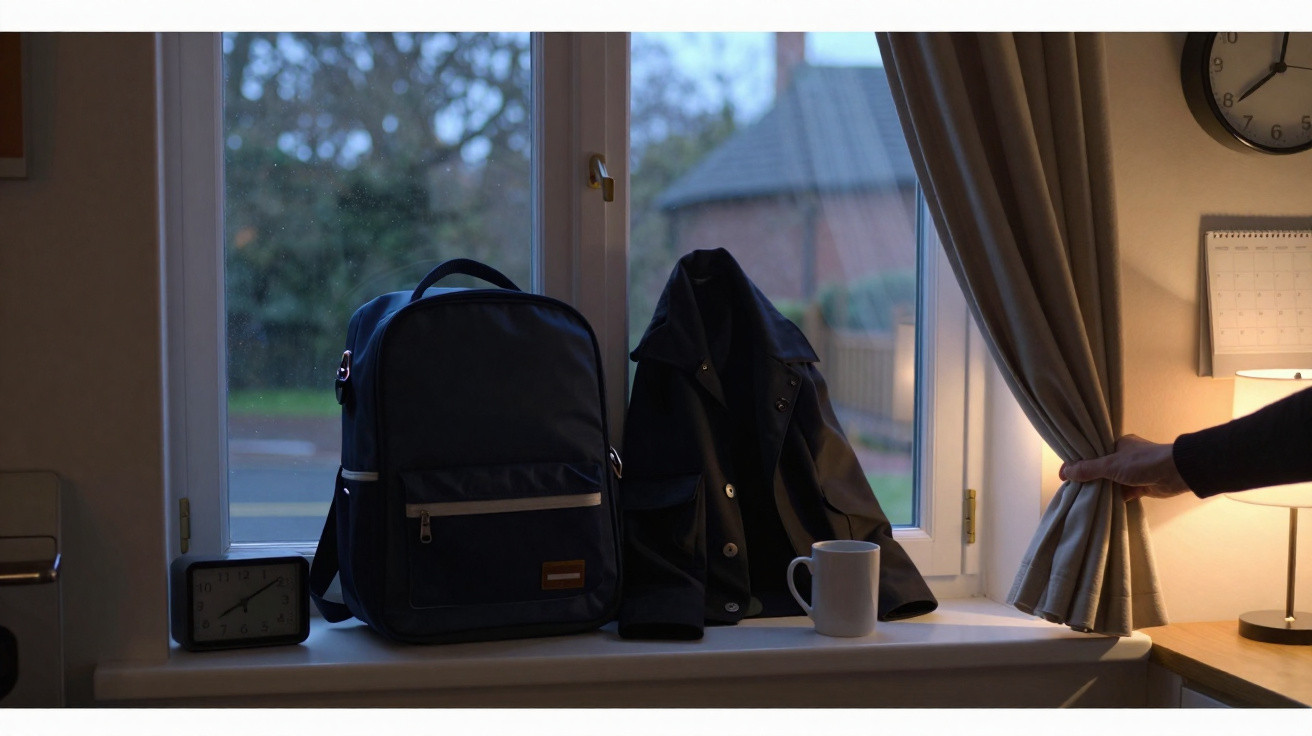
Whatever happens to Britain’s clocks in future, winter mornings are easier when they require fewer decisions. Put out clothes, pack bags and prepare breakfast items the night before. Turn on ordinary room lighting after waking, open the curtains promptly and sit near a window where possible.
If it is safe and convenient, a short walk outside after daybreak can help make the transition into the day feel less abrupt. For those travelling on dark mornings, use lights and reflective clothing where appropriate, and take extra care around wet leaves, ice and poorly lit crossings.
For now, GMT remains the UK’s winter time. It cannot make winter brighter, but it does place more of the scarce daylight near the beginning of the day - a practical advantage worth remembering when lighter evenings are the main focus of the debate.














Comments
No comments yet. Be the first to comment!
Leave a Comment