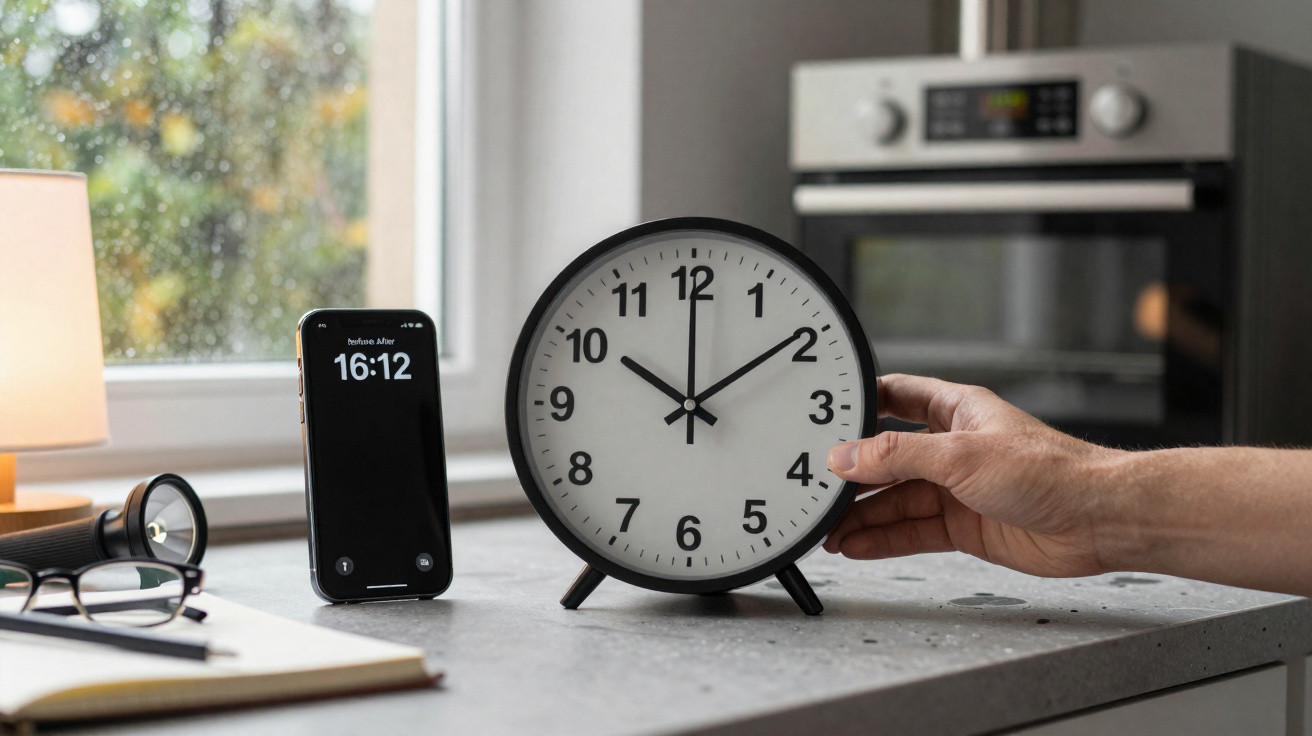
The lighter evenings can seem to vanish almost overnight in late October. In 2026, clocks across the UK go back in the early hours of Sunday 25 October, ending British Summer Time (BST) and returning to Greenwich Mean Time (GMT).
The simplest way to avoid a muddled start to the week is to let internet-connected devices update themselves, then check every clock, timer and appliance that does not. The change also makes the evening look dramatically darker: daylight has been shortening for months, and the clock change shifts an hour of usable light from late afternoon to the morning.
Exactly when the clocks change
At 2am BST on Sunday 25 October 2026, clocks go back one hour to 1am GMT.
This means the hour between 1am and 2am happens twice: once in BST, then again in GMT. Most people will experience it as an extra hour in bed, although anyone working, travelling or caring for others overnight may need to be more careful with timings.
The UK remains on GMT until clocks go forward again on Sunday 28 March 2027.
The autumn clock change does not take away daylight. It changes where that daylight falls on the clock.
The change applies throughout England, Scotland, Wales and Northern Ireland. Sunrise and sunset times are not identical across the country, however: longitude, latitude and local weather all make a difference.
Why it feels dark so quickly after 5pm
The clock change is striking because it arrives after several weeks of steadily shorter days. By late October, sunset is already moving earlier by a few minutes each day.
When clocks go back, the displayed time of sunset shifts by almost a full hour in one night. If the sun sets shortly before 6pm on Saturday under BST, it may set shortly before 5pm on Sunday under GMT.
In London and much of southern and central Britain, sunset will be before 5pm after the change. In northern parts of the UK it can be earlier still, particularly in Scotland; places farther west generally keep daylight a little later by the clock than places farther east.
Sunset is not the same as complete darkness. There is twilight afterwards, but cloud, rain, trees, tall buildings and wet roads can make a late-autumn afternoon feel gloomy well before the official sunset time.
What changes over the following weeks
- Before Sunday 25 October: evenings are already drawing in, but clocks still show BST.
- From Sunday afternoon: sunset appears about an hour earlier on the clock.
- Early November: many commutes, school runs and dog walks take place in fading light or darkness.
- By December: the winter solstice brings the shortest days of the year.
- After the solstice: daylight starts to increase again gradually, although evenings take longer to become noticeably lighter.
Which clocks should update automatically?
Many devices should change themselves if they have an accurate time-zone setting and are connected to a mobile network or the internet. These may include:
- mobile phones;
- tablets and computers set to automatic date and time;
- smart speakers and smart televisions;
- some digital alarm clocks;
- some heating controls;
- many newer in-car systems.
Automatic is not guaranteed. A device may have lost its connection, have automatic time switched off, or be using the wrong time zone. Check the time on Sunday morning rather than assuming every screen is correct.
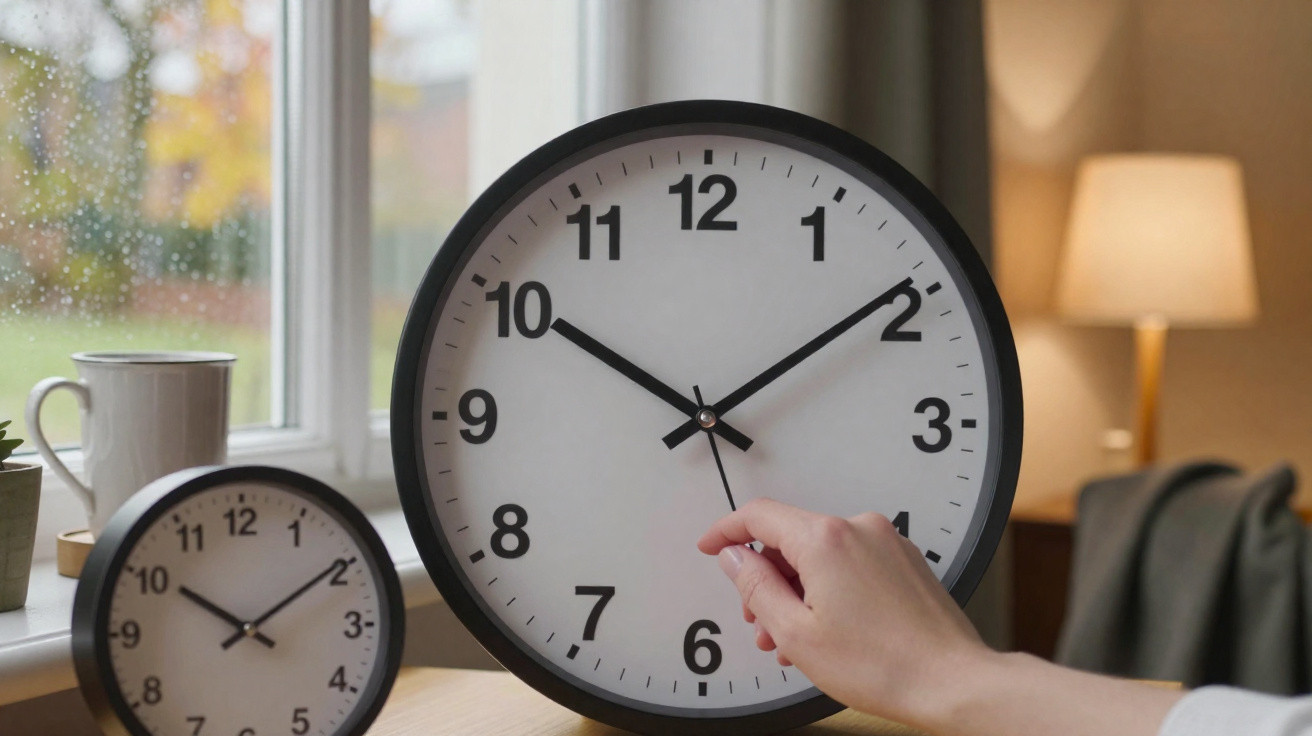
Manual clocks are the usual offenders. Look out for wall clocks, watches, alarm clocks, ovens, microwaves, cameras, plug-in timers, older heating programmers and car clocks.
A quick household clock check
- Use your phone as the reference. Confirm it has updated correctly on Sunday morning.
- Check the kitchen. Reset the oven, microwave and any timer controlling lamps or other appliances.
- Review heating times. Make sure programmed heating and hot-water periods still match your daily routine.
- Confirm alarms and calendars. This matters if you have an early shift, an appointment, a flight or a train to catch.
- Leave correctly updated smart devices alone. Manually changing one that has already adjusted can put it an hour out.
Prepare for the darker commute and school run
The first weekday after the clocks go back can catch people out. A familiar route that was bright at 5.30pm in September may now be dark, wet and busy.
Use the weekend as a prompt to check the basics.
- Charge cycle lights and make sure they work properly. When cycling in the dark, use the required white front light and red rear light.
- Keep a torch handy for unlit paths, taking bins out or checking the garden after work.
- Clean vehicle windscreens inside and out. Grease, condensation and dirt can make glare from headlights and low sun worse.
- Check that children have suitable lights or reflective details on coats, bags or scooters where useful.
- Allow extra time in poor weather, especially on unfamiliar country roads or unlit footpaths.
If you walk regularly, choose a route you know well and take extra care at crossings. Dark clothing, rain and reflections can make it harder for all road users to spot one another.
A five-minute check of lights, coats and travel plans can make the first dark week of the season much less awkward.
Use the lighter mornings where you can
The return to GMT gives lighter mornings by the clock for a while. That will not suit every work pattern, but it can make a few household jobs easier.
If your routine allows, move a walk or outdoor chore to earlier in the day. Autumn gardening, washing the car, clearing leaves and checking exterior lighting are all easier before late afternoon.
Indoors, review lighting in the rooms you use most during the evening. Replace failed bulbs, make sure hallways and stairs are adequately lit, and consider using lamps to create a more comfortable pool of light than a single overhead fitting provides.
Keep routes through the home clear of shoes, bags and trailing cables, particularly around stairs and changes in floor level. This is a useful seasonal reset for any household, especially where someone may be unsteady on their feet.
Common mistakes when the clocks go back
The most common mistake is assuming every digital display updates automatically. Kitchen appliances, car clocks and heating programmers are often missed.
Other pitfalls include:
- changing a phone manually after it has already adjusted;
- setting an overnight alarm for the wrong occurrence of 1am;
- forgetting that plug-in lights, aquarium equipment or other timed devices may be an hour out;
- relying on an old vehicle clock and arriving late for an appointment or school collection;
- assuming sunset happens at the same clock time everywhere in the UK;
- overlooking travel details for journeys that cross the repeated hour.
For flights, coaches, ferries or rail journeys, check your booking and the operator’s latest information. Digital calendars can also be worth checking if an event has been created in another time zone.
Sensible autumn safety checks
The clock change is a useful reminder to test smoke alarms and carbon monoxide alarms in line with the manufacturer’s instructions. If an alarm has a replaceable battery, use the specified battery type. Do not remove a battery to silence a warning: replace it promptly or follow the maker’s guidance.
Take care when resetting appliances. Dry your hands before touching electrical controls, particularly near a sink, and do not force stiff buttons or dials. If a heating programmer or boiler behaves unexpectedly, consult its manual or contact a qualified engineer rather than experimenting with settings you do not understand.
Autumn cleaning often happens at the same time, so keep products separate. Never mix bleach with acidic cleaners, limescale removers or ammonia-based products. Follow the product label, ventilate the room as directed and store cleaning products away from children and pets.
Why the UK still changes its clocks
The UK has used seasonal clock changes in various forms for more than a century. GMT puts more daylight into winter mornings by the clock, while BST gives later clock-time evenings during the warmer months.
Whether the system should continue remains a regular subject of debate. People value different things: lighter mornings, lighter evenings, consistency for travel and work, or avoiding the disruption of changing routines. For 2026, the established timetable remains in place.
For everyday purposes, remember the pattern: clocks go back on the last Sunday in October and forward on the last Sunday in March.
Your practical checklist for Sunday 25 October
Before bed on Saturday, set any essential manual alarm and make a note of clocks likely to need attention. On Sunday morning, confirm the time on your phone, reset manual displays, check heating schedules and charge lights for the darker week ahead.
The return to GMT can make evenings feel suddenly short, but it does not need to make the week disorganised. Check the clocks, plan for lower light and make the most of the brighter early hours while they last.









Comments
No comments yet. Be the first to comment!
Leave a Comment