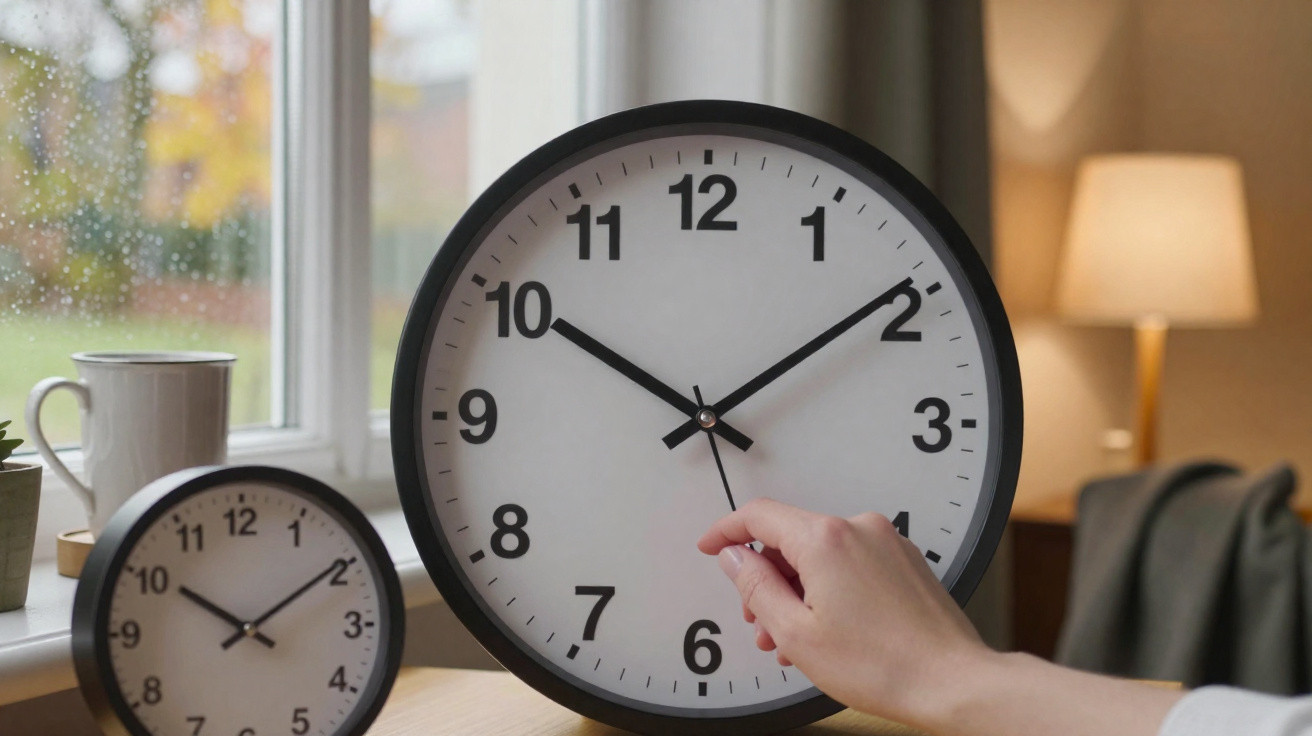
The autumn clock change can catch people out, particularly when the evening suddenly feels darker before the working day is over. This year, the UK returns to Greenwich Mean Time (GMT) in the early hours of Sunday 25 October 2026 - the earliest date the October change can fall.
The simple way to make it less disruptive is to treat it as a brief household reset. Put manual clocks back, check timers and alarms, and use the moment to make entrances and evening routines safer for the darker months.
The key date for autumn 2026
At 2am on Sunday 25 October 2026, clocks across the UK go back one hour, becoming 1am GMT.
In practical terms:
- 2am British Summer Time (BST) becomes 1am GMT;
- the hour between 1am and 2am happens twice;
- sunrise and sunset will appear an hour earlier by the clock;
- most people have an extra hour overnight;
- evenings will become dark noticeably earlier.
The change applies throughout England, Scotland, Wales and Northern Ireland. Phones, computers and many internet-connected devices should update automatically if their date, time and time-zone settings are correct. Analogue clocks, ovens, car displays and some heating controls often need changing by hand.
In October, clocks go back by one hour. A useful reminder is: spring forward, autumn back.
Why the clocks change so early this year
There is no new rule for 2026. The UK returns to GMT on the final Sunday in October each year, and that Sunday can fall between 25 and 31 October.
In 2026, the final Sunday is 25 October, making it the earliest possible date. In other years, the change can be much closer to Halloween, which is why this one may feel earlier than expected.
The clocks are due to go forward again on the final Sunday in March 2027, which falls on 28 March. Until then, the UK will use GMT rather than BST.
What will feel different day to day
Changing the clocks does not alter the amount of daylight available. It changes where the daylight falls on the clock, bringing lighter mornings at first but darker late afternoons and evenings.
For many households, the most noticeable differences will be:
- darker school runs, commutes and dog walks later in the day;
- earlier use of hallway, porch and outdoor lighting;
- a need to reconsider lamp and heating timers;
- children becoming tired or hungry at unfamiliar times for a few days;
- possible confusion around late-night shifts, travel and appointments.
Daylight varies considerably around the UK. Northern parts of Scotland have much shorter winter days than southern England, while rain and low cloud can make an October afternoon seem darker still.
A clock-change checklist for the home
A five-minute check on Saturday evening or Sunday morning can prevent the usual Monday-morning rush.
1. Find the clocks that will not update themselves
Walk through the house and check devices such as:
- wall, mantel and bedside clocks;
- watches without automatic time setting;
- microwave and oven displays;
- alarm clocks;
- car clocks;
- plug-in lamp timers;
- aquarium or plant-light timers;
- cameras, video doorbells and older security systems;
- heating programmers and thermostats.
Do not assume a display is right because it has changed. Some devices use an incorrect time zone, while others may have been set manually in a previous year.
2. Check alarms and timed routines
On a phone, make sure the time zone is set to the UK and automatic date and time are enabled. This matters especially after travel, changing a SIM, or using an older handset.
Check the household heating programme too. Some controls alter themselves; others do not. If you are unsure how yours works, consult the manufacturer’s instructions rather than repeatedly changing settings and accidentally overwriting your usual schedule.
3. Confirm plans involving travel or work
The repeated hour can affect overnight rail, coach and air services, as well as night shifts and on-call work. Check current information directly with the operator, organiser or employer if you are travelling late on Saturday or early on Sunday.
For video calls with people overseas, confirm the local time rather than assuming every country changes its clocks on the same weekend. Some countries use different dates, and many do not change their clocks at all.
Use the darker evenings as a safety prompt
The return to GMT is a useful reminder to make the route into your home easier to navigate after dark. You do not need to turn it into a major weekend project; a few basic checks can make a real difference.
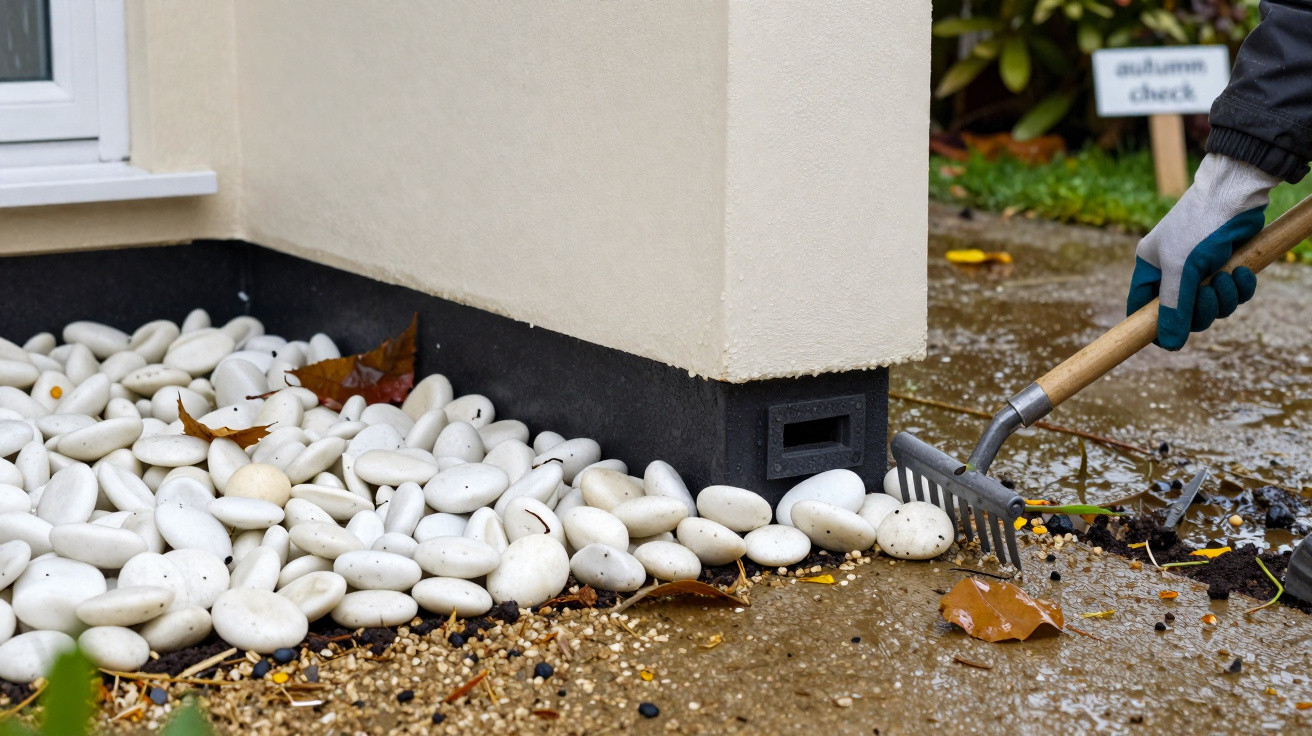
Clear wet leaves from steps, paths and entrances where it is safe to do so. Look for loose mats, trailing cables and clutter around the front door. Test outside lights and replace failed bulbs with the correct type and rating for the fitting. If wiring or a light fitting is damaged, do not attempt a repair unless you are competent to do it safely.
Indoors, test smoke alarms and carbon monoxide alarms using the test button, following the manufacturer’s instructions. Replace alarms that are damaged, faulty or beyond their stated replacement date. Do not remove batteries to silence a low-battery warning: fit suitable new batteries or replace the unit as required.
Take particular care with candles, open fires and portable heaters as evenings become colder. Keep paper, curtains, bedding and furniture away from heat sources, use heaters on a stable surface, and never leave flames or portable heaters unattended.
A well-lit, clear route from the pavement to the front door is one of the simplest preparations for darker evenings.
Make the first week easier
An extra hour in bed does not always mean people feel more rested. A changed clock can briefly affect sleep, mealtimes and family routines, particularly in homes with young children or pets.
A few modest adjustments can help:
- keep wake-up, meal and bedtime routines broadly consistent;
- get outdoors during daylight where possible;
- put reflective clothing, lights or hi-vis accessories where they are easy to find;
- bring afternoon errands forward if you prefer not to drive after dark;
- use a timer to switch on a lamp before you arrive home.
If a child’s or pet’s routine is particularly fixed, shifting meals or bedtimes by ten to fifteen minutes over several days may feel more manageable than making every change at once.
Common mistakes to avoid
The clock change is straightforward, but the same errors appear each autumn.
- Moving clocks forward instead of back. October means back one hour.
- Changing devices a day too early. Wait until the correct overnight change, or you may spend Saturday an hour out.
- Forgetting the car clock. It is easy to overlook until the Monday commute.
- Assuming every smart device is correct. Check the time zone after the change.
- Ignoring timers. Lamps, heating, kitchen appliances and security settings may be an hour out.
- Relying on an old timetable. Check live travel information for journeys that weekend.
- Starting risky jobs when tired. Leave ladder work, electrical repairs and demanding DIY for suitable daylight and proper conditions.
A practical Sunday reset
On Sunday 25 October, change the remaining manual clocks, check the week’s alarms and make sure a torch is charged and easy to find. Put coats, umbrellas and reflective items near the door if they will make darker journeys easier.
It is also a good moment to review heating and lighting schedules before colder weather properly settles in. The return to GMT is early this year, but a few calm checks can make the darker evenings feel far more organised.














Comments
No comments yet. Be the first to comment!
Leave a Comment