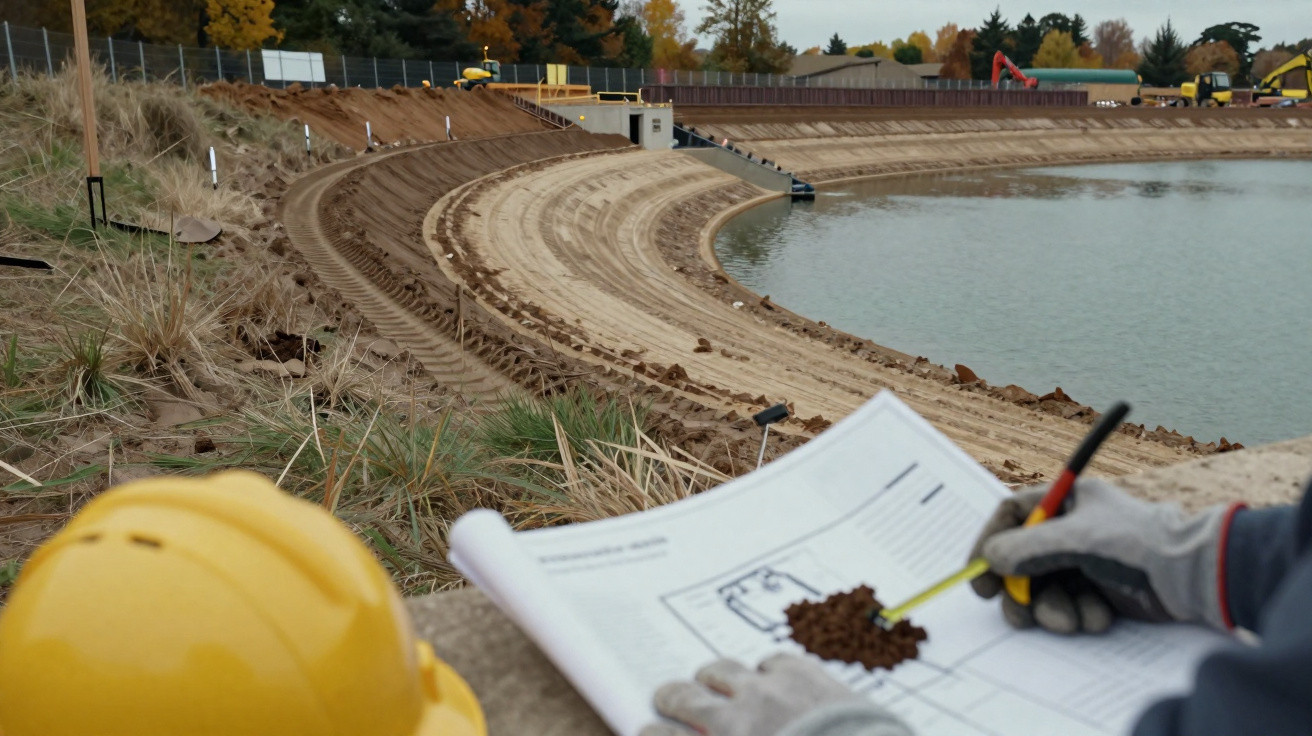
A new reservoir can sound like an obvious answer to a familiar problem: hold on to more water when it rains, so there is more available when dry spells arrive. In reality, it is one of the most complicated types of infrastructure Britain can build.
The central point is that a reservoir is not simply a lake behind a dam. It is a long-term water-supply system involving land, rivers, pipes, treatment works, wildlife, nearby communities and uncertain future weather. That is why a proposal can take many years to move from a line on a map to water reaching people’s taps.
Why Britain is looking again at reservoir storage
Britain has a wet reputation, but rainfall is unevenly distributed across both the year and the country. Northern and western areas generally receive more rainfall than the south and east, where large populations and water demand are concentrated.
Climate change adds further pressure to water planning. Water companies must prepare for hotter, drier summers, prolonged droughts and more intense downpours. Heavy rain does not necessarily translate into more usable water: dry ground, rapid run-off, environmental limits on abstraction and restricted treatment or transfer capacity can all affect what can be stored.
Reservoirs can form part of the response. Depending on their design, they may:
- store water taken from rivers during higher-flow periods;
- hold water transferred from another area;
- provide a buffer during dry weather;
- support connections between regional water networks;
- create habitats and recreational opportunities where these are properly planned and managed.
They are not a substitute for repairing leaks, cutting unnecessary water use or upgrading ageing pipes and treatment works. Long-term water-resource plans generally rely on a combination of measures.
A reservoir’s value is not just its size. It depends on when it can be filled, how the water will be treated and where it can be supplied.
The phrase “first new reservoir” needs context
Headlines sometimes describe a proposed scheme as Britain’s first new reservoir for decades. That can be misleading, as reservoirs differ greatly in purpose, scale and design.
Some supply drinking water, while others are associated with flood management, hydropower, farming, navigation or industry. Existing reservoirs can be enlarged, and off-river schemes can store water without damming a valley. There may also be a lengthy gap between planning approval, construction and a reservoir becoming operational.
For people living near a scheme, the more useful questions are practical ones:
- What source will fill it, and under what conditions?
- How much water could it provide during a drought?
- What pipelines, pumping stations and treatment upgrades are needed?
- Which habitats, farms, roads, homes or rights of way could be affected?
- How will costs, disruption and environmental commitments be monitored?
Choosing a location is about far more than open land
Large water-storage schemes need substantial land, but a site that appears empty may contain productive farmland, floodplain, woodland, protected species, archaeology and public footpaths. It may also be close to homes that would experience years of construction traffic, dust and noise.
Engineers must investigate the ground in detail. The geology and foundations must be suitable, while dams and embankments need to meet demanding safety requirements. A site must also fit the wider water network: there needs to be a realistic route for water to enter the reservoir and for it to travel onwards to treatment works and customers.
For an off-river reservoir, water may be taken from a river only when flows are sufficiently high. This can reduce pressure on rivers during dry periods, but it requires clear operating rules, pumping infrastructure and careful monitoring.
How a proposed site is tested
- Water-resource modelling considers future demand, drought conditions and available supplies.
- Environmental surveys identify habitats, watercourses, soils, landscape impacts and archaeological features.
- Ground investigations assess rock, clay, groundwater and stability conditions.
- Network studies examine pipelines, pumping, treatment capacity and electricity needs.
- Public consultation gathers local knowledge and highlights design concerns before formal decisions are made.
No single test settles the matter. A site with a large potential storage volume may still be a poor choice if its environmental effects or connection costs are too high.
Planning is a major part of the project
The visible construction stage may be the shortest part of a reservoir’s story. Before work begins, the promoter normally needs to assess alternatives, consult residents and landowners, examine environmental effects and secure the required permissions.
For some nationally significant schemes in England, this can involve the Development Consent Order process. Projects elsewhere in Britain, or those of a different scale, may follow other planning and consenting routes. Environmental protection, flood risk, protected sites and water-abstraction rules can all be relevant.
Local objections should not be dismissed as simple resistance to change. People living nearby may identify issues that need proper answers, including HGV routes, construction hours, drainage, access to fields and the future of footpaths.
The strongest infrastructure plans explain both the wider need for a project and the local trade-offs it will create.
Nature cannot be an afterthought
A new water body can support birds, wetland plants and insects, but construction can also damage or fragment valuable habitats. The balance depends on the original site and on the detail of the design.
A credible scheme considers ecology from the earliest land-selection work, rather than adding a few trees at the end. Measures may include wetland margins, habitat creation, wildlife corridors, tree protection, fish passage where relevant and funding for long-term management.
Water quality matters too. Nutrient-rich run-off can contribute to algal growth, while disturbed soil can affect nearby streams. Construction drainage, sediment control and careful storage of topsoil are routine but important parts of responsible site management.
Where impacts cannot be avoided, mitigation or compensation may be required. Newly created habitats can take years to establish, however, so the location, quality and long-term care of replacement habitats deserve close scrutiny.
What construction actually involves
Reservoir construction is not just about building an embankment. Works may also include diversion channels, intake structures, pumping stations, access roads, electrical connections, pipelines, bridges and treatment upgrades.
Earthworks are particularly significant. Material may be excavated on site, imported or processed into engineered layers. Teams monitor moisture levels, compaction and slope stability throughout the work. These details are fundamental to the safe performance of an embankment.
Before a reservoir is brought into normal operation, its structure and equipment are checked through commissioning. Monitoring, operating procedures and emergency arrangements must be established. Reservoir safety is subject to specialist regulation and inspection requirements, with suitably qualified engineers playing an important role.
What neighbours may notice during works
- temporary road changes and increased HGV movements;
- soil stockpiles, fencing and altered views;
- construction noise, vibration and dust-control measures;
- restricted working hours, with occasional specialist activity;
- diversions to footpaths and local access routes.
Use the project’s official contact channel to report concerns. Around active works, follow barriers and signed diversions. Do not enter construction areas, climb soil mounds or approach machinery, water margins or excavations.
Common mistakes in the reservoir debate
It is easy to reduce the discussion to “build it” or “do not build it”. That overlooks how interconnected water supply really is.
Common mistakes include:
- Assuming winter rain solves summer shortages. Storage, river flows, treatment capacity and distribution networks determine whether water can be used later.
- Treating leakage and reservoirs as alternatives. Both may be needed, alongside demand reduction and water transfers.
- Focusing only on the lake. Pipelines, power supplies, treatment works and environmental controls can be equally significant.
- Ignoring construction impacts. Long-term benefits do not remove the need to manage local disruption fairly.
- Assuming every reservoir improves biodiversity. Outcomes depend on the original habitat, water quality, design and ongoing management.
- Expecting an instant solution. Major infrastructure requires years of investigation, consent, construction and testing.
What a better project looks like
The most resilient reservoir proposals are honest about their limits as well as their benefits. They make information available on water need, alternatives considered, likely environmental effects, traffic arrangements and realistic timescales.
They should also sit within a wider plan: repairing leaks, reducing waste, protecting catchments, improving treatment capacity and moving water between areas where appropriate. In a country with sharply contrasting regional rainfall, no single intervention can do everything.
For households, the practical lesson is straightforward. New storage may improve resilience in the longer term, but careful water use still matters now. Repair dripping taps, run washing machines with full loads and use collected rainwater in the garden where suitable. During restrictions, always follow guidance from your water supplier.
Britain’s next major reservoir will not be delivered quickly or without difficult choices. But when it is selected transparently, engineered carefully and linked to a broader water strategy, it can provide a useful buffer against less predictable seasons.













Comments
No comments yet. Be the first to comment!
Leave a Comment