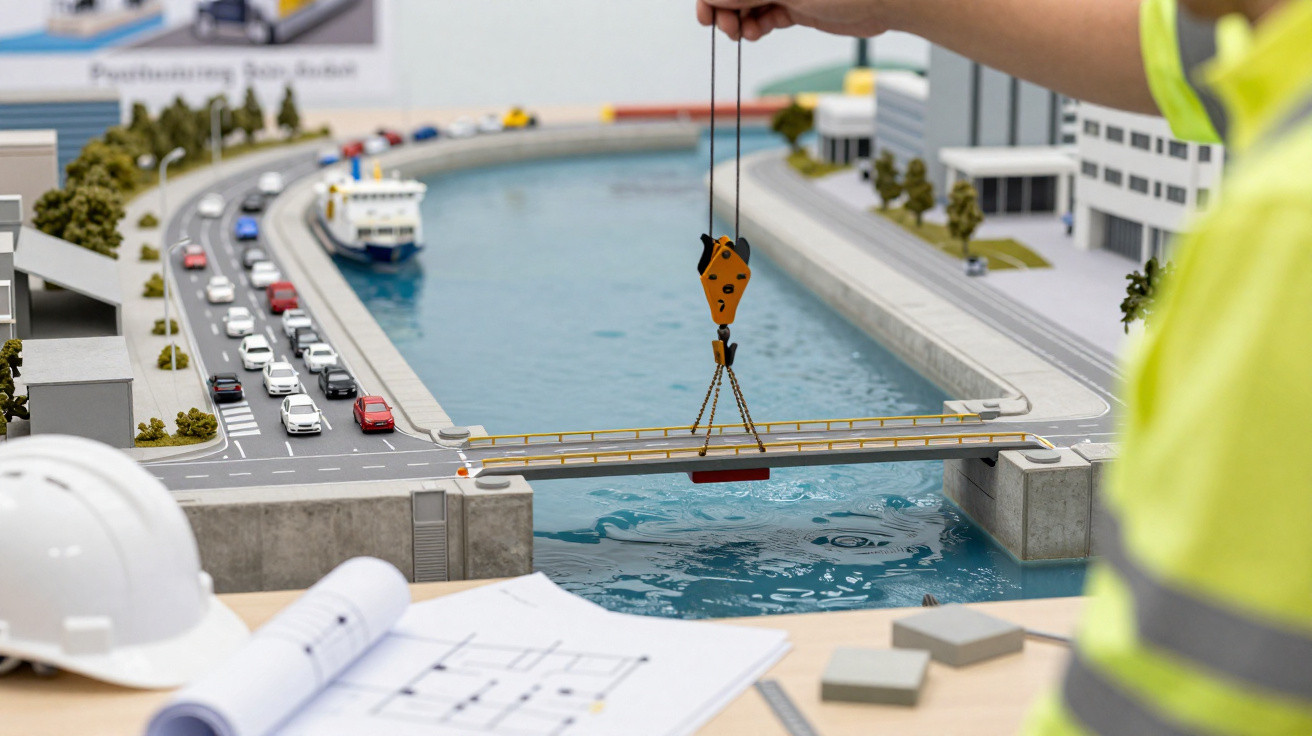
Travelling between Santos and Guarujá, on Brazil’s south-east coast, can involve a ferry crossing or a longer route around the busy port area. Queues, weather and traffic can all make what looks like a short distance on a map take far longer than expected.
A proposed fixed crossing beneath the Port of Santos navigation channel is intended to change that. The important detail, however, is often misunderstood: the reported 870-metre figure refers to the planned length of the immersed section beneath the channel, not a depth of 870 metres below the water.
What the Santos–Guarujá project involves
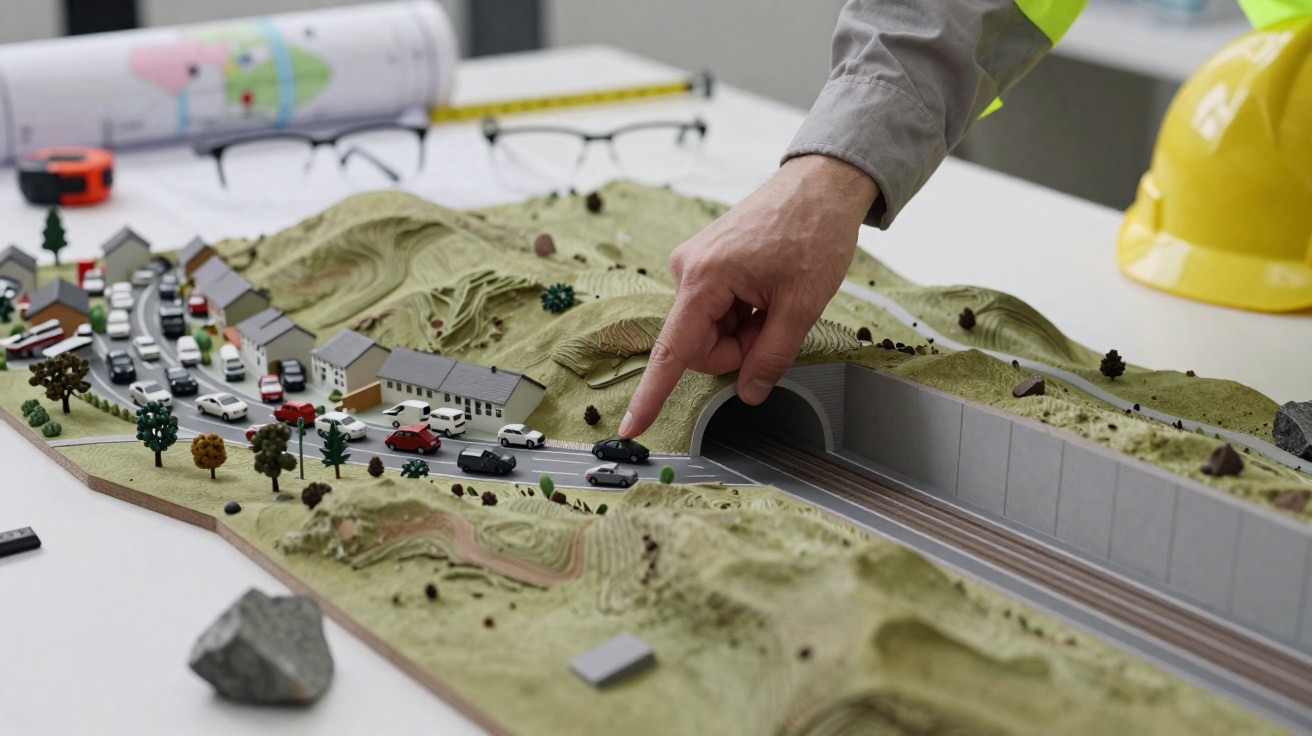
The planned link would connect Santos on the mainland with Guarujá, on Santo Amaro Island, beneath an active shipping channel serving the Port of Santos.
Published plans have described a crossing of roughly 1.5km in total, including an immersed tunnel section of about 870 metres. The final route, dimensions and facilities remain subject to detailed design and approvals.
The scheme has been described as providing space for:
- road traffic, including cars, buses and goods vehicles;
- a future or integrated connection for Santos’s VLT light-rail network;
- walking and cycling facilities;
- drainage, lighting, ventilation, communications and emergency systems;
- approach roads and junction improvements at either end.
It is not simply a shortcut for private cars. A fixed connection could reduce reliance on ferry services for some journeys and alter how local traffic interacts with port access routes.
The headline figure is the length of the submerged section, not the depth of the tunnel beneath the water.
How an immersed-tube tunnel works
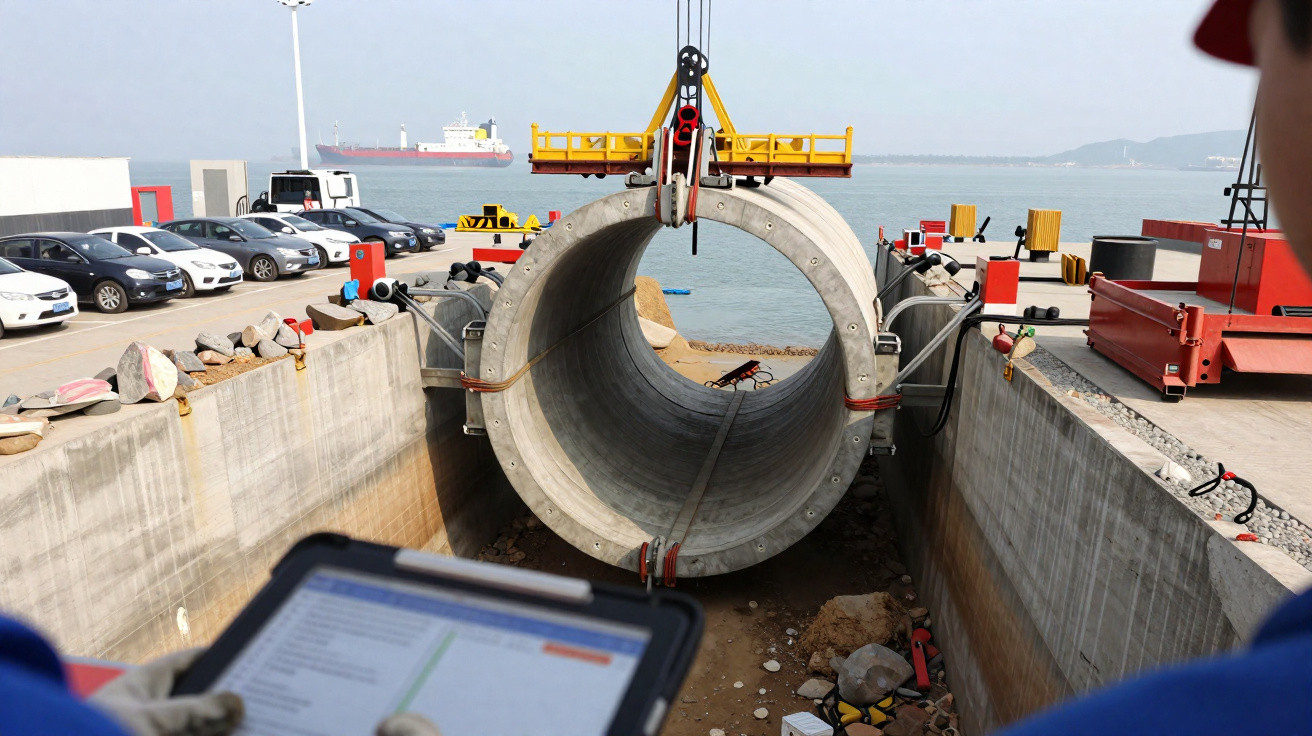
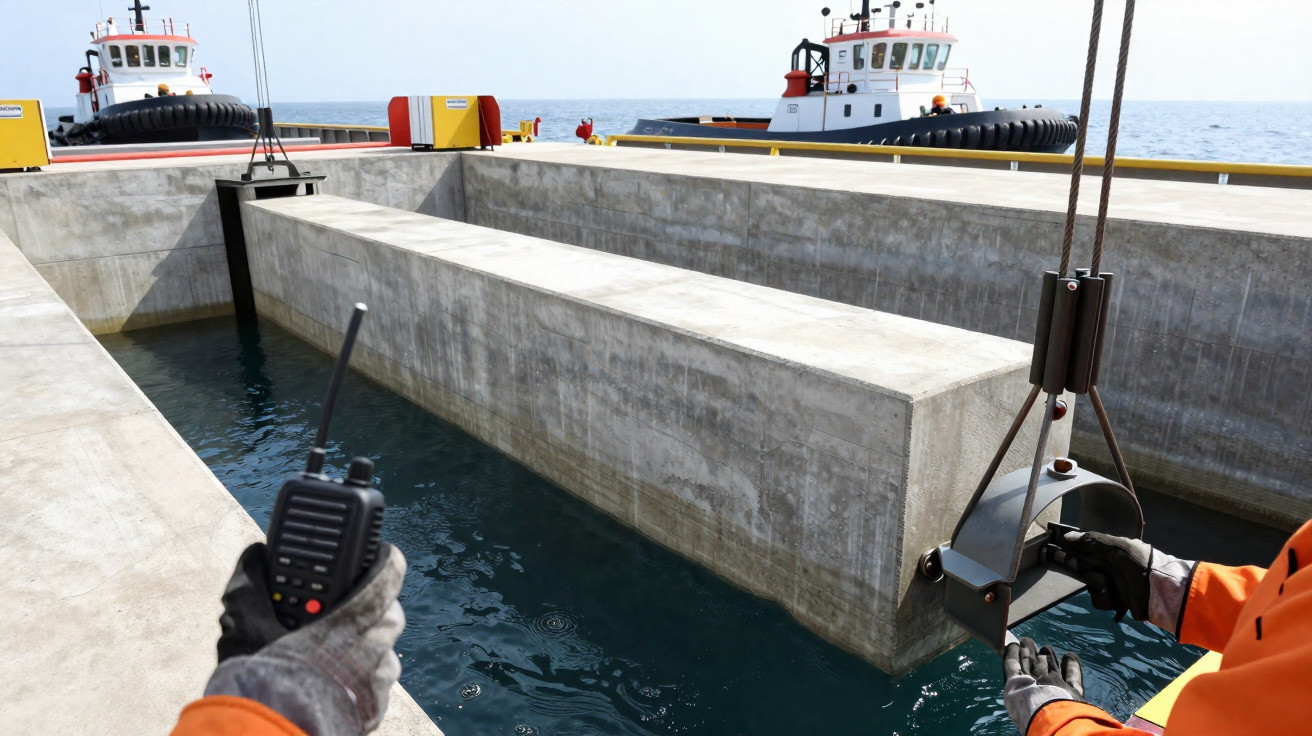
This is not expected to be a conventional tunnel bored deep through rock. The proposed method is an immersed-tube tunnel, in which large watertight concrete elements are made elsewhere, floated to the site and lowered into a prepared trench on the bed of the waterway.
This method is used where ground conditions, water depth and the layout of a crossing make it practical. It can suit a relatively shallow harbour, river or estuary route, but demands very careful planning around navigation, tides and the seabed.
The usual construction sequence
- Survey the channel and ground conditions
Engineers assess sediment, currents, existing utilities, shipping movements and the stability of the seabed. These investigations guide the route and determine how the tunnel must be protected.
- Cast sealed concrete elements
The tunnel sections are generally built in a dry dock or similar controlled setting. Temporary bulkheads keep water out so each huge element can float.
- Prepare a trench in the channel bed
Dredging creates the route for the elements. The base must be carefully levelled so the sections sit at the correct line and gradient.
- Float, lower and join the sections
Tugs move an element above the trench. It is gradually lowered using controlled ballast, aligned with the previous section and sealed with specialist joints.
- Protect, equip and test the finished tube
Protective fill is placed over the completed structure. Roads, rails, power, ventilation, drainage, fire systems and control equipment are then installed and tested.
The approach avoids some of the challenges of boring far beneath a waterway, but it introduces others. The elements are exceptionally heavy, and each underwater joint must be positioned accurately while the port continues to operate safely.
China’s connection to the scheme
The concession to deliver and operate the Santos–Guarujá crossing has been awarded to Portuguese construction and infrastructure group Mota-Engil under a public-private partnership model.
References to Chinese involvement relate to China Communications Construction Company, commonly known as CCCC, which has a strategic investment relationship with Mota-Engil. That does not mean that one Chinese company is automatically responsible for every part of the design or construction.
Large infrastructure projects normally involve several organisations, including:
- public authorities and port operators;
- the concession holder;
- investors and lenders;
- engineers and environmental consultants;
- specialist dredging, marine and tunnelling contractors;
- local suppliers and construction teams.
The eventual division of responsibilities will depend on detailed contracts and procurement decisions. The more meaningful tests are whether the project meets Brazilian environmental, engineering, navigation and public-safety requirements.
The proposed timetable to 2031
The stated aim is for the crossing to enter operation around 2031. That should be treated as a target rather than a certainty. Major marine projects can be affected by permits, detailed design changes, access to land, dredging conditions, supply chains and funding arrangements.
A broad programme would typically include:
- final design, permits and preparatory works;
- creation of site compounds and arrangements for casting the tunnel elements;
- dredging and preparation of the channel-bed trench;
- manufacture and immersion of the concrete sections;
- construction of portals, roads and rail interfaces;
- installation, testing and commissioning of operational systems.
Approach roads matter as much as the underwater structure. A fast crossing will not automatically produce a fast door-to-door journey if traffic builds up at the portals or surrounding junctions.
A tunnel can save minutes on the crossing itself, but reliable access at both ends determines the real benefit for daily travellers.
Could the journey really take five minutes?
A crossing time of around five minutes has been widely associated with the proposal, compared with journeys that can take much longer when ferry queues or road congestion are severe. In practice, a journey time depends on more than the tunnel’s length.
Factors likely to affect day-to-day experience include:
- traffic volumes at peak times;
- the final number and layout of road lanes;
- bus priority or public-transport arrangements;
- tolling, if introduced under the operating model;
- junction capacity near the port;
- rules governing lorries and other port-related traffic.
For commuters and businesses, consistency may prove as valuable as speed. A predictable crossing can be useful even when it does not deliver the best-case travel time every day.
Why the ‘first underwater tunnel’ claim needs care
Descriptions of the project as Latin America’s first underwater tunnel should be treated cautiously. Such claims depend on what counts as an underwater tunnel: an immersed road crossing, a bored rail tunnel, a river tunnel or a completed project rather than one at planning stage.
The Santos–Guarujá proposal is significant because it would pass beneath a working port channel and use immersed concrete elements. That is more informative than a sweeping “first” claim.
It is also different from the Channel Tunnel between England and France. The Channel Tunnel is a much longer rail link bored through the ground beneath the English Channel. Another comparison is the Fehmarnbelt project between Denmark and Germany, which is being built as an immersed-tube tunnel on a far larger scale.
Common mistakes when reading the plans
- Confusing length with depth. The 870-metre figure is associated with the submerged section’s length.
- Treating the opening date as guaranteed. A 2031 start remains dependent on delivery, testing and approvals.
- Assuming China is the sole builder. A shareholder or strategic partner is not necessarily the only contractor.
- Mistaking the total route for the tunnel alone. Headline route lengths can include ramps, portals and connecting roads.
- Ignoring the port. Construction and operation must work alongside one of the region’s most important shipping channels.
- Focusing only on cars. The final arrangements for buses, VLT, pedestrians and cyclists will shape the project’s local value.
Safety and the next milestones
Underwater road tunnels require robust safety systems from the outset. These include ventilation, flood protection, fire detection and suppression measures, emergency communications, lighting, incident monitoring and protected escape arrangements. They are core engineering requirements, not optional extras added at the end.
The next meaningful developments will be detailed engineering documents, environmental and navigation conditions, confirmation of the construction method and casting location, and clearer plans for road, rail, walking and cycling connections.
If it proceeds on schedule, the Santos–Guarujá link could become a notable example of immersed-tube engineering in the Americas. Its success will depend less on the drama of building beneath the harbour than on delivering a safe, dependable connection that works for people travelling on both sides of the port.






Comments
No comments yet. Be the first to comment!
Leave a Comment