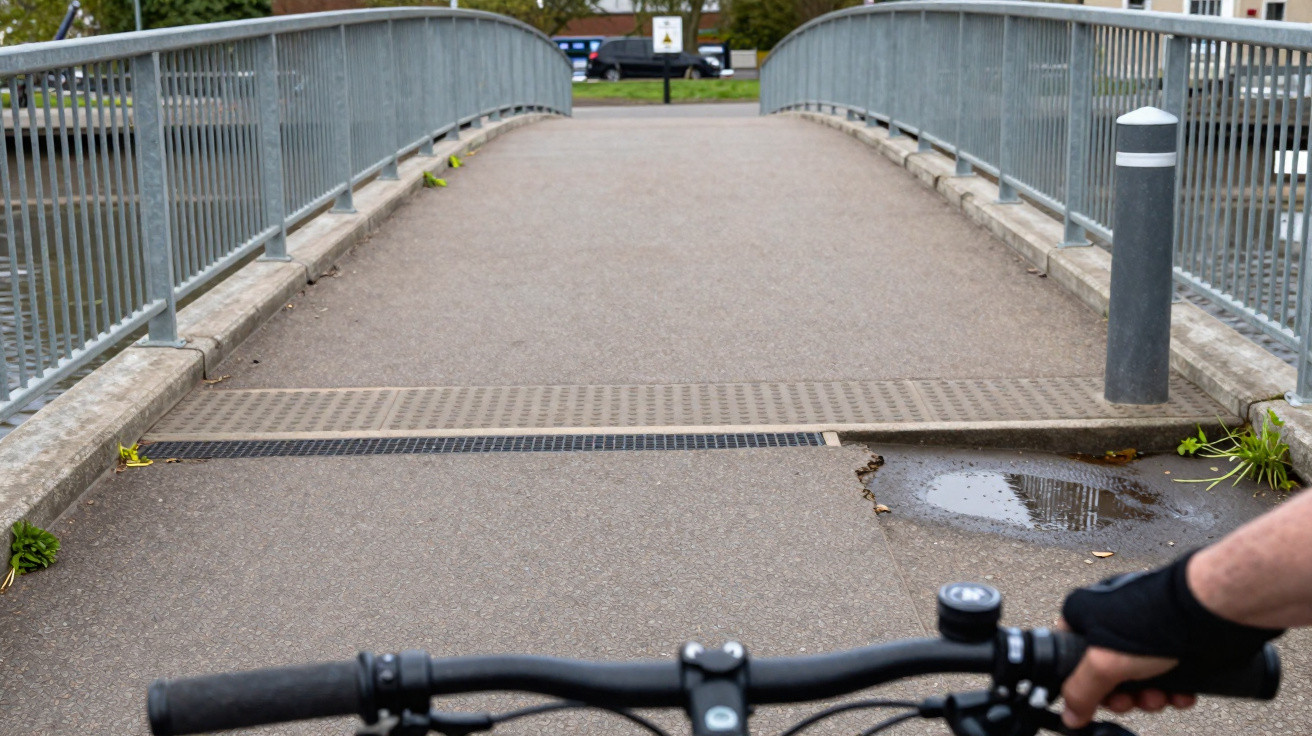
A bridge for walking and cycling should solve an everyday problem: getting safely over a road, railway or waterway without a long detour. The essential test is simple. Does it make a useful journey easier for real people, at a cost the public body can explain?
The headline makes a strong judgement about the Wichita bike-ped bridge. That judgement cannot fairly be treated as established without reliable evidence on the scheme’s purpose, final cost, alternatives, use and maintenance. But it does raise a worthwhile wider question for anyone assessing public projects: a bridge is not good value because it looks impressive; it must work as part of a complete route.
A bridge must solve a real journey problem
Cycle and pedestrian bridges can be highly useful. They may remove the need to cross fast traffic, connect neighbourhoods separated by rail lines, or give pupils, commuters and shoppers a safer route.
Equally, a structure can disappoint if it sits away from where people want to travel, adds awkward detours or ends at an unsafe junction. The bridge itself may be well designed, but it cannot compensate for missing links at either end.
Questions worth asking include:
- What barrier does the scheme remove?
- Which destinations does it connect?
- Is it on a natural route people already try to use?
- Does it save time or make an existing journey materially safer?
- Can people reach both ends comfortably on foot, by bicycle, with a buggy or using a wheelchair?
- Is there a practical alternative that would deliver similar benefits for less money?
Public infrastructure should be judged as a usable route, not as a photograph of one attractive structure.
The visible span is rarely the whole cost
It is easy to focus on steelwork, concrete, decking and railings. Yet a bridge project’s cost often depends heavily on the less visible work around it.
That may include surveys, drainage, earthworks, retaining walls, ramps, lighting, resurfacing, utility diversions, land agreements, traffic management and environmental measures. A crossing near a railway, trunk road or river can also require specialist approvals and tightly controlled working arrangements.
These costs are not automatically evidence of waste. They may be unavoidable at a difficult site. The concern arises when they were missed in early planning, poorly explained, or allowed to grow without clear public reporting.
For a UK scheme, residents should look beyond the headline construction contract. Ask whether the published figure includes design fees, land costs, approach paths, contingency, future inspections and any work needed to tie the bridge into the wider walking and cycling network.
Usage figures need proper context
A low user count can be a warning sign, but one count on one day proves very little. Weather, school holidays, local events, daylight hours and seasonal cycling patterns can all affect the result.
Good monitoring records when and how counts were taken. It considers different times of day and different seasons, and distinguishes between people walking, cycling or using other mobility aids where possible. It should also make clear what the bridge was intended to achieve.
For example, a crossing installed to replace a dangerous informal route may have safety value that is not captured by a single daily total. A bridge promoted as a major commuter connection, however, should provide a direct and dependable route at the times commuters need it.
Useful follow-up questions include:
- Are people avoiding the bridge because the approach is inconvenient?
- Are paths muddy, poorly drained or obstructed after rain?
- Is lighting adequate in winter afternoons and evenings?
- Are signs clear from nearby streets and paths?
- Has a new housing development, school or employment site changed likely demand?
A disappointing count should prompt investigation rather than instant assumptions. Sometimes the weakness is the bridge; sometimes it is a missing dropped kerb, a broken connection or an approach that feels unsafe after dark.
The approaches decide whether people use it
A bridge is only one link in a journey. The most effective schemes plan the route before and after the crossing with as much care as the span itself.
1. Follow actual travel patterns
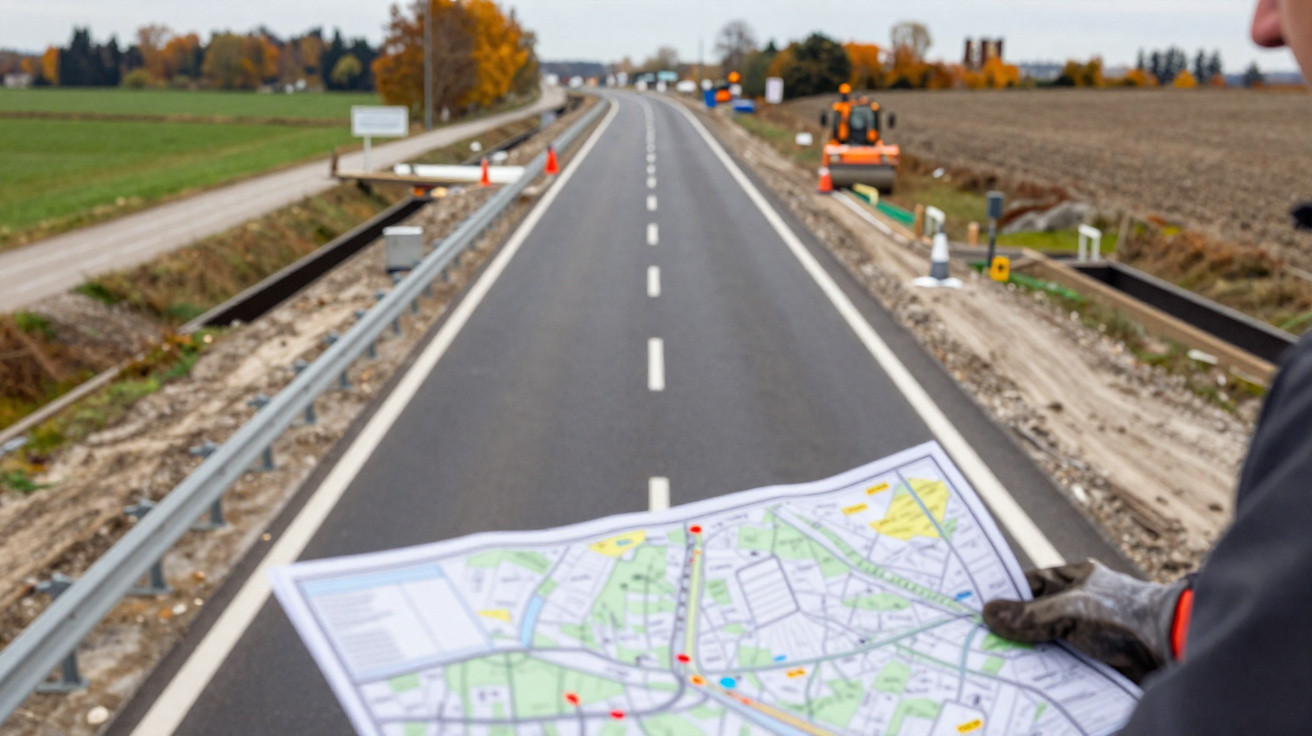
Plans should take account of where people live and where they need to go: bus stops, stations, schools, shops, parks and workplaces. A route that appears direct on a map may feel unpleasant or intimidating in practice.
2. Keep movement simple
Long detours, steep ramps, narrow pinch points and repeated road crossings can make a route frustrating. Gradients, widths and turning space matter particularly for wheelchair users, people with limited mobility, cargo bikes and parents pushing buggies.
3. Make year-round use realistic
In the UK, wet leaves, standing water, ice and early winter darkness can quickly expose weak maintenance or drainage. Durable surfacing, working lighting and regular vegetation cutting are not optional finishing touches.
4. Plan for maintenance from the start
Decks, joints, drainage channels, handrails, paintwork and lighting all need inspection and repair. The body responsible for those tasks should be identified before opening, with a realistic budget for the work.
Transparency is the answer to claims of waste
The phrase “government waste” gains force when people cannot see how a decision was made. Public bodies cannot eliminate criticism, but they can publish enough information for residents to test the case properly.
Before work begins, a clear summary should set out:
- the problem the scheme is meant to address;
- the options considered and why one was chosen;
- the expected cost range and funding source;
- key risks, including ground conditions and utilities;
- the proposed route, accessibility arrangements and maintenance responsibility;
- how success will be assessed after opening.
Once complete, a plain-English review should explain the final cost, major changes to the scheme, observed use, outstanding issues and lessons for future projects.
A project becomes accountable when its costs, compromises and outcomes can be examined openly.
For UK residents, council committee papers, planning portals and published cabinet reports can be useful places to start. Freedom of Information requests may also help, although authorities can lawfully withhold some commercially sensitive information or personal data.
Common mistakes in bridge projects
Several errors repeatedly undermine otherwise sensible active-travel schemes.
- Treating consultation as a formality. Local users may know where paths flood, where people currently cross, or which routes feel unsafe.
- Presenting forecasts as facts. Predictions should state their assumptions and acknowledge uncertainty.
- Ignoring onward connections. A bridge without convenient paths at both ends can become an expensive dead end.
- Spending on spectacle before basics. Good architecture has value, but it should not displace safe access, durable surfacing and straightforward maintenance.
- Leaving revenue costs unclear. Cleaning, inspections, vegetation management, lighting and repairs continue long after capital funding is spent.
- Publishing information too late. It is harder to build confidence once contracts are signed and construction is under way.
- Comparing only one option. Improved crossings, reduced traffic speeds, protected cycle lanes or upgraded existing routes may sometimes be more effective.
How residents can assess a proposal sensibly
It is reasonable to be sceptical about a costly project, but it is more useful to be specific. Visit the site at different times, if it is safe to do so. Look for desire lines, difficult crossings, poor drainage and gaps in the walking or cycling network.
When commenting on a consultation or writing to a councillor, identify the precise concern and suggest a practical improvement. That might mean a safer crossing point, clearer wayfinding, better lighting, a dropped kerb or an all-weather connection to an existing path.
Residents should not attempt to inspect closed structures, climb barriers or carry out repairs themselves. Report loose surfaces, damaged rails, blocked drainage, failed lighting or dangerous obstructions to the relevant council, highway authority or landowner. On shared paths, cyclists should slow down in poor visibility and on wet or icy surfaces.
Public confidence has to be earned
A bridge can be an excellent public investment when it removes a genuine barrier and creates a safe, direct connection people can use every day. It can also become a symbol of poor value when the need is unclear, the route is incomplete or the costs are hidden behind vague language.
The fair response to a contentious project is neither automatic opposition nor blind support. Ask for the evidence: the need, the total cost, the alternatives, the design details and the outcome after opening. If a bridge genuinely improves everyday journeys, it should be possible to show how and why.






Comments
No comments yet. Be the first to comment!
Leave a Comment