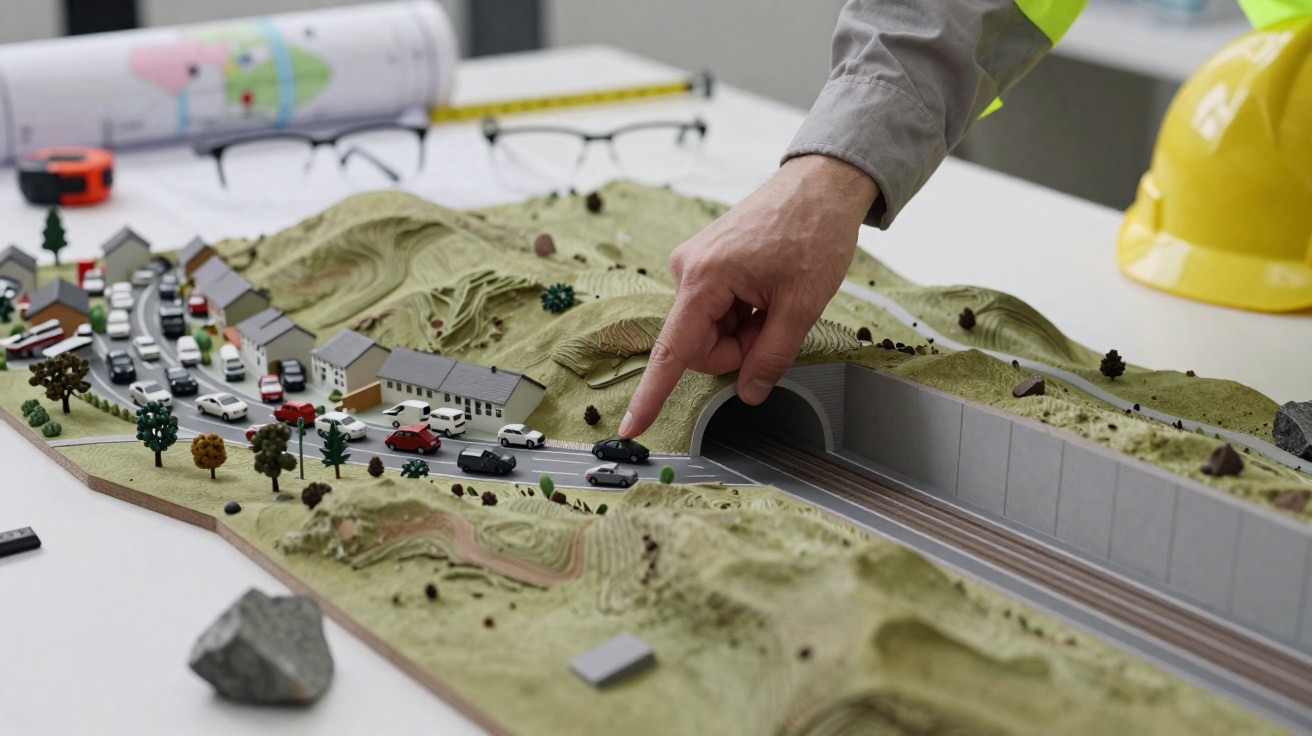
Queues through Mottram and Hollingworth are a familiar problem for people travelling between Greater Manchester, Derbyshire and South Yorkshire. The Woodhead and Snake routes carry local traffic, freight and longer-distance journeys across difficult Pennine terrain, with the effects felt in village centres as well as on the approaches to Manchester and Sheffield.
A proposed combined road-and-rail tunnel has been put forward as a possible long-term answer. The core idea is to take some cross-Pennine traffic underground, potentially reducing pressure on existing roads and improving east–west connections. But it remains an early-stage proposition, not an approved project, and the practical questions are at least as significant as the promise.
What is being proposed?
Future Works has outlined a concept for a tunnel linking the Manchester and Sheffield sides of the Pennines. Public descriptions of the idea have included a major road connection, rail infrastructure and possible use of existing Woodhead tunnel assets alongside new tunnelling.
At this stage, the precise route, tunnel layout, portal locations and rail operation are not settled. Nor is there a published scheme with the level of technical detail normally needed for formal planning, funding or construction decisions.
Supporters argue that a direct underground route could:
- reduce through-traffic on roads passing through or close to Peak District communities;
- make journeys between the two city regions more reliable;
- offer a more resilient cross-Pennine link when existing roads are congested or disrupted;
- support freight movements as well as private car trips; and
- create an opportunity to improve rail connectivity, if the rail element proved deliverable.
The attraction is clear: fewer vehicles in bottleneck villages and a more dependable way across the Pennines. The difficult part is proving that a tunnel can deliver those benefits at an acceptable cost and impact.
A scheme of this scale would need much more than an appealing line on a map. It would require detailed engineering, environmental work, public consultation, a funding plan and a credible case for how road and rail elements would work together.
Why congestion in Tameside matters
The debate is rooted in a real local problem. Mottram and Hollingworth sit near routes used by traffic heading towards the Woodhead Pass and Snake Pass, as well as traffic travelling into and out of Greater Manchester.
For residents, the issue is not only about journey times between cities. Heavy and slow-moving traffic can affect noise levels, air quality, road safety, bus reliability and the ease of walking across busy main roads. HGVs can add to those pressures, particularly where road layouts run directly through built-up areas.
There have been several attempts over the years to improve connections around Mottram. However, any new road infrastructure has to balance local relief against the possibility that it shifts congestion to another junction, settlement or stretch of road.
A tunnel promoter would therefore need to show not simply that the route saves time for long-distance travellers, but where traffic would go at each end of the tunnel. Portal roads, interchanges and freight access could be as important to local communities as the underground section itself.
The cost question cannot be skipped
Large Pennine tunnel ideas have been considered in different forms before. Past public discussion has often highlighted the potential for better east–west connections, including freight links between the ports and industrial areas on either side of the country.
The recurring obstacle is cost. Long tunnels are expensive because the bill includes much more than boring through rock. Early estimates for major projects are also inherently uncertain, especially before ground investigations and detailed design have taken place.
Future Works has suggested that a different construction approach could reduce costs compared with earlier tunnel concepts. That may be possible, but it would need to be tested independently against a defined route and specification.
A serious cost estimate would need to include:
- geological surveys, boreholes and groundwater management;
- construction access, spoil removal and treatment of excavated material;
- tunnel linings, drainage, lighting, ventilation and power supplies;
- emergency exits, control rooms, communications and incident-response facilities;
- rail track, signalling, electrification and connections to the wider network;
- approach roads, junctions, land purchases and utility diversions;
- landscape, habitat and watercourse protection; and
- long-term inspection, maintenance and renewal costs.
Inflation, construction risk and financing also matter. A lower headline figure is not enough on its own; decision-makers would need transparent assumptions about what is included and what risks sit behind the number.
Why the construction method matters
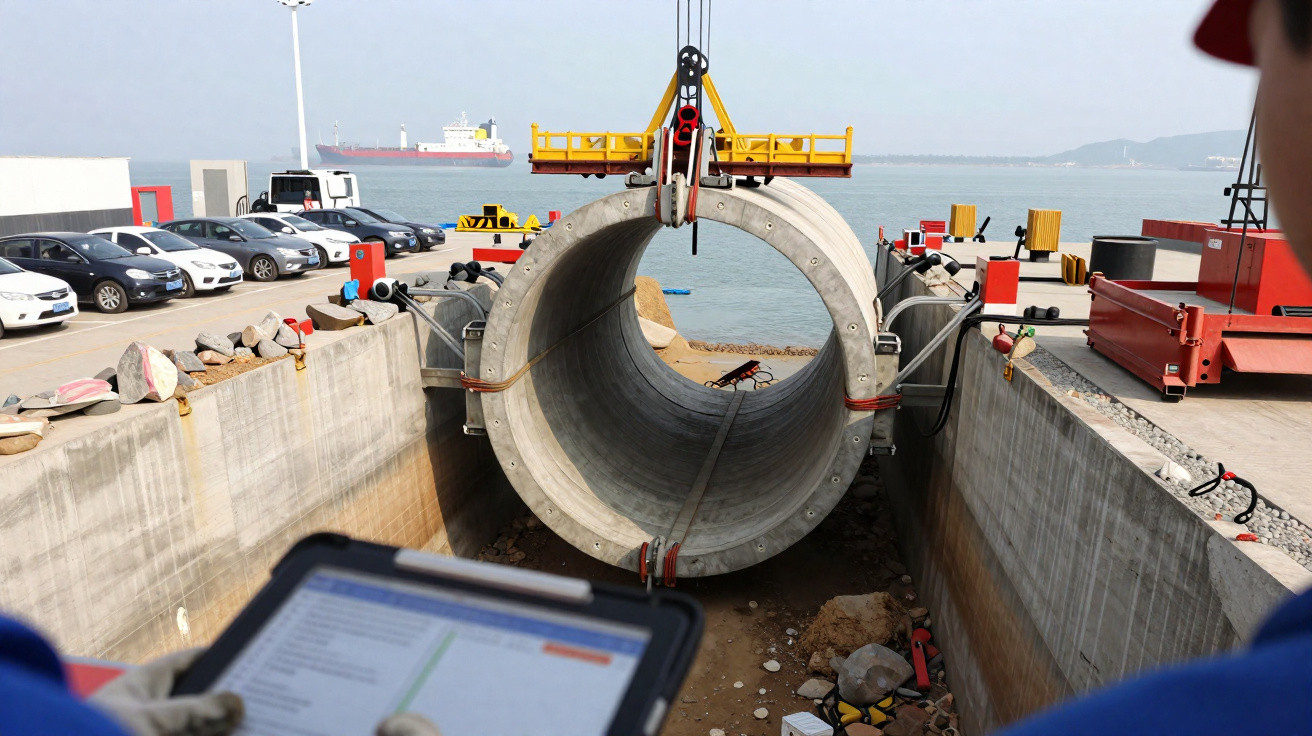
One approach discussed by the scheme’s backers is drill-and-blast tunnelling, a method widely used in suitable rock conditions. In simple terms, workers drill a pattern of holes, use carefully controlled blasting, remove the broken rock and stabilise the exposed ground before progressing.
This is not a shortcut or a low-risk alternative to engineering work. Whether it is appropriate depends on the geology along the actual route, including rock strength, faults, water ingress and the proximity of sensitive surface features.
Norway is often cited in tunnel discussions because of its extensive road-tunnel network. Its experience can offer useful lessons, but it cannot be treated as proof that the same method, cost or construction programme would apply in the Peak District.
The work needed before a decision
- Investigate the ground. Engineers would need boreholes, surveys and geological modelling across possible alignments.
- Compare route options. This includes tunnel depth, gradients, portal locations, road junctions and rail connections.
- Design for emergencies. Road and rail incidents require separate, robust evacuation, ventilation and communications arrangements.
- Assess environmental effects. The impacts on landscape, habitats, water, construction traffic and nearby communities would need formal examination.
- Test the business case. Independent appraisal should examine likely demand, benefits, costs, risks and alternatives.
Can tolls and private investment fund it?
The proposal has raised the possibility of private investment, pension-fund capital, public-private arrangements and road tolls. Such models are sometimes suggested for major infrastructure because they may reduce the need for all construction costs to be paid upfront from public budgets.
But a toll-funded tunnel would still depend on difficult choices. Set the charge too high and drivers may continue to use existing roads; set it too low and revenue may not cover the costs expected by investors and operators. Freight firms would also need confidence that the route was consistently quicker and reliable enough to justify the charge.
Public-sector involvement would not necessarily disappear. Government and councils could still face decisions on planning, land, network changes, regulation and who carries the risk if traffic levels or income fall short.
A funding model is part of the transport case, not an afterthought. It shapes who uses the route, who pays for it and whether promised local benefits are realised.
Common mistakes when discussing the tunnel
Early infrastructure proposals can quickly be described as though they are already committed. A few distinctions are important.
- A concept is not an approved scheme. There is no confirmed route, construction programme or final design.
- A cost range is not a budget. Reliable figures require surveys, specifications and realistic allowances for risk.
- A road tunnel does not automatically provide a useful rail service. Rail capacity, connections, stations, timetables, rolling stock and operating funding would all need decisions.
- Moving traffic underground does not remove all traffic impacts. New congestion could occur near portals and connecting junctions.
- A tunnel does not avoid environmental scrutiny. Underground construction can still affect groundwater, habitats, landscape, carbon emissions and communities.
Safety and environmental safeguards would be central
Long road tunnels need carefully planned fire protection, ventilation, drainage, emergency access, monitoring and trained response arrangements. A collision, vehicle fire or hazardous-materials incident can be much harder to manage underground than on an open road.
If road and rail were included in the same wider scheme, their safety systems would need clear separation and coordination. The final arrangement would be governed by detailed standards and assessment, rather than simply placing a railway beside a carriageway.
The Peak District setting raises further questions. Construction could involve substantial spoil, temporary works compounds, vehicle movements and changes around tunnel entrances. Any promoter would need to demonstrate how it would avoid, reduce or compensate for harm, and how local people would be consulted.
A bold idea that needs evidence
The tunnel concept responds to a genuine problem: crossing the Pennines by road can be slow, unreliable and disruptive for communities on the existing routes.
Its potential benefits are substantial, but so are the unanswered questions. Before it can move beyond an ambitious proposal, the plan needs a defined route, independent engineering evidence, an honest cost assessment, a workable rail strategy and meaningful public scrutiny.
For people living around Mottram and Hollingworth, that distinction matters. A long-term tunnel may be worth investigating, but it should be judged on detailed evidence and local outcomes rather than optimistic journey-time claims alone.









Comments
No comments yet. Be the first to comment!
Leave a Comment