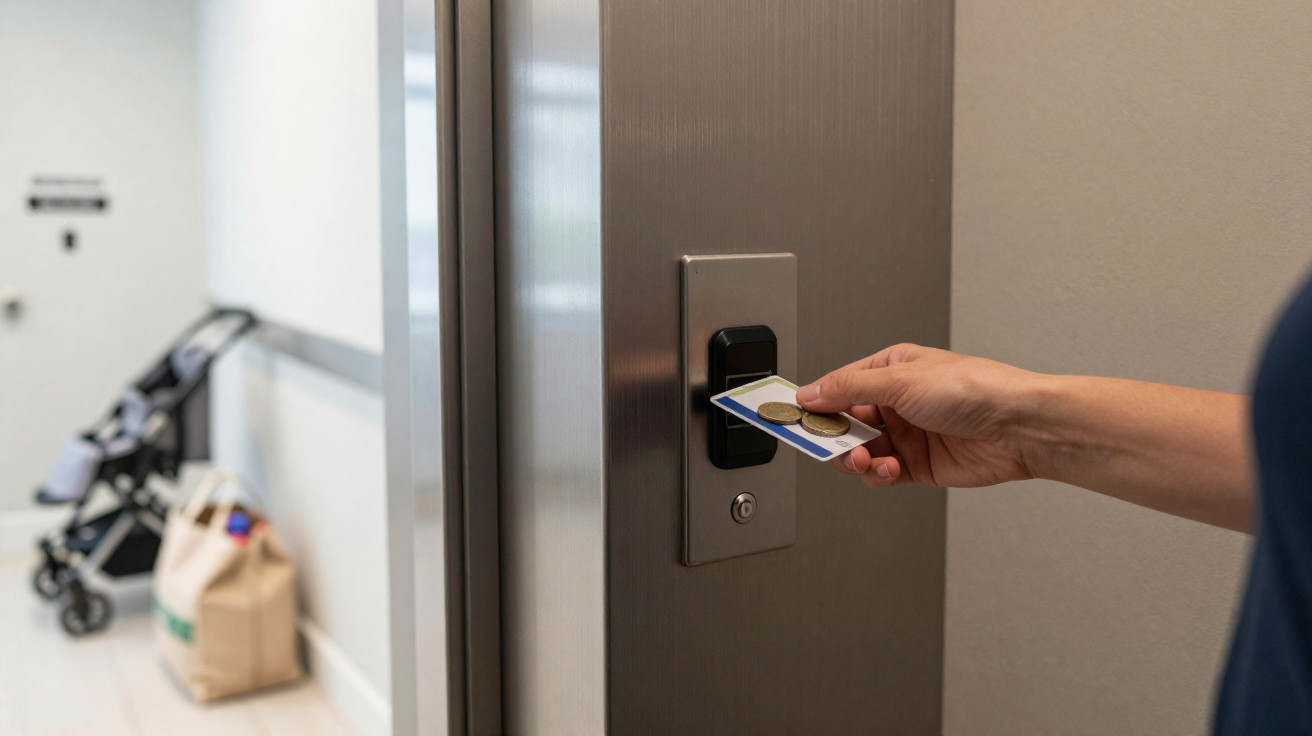
Coming home with shopping, a buggy, a suitcase or sore knees is exactly when a lift stops feeling like a luxury. In many blocks, it is the practical route to your own front door. Charging residents every time they travel between floors may sound like a tidy way to cut costs, but it can turn a shared essential into a daily barrier.
Lifts are expensive to run, maintain and eventually replace. The core issue is not whether a payment reader could be fitted - it could - but whether charging at the point of use is fair, workable and permitted by the agreements that govern the building. For most UK blocks, transparent service charges and proper forward planning are likely to be a more reliable answer.
Why lift costs put pressure on a block budget
A passenger lift is a safety-critical piece of building equipment, not simply a moving box. Its ongoing costs can include:
- electricity for operation, lighting and standby systems;
- routine maintenance and thorough examinations;
- call-outs, repairs and replacement parts;
- emergency alarm or communication equipment;
- cleaning and upkeep of lift cars, doors and landings;
- modernisation or replacement as the equipment ages.
In an older block, a single major fault can expose a budget that has been held too low for years. That is when ideas such as per-journey charging can seem tempting: managers want a visible income stream, while leaseholders are understandably worried about rising service charges.
Yet lift costs are not driven only by how often residents press the button. The lift’s age, condition, maintenance history, design and quality of past repairs can be just as important.
A lift is shared infrastructure. The question is not simply who uses it most, but how the building keeps it safe, available and affordable for everyone.
How a pay-per-journey system might work
Access-control technology can manage doors, parking areas and communal entrances, and in theory it could also be connected to lift controls. A building might use a prepaid fob or card, a monthly subscription, or a set allowance of journeys before further charges apply.
Possible approaches could include:
- a fixed charge for each journey;
- credit deducted from a prepaid fob or card;
- a monthly allowance with extra journeys charged separately;
- a subscription that activates access to the lift;
- different charges according to the floor selected.
The technology is not necessarily the difficult part. The harder questions are whether the arrangement is allowed under the lease or tenancy agreement, how exceptions would work, and whether the system would make access less fair.
It would also create everyday problems to solve: lost fobs, faulty readers, visitors, carers, deliveries, residents moving home, power cuts and disputed charges. A lift should not become unusable because a payment system has failed.
The access problem: not everyone can take the stairs
A per-journey charge would affect households very differently. A fit resident on a lower floor may regard it as a small inconvenience. For a disabled person, someone with reduced mobility, a parent with a buggy, a resident recovering from an injury or a person carrying essential equipment, the lift may be the only realistic way in and out.
Even a modest charge can add up when it is paid several times a day. It can also create worry for residents who fear running out of credit before an appointment, a care visit or a trip home with heavy shopping.
In the UK, owners, managing agents and residents’ management companies should consider accessibility and equality implications carefully before changing how a communal facility is accessed. Duties will depend on the building, its ownership arrangements and the circumstances of those affected. Take property-specific legal and accessibility advice before introducing a restriction or new charge.
Questions to ask before a proposal goes ahead
Is lift use already covered by the lease or tenancy agreement?
Check what the documents say about communal services, service charges and how costs are shared.Who would be exempt from charges?
Arrangements for disabled residents, carers, support workers and emergency access should be clear from the start.What happens if the system fails?
Residents need a dependable way to reach their homes if a fob, reader or account is not working.How would visitors and deliveries be handled?
Think about relatives, home-care teams, tradespeople, couriers and removal firms.Where would the income go?
Residents should be able to see whether money is ring-fenced for lift running costs, repairs and reserves, or used elsewhere in the building budget.
Why a service charge is usually more workable
In many UK apartment blocks, lift costs are already recovered through a service charge or estate charge, under the terms applying to the homes. The exact arrangements vary, but the principle is straightforward: residents contribute towards maintaining shared parts of the building.
A well-managed budget spreads irregular costs over time instead of relying on a sharp increase after a breakdown. It also avoids making access dependent on a resident having credit available at the moment they need the lift.
A more resilient approach to lift budgeting
- Review service reports, breakdown records and repair invoices rather than relying on estimates.
- Compare maintenance quotations carefully, including response times, exclusions and call-out arrangements.
- Build a reserve or sinking fund where the lease allows it.
- Give residents clear accounts separating electricity, maintenance, repairs and reserve contributions.
- Plan for major works well in advance, including any consultation requirements that apply.
- Do not defer necessary maintenance simply to keep this year’s service charge low.
This does not make lifts inexpensive. It does make costs more visible and easier to plan for. Shared charges may be easier for households to budget for than a stream of small, unpredictable payments.
The hidden cost of collecting small payments
A per-journey charge can look appealing on a spreadsheet because it appears to make each user pay directly. But collecting small sums comes with costs and risks of its own.
There may be installation costs for readers, controllers, software, cards or fobs. Someone must deal with account queries, failed payments, replacement fobs and refunds where charges have been taken wrongly. If the system holds resident account details, the organisation must also handle personal data appropriately.
Cash-operated equipment creates further issues. Cash has to be emptied, counted, stored and reconciled securely, while a visible payment box may attract tampering. Any alteration to lift controls must be specified, installed and maintained by competent lift professionals. Residents and building staff should never improvise changes to a lift system.
The cheapest-looking funding idea can become costly once hardware, administration, faults and resident disputes are included.
Common mistakes when trying to reduce lift spending
Treating the lift as optional
In a multi-storey building, lift access may be fundamental to daily life. A policy that appears reasonable for an able-bodied resident on a good day may exclude somebody who relies on it.
Looking only at electricity bills
Electricity is easy to spot in the accounts, but it may not be the largest financial risk. Ageing doors, worn components and major repairs can have a far greater effect on the budget.
Adding fees without checking the paperwork
Leases, tenancy agreements and company rules may set out how communal services are provided and paid for. A committee vote alone may not be enough to introduce a new charging method.
Waiting until something fails
Residents are more likely to accept necessary spending when they can see maintenance records, understand the alternatives and receive notice before a crisis.
Buying technology before understanding the building
Consider the real pattern of use. Are there regular care visits? Is the lift the only step-free route? Are deliveries frequent? A system that ignores these basics will create avoidable disputes.
Safety and access checks that cannot be skipped
Report erratic operation, damaged doors, unusual noises, trapping incidents or unreliable levelling promptly to the building manager and lift contractor. Do not force lift doors, interfere with control panels or attempt repairs yourself.
If someone is trapped, use the alarm or emergency communication system in the lift and follow the building’s emergency procedure. If there is an immediate risk to life or safety, call 999.
For managers, controlling costs must not undermine maintenance, examinations or emergency response. Use competent lift professionals, keep clear records and make sure any access-control change still allows safe access for residents, visitors and emergency situations.
A practical way to start the conversation
If your block is struggling with lift bills, ask for an evidence-based review before considering pay-per-journey access. Request recent servicing, repair and electricity costs; separate routine spending from one-off failures; and compare maintenance contracts and reserve-funding options.
Residents deserve to understand what they are paying for, while managers need a realistic plan for an expensive shared asset. Charging people each time they go home may appear neat, but it can make access harder and administration heavier. Clear accounts, timely maintenance and fair cost-sharing are stronger foundations for keeping a residential lift running.













Comments
No comments yet. Be the first to comment!
Leave a Comment