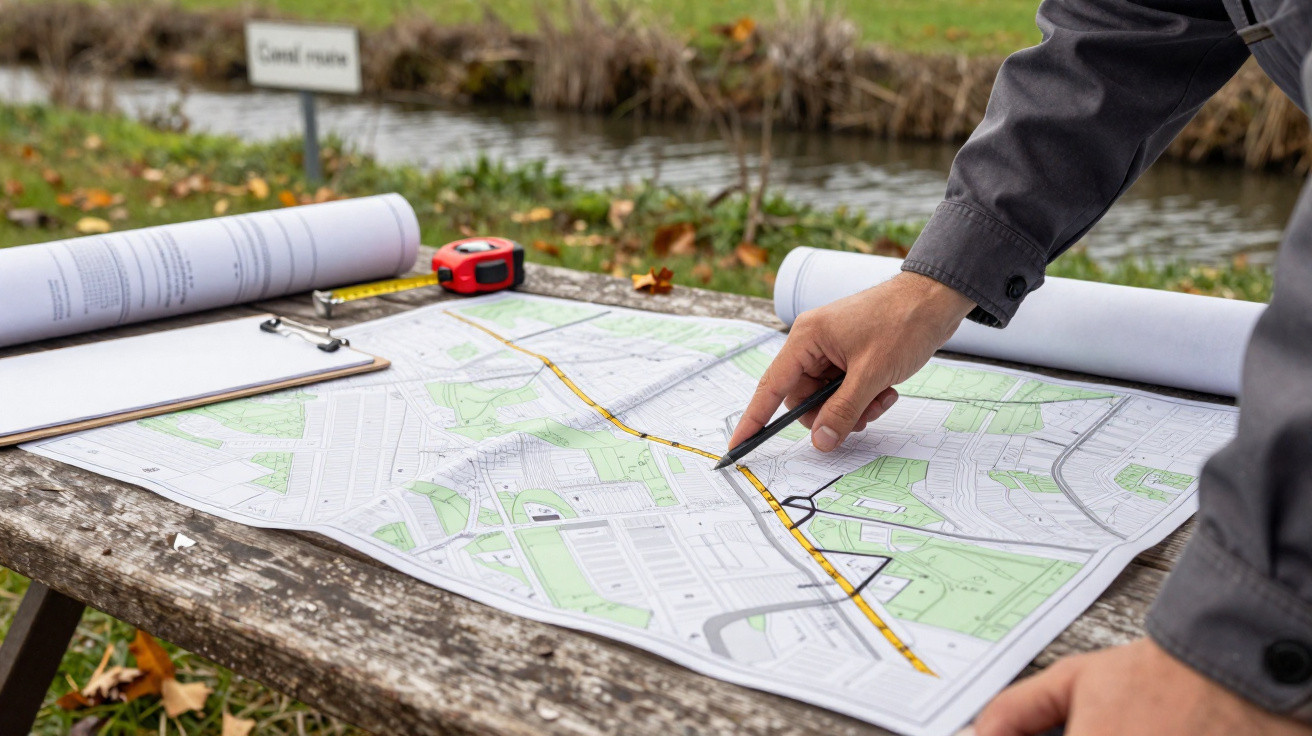
A canal does not need to be dug before it changes a landscape. For years, the planned Saône–Rhine waterway shaped ownership, development decisions and local expectations along a route through eastern France - even though the full scheme was never completed.
The useful lesson is that a transport corridor becomes real well before construction starts. Buying land, safeguarding a route and restricting development can leave a lasting footprint. If a scheme is delayed or cancelled, managing that legacy is as important as designing the original project.
A major route that never became a complete canal
The proposed Saône–Rhine high-capacity waterway was intended to link the Saône basin with the Rhine, creating a continuous inland shipping route between northern Europe and the Mediterranean network.
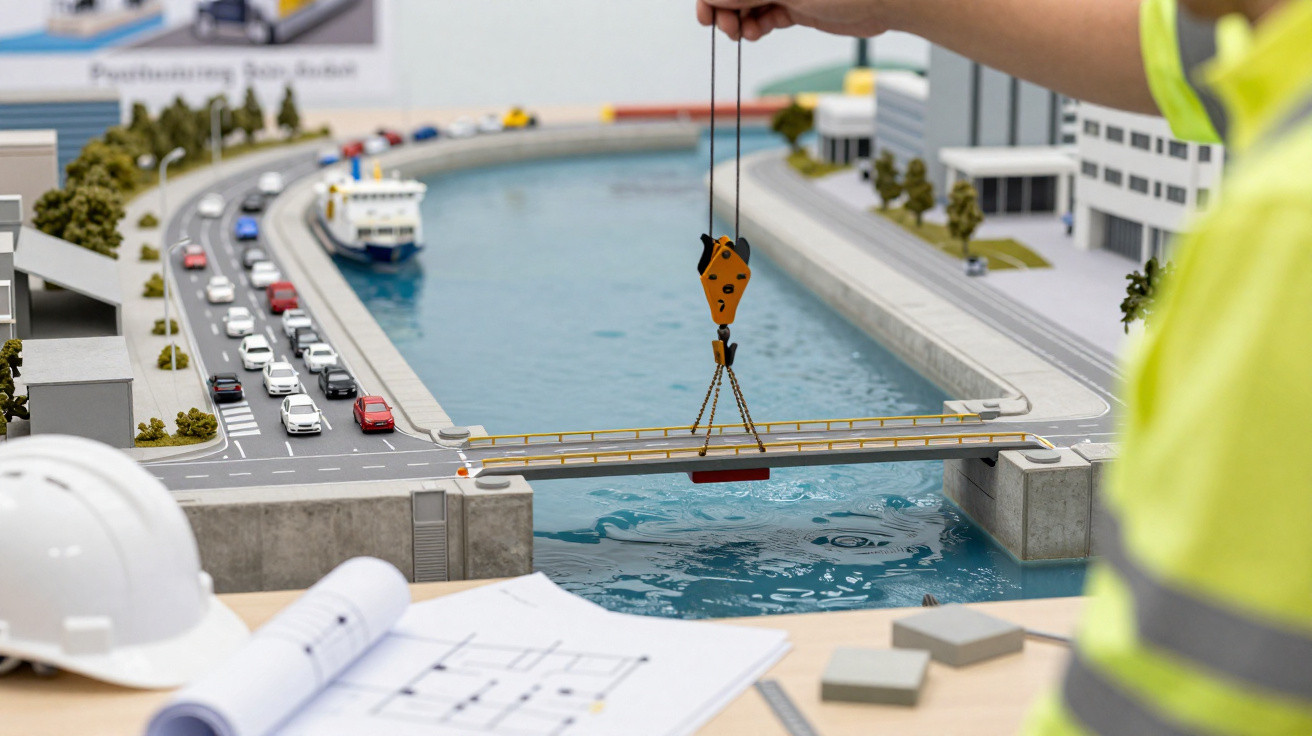
The scheme was far more than a small local canal improvement. Plans involved upgrading or constructing long sections of waterway, large locks, pumping stations, bridge works and substantial alterations around the River Doubs valley. The route would have passed through or close to places including Dole, Besançon, Montbéliard and Mulhouse.
It was promoted during a period when large-scale inland freight routes were seen as an important part of European transport planning. But the engineering challenge, environmental consequences and projected costs were all considerable.
The proposed canal was not only an engineering scheme. It was also a land-management decision affecting farms, homes, local plans and habitats.
Land acquisition made the route visible
Land was acquired for the scheme over a long period, through negotiated purchases and, where authorised, compulsory acquisition. Once parcels were in public ownership, the intended corridor could be traced on cadastral plans and in the pattern of land left outside normal development.
This is a familiar feature of nationally important infrastructure. A promoter needs more than the final route itself. Land may be required for:
- embankments, cuttings and drainage;
- construction access and temporary compounds;
- locks, pumping equipment and service roads;
- river diversions and flood-management works;
- ecological mitigation and long-term maintenance.
For people living or working nearby, however, the immediate issue was uncertainty. A safeguarded corridor can make it harder to plan new homes, farm buildings, community facilities or commercial premises. Even where there is no formal bar on every kind of development, the prospect of a future scheme can discourage investment.
Why early acquisition has lasting effects
- It protects the route. Securing land prevents later development from blocking or making a scheme more expensive.
- It gives designers flexibility. Detailed engineering can change while the broader corridor remains available.
- It can constrain local choices. Owners, tenants and councils may wait years for clarity.
- It creates a future responsibility. Land still needs maintenance, safe boundaries, insurance and a plan for use or disposal.
Legal approval did not guarantee construction
A declaration of public utility for the Saône–Rhine scheme was issued in 1978. In France, this type of authorisation can support compulsory acquisition for projects judged to serve the public interest, subject to the relevant legal process and time limits.
The authorisation was later extended, but the project was formally abandoned in 1997. Its cancellation reflected more than a procedural decision. By then, the case for the waterway had to be considered against changing freight assumptions, public funding pressures and increasingly important environmental and heritage concerns.
The proposed route would have affected river landscapes, floodplains, settlements and sensitive sites in the Doubs valley. These were not secondary details to be resolved after the main decision; they were central to whether the project could still be justified.
For any long-lived infrastructure proposal, this is the difficult reality: legal consent and assembled land can enable a project, but neither makes delivery inevitable.
The true cost went beyond the construction works
Historical estimates for the full canal ran to many billions of French francs. It is unhelpful to convert such figures directly into a modern price without careful context, as inflation, design changes, accounting methods and environmental requirements can all alter the comparison.
More importantly, the headline construction budget was only one part of the cost. Major corridors also involve:
- operating costs, including pumping, inspections, dredging and lock maintenance;
- environmental effects, such as changes to river habitats, landscapes and floodplains;
- social effects, including long periods of uncertainty for affected communities;
- landholding costs, from managing vacant plots and buildings;
- opportunity costs, where land and public money cannot be used for other priorities.
A land strategy should therefore never be treated as a brief preliminary stage. It is a commitment that may last for decades, whether or not the project is ultimately built.
Some works were completed, but the network was not
The cancellation did not mean that every element existed only on paper. Parts of the Canal du Rhône au Rhin were improved, especially towards the Rhine near Niffer and Mulhouse, and a short upgraded section was completed near Montbéliard.
These works demonstrate a wider infrastructure problem: a useful individual asset may deliver less value when the route around it is incomplete. A large lock or improved channel cannot create a continuous freight corridor on its own.
Infrastructure is often valuable because of the network it joins, not simply because of the structure itself.
That principle applies equally to rail upgrades, road junctions, cycle routes, utilities and flood defences. The benefits depend on what connects at either end, who can use it and whether the wider system is ready.
What can happen to land after cancellation?
After the project was abandoned, land bought for the route had to be managed, sold, transferred or put to another use. That sounds straightforward but is rarely quick.
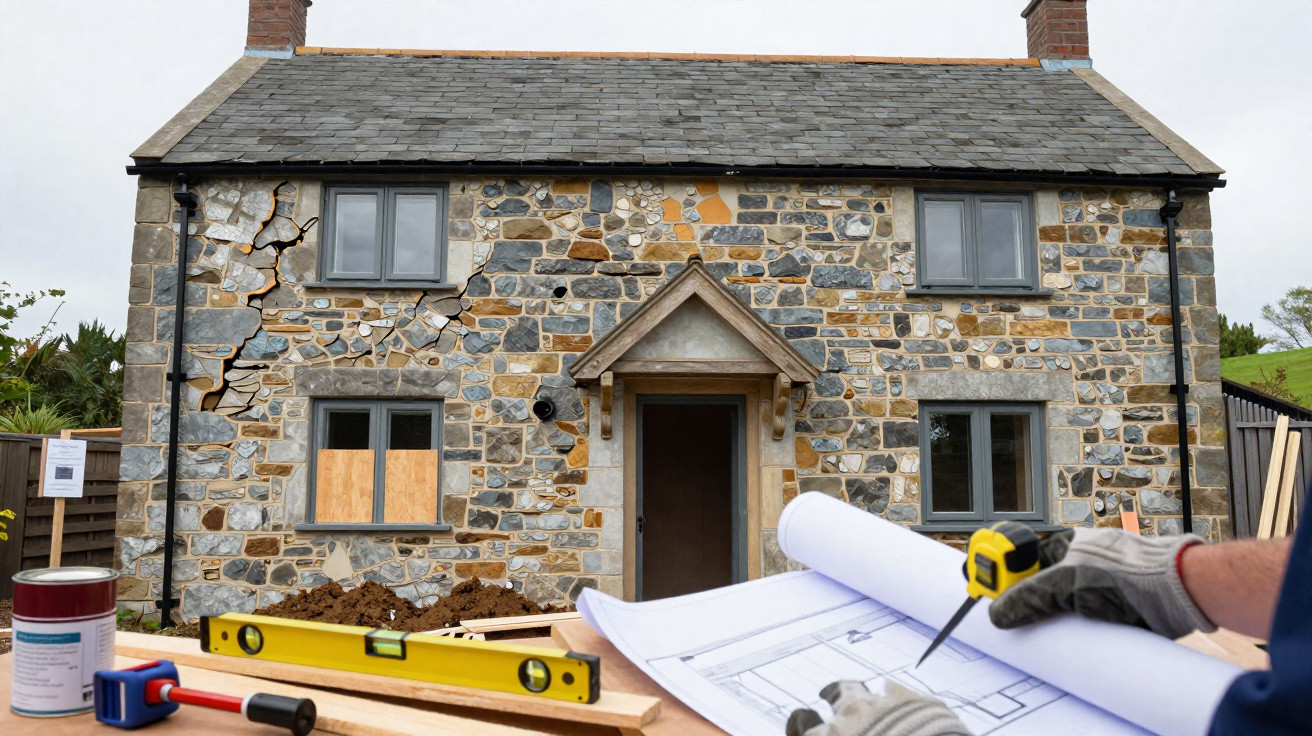
Over several decades, former owners may have moved, land parcels may have been divided, access arrangements may have changed and new environmental constraints may have arisen. A plot that once formed part of a canal corridor may later be appropriate for agriculture, habitat recovery, flood storage, public open space or local development. Other plots may have little practical value on their own.
A responsible disposal process should consider current ownership records, access rights, contamination risks, drainage, ecology, planning policy and the views of neighbouring communities. It should also be clear about who is responsible for unsafe structures, overgrown land or boundary repairs while decisions are being made.
Common mistakes in long-term corridor planning
The Saône–Rhine case highlights errors that can affect any large project, including railways, bypasses, utility routes and flood schemes.
- Buying land without a management plan. Vacant sites still need inspection, secure boundaries and safe access.
- Treating safeguarding as harmless. Delayed investment and uncertainty can affect communities even when construction never begins.
- Reviewing the business case too rarely. Freight patterns, environmental standards and costs can change markedly over time.
- Focusing on individual structures rather than the full network. A finished section may have limited usefulness without its connections.
- Giving residents vague information. People need honest updates on timescales, approvals and property options.
- Assuming an old consent settles current concerns. Climate resilience, biodiversity and heritage expectations may be very different years later.
A practical checklist for project teams
A live land strategy should run alongside the engineering programme from the earliest stage.
Before acquiring land
- Map permanent and temporary requirements, including access, drainage and construction compounds.
- Record occupiers, rights of way, services, ecology and heritage constraints.
- Explain clearly what is confirmed, what remains uncertain and when decisions will be reviewed.
- Test route options that reduce severance of farms, neighbourhoods and habitats.
While a route is safeguarded
- Keep ownership, boundary and maintenance records current.
- Review the environmental and economic case at defined points.
- Inspect vacant land and buildings, particularly after storms or flooding.
- Prepare realistic reuse, sale or restoration options in case the scheme changes.
Safety note
Disused waterways and incomplete works are not safe places to explore. Lock chambers, culverts, steep banks, deep water, hidden debris and unstable structures can be dangerous. Follow local signs and access restrictions, keep children away from unfenced water edges, and report damaged barriers, pollution or unsafe structures to the responsible authority.
The lesson of an invisible canal
The Saône–Rhine scheme shows how a proposed route can shape a region even without becoming a finished waterway. Its legacy remained in acquired plots, altered plans, partially improved sections and local memory.
Ambitious infrastructure should not be dismissed simply because it is difficult. But land assembly, design, environmental protection and an exit plan must be considered together. Once a corridor is reserved, its effects are already real - whether or not the canal is ever built.








Comments
No comments yet. Be the first to comment!
Leave a Comment