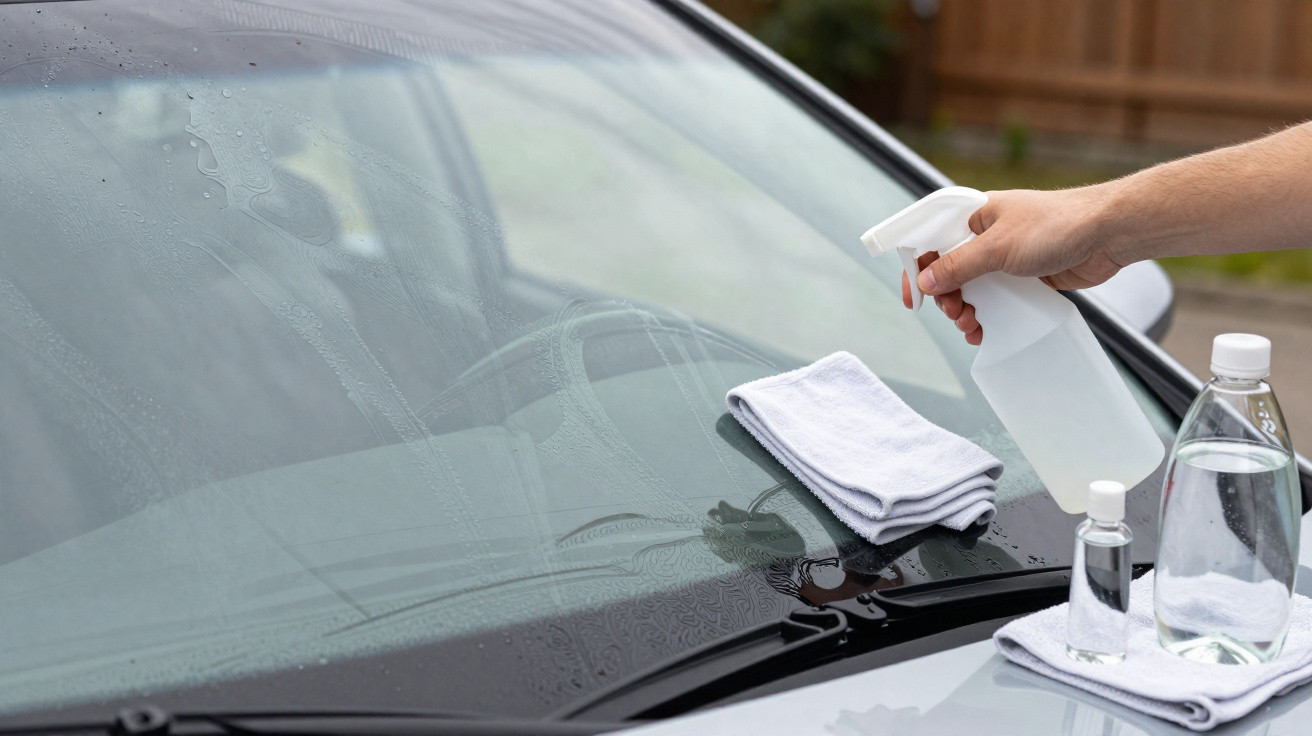
A windscreen can appear clean until low autumn sun, rain or oncoming headlights expose a greasy haze. Light scatter from road film, water marks and insect residue can make driving more tiring, especially at dawn, dusk and in wet weather.
Diluted white vinegar can help remove light mineral deposits from the outside of automotive glass, but it is not an all-purpose car cleaner. The safest approach is to apply a mild solution to a cloth rather than spraying it freely around the vehicle, then dry the glass properly with a second clean cloth.
What diluted vinegar can help remove
White distilled vinegar contains acetic acid, which can help loosen alkaline mineral residue left by hard water and dried rain. It may also shift a light greasy film that ordinary water has not removed.
It can be useful for:
- light water spotting on exterior glass;
- fingerprints and oily marks;
- road film around the lower edge of the windscreen;
- residue left after insects have first been softened with water;
- streaks caused by unsuitable cleaning products.
The benefit comes from lifting the residue and buffing the glass dry, not from leaving vinegar sitting on the windscreen.
It will not repair chips, scratches, pitting, wiper scoring or glass that has been etched by contamination. If glare remains after cleaning, particularly where the wipers sweep, the glass or the blades may need professional attention.
Why a clean windscreen matters in UK conditions
British roads can leave glass coated with drizzle, spray, grit, pollen and winter road salt. In lower sun, even a thin film can scatter light and make the road ahead harder to judge.
The exterior is only part of the picture. Misting on the inside of the windscreen is usually caused by moisture in the cabin rather than dirty glass alone. Wet coats, damp mats, blocked drainage channels, a leaking seal, a dirty cabin filter or frequent use of recirculation can all contribute.
For safe visibility:
- use the demister and air conditioning, if fitted;
- remove wet items from the car where practical;
- clear frost, snow and ice fully before setting off;
- keep washer fluid topped up with screenwash suitable for the season;
- replace wiper blades that smear, judder or have split edges.
A sensible vinegar mixture
Use plain white distilled vinegar only. Malt vinegar, balsamic vinegar and fragranced cleaning vinegars can leave residue or contain ingredients that are not useful on glass.
For occasional cleaning, mix equal parts white vinegar and clean water in a clearly labelled spray bottle. You will also need two clean, lint-free microfibre cloths: one to clean and one to dry.
Avoid adding washing-up liquid unless it is specifically intended for automotive glass. Household washing-up liquids can leave a film behind, which may worsen smearing in rain or under headlights.
Do not put vinegar in the washer-fluid reservoir. Use a purpose-made screenwash that is appropriate for the forecast temperatures and compatible with the vehicle.
How to clean the outside of the windscreen
- Park out of direct sun. Work on cool glass where possible. Cleaning fluid dries too fast on hot glass and is more likely to streak.
- Remove loose dirt first. Rinse the windscreen with clean water or use a gentle hose. This reduces the chance of dragging grit across the glass.
- Dampen the cloth, not the vehicle. Spray the diluted vinegar solution on to the first microfibre cloth. This controls the amount used and limits overspray.
- Work in small sections. Wipe with light pressure, moving across the glass rather than concentrating on one spot.
- Give water marks a moment. Hold the damp cloth against stubborn mineral marks briefly, then wipe them away. Do not scrub hard.
- Buff dry immediately. Use the second, dry microfibre cloth and turn it regularly to avoid redistributing residue.
- Check from the driver’s seat. Look towards a bright patch of sky before driving to spot any remaining smears.
Dealing with insects, bird mess and tree sap
Vinegar is not the first step for every mark. Insect remains and bird droppings should be softened with plain water before wiping. Bird mess can contain grit, so rubbing it when dry may scratch the glass.
Once the area is softened, lift the residue gently with a clean damp cloth. If a light film remains, use the diluted vinegar solution sparingly, then wipe and buff the glass dry. Rinse or change the cloth if it has picked up grit.
Tree sap can be more stubborn. Fresh spots may come away with repeated gentle cleaning, but hardened sap can require an automotive glass cleaner designed for the task. Avoid scourers, abrasive pads, blades and strong solvents unless the vehicle or product instructions explicitly permit their use on automotive glass.
Vinegar is not a frost or demisting solution
Vinegar is sometimes presented as a way to prevent frost. A diluted household mix is not a dependable safeguard against a freezing night. Frost formation depends on the temperature, humidity, wind and whether the car is exposed to the open sky.
A windscreen cover, a suitable de-icer and a proper ice scraper are more reliable choices. Never pour hot water over a frozen windscreen: the rapid temperature change can damage glass, and the water may refreeze.
Never drive with only a small cleared patch. Clear the whole windscreen and the windows needed for safe observation before moving off.
For interior misting, clean the inside of the glass with a barely damp clean cloth and dry it thoroughly. If condensation returns constantly, investigate the cause rather than repeatedly treating the glass. Damp carpets or a persistent musty smell can indicate a leak or drainage problem.
A clean windscreen helps visibility, but it cannot replace effective wipers, winter screenwash and a working demister.
Common mistakes to avoid
Most problems arise from using too much product or treating vinegar as a cure-all.
- Using neat vinegar routinely. Dilution is sufficient for light water marks and reduces unnecessary contact with surrounding materials.
- Adding it to the washer tank. Vinegar is not a substitute for screenwash and offers no dependable freeze protection.
- Spraying heavily near seals and trim. Apply the solution to a cloth for better control.
- Using kitchen roll or an old rag. These can shed fibres or hold grit that may mark the glass.
- Ignoring the wiper blades. Clean the blade edges gently with water and a cloth, and replace worn blades.
- Trying to polish away damage. Deep haze may be scratched or etched glass rather than surface dirt.
- Mixing cleaners. Combining products is unnecessary and can create safety risks.
Safety and material-care notes
Never mix vinegar with bleach or any cleaner containing chlorine. This can release harmful gases. Keep cleaning products away from children and pets, avoid spraying towards your face and wear gloves if you have sensitive skin.
Take care if the vehicle has aftermarket hydrophobic glass treatments, tinted film or other coatings. Acidic cleaners may affect some finishes or their water-repellent performance. Check the vehicle handbook and the coating maker’s care instructions; if uncertain, use the cleaner recommended for that finish.
Keep vinegar solution away from camera lenses, parking sensors, interior displays and exposed metal. If any reaches paintwork, seals or trim, rinse the area with clean water rather than leaving it to dry.
A practical routine for clearer driving
Use diluted vinegar occasionally when exterior glass has light hard-water spotting or a greasy film. For routine maintenance, clean the windscreen with an automotive glass cleaner or clean water, keep microfibre cloths in the boot and inspect the wipers regularly.
If headlights still flare badly after a thorough clean, inspect the glass in daylight. Chips, fine scratches and wiper arcs are best assessed by a windscreen repairer or automotive glass specialist. Clear glass, sound wipers and a dry cabin will make a more meaningful difference than any single household cleaning trick.













Comments
No comments yet. Be the first to comment!
Leave a Comment