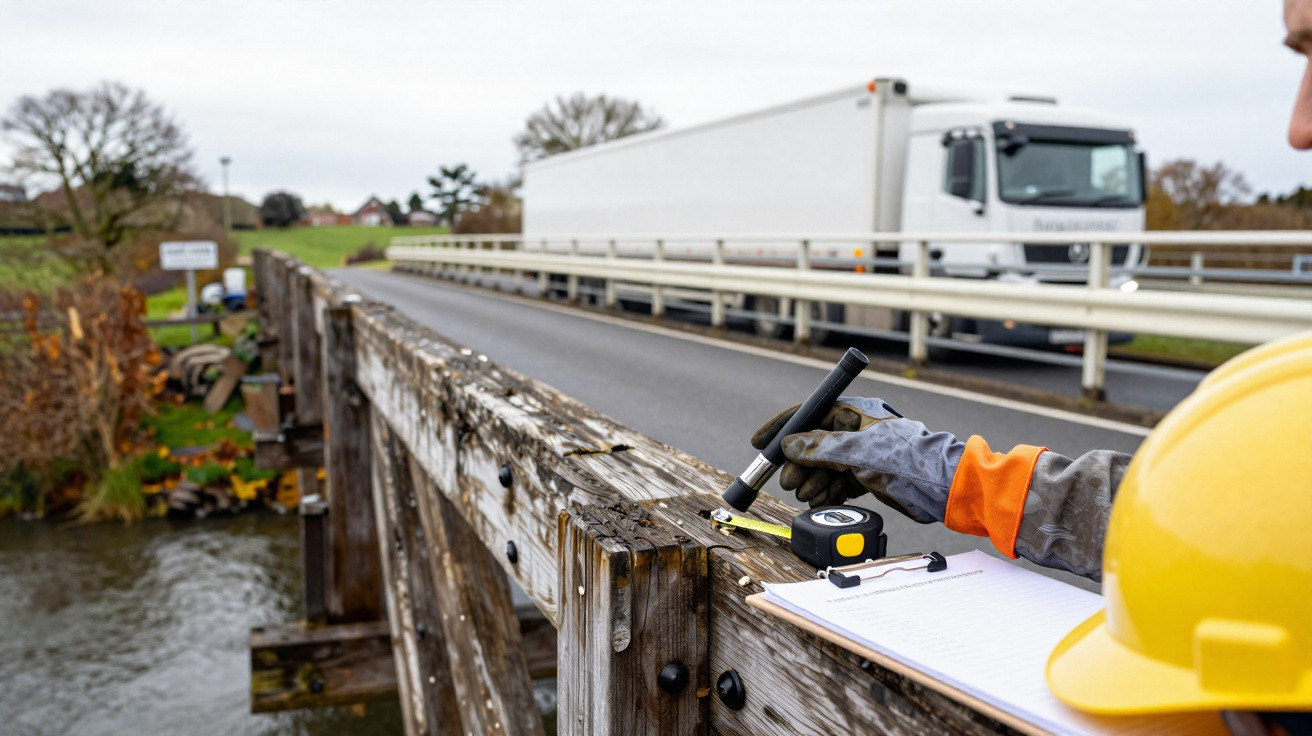
An old timber bridge can look like a quiet local landmark, yet a weight restriction can affect far more than the road immediately around it. A diverted lorry may face narrow lanes, another weak bridge, low branches, unsuitable turning points or several extra miles. For farms, hauliers, residents and emergency services, that can turn a small crossing into a major practical problem.
The key is to assess the whole route, not the bridge in isolation. A structure may be worth retaining for its history and character, but its future role needs to be clear: what can cross it safely, what must use another route, and whether that alternative genuinely works.
Why old timber bridges are difficult to manage
Many timber bridges were built for lighter, slower traffic than uses rural roads today. Age alone does not make a bridge unsafe, and a well-maintained structure can continue to serve a useful purpose. But timber is vulnerable to decay, moisture, insect damage and hidden deterioration around joints, bearings and deck elements.
Modern freight also places different demands on a crossing. It is not only the gross weight of a vehicle that matters. Axle loads, vehicle length, braking forces, road width, approach angles and the condition of the bridge approaches can all affect whether a route is suitable.
Restrictions may have wider consequences, including:
- longer journeys for deliveries, agricultural movements and waste collections;
- more heavy traffic on minor roads not designed for it;
- difficult access during harvest, livestock movements or severe weather;
- reduced resilience when another crossing is closed or flooded;
- delays for maintenance teams and emergency responders.
A weight limit is not simply a sign at the roadside. It changes how an entire local network is used.
Begin with the route, not just the structure
A professional bridge inspection is essential, but it answers only part of the question. It can establish the bridge’s condition and likely capacity; it cannot alone determine the consequences of a restriction for the surrounding area.
1. Identify who relies on the crossing
Build a picture of actual use rather than relying solely on an average traffic count. Speak to people and organisations that use the route at different times of year.
This may include:
- farmers moving machinery, feed, livestock or crops;
- local haulage firms and delivery operators;
- bus, school transport and community transport providers;
- utility companies and maintenance contractors;
- residents, pedestrians, cyclists and horse riders;
- police, fire and rescue, ambulance and other emergency services.
A bridge with modest daily traffic may still be important at particular times. Seasonal movements or an occasional abnormal load may not appear in a short survey, but may be significant for a local business or community.
2. Check diversions in real conditions
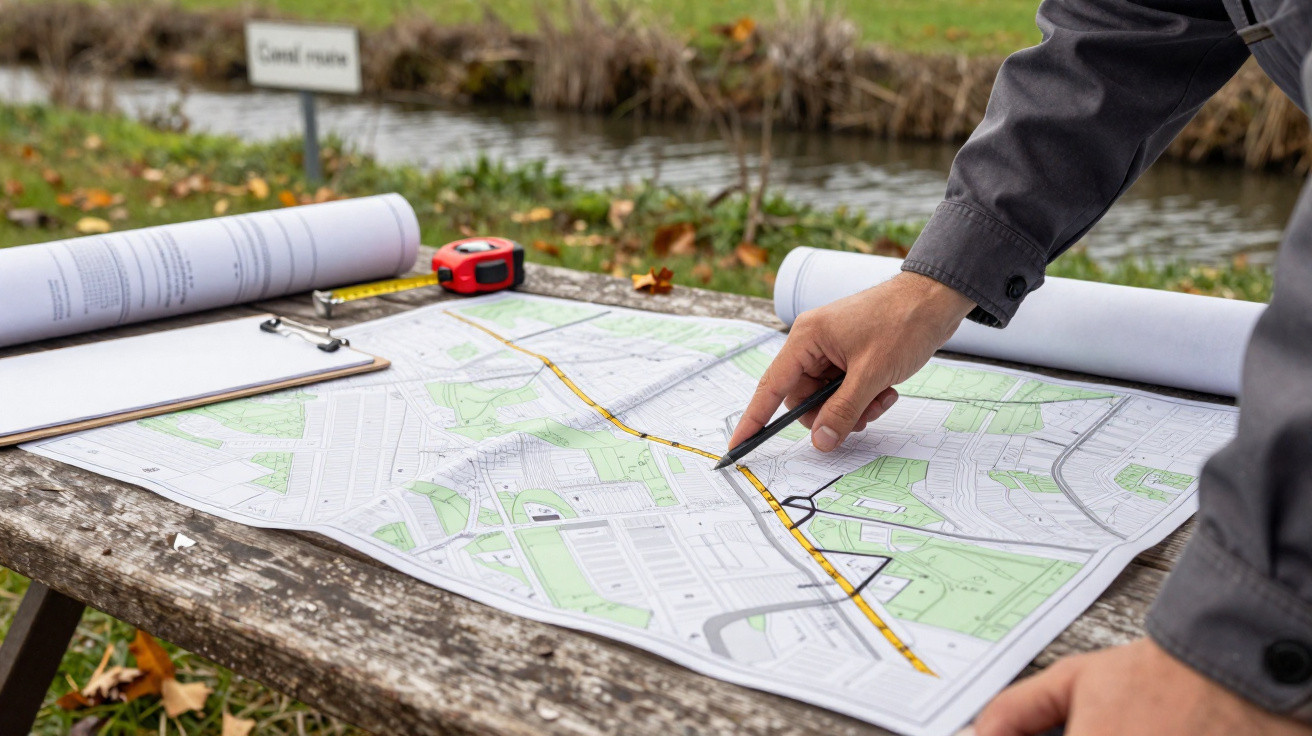
An alternative route should not be treated as viable merely because it appears on a map. Check whether it is suitable for the vehicles expected to use it.
Consider:
- other bridges and their posted restrictions;
- lane width, bends, steep gradients and junction geometry;
- low branches, overhanging buildings or low structures;
- turning space for articulated vehicles and agricultural machinery;
- flood-prone sections and winter maintenance arrangements;
- road surfaces and verges likely to be damaged by repeated heavy use.
Where possible, highway authorities and operators should assess the diversion using the relevant vehicle type. A route that is manageable for a van may be impossible for a loaded rigid lorry or a tractor with a trailer.
3. Consider resilience, not only convenience
A route with one usable crossing can become a weak point during flooding, storms, collisions or planned maintenance. In rural parts of the UK, particularly where watercourses rise quickly, an apparently minor bridge may be essential when other roads are impassable.
Recording previous closures, flood patterns and emergency access issues helps distinguish a mildly inconvenient diversion from one that creates a serious network problem.
Understand what the bridge can safely do
Load limits, closure decisions and repair proposals should be based on a competent structural assessment. Visual appearance is not a reliable guide: timber can look weathered yet remain sound, while decay may be concealed within a member or connection.
The bridge owner or responsible highway authority should keep clear records of inspections, defects, repairs and restrictions. Where a timber bridge is historic, surveys may also need to identify significant original features before work is planned.
The right question is not whether an old bridge “looks strong”. It is what a qualified assessment says it can safely carry, and under what conditions.
Give heritage and access equal weight
Historic bridges can have value beyond their transport function. Their design, materials, setting and connection to a place may matter greatly to local communities. In some cases, retaining a bridge for walking, cycling or light local traffic may be preferable to losing it altogether.
At the same time, heritage value does not remove the need for safe, reliable access. A sound decision explains both sides openly.
For the heritage case, document:
- the bridge’s age, design and surviving original fabric;
- its setting and contribution to the local landscape or streetscape;
- whether repairs can retain significant elements;
- ongoing inspection, maintenance and access requirements.
For the transport case, set out:
- vehicle types, typical loads and frequency of use;
- the purpose of journeys and seasonal peaks;
- the quality of diversion routes;
- likely future demand and the consequences of closure.
This avoids a false choice between preservation and practicality. The aim is to define an appropriate role for the bridge and make sure the wider route can support that decision.
Options beyond “keep it or replace it”
A good appraisal should compare realistic alternatives rather than moving straight to a preferred answer.
Retain with restrictions
This can suit a bridge of particular historic interest where heavier vehicles have a safe and practical alternative route. It requires clear signing, regular inspection, enforceable restrictions and a funded maintenance plan.
Repair for a defined use
Repair or strengthening may allow the bridge to remain open to pedestrians, cyclists, cars, agricultural vehicles or specified lighter vehicle categories. Any limits must be clearly communicated and supported by the structural assessment.
Build a parallel crossing
A nearby modern bridge can carry heavier traffic while the older structure is retained. This may offer a balanced solution, but it can involve land requirements, planning permissions, environmental assessment, drainage work and improvements to approaches on both sides.
Replace the crossing
Replacement may be appropriate where the bridge is in poor condition, the route has strategic importance and there is no credible alternative. If the existing structure has heritage significance, recording it properly and retaining elements where practicable should be considered as part of the project.
What effective consultation looks like
Consultation is most useful when it gathers evidence, rather than simply asking whether people support or oppose a proposal. Local knowledge can reveal issues that desktop work misses: a recurring flood point, the only safe turning place, or a particular period when farm traffic is essential.
A helpful response to a bridge consultation should include:
- the bridge and route concerned;
- the vehicle types affected;
- the normal frequency and purpose of journeys;
- the present operational problem or restriction;
- the proposed diversion and its practical shortcomings;
- relevant safety, access or seasonal issues;
- a preferred option, including any heritage concerns.
Accurate photographs, route maps and records of past closures can add useful context. Specific examples are more persuasive than general frustration, particularly where they can be checked by the authority.
Common mistakes in ageing-bridge plans
Several mistakes can undermine otherwise sensible proposals.
- Relying only on traffic counts. They can miss seasonal freight, agricultural movements and occasional essential journeys.
- Assuming a signed diversion is automatically suitable. It may contain another restricted bridge, a sharp bend or a flood-prone lane.
- Leaving maintenance until an urgent closure is needed. Planned work usually gives communities and operators more time to prepare.
- Ignoring approach roads. A stronger bridge does little if the approaches cannot safely accommodate the intended traffic.
- Treating heritage and access as mutually exclusive. A parallel crossing or lighter-use role may protect both interests.
- Consulting after decisions are effectively fixed. Users should have an opportunity to provide evidence while options can still change.
Safety and practical next steps
Never attempt informal repairs, strengthening or load testing on a bridge. Do not remove timbers, drill structural members, add makeshift supports or drive a vehicle over a posted limit. These actions can cause sudden failure and may put other road users at risk.
Bridge inspections and works should be managed by appropriately qualified professionals. Work near water also requires proper planning for unstable surfaces, falls, hidden decay, traffic management, overhead services and changing weather conditions. Never enter a watercourse or work beneath a bridge during high flows or flood warnings.
For local authorities, landowners and communities, the practical next step is simple: gather sound condition evidence, map real journeys and test diversion routes honestly. Then set out what the old bridge will do, what any replacement or parallel crossing will do, and how both will be maintained.
A timber bridge does not have to carry every modern freight vehicle to remain valuable. But where it holds up vital access, the answer must be more than a weight-limit sign: it needs a safe, workable plan for the whole route.













Comments
No comments yet. Be the first to comment!
Leave a Comment