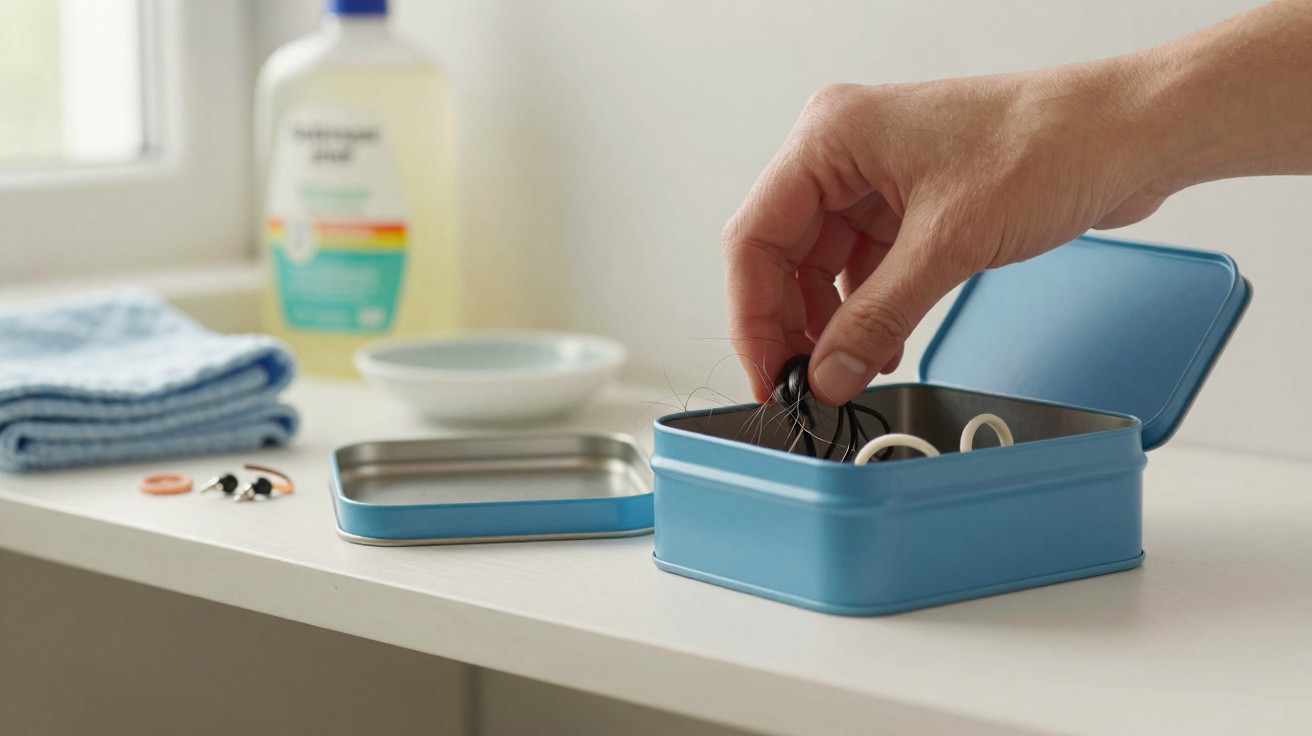
An empty blue Nivea cream tin is easy to dismiss once the last of the moisturiser has gone. But its compact shape and close-fitting lid make it useful for one simple job: keeping a small, easily lost category of household items together.
The best approach is not to turn every tin into a craft project. Clean it thoroughly, check that it is undamaged, then give it one practical purpose - from hair grips in the bathroom to buttons in a sewing drawer.
A small container is most useful when it gives one awkward type of clutter a permanent home.
Clean and check the tin first
Remove all remaining cream before reusing the tin. Oily residue can transfer to jewellery, paper, fabric and other items stored inside.
1. Wash, dry and inspect it
- Wipe out the last traces of cream with kitchen roll or an old cloth.
- Wash the tin and lid in warm water with washing-up liquid.
- Use a soft brush or old toothbrush around the rim.
- Rinse thoroughly and dry with a tea towel.
- Leave the tin and lid separate for several hours, so no moisture is trapped inside.
Inspect the inside and edges once it is dry. If there is rust, flaking material, a sharp edge or a badly bent lid, do not reuse it for storage. Check your local council’s guidance before putting small metal packaging in household recycling, as arrangements vary.
Make a bathroom mini-organiser
Bathroom drawers have a habit of collecting loose grips, hair ties, spare razor heads and half-used packets of plasters. A lidded tin helps keep one group of small items clean, contained and easy to find.
Suitable uses include:
- hair grips and small hair elastics;
- spare earrings or travel jewellery;
- safety pins and collar stays;
- plasters in their individual wrappers;
- a few cotton buds, provided the tin stays dry;
- a compact sewing repair kit.
Choose a single category for each tin. A container filled with unrelated odds and ends quickly becomes another version of the messy drawer it was meant to improve.
For a shared bathroom, a small coloured sticker or discreet mark on the base can help everyone remember what belongs inside. Avoid writing on the lid if you prefer to keep its original appearance.
Keep handbag essentials in one place
Hair grips, spare buttons and safety pins are useful until they disappear into the bottom of a handbag. A small metal tin protects these items better than a paper envelope and is easy to transfer between bags.
A simple handbag kit might contain:
- two or three plasters;
- a few safety pins;
- hair grips;
- a spare button;
- a short length of thread wound around card;
- a folded emergency contact number, if that would be useful.
Avoid putting liquids directly in the tin. A cosmetic tin is not a guaranteed leak-proof travel container, even if the lid feels secure. Keep hand sanitiser, perfume and creams in their original containers instead.
The most successful reuse projects are the ones you reach for every week, rather than the ones left unfinished in a cupboard.
Tidy desk and craft supplies
Small desk items can create an outsized mess. Paper clips, drawing pins, rubber bands, USB adaptors and spare leads are all prone to wandering around a drawer. A tin gives them a defined place and stops them rolling about.
It also works well for craft supplies such as:
- buttons sorted by colour;
- beads and jewellery findings;
- embroidery floss bobbins;
- small paintbrushes;
- replacement blades kept in their protective sleeves;
- miniature dollhouse or model-making pieces.
Take particular care with needles, pins and blades. Do not use a tin as a casual loose-sharps container, especially in a home with children or pets. Keep sharp items in their own secure packet or case inside the tin, and store the tin out of reach.
A simple pincushion lid
If you sew regularly, a padded lid can make a useful pincushion while the tin stores thread or buttons below.
Cut a fabric circle slightly wider than the lid. Put a small amount of toy stuffing or wadding in the centre, gather the fabric underneath and secure it to a card circle that fits inside the lid. Strong glue or stitching can work, depending on the materials.
Keep glue away from the rim so the lid will still close properly. Let it dry fully, following the adhesive instructions, before using the pincushion.
Give the lid a restrained makeover
The familiar blue finish can look smart without any alteration, but a subtle marker is useful if you keep several tins in one drawer. A coloured dot, a small adhesive label or a simple painted design is usually enough.
For paint or decoupage, clean and dry the outer surface first. Apply thin coats and allow each one to dry in a well-ventilated space. A craft varnish can protect the finish, but it should be fully cured before the tin is put back into use.
Keep the inside plain. Paint, glue and paper lining can make the tin harder to clean and may peel over time.
Use it as a cover pot, not a planter
A small cream tin can work as a decorative cover pot for a tiny succulent or cactus on a bright windowsill. The safer option is to leave the plant in its original nursery pot and stand that pot inside the tin.
This makes watering easier: take the plant out, water it over the sink, let excess water drain away, then return it to the tin. It also prevents water sitting against the metal and causing corrosion.
Planting directly into the tin is less practical. It would need drainage holes, which can leave sharp edges and require suitable tools and eye protection. A cover pot avoids that risk altogether.
In UK homes, cool windowsills and lower winter light mean many houseplants need less water in the colder months. Keep any planted tin away from untreated wood, as condensation or drips can mark furniture.
Avoid food and candle uses
It may be tempting to pack sweets, nuts or grapes in a freshly cleaned tin. However, a container made for cosmetics is not necessarily intended for repeated food contact. It is better reserved for non-food storage, with a purpose-made lunchbox or snack pot used for anything edible.
Homemade candle projects also need caution. Metal can become very hot while a candle is burning, and candle-making involves hot wax, fragrance oils and, later, an open flame. If you make candles, use containers specifically intended for that purpose, follow the wax supplier’s instructions and never leave a burning candle unattended.
Do not use a damaged, rusty or heavily scratched tin as a candle holder.
Common mistakes to avoid
A reuse project should solve a problem, not introduce another one. Avoid these common errors:
- Putting the tin away damp. Trapped moisture can cause corrosion and spoil fabric or paper items.
- Using it for loose medicines. Keep medicines in their original labelled packaging and store them safely away from children.
- Assuming it is food-safe or watertight. It may not be suitable for either job.
- Keeping loose needles or blades inside. Secure sharp items separately and store them safely.
- Trying to make drainage holes without suitable equipment. Sharp metal edges are a real risk; use the tin as a cover pot instead.
- Painting over grease or dust. A finish will last longer on a properly cleaned surface.
- Holding on to a damaged tin because it might be useful. Rust, sharp edges and flaking surfaces are good reasons to recycle it.
Keep one only if it earns its place
Rather than saving every empty tin, keep one clean example in a small box of useful containers. When you need somewhere for paper clips, spare buttons or hair grips, it will be ready.
If no genuine use appears after a few weeks, recycle it according to your local authority’s rules. Reuse is worthwhile when the tin replaces clutter or saves you buying another organiser. If it does neither, recycling is the sensible next step.













Comments
No comments yet. Be the first to comment!
Leave a Comment