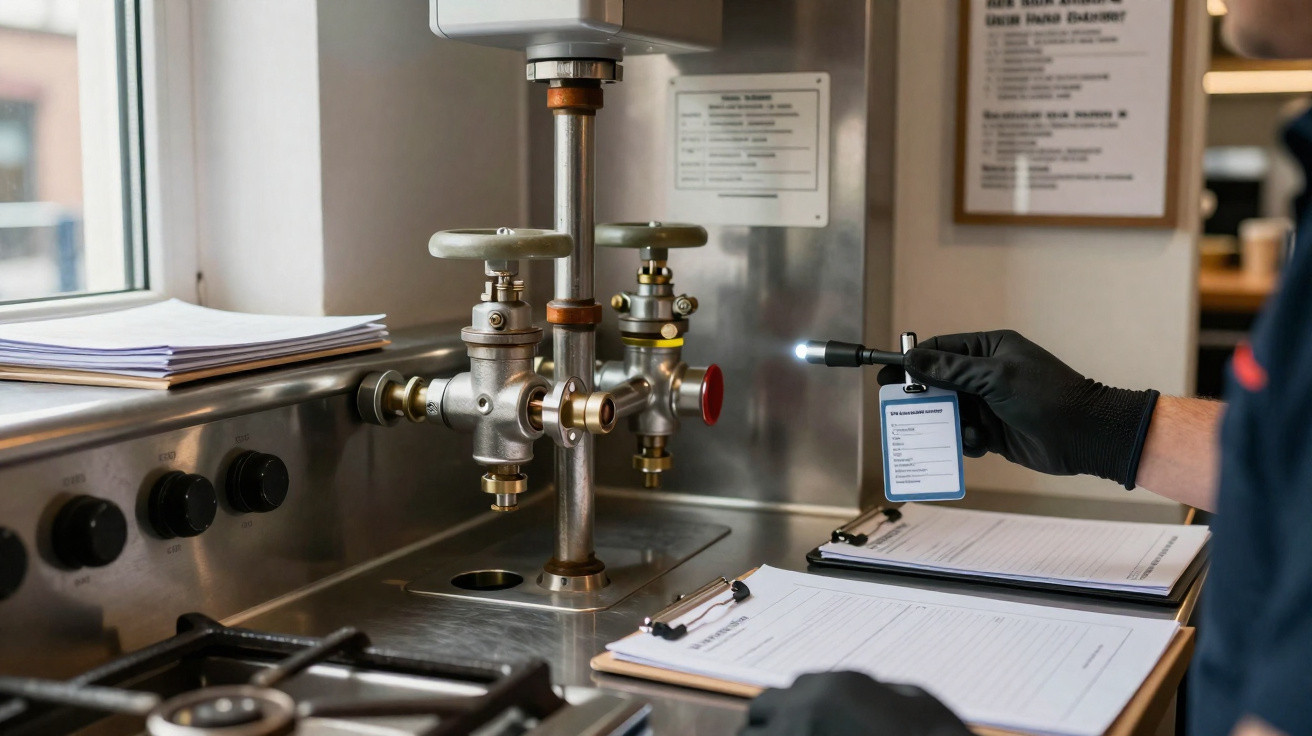
A boiler failure, a commercial kitchen refit or an urgent heating repair can put a business under pressure to get someone on site quickly. But gas work in a café, office, workshop, hotel or care setting is not a job to award on availability alone. The essential check is straightforward: use a Gas Safe registered engineer whose qualifications cover the particular appliance, fuel and work required.
Commercial systems can be more complex than domestic ones, and a poor decision can mean disruption, unsafe equipment and a costly closure. Checking credentials before work begins, agreeing the scope in writing and retaining the paperwork will make routine maintenance and emergency repairs much easier to manage.
Commercial gas work is not simply domestic work on a larger boiler. The engineer’s qualifications must match the appliance, the fuel and the setting.
Why commercial gas work needs closer checks
Commercial premises may have larger boilers, catering appliances, warm-air heaters, water heaters, laundry equipment or pipework serving several parts of a building. Equipment may also sit in roof plant rooms, basements, kitchens or other locations with restricted access.
The consequences of poor work can affect far more than one household. A fault could close a kitchen, interrupt trading, leave guests without hot water or affect staff, residents and customers.
In Great Britain, gas work covered by the relevant safety rules must be undertaken by a Gas Safe registered engineer. Registration is only the starting point: the individual carrying out the work must hold current qualifications for the relevant category of appliance and gas work.
If you manage premises in different parts of the UK or elsewhere, check the local requirements rather than assuming that the same registration arrangements apply everywhere.
Define the job before you seek quotations
The description “gas engineer” is too broad on its own. A clear brief helps contractors establish whether they have the right person available and avoids an engineer arriving without the required competence or parts.
Provide:
- the premises address and type of business;
- the appliance make, model and fuel, where known;
- whether the task is a service, repair, installation, alteration, commissioning or safety check;
- the appliance location, such as a kitchen, roof plant room or external enclosure;
- details of other appliances or shared pipework that may be affected;
- access restrictions, operating hours and any urgent symptoms.
For example, a restaurant may need work on a commercial cooker, water heater and kitchen pipework. Someone qualified only for domestic boilers should not automatically be considered suitable.
Ask the contractor to confirm in writing that the attending engineer is registered and competent for the stated work. They may need photographs of the data plate, a site visit or further information before giving a firm price. That is usually a sign of sensible preparation, not unnecessary delay.
How to verify an installer before work begins
The Gas Safe Register offers a public route for checking a business or engineer. Use it instead of relying on a logo on a van, a social-media profile or a verbal assurance.
1. Check the business and the person attending
Confirm the contractor’s trading name and registration details. Then ask who is expected to attend. The engineer doing the work should be able to show a current Gas Safe ID card.
2. Check the card’s listed qualifications
The reverse of the card lists the types of gas work and appliances for which the engineer is qualified. Check that these cover the commercial appliance and work in question. If a category is unclear, ask the contractor or contact the register before authorising the work.
3. Match competence to the installation
Take particular care with commercial catering equipment, LPG, larger heating systems and appliances in unusual locations. A contractor should be willing to discuss the exact equipment rather than offering a vague assurance that they “do commercial”.
4. Agree the paperwork in advance
Ask what report, commissioning record, warning notice or other documentation will be supplied after the visit, and when you should receive it. The documents required will depend on the work undertaken.
Paperwork records what happened; it does not replace checking the engineer’s competence before the work starts.
Plan routine work before winter and busy periods
Specialist commercial engineers may not be available at short notice, particularly during cold weather or when a business is heavily reliant on gas-fired cooking and heating. The answer is planning, not lowering the standard of checks.
For routine servicing, book well before the autumn and winter rush. Keep an approved-contractor list with out-of-hours contact details, and review it when responsibilities or equipment change.
For a larger replacement or upgrade, arrange a survey early. Ask whether the project needs specialist access equipment, a shutdown plan, design work, ventilation changes or coordination with other trades. Do not accept an unqualified person completing regulated work as a temporary workaround.
Records your business should retain
Well-organised records are useful for future servicing, fault-finding, building handovers and discussions with insurers or managing agents. They also give the next contractor a reliable starting point.
Keep a digital maintenance file, with printed copies where practical, containing:
- installation, service and repair reports;
- commissioning and handover documents;
- appliance model and serial numbers;
- planned service and inspection dates;
- invoices and agreed scopes of work;
- photographs of accessible plant labels and gas isolation points;
- reports of faults, warning notices and completed remedial work.
Store the file somewhere accessible to the person responsible for the premises, rather than in one employee’s inbox. If a facilities manager, landlord, tenant or managing agent is involved, agree in writing who arranges maintenance and who receives the completed documents.
Warning signs that merit a pause
A low price or rapid availability may be attractive when trading is at risk, but it should still pass basic checks. Pause and seek clarification if a contractor:
- will not provide registration details;
- says credentials are unnecessary because the job is minor;
- cannot identify the appliance type or asks no questions about it;
- proposes work on a complex installation without inspecting it or gathering enough information;
- refuses to issue written findings or completion records where these are appropriate;
- suggests bypassing isolation, testing or commissioning steps;
- pressures you to pay before the scope is clear.
None of these signs proves misconduct on its own. Together, or in a high-risk situation, they are good reasons to obtain another opinion.
Common mistakes businesses make
A common error is assuming that experience with domestic boilers demonstrates competence with commercial equipment. Another is checking the company’s registration but not the qualifications of the engineer who actually attends.
Businesses can also leave servicing until a fault becomes urgent. That reduces the choice of contractor and can lead to rushed decisions during cold weather, a busy service period or an unexpected kitchen closure.
Do not treat online documents as an administrative afterthought. Download and file records where appropriate, check that the equipment and dates are correct, and query errors promptly while the visit is still fresh in everyone’s mind.
Finally, avoid assumptions about responsibility in leased or multi-let premises. The landlord, tenant, operator and managing agent may each have different duties under the lease and their arrangements. Make the maintenance responsibilities clear in writing.
If you smell gas or suspect a fault
Safety comes first. If you smell gas, suspect a leak, see signs of incomplete combustion or have concerns about an appliance, follow your site emergency procedure. If it is safe to do so, keep people away from the area, avoid using electrical switches, naked flames or anything that could create a spark, and contact the relevant gas emergency service or network operator.
Do not search for a leak with a flame, remove gas components yourself or restart an appliance that has been labelled unsafe. Never block ventilation grilles or alter flues, pipework or appliance casings.
Carbon monoxide cannot be seen or smelled. If anyone feels suddenly unwell and carbon monoxide is suspected, move them into fresh air if it is safe, seek urgent medical help and do not re-enter the affected area until it has been made safe. A correctly installed carbon monoxide alarm is a useful warning device, but it does not replace servicing and professional checks.
A practical check for your next booking
Before approving commercial gas work, identify the appliance and scope, verify the business and attending engineer, check that the listed qualifications match the job, agree the records you will receive and file them afterwards.
These steps cannot prevent every breakdown. They can, however, help your business make safer decisions, reduce avoidable disruption and give properly qualified contractors the information they need to do the job correctly.








Comments
No comments yet. Be the first to comment!
Leave a Comment