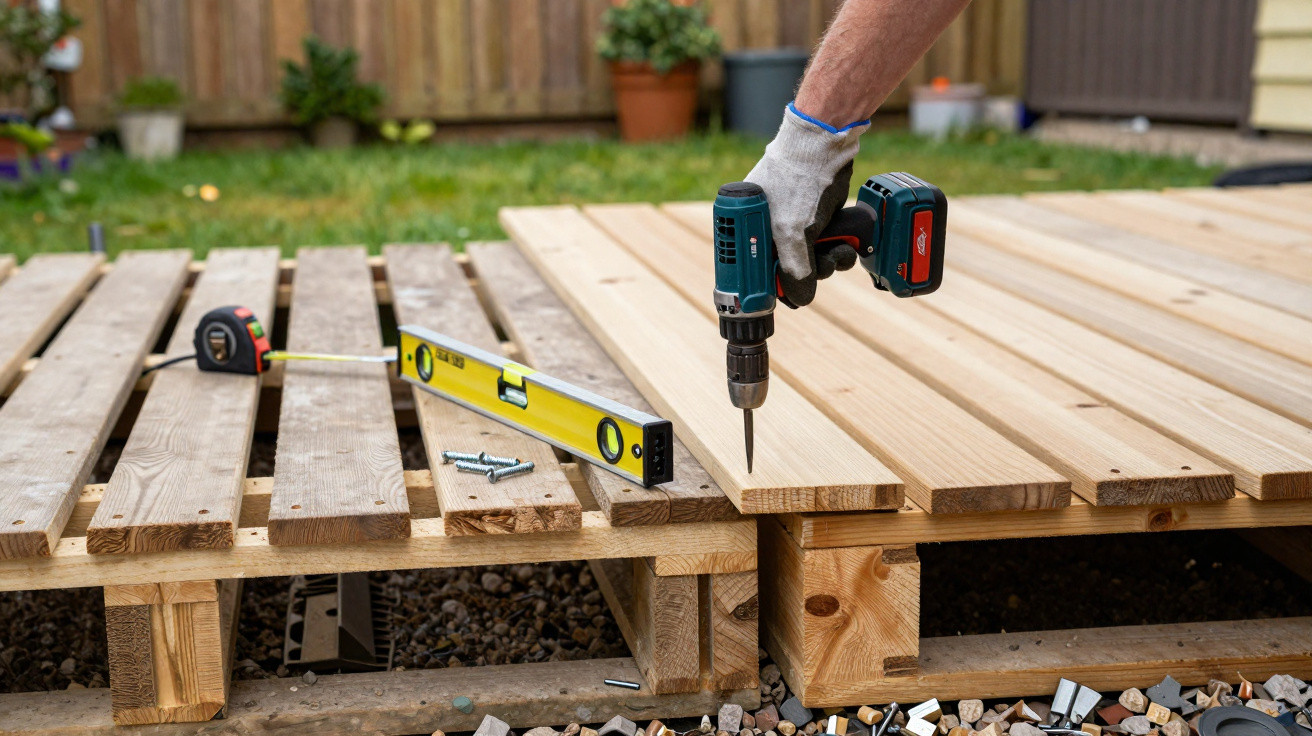
A low garden platform can make an unused corner of lawn more inviting for a chair, small table and pots without the cost of a full decking project. The important trick is not to treat whole pallets as a ready-made deck: build a sound, well-drained frame first, then use carefully selected reclaimed pallet timber only for suitable non-structural details.
That approach takes a little longer, but it avoids the common problems of sagging surfaces, trapped moisture, protruding nails and unknown timber history. A small, low platform with proper support is safer, easier to maintain and far more likely to cope with a British winter.
The value of reclaimed pallets is in usable timber, not in assuming that every pallet is safe enough to become a structure.
Decide whether the site is suitable
Keep this project modest and close to ground level. It can suit a reasonably flat, well-drained area of garden or a sound existing concrete base.
It is not suitable for a raised deck, balcony, hot-tub base, roofed structure, retaining feature, large planter wall or a platform attached to the house. Do not use it where the ground is soft, regularly waterlogged or noticeably sloping.
Before starting, mark the proposed area and check for:
- air bricks, drains, inspection covers and utility access;
- doors that need to open freely;
- boundary lines and shared access routes;
- overhanging trees that will drop leaves and hold moisture;
- nearby steps or changes in level that could create a trip hazard.
Planning rules vary across the UK. In England, a raised platform above 30cm can need planning permission, and other restrictions may apply to listed buildings, flats, conservation areas and properties with specific planning conditions. Check with your local planning authority if you are unsure; Wales, Scotland and Northern Ireland have their own rules.
Prepare a base that drains
Timber should never sit directly on turf, bare soil or loose gravel. Ground contact holds moisture against the wood and speeds up decay.
After rain, inspect the intended spot. If water remains there for a long time, improve drainage before covering the area. A platform will not solve a drainage problem; it can conceal and worsen it.
1. Mark out and excavate
Use pegs, string and a tape measure to mark a simple rectangle. Check the diagonals: equal measurements indicate square corners.
Remove turf and topsoil, then level the exposed ground. Leave enough space around the finished platform to inspect its edges and let water drain away.
2. Add a stable sub-base
Lay a permeable geotextile membrane over the soil, then add suitable sub-base aggregate in compacted layers. This helps prevent the supports from sinking and reduces weed growth.
Set paving slabs or purpose-made deck support pads on the compacted base. Each support should be firm, level and evenly bedded. Never level a platform by stacking loose bricks, timber offcuts or spare pallets.
3. Plan a slight fall
Use a long spirit level or straightedge to check the supports. The finished surface should have a gentle fall away from the house so rainwater does not collect against the wall.
A level-looking platform is useful; a platform that sheds water is essential.
Choose pallets cautiously
Pallets vary greatly in strength, condition and previous use. Some have carried industrial goods, sat in wet yards or been exposed to spills. Even clean-looking timber may hide nails, staples or splits.
Where a marking is present, look for HT, meaning heat treated. Avoid pallets marked MB, which refers to methyl bromide fumigation. However, an HT marking does not confirm what the pallet carried afterwards, so reject any timber with staining, oily residue, strong smells, mould, rot or excessive cracking.
Ask the supplier what the pallets were used for and obtain permission before taking them. Many pallets belong to the company that supplied goods and are not simply unwanted scrap.
Wear gloves, eye protection and sturdy footwear when handling or dismantling pallets. Inspect boards carefully and remove old fixings before cutting. A metal detector is useful if you have one; hidden metal can damage saw blades and cause kickback.
Use pallet timber in the right places
Do not rely on whole pallets as the load-bearing base of a garden platform. Their dimensions, bearers and construction are inconsistent, and they are not designed to remain outdoors over damp ground.
For a durable build, make the frame from exterior-rated structural timber and appropriate corrosion-resistant fixings. Use reclaimed pallet boards selectively, for example as:
- ventilated edge cladding;
- lightweight decorative slats;
- removable access panels;
- occasional surface boards only if they are thick, sound and securely fixed.
If a board is badly warped, thin, split, soft or full of old fixing holes, do not try to make it work. Reclaimed timber is best treated as a limited resource rather than something that must all be used.
Build a secure low-level frame
Choose timber suitable for outdoor structural use, and follow span guidance for the joist size you select. If any timber is intended for ground contact, use material specifically rated for that purpose.
1. Set out the supports
Arrange supports beneath the frame and along the joists, rather than placing them only at the corners. The spacing depends on the timber section, platform size and expected load.
Check every support with a spirit level. A frame that is uneven at this stage will be difficult to correct later.
2. Assemble the frame
Use exterior-rated structural screws or suitably galvanised fixings. Make the frame square, then add noggins between joists to reduce movement and twisting.
Keep the timber raised clear of the slabs with suitable supports or brackets where required, allowing air to circulate beneath it. Do not fix the platform to the house unless the detail has been properly designed for that purpose.
3. Fit the surface
Purpose-made decking boards are generally more consistent and comfortable underfoot than pallet slats. If you use selected reclaimed boards on the surface, pre-drill close to their ends and discard any board that will not sit securely.
Leave small, even gaps for drainage and seasonal movement. Countersink or drive screw heads flush with the surface; proud fixings can catch feet, footwear and chair legs.
Finish edges while keeping airflow
Open sides can make a low platform look unfinished, but solid skirting down to ground level traps damp leaves and creates an ideal hiding place for pests.
Use pallet timber for slatted edging instead. Leave visible gaps between boards and keep the lower edge clear of the ground. Make one section removable so you can inspect the frame and clear debris.
If a step is needed, use a broad paving step or a properly supported timber one. Loose pallets, stacked blocks and uneven offcuts are not safe steps.
Protect timber from wet weather
Once the wood is dry and clean, apply an exterior wood preserver or stain that is suitable for the product and the timber type. Follow its instructions for preparation, drying time, ventilation and re-coating.
A coating helps water run off the surface, but it cannot make rotten timber sound or compensate for poor drainage. Check the platform each spring and after extended wet weather. Clear leaves from gaps, tighten loose fixings and replace damaged boards promptly.
Keep pots on feet or risers so water can drain beneath them. Do not place a fire pit, barbecue or patio heater directly on timber. Follow the appliance manufacturer’s clearances and use a stable, non-combustible surface where required.
Common mistakes to avoid
- Using pallets with an unknown or suspicious history. A clean appearance is not enough.
- Building directly on grass or soil. The timber will stay damp and deteriorate quickly.
- Treating whole pallets as engineered decking. They are inconsistent and can move or fail.
- Supporting only the corners. The centre of the frame can sag or bounce.
- Closing the sides completely. Ventilation and inspection access matter.
- Using indoor screws. They can corrode outdoors and leave stains.
- Painting damp timber. Moisture beneath the finish encourages peeling and decay.
- Ignoring drains, air bricks or planning limits. These details are more important than a quick finish.
Keep the finished space simple
Once the surface feels firm underfoot and every fixing is flush, add lightweight furniture, weather-resistant cushions and pots at different heights. Solar lights placed beside the platform can mark its edge without drilling more holes into the boards.
Avoid bolting a privacy screen or shade sail to a lightweight platform. Both can put substantial force on the structure in wind and need independent posts with suitable footings.
Start small, use only timber you can assess confidently, and inspect it regularly. A compact platform with a solid frame, clear drainage and a few well-used reclaimed boards will look intentional rather than improvised.









Comments
No comments yet. Be the first to comment!
Leave a Comment