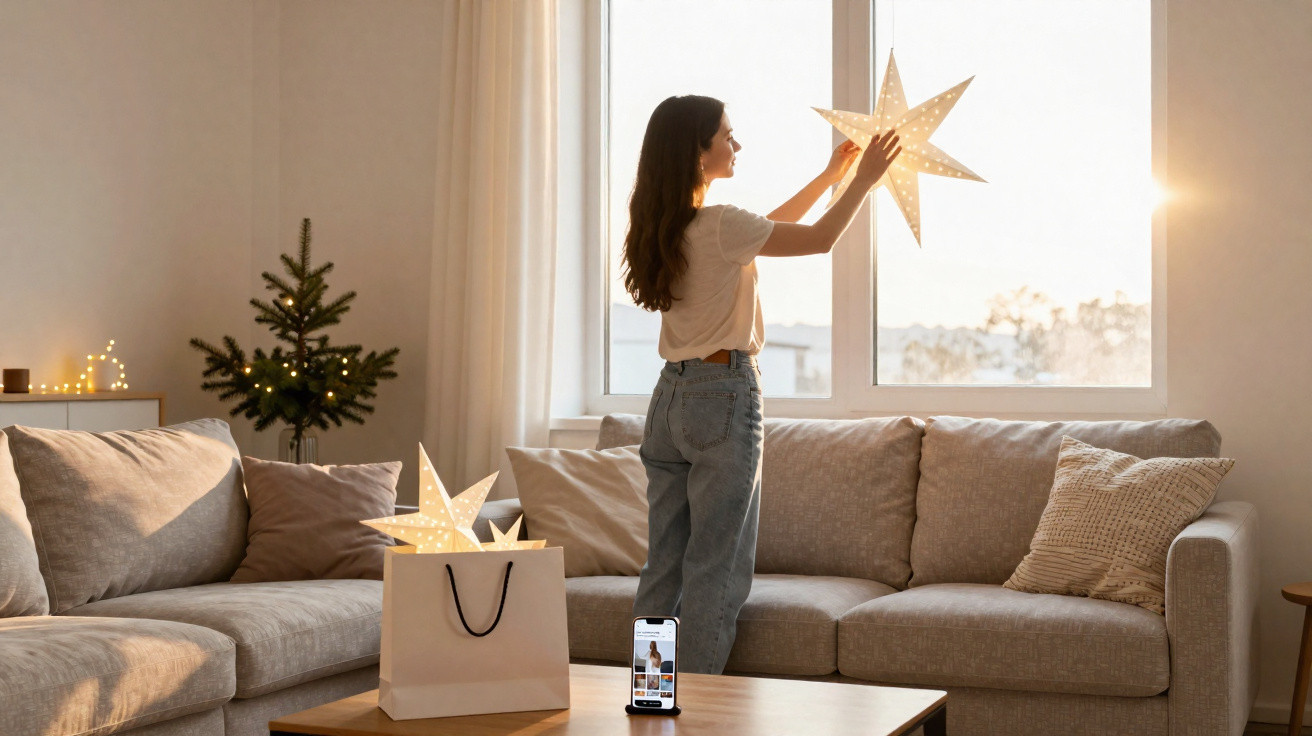
Across Europe, a Christmas ornament from a budget chain is appearing in photographs, Reels and TikToks well before the first snowfall. It has the appearance of something from a design shop, but in many cities it costs less than a takeaway coffee. For millions of shoppers managing restricted winter budgets, that difference feels especially relevant.
The paper LED star everyone is talking about
This season’s standout item is a large paper star with built-in LED illumination, available in ACTION stores for about £3.99. In social-media posts, the price label is often absent, prompting viewers to think it belongs to a Scandinavian design label. The revelation usually comes in the comments: it is a discount-store purchase rather than a boutique find.
This paper LED star hits a sweet spot: soft lighting, understated design and a price low enough to justify buying several.
At around 60 cm wide, the star works as a statement piece rather than a minor accessory. Its folded-paper construction adds dimension and shadows, while the warm-white LED centre casts a diffused, gentle light. A built-in timer leaves it on for six hours before turning it off for eighteen, suiting a normal evening routine without the need to keep operating switches.
Why a £4 decoration looks far more expensive
Its appeal comes from several design choices more commonly found at higher prices. The paper is matte and lightly textured rather than glossy or glitter-covered. The fittings are kept unobtrusive, giving the star an almost weightless appearance from afar. Its light source is set deeply enough within the design that there are no obvious bright spots.
Together, these details create an effect similar to Nordic paper lanterns that cost three or four times as much. For renters and first-time buyers seeking a serene, minimalist Christmas scheme, the star provides an easy solution. Hang a single piece, lower the main ceiling light, and the room’s atmosphere shifts within seconds.
A social-media hit grounded in everyday concerns
Instagram and TikTok clips feature the star in compact flats, student bedrooms and family houses. Influencers regularly draw attention to the timer alongside its appearance. With energy costs continuing to be a concern across Europe, audiences respond keenly to lighting that seems cosy while having a low impact.
The timer means the star can act like a gentle nightlight, then switch off automatically before it starts wasting power.
Comments on viral posts repeatedly focus on three useful features: no electrical installation is needed, it can use batteries rather than mains electricity, and it folds flat once Christmas is over. For households short on storage, the final point can matter nearly as much as the low price.
How people are styling the ACTION paper LED star at home
Although the object itself is uncomplicated, users are finding fresh ways to use it beyond the familiar image of a star suspended in a window. Some use it as a sculptural feature, while others rely on it for soft task lighting.
From living room to bedroom: placement ideas
- Suspended in front of a window, the star looks from outside like a soft seasonal beacon, with a slight reflection in the glass.
- Grouped above a dining table, three or five stars form an airy canopy in place of a more traditional centrepiece.
- Rested against a wall on a sideboard, it functions more like illuminated artwork than a festive bauble.
- Used as a low bedside light in a child’s bedroom, it offers comfort at bedtime without making the room too warm.
Many people keep surrounding decorations deliberately minimal: a linen tablecloth, a few green branches, perhaps a bowl of baubles. The illumination becomes the key visual gesture, reducing the need to purchase lots of additional decorations.
Beyond Christmas: can this piece stay up all year?
As the star does not feature distinctly seasonal motifs such as reindeer or holly, some households intend to leave it in position until late winter. In Scandinavian-inspired homes, paper lighting often remains on display year-round as a response to lengthy dark evenings.
In this role, it becomes a subtle ambient lamp for reading spaces or home offices. Once the tree is taken down in January, the star can move to a less prominent position while still delivering a soft, indirect light.
Seasonal decor that survives until March reduces waste and makes each purchase feel less like a one-month expense.
Cheap, not flimsy: what buyers actually say
Early purchasers who have posted feedback say the product feels sturdier than its price would suggest, even though it is unmistakably made from paper. Many report that putting it together takes a few minutes initially, but gets faster once the folding mechanism is understood.
Frequently repeated comments include:
- “The light is gentle, not blinding, perfect for evenings.”
- “Looks much more expensive when it’s on.”
- “Timer makes a real difference, especially if you tend to forget to switch things off.”
Buyers also note some drawbacks. The paper may crease when stored carelessly, and replacing batteries means opening the structure again. These are standard compromises with lightweight, foldable decorations, but they are worth considering if the intention is to use the star for several years.
Other low-cost ACTION pieces catching attention
The same seasonal section includes various LED products made from glass and plastic. Shoppers watching their spending are combining them to create a complete display without spending heavily. Items commonly seen on social media include:
| Product | Approx. role in decor |
|---|---|
| LED suspension, 32 cm | Graphic focal point above a table or in a hallway |
| LED “gift box” ornament | Accent under the tree or on a windowsill |
| Glass Christmas houses with LED | Delicate village scene on a mantel or shelf |
| Oversized bows and light-up figures | Bold statement on doors, fireplaces or entrances |
None of these products reaches double-digit prices, helping to explain the “haul” culture surrounding them: shoppers often buy several pieces and try different layouts throughout the season.
Design tricks for a premium look on a tight budget
The popularity of this paper star highlights a straightforward point about Christmas interiors: mood depends more on light and texture than on sheer volume. Rather than decorating every available corner, many stylists recommend concentrating on a handful of meaningful focal points.
Borrowing ideas from stylists and influencers
- Keep LEDs to one main colour temperature, ideally warm white, to prevent an uneven look.
- Create variation in height: suspend certain elements, set others on low furniture, and treat the tree as one of several sources of light.
- Pair paper, glass and natural foliage instead of using numerous types of plastic.
- Use mirrors and windows to make light appear more abundant without increasing energy consumption.
A single, well-placed focal point can make a budget room feel intentional rather than improvised.
This method is particularly suitable for smaller homes, where visual clutter can soon become overpowering. A large star in an uncluttered corner, accompanied by a few fir sprigs and a textured throw, can feel more restful than shelves filled with ornaments.
What this trend says about Christmas 2025
The demand for a £4 paper decoration may appear insignificant, yet it points to broader changes. Households throughout Europe are still dealing with high living costs, while wanting to maintain seasonal traditions without worrying about substantial bills. Considered-looking affordable items, rather than visibly cheap ones, meet that demand.
Retail analysts observe that chains such as ACTION now shape visual trends almost as strongly as established homeware brands. When a low-priced product captures current preferences - neutral colours, uncomplicated forms and warm LEDs - it travels fast through social feeds and influences the way people present the festive season in their homes.
For those planning a festive update of their own, the message extends beyond one paper star. It is useful to choose one or two “hero” pieces that establish the atmosphere before adding smaller, more understated items around them. In this way, even limited budgets can create interiors that are calm, cohesive and prepared for winter visitors.







Comments
No comments yet. Be the first to comment!
Leave a Comment