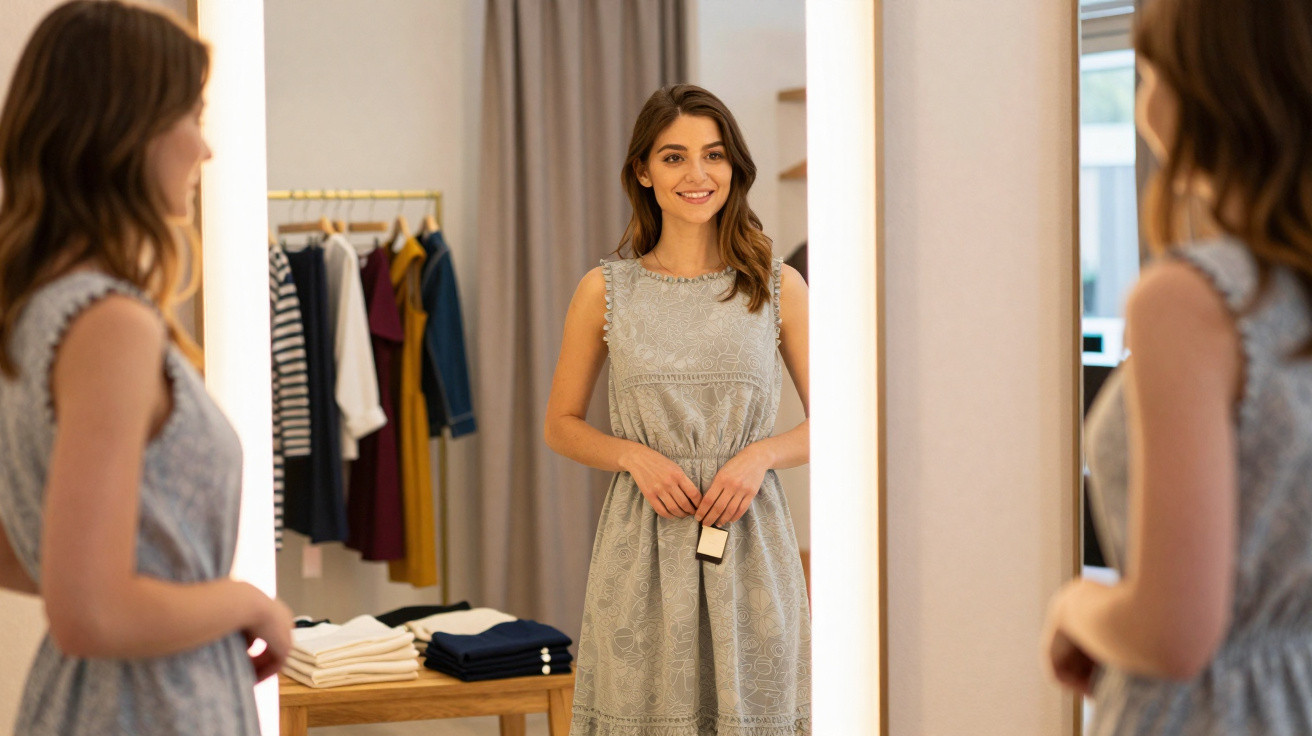
Changing-room mirrors in shops are larger and more brightly lit because they form part of the shopping experience rather than serving solely as decoration. In a compact space, they allow customers to assess a garment’s fit, colour, texture and proportions within minutes. Front-facing lighting, mirror size and viewing angle minimise harsh shadows and can affect confidence before deciding whether to buy an item.
Why is the changing-room mirror usually so large?
A large mirror makes it possible to see the whole body without having to stand far back, which is particularly important in narrow changing rooms. At a glance, shoppers can check trouser hems, dress length, shoulder fit and the overall balance of an outfit.
At home, mirrors are often placed in a hallway, bathroom or behind a door, where the available distance is restricted and lighting is makeshift. In a shop, the changing room is designed to speed up comparisons between garments and lessen uncertainty about size, cut and styling.
How does lighting alter the way clothes are perceived?
Changing-room lighting directly affects how skin, fabric and fit appear. Studies of changing-room lighting indicate that the direction of light influences facial shadows and the sense of space; front-facing illumination is generally rated more favourably than light coming only from above.
When light comes exclusively from the ceiling, it can cast shadows beneath the eyes, chin and folds of clothing. With evenly distributed frontal or side lighting, shoppers can see more of the fabric’s detail, fewer harsh marks and an image closer to what they will see outside the shop.
Can the mirror angle affect the decision?
Yes. A slightly tilted or poorly positioned mirror, especially when paired with unsuitable lighting, can alter the perceived height, width and proportions of the body. For this reason, attentive retailers use large, flat mirrors installed so that the full body can be assessed quickly.
Customers notice these differences through simple details:
- The garment appears better aligned when the mirror shows the entire body.
- Front-facing lighting reduces shadows that may distort the way the garment hangs.
- A brighter space makes the changing room feel less cramped.
- A wide mirror makes it easier to compare accessories, shoes and layered items.
- An uninterrupted view of the outfit reduces uncertainty before purchase.
What does consumer psychology say about this environment?
Retail psychology shows that layout, lighting, comfort and atmosphere affect the time people spend in a space, their perception of quality and their purchasing decisions. The changing room is a crucial stage because it is where a garment stops being an item on a rail and becomes a real possibility on the customer’s body.
If the room is dark, confined and uncomfortable, shoppers are more likely to give up sooner or judge the garment negatively. When the changing room offers clear lighting, a large mirror, an accessible hook and privacy, the experience feels more secure and the decision involves less friction.
Why do these details matter so much in a shop?
The changing room brings together the most sensitive part of a purchase: comparing expectation with reality. A T-shirt may look good on the rail, but it only becomes convincing when the mirror reveals the fabric on the shoulder, sleeve length, transparency and the way it falls at the waist.
A large mirror, considered lighting and the right angle create an environment in which clothing can be viewed more clearly and with fewer distractions. These details are not accidental: they help customers interpret the garment more accurately, spend longer in the changing room and decide with greater confidence whether the item will work outside the shop.













Comments
No comments yet. Be the first to comment!
Leave a Comment