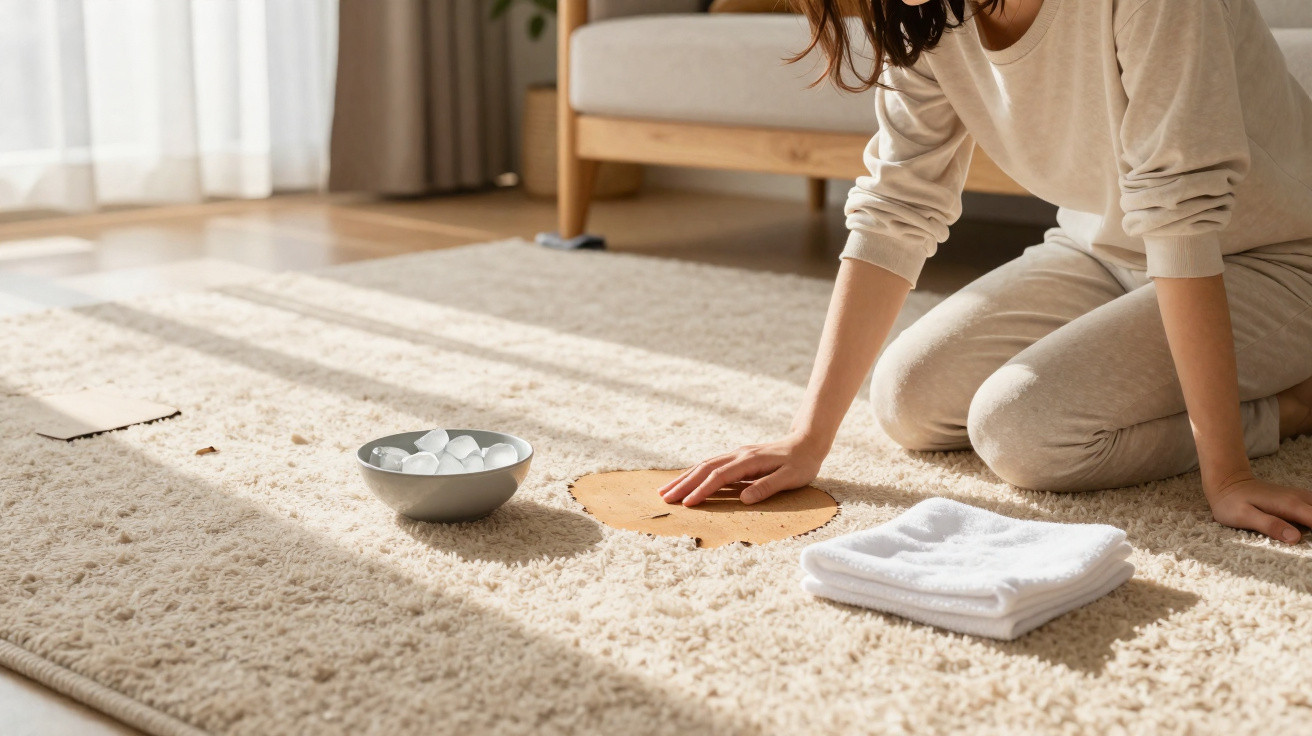
Some carpet dents seem harmless until the late-evening light catches them and makes them look like tiny craters. I tested the easiest remedy I could find-putting ice cubes on the impressions-and by morning the floor looked unexpectedly renewed.
I had spotted orderly lines of furniture marks pressed into the carpet, resembling a grid of long-standing regrets. I had seen the ice cube trick mentioned countless times, but always carried on scrolling. That evening, I took out an ice tray, crouched beside the dents and placed a cube on each mark. It felt faintly ridiculous, very domestic and strangely optimistic. I went to bed with the quiet thought of water working gradually while I did absolutely nothing. Morning brought soft light and an unexpected result: the carpet had sprung back.
Results after one night that seemed impossible, but weren’t
What I noticed first was what had disappeared. The persistent round marks beneath the old bookcase had almost faded away, while the pronounced groove left by a chair leg had lifted like bread rising in a warm kitchen. Fibres that had appeared flattened beyond hope the previous night were standing a little higher. By morning, the dents had disappeared. Not every section was completely flawless, but the entire room looked different-less worn out and more welcoming.
I tested the method in three places: beneath the sofa legs, under the reading chair and around the lamp table that never gets moved. The dents from the lamp table required two cubes, applied an hour apart, because that wool-blend carpet is dense. The sofa marks, in polyester pile, recovered most quickly and almost bounced back after a light fluffing. For the chair, one cube on each dent was enough. We have all experienced that moment when a household tip seems likely to disappoint, only for the result to make us unexpectedly pleased.
There is straightforward reasoning behind this apparent magic. When the ice melts, the water is drawn into the carpet fibres and backing, allowing the pile to expand and loosen so that it can return closer to its original form. Capillary action carries out the slow work that a hairdryer cannot achieve, as cool water is absorbed evenly. The underlay also makes a difference: a more cushioned pad provides greater rebound. Loop-pile carpet is less suited to this approach because its loops do not fluff up in the same manner. Cut pile, particularly nylon and polyester, reacts as though it has simply been waiting for the chance.
How to use the ice cube trick properly without making it complicated
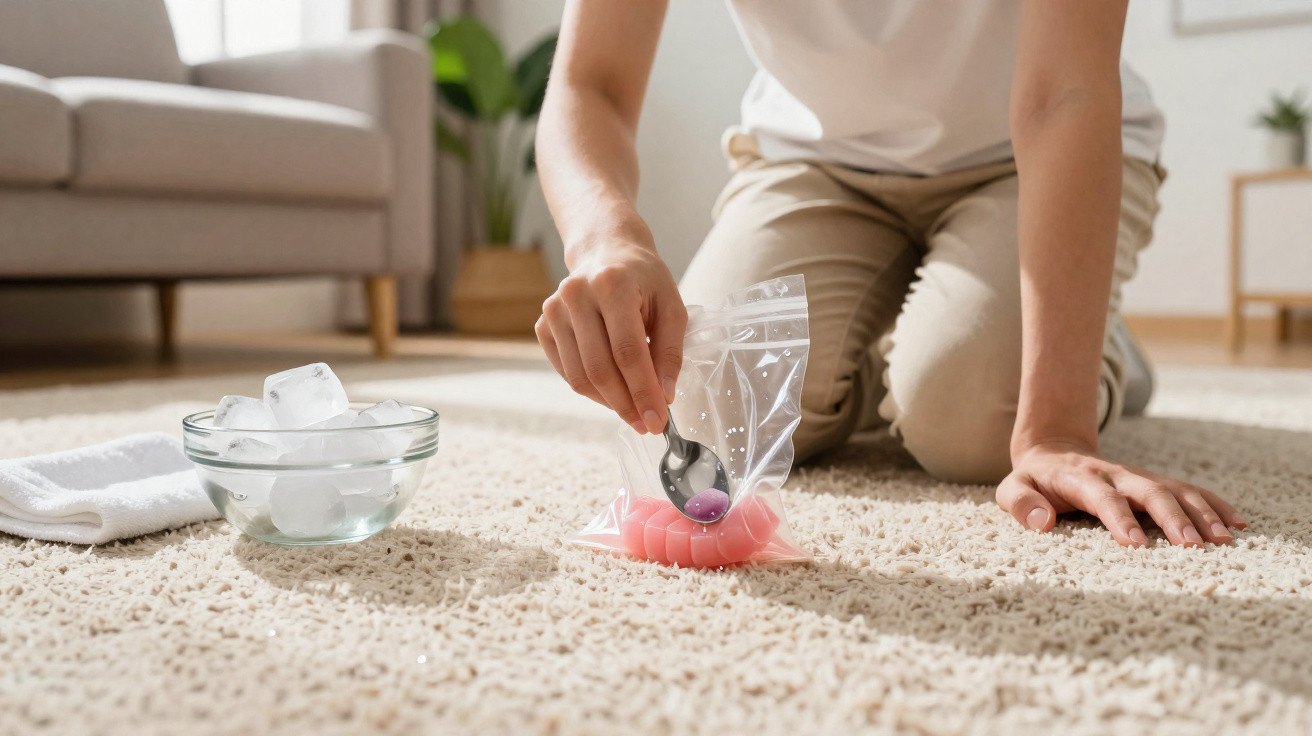
Set one ice cube in the middle of every dent and leave it alone. Allow each cube to melt completely; doing it overnight is the simplest option. In the morning, use a clean towel to blot away any remaining surface moisture. Next, gently encourage the fibres upwards using the edge of a spoon, your fingertips or a vacuum cleaner upholstery attachment. It did not cost me anything and involved under five minutes of real work. If an impression remains slightly visible, try again with half a cube and fluff it more gently.
Be cautious when using heat. A warm hairdryer may help raise the pile once you have blotted the area, but excessive heat can distort synthetic fibres. Do not saturate the carpet; the method relies on moisture, rather than leaving a puddle. Avoid placing ice on natural plant fibres such as sisal or jute, as water can cause them to darken. Shift heavy furniture legs by a few centimetres with each season to distribute the pressure. Honestly, no one does this every day. A modest reminder in your calendar every few months will do.
This small routine succeeds because it gives time something useful to do. Water brings back flexibility, while the towel helps restore the shape. Watching a dent disappear feels like evidence that a little care can still make a difference.
“Carpet doesn’t forget-it just needs a little reminder,” a local installer told me when I asked why the trick seems so reliable.
Here is a quick pocket guide to save:
- Use one cube for each dent, leave it overnight, then blot in the morning.
- Fluff the area with a spoon or vacuum cleaner; repeat gently if necessary.
- Do not soak natural fibres such as sisal and jute.
What this small home repair reveals about the wider picture
I had not expected several ice cubes to alter the feel of the room, but they did-a minor improvement with a surprisingly large impact. The floor seemed fresher, and so did my mindset. It is the sort of success that encourages you to repair a sticking door handle or finally clean the throw-pillow covers. Water, time and a towel can beat heavy furniture. The technique is modest and almost traditional, which is precisely why it works so well. The outcome is not perfect enough for a showroom, and that makes it all the more satisfying.
| Key point | Detail | Benefit for the reader |
|---|---|---|
| Melt-and-fluff method | Ice melts into the dents, fibres expand and then rise | Straightforward science that can be repeated at home |
| Best carpet types | Nylon and polyester cut pile responds quickly | Shows where the trick works best |
| When to avoid it | Sisal, jute and tight loop piles do not respond well to water | Helps prevent stains or fibre damage |











Comments
No comments yet. Be the first to comment!
Leave a Comment