In a nutshell
- 💡 The easily missed habit: leaving bright overhead lights switched on during the last hour before bed can subtly postpone sleep onset.
- 🧠 Light in the evening changes the circadian rhythm by suppressing melatonin; cooler, brighter (blue-rich) lighting produces the most powerful alerting response.
- 📊 Data snapshot: cool-white ceiling LEDs (~150–300 lux, high blue) commonly delay sleep, whereas shaded table lamps (20–70 lux) have a milder impact.
- ⚖️ Pros vs. Cons: well-lit rooms improve visibility and safety, but may also bring later drowsiness, small phase shifts and more sluggish mornings.
- 🔧 Practical fixes: choose a “last bright light” time, fit ≤2700K bulbs and dimmers, direct light away from your eyes, and moderate screen use-a case study found 20 minutes faster sleep onset.
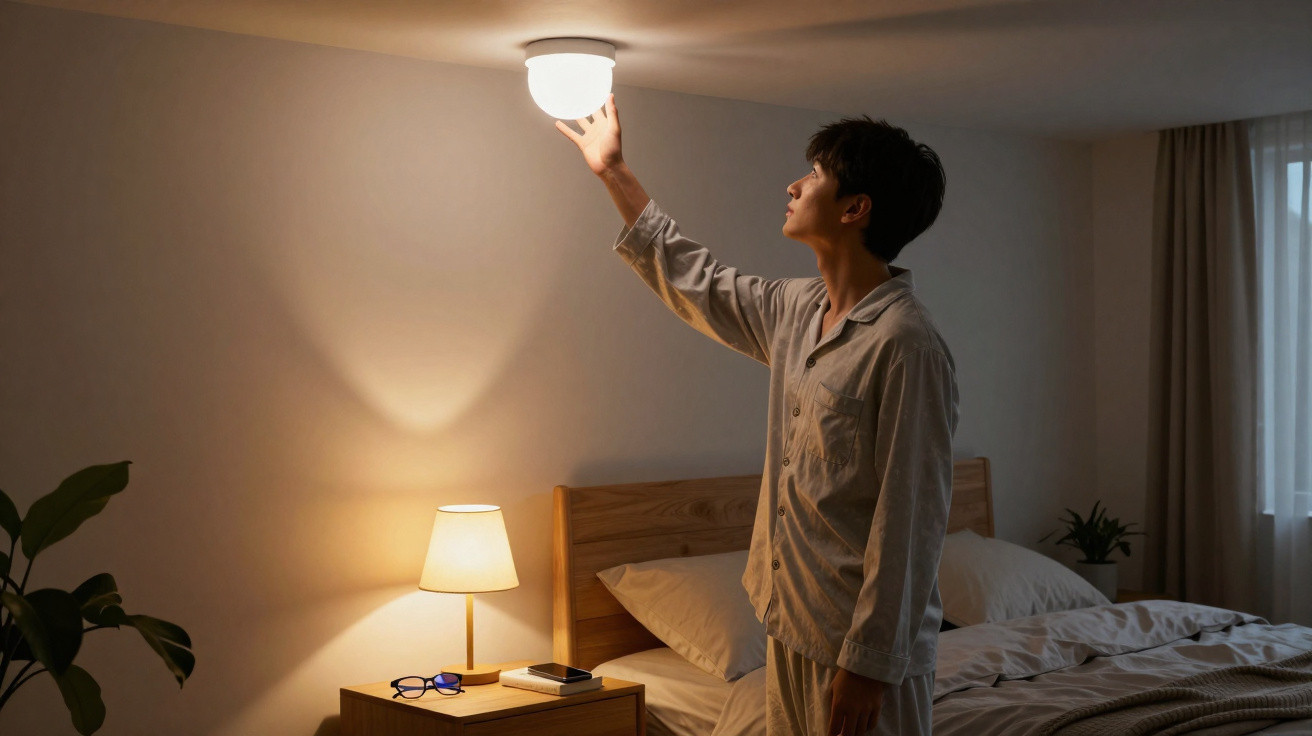
In homes throughout Britain, the last hour before bed frequently follows a familiar pattern: tidying the kitchen, dealing with a final email, the television humming away-and every ceiling lamp still shining brightly. That seemingly unremarkable detail may be the overlooked evening habit slowing your sleep onset. Studies indicate that evening blue light and high brightness delay the brain’s natural signal to sleep, yet bright overhead LEDs remain the default in many households until bedtime. Having visited homes from Leeds to Lewes as a reporter, I have repeatedly noticed the same approach: intense cool-white lighting right until bed. Small changes to what you switch on can change when you switch off. Here is why your lighting routine matters, along with what you can change tonight.
The Habit Hiding in Plain Sight: Bright Overhead Lights
A brightly lit home is often associated with comfort and getting things done. Yet the overhead LEDs that make it easier to power through the washing-up may also be quietly postponing your sleep onset. Ceiling fittings cast widespread, strong illumination straight towards the eyes, commonly with a substantial blue element that keeps the brain alert. You can end up feeling “awake but tired”, the very contradiction many readers report: yawning at 10 p.m. but still checking the clock at 11:30. Screens are not the sole issue; the combined exposure to bright light throughout that final hour matters too.
Kitchens and bathrooms in UK homes can be particular offenders, with powerful downlights, mirror strips and brilliant task lighting shaping late-night routines. Add a brief phone scroll beneath those lights and the combination can push your body clock later. This is the habit hiding in plain sight: bathing your eyes in bright, blue-leaning light during the very window when your body expects dusk. Simply replacing overhead lighting with lamps can shift a room from “office-bright” to “evening-soft” and reduce the time needed to fall asleep by minutes.
How Evening Light Alters Your Body’s Sleep Timing
Light acts as the leading cue for the circadian rhythm. When they encounter bright or blue light, specialised eye cells called intrinsically photosensitive retinal ganglion cells send daytime signals to the brain’s clock. This curbs melatonin, the hormone that tells the body it is time to settle down. The difficulty is that typical domestic evening lighting may be strong enough to slow this nightly increase, lengthening the time before sleep and potentially moving your sleep period later during the week.
Both intensity and colour play a part. Bright lighting and cooler “white” light, often marked 3000–4000K or above, are more alerting than lower, warmer light levels. This guide outlines common sources and their probable effect on sleep onset:
| Evening Light Source | Typical Brightness at Eye (approx.) | Blue Content | Likely Impact on Sleep Onset |
|---|---|---|---|
| Ceiling LED (cool white) | 150–300 lux | High | Delays and increases alertness |
| Ceiling LED (warm white) | 70–150 lux | Moderate | Possible delay if used late |
| Table lamp with shade | 20–70 lux | Low–moderate | Milder effect; usually suitable |
| Bathroom mirror strip | 200–400 lux | High | Not ideal near bedtime |
| TV at ~2 metres | 10–30 lux | Moderate | Varies; less than overheads |
| Tablet/phone near face | 80–150 lux | High | Can delay, especially bright |
| Candle/very dim lamp | <10 lux | Very low | Unlikely to delay |
The headline: lowering light intensity and shifting to warmer tones in the final hour supports your body’s natural “drowsy” signal. This is a physiological prompt, rather than a placebo effect.
Pros and Cons of Keeping the Lights On
Why leave the home fully illuminated? It improves safety and tidiness, while offering the reassuring feeling that the day remains under control. However, this convenience can come at a cost to sleep. The balance is straightforward.
- Pros: Clearer visibility for chores; safer kitchens and stairways; a more stimulating atmosphere when concentration is still needed; and communal rooms that feel energetic and inviting.
- Cons: Reduced melatonin; later sleep onset; a slight phase shift that can carry morning grogginess into the next day; and heightened alertness when screens or late exercise are added.
- Why More Light Isn’t Always Better: Strong lighting is helpful when you need to perform, but counterproductive when you want to relax. The issue is the “one-light-for-everything” approach.
Take a small case study. A Manchester secondary-school teacher I interviewed regularly marked books at her kitchen island beneath cool-white downlights until 10:30 p.m. Falling asleep before midnight was difficult for her. Once she moved to shaded lamps and set a “last bright light” alarm for 9:15 p.m., she said she was falling asleep about 20 minutes faster within a fortnight. Same workload, different lighting-markedly different nights.
Practical Fixes You Can Try Tonight
You do not need blackout curtains in the lounge; a more considered lighting plan is enough. Begin with well-chosen changes and timed habits that support the circadian rhythm without spoiling your evening.
- Set a “last bright light” time: turn off overhead fittings 60–90 minutes before bed and use shaded table lamps instead.
- Pick warmer bulbs (≤2700K) and add dimmers to the strongest fittings; keep cool-white strips for cooking or cleaning alone.
- Move tasks earlier: clean your teeth using a dim hallway lamp rather than bathroom floodlights, and prepare tomorrow’s lunch sooner.
- Point lighting downwards and away from your eyes, using task lamps for reading instead of brightly lighting the entire room.
- Switch on “night mode” on devices or, preferably, hold screens at arm’s length and reduce their brightness.
- Retain a low-level night light on landings for safety; dim, warm light is preferable to bright, cool light.
If you prefer bright evenings, try a gradual reduction instead: full lighting after dinner, lamps only from 9 p.m., and then one low lamp for the final 30 minutes. When light steps down, sleep steps forward. Monitor the outcome for a week; many people find they become sleepy sooner and drift off more calmly, without abandoning the rituals they enjoy.
Caffeine, stress and screens are often blamed for late nights, but the ceiling switch can be equally influential. Viewing lighting as a biological cue rather than simply décor can help home life work with your body, allowing melatonin to rise on time and making the journey into sleep easier. It costs little, reduces glare and safeguards energy for the following day. If you softened the evening as though the sun were gently setting-overheads off, lamps low and routines unhurried-how many minutes could you reclaim between getting into bed and falling asleep, and what might a calmer close to the day offer you?







Comments
No comments yet. Be the first to comment!
Leave a Comment