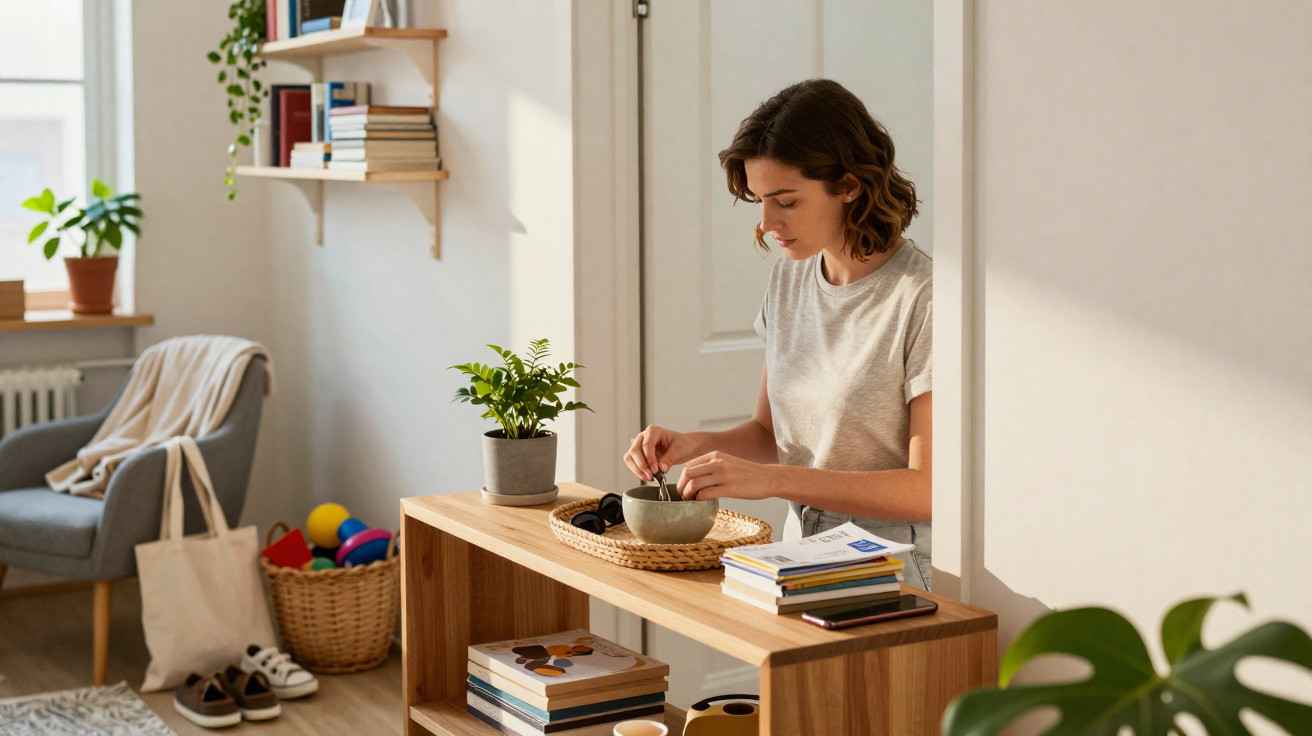
On Sunday evening, the living room looked almost unreal. The cables were coiled, cushions plumped up, and the coffee table held nothing but a tidy candle and a rather self-satisfied-looking plant. You took photographs because, honestly, it felt like a minor miracle. By Wednesday morning, it had vanished. A jacket sat over the chair, delivery boxes covered the floor, and school papers crept across the table like ivy. One cereal bowl appeared beside the sofa. Then another. Then the tote bag you were certain you had only just put away.
By Friday, the room no longer looked “lived-in”. It looked as though you had never tidied it in the first place.
And that is the bit nobody shares on Instagram.
Clutter doesn’t come back. It never really left.
Look around your home now and choose one untidy area. Perhaps it is the chair that collects every outfit, the hallway console that silently gathers keys, post and receipts, or the kitchen corner where miscellaneous appliances seem to end up forever. The mess is not new. It is the same pattern playing out again, just with slightly different props.
We call it “recluttering”, as though a villain is creeping in overnight. In reality, clutter usually takes the easiest route. It lands precisely where your hands naturally let things go.
Imagine arriving home carrying bags, exhausted and perhaps scrolling on your phone with one hand. Your keys go on the first available surface. The post follows. Yesterday’s partly opened parcel is still there because the recycling bin is two rooms away and the scissors were never returned to their proper place.
A couple of days later, you are searching through that same heap for concert tickets you printed “just in case”. The pile is irritating, yet it is also familiar. That small mound of belongings is quietly performing a function: it catches the spillover from your day. You clear it once, twice, ten times, and it keeps returning to exactly the same place.
Clutter reappears quickly because the system surrounding it has not changed. You have taken away the items rather than the routine. The hallway table remains the first flat surface beyond the front door. The “clothes chair” is still nearer than the wardrobe. Your children’s artwork has no proper home, so it keeps multiplying on the fridge.
We often focus on storage, when the real issue is habit and friction. The small gap between “putting this down here” and “returning it to where it belongs” determines nearly everything. When that gap is large, clutter wins. When it is tiny, tidiness finally stands a chance.
The real fix happens before the mess lands
One effective approach is to deliberately redesign your “drop zones”. Rather than battling the places where clutter naturally gathers, use them. If post always lands on the kitchen worktop, turn that location into a genuine post station: a shallow tray for letters, a small pot for pens, and a narrow recycling bag or bin beneath the counter.
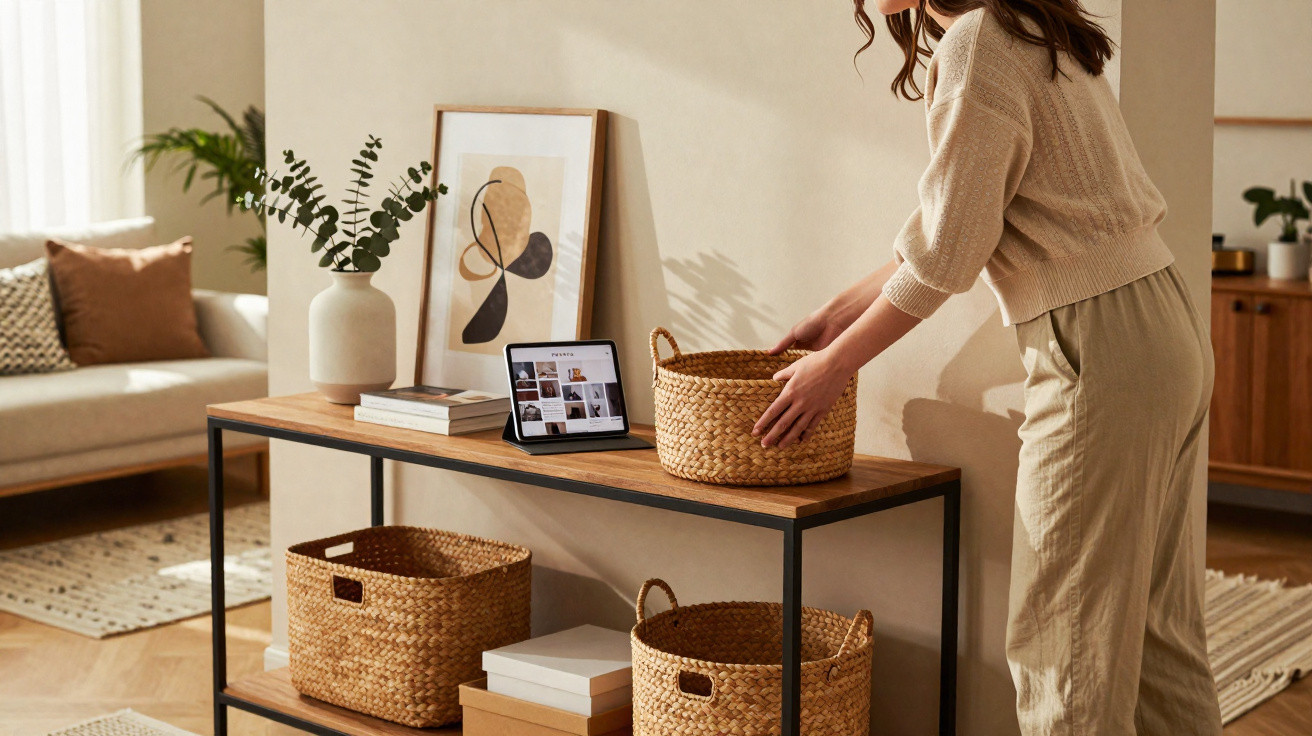
Apply the same thinking in the entrance hall. Put hooks at the height you actually use, place a key bowl where your hand naturally reaches, and add a basket for hats and scarves instead of relying on the vague intention that “they go in the wardrobe upstairs”.
It also helps to think in terms of “homes” rather than storage. Saying, “These cables live in this box in this drawer” may sound slightly silly, but it changes how your brain understands the task. You are not simply concealing items; you are taking them back where they live.
A frequent mistake is trying to achieve magazine-style minimalism overnight. You declutter frantically, fill ten rubbish bags and reorganise everything. For a fortnight, the fresh start feels exhilarating. Then life becomes busy again. The systems you put in place are too perfect and too disconnected from your real routines, so they quietly unravel. Let’s be honest: nobody really does this every single day.
“Clutter is what happens when your stuff has a better memory than you do,” a professional organiser once told me. “It remembers exactly where you tend to drop it. Your job is just to listen.”
- Give the five fastest-cluttering items tiny, obvious “homes”: keys, post, chargers, dirty clothes and bags.
- Cut friction by choosing hooks over hangers, open baskets over boxes with lids, and clear trays over deep drawers.
- Limit the container, not your life: one basket per child for toys, one shelf for mugs and one box for sentimental papers.
- Attach tidying to habits you already have: a five-minute reset after brushing your teeth, or a quick sofa clear-up before switching on Netflix.
- See every repeat pile as a signal that a system is missing, rather than evidence that you are lazy.
What if the goal isn’t “no clutter” but a kinder rhythm?
There is a subtle sense of relief in no longer treating clutter as a personal failing and instead viewing it as information. That stack of books beside the bed suggests you enjoy having three choices available at once. Gardening tools in the hallway may mean you never use the back door. Snack wrappers on your desk could show that your working days run longer than you admit.
When you see your home in this way, the question changes. Rather than asking, “Why can’t I keep this tidy?”, you ask, “What kind of life is this room trying to support?” Some people realise they own too many versions of the same item. Others find they have arranged their homes for visitors rather than for their genuine everyday routines.
Clutter will always rise and fall with your energy levels, workload, moods and the seasons. A home with no visible belongings is not automatically more calming than one with a toy train beneath the sofa and a partly read book on the armrest.
The real magic arrives when the mess no longer seems permanent. When you know that ten or fifteen minutes can restore a room because, at last, everything has an obvious place to go. That is when “recluttering” loses its hold and becomes simply… life happening. And that is a story worth sharing.
| Key point | Detail | Value for the reader |
|---|---|---|
| Clutter follows habits | Belongings collect where your hands instinctively set them down, rather than where you believe they “should” live | Reduces self-blame and directs your attention to changing the route, not merely clearing the pile |
| Systems beat one-off tidying | Drop zones, straightforward “homes” and low-friction storage prevent order from falling apart | Makes tidiness quicker and more sustainable on busy days |
| Limit by container, not by guilt | One basket, one shelf or one box creates a natural boundary for the amount of stuff that remains | Eases overwhelm while allowing you to keep what you truly use and love |



Comments
No comments yet. Be the first to comment!
Leave a Comment