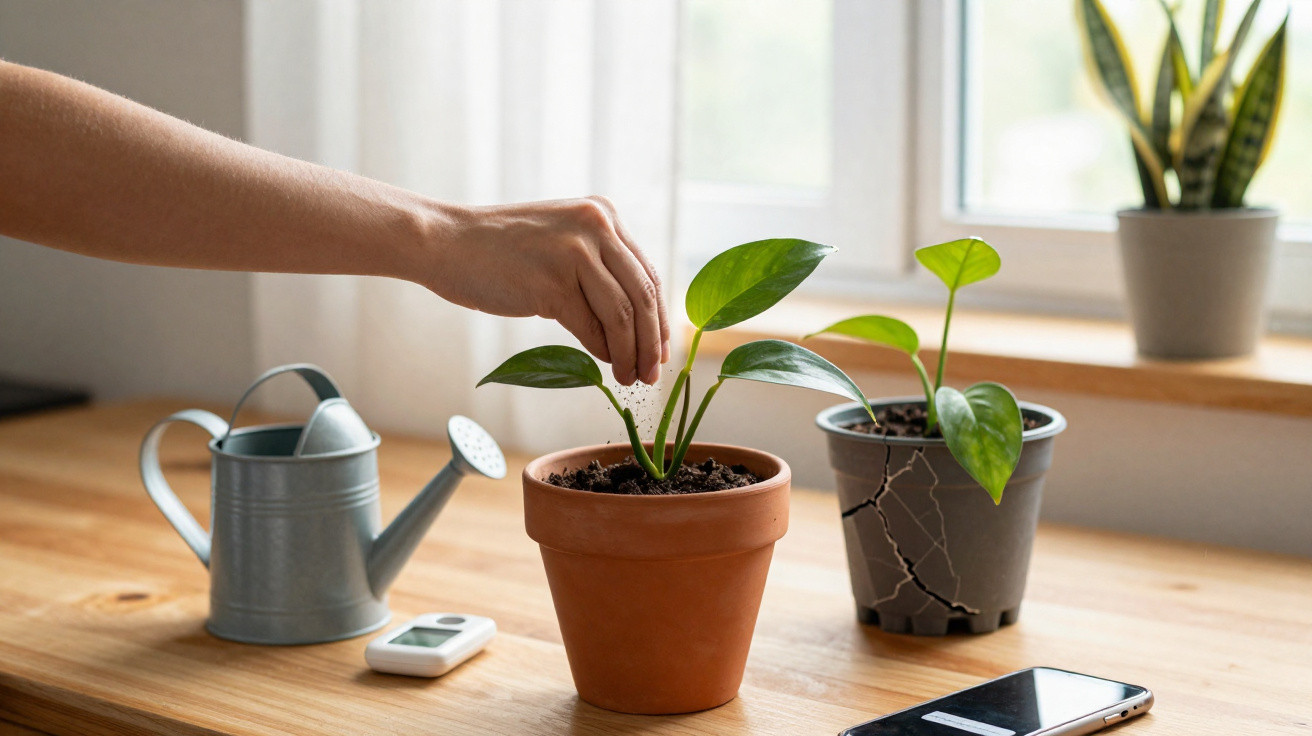
The compost still feels damp when you press a finger into it, yet the leaves have already folded themselves into a miserable little fist.
Yesterday, your monstera could have been styled for an Instagram lifestyle shoot. Today, it resembles the “after” picture from a break-up. Its tag said “easy-care” and “thrives indoors”. Your flat seemed bright enough. And you genuinely thought this would be the one you finally kept alive.
But here you are once more, taking a browning plant to the bin and telling yourself you’re “just refreshing the space”, while feeling a small pang of guilt. You water them whenever it occurs to you, occasionally talk to them, and have even searched “yellow leaves help” at 1am. Yet they still die.
Why, then, do certain people seem to inhabit lush urban jungles while your peace lily is silently drafting its will? Almost everyone makes one understated mistake.
Why your plants keep dying (and it’s not because you’re ‘bad’ at it)
Most houseplants that die have not been neglected out of cruelty; they have suffered from mixed signals. We treat them as decorative little people in soil-filled shoes rather than living organisms with straightforward but particular requirements.
You choose a plant because it looks good, rather than because it suits your flat. You place it on a bookshelf nowhere near a window because it “looks nice there”. When it droops, you soak it, then overlook it for a fortnight. The plant is not being dramatic; it is simply living somewhere it would never select for itself.
Once you understand that, you cannot really unsee it.
A London rental flat attracted a modest wave of attention on TikTok a few years ago. Its tenant had transformed a small, gloomy sitting room into something resembling a rainforest. Commenters poured in with questions: “What’s your secret?” “What soil mix?” “What fertiliser?” Her answer was painfully unexciting: she had chosen plants that already suited the flat exactly as it was – fairly low light, dry air from radiators and inconsistent watering.
A snake plant stood beside the north-facing window. Pothos cascaded from the curtain rail. ZZ plants occupied the darkest corners. She was not following elaborate misting routines or studying Latin plant names. She had simply stopped attempting to grow sun-loving drama queens in a cave.
The reverse scenario happens all the time. A friend buys a fiddle-leaf fig because Instagram is full of them, puts it in a shadowy hallway, waters it “when it looks sad”, and then panics as the leaves fall. The plant was not demanding; it was merely living the wrong life.
Houseplants usually die in our homes for three major reasons: unsuitable light, unsuitable watering and unsuitable expectations. Light is the first priority. Many plants that seem to die “randomly” are really short of light, positioned three metres from the closest window and attempting photosynthesis through determination alone. Water is the next issue. Overwatering does not always resemble drowning; it commonly appears as yellow leaves and a musty odour around the roots.
Then there is the human element. You may expect a plant to act like furniture: purchase it, set it down and consider the task finished. A living plant in a pot is more like a pet rock that subtly responds to the seasons, central heating and your holiday arrangements. Accepting that changes the whole approach.
The simple habits that keep plants alive (even if you’re forgetful)
The most effective habit for plant care is to choose one weekly “plant check” and attach it to something you already do. It could be Sunday morning coffee or Friday-night Netflix; the occasion itself does not matter. Pass your plants, feel the soil, inspect the leaves and spend one minute doing nothing except noticing.
For a typical houseplant, water thoroughly when the top 2–3cm of compost feel dry, continuing until water drains through the holes, then stop. If the compost remains moist, leave the watering can alone. It really is that simple. No complicated timetables or colour-coded charts are necessary. Your fingertips are more dependable than any app.
Let’s be honest: nobody actually does this every day.
We have all had that moment when we return after a weekend, open the door and feel as if we have entered a miniature plant graveyard. Leaves are upside down, the compost is dust-dry, and one heroic stem is still hanging on. You panic, water everything at once and hope for a miracle. That kind of emergency soaking is precisely how root-rot stories start.
My neighbour Emma used to treat her herb pots this way. They lived on a bright but windy balcony, scorching in summer and freezing during spring storms. She would leave them all week, then drench the compost on Sunday until the saucers were full. The basil would thrive wildly for a few days before flopping, blackening at the stems and dying. When she eventually lifted the pots, their roots were sitting in stale water like week-old tea bags.
After drilling extra drainage holes and checking the compost with her fingers instead of watering out of guilt, her next batch of basil lasted an entire season. There was no “green thumb” involved – just less drama and more observation.
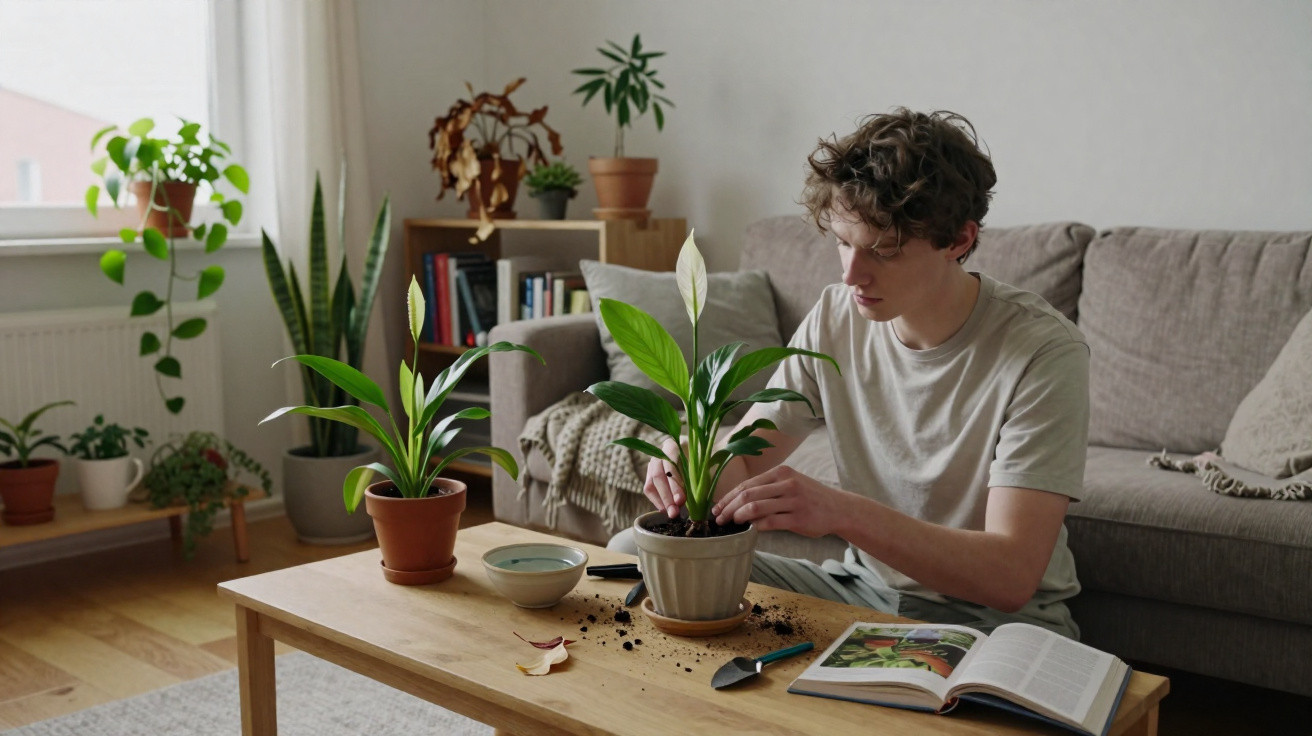
Plants can also decline quietly because of the strain of frequent moves, excessive repotting, or exposure to radiators and air conditioning. A peace lily beside a hot radiator will droop and turn crisp regardless of how affectionately you water it. A cactus can sulk for months after being shifted into a far larger pot filled with dense, waterlogged compost. Consistency is an overlooked part of plant care.
Treat your home as a miniature ecosystem rather than a showroom. Light, airflow, temperature and your own routines create a pattern together. If you spend little time at home, select plants that enjoy drying out. If you live in a dark basement flat, avoid plants that crave sun. Matching your energy to a plant’s energy may sound a little woo, but practically it means reading the label and asking, “Does this sound like my life?”
The easiest plants for beginners (and how not to kill them)
If you have killed several spider plants over the years, you are not beyond help. You have simply been dating the wrong species. Some plants are brutally clear about what they need and recover well from neglect. Those are your kind of plants.
The snake plant (Sansevieria) is a classic hero for beginners. It copes with low light, does well when ignored and forgives occasional overwatering. The ZZ plant (Zamioculcas zamiifolia) is another tough survivor: its thick, potato-like rhizomes retain water, allowing you to forget about it for weeks. Pothos (Epipremnum) trails beautifully, visibly droops when it needs a drink, and perks up again within hours of being watered.
These “starter plants” are not dull. They are low-maintenance housemates that quietly clean the air and make your flat appear deliberately put together.
The greatest risk with “easy” plants is believing they cannot be destroyed. They can. Snake plants rot when left constantly wet. ZZ plants become stretched and leggy in almost total darkness. Pothos lose their variegation when they never receive decent light. The same rule therefore applies: light first, then water.
Examine your windows. In the UK, south-facing windows receive the strongest light, while north-facing ones offer softer, gentler conditions. East- and west-facing windows sit in the pleasantly balanced middle. Keep sun-tolerant plants nearer brighter windows and shade lovers slightly further away. Do not tuck anything behind a heavy curtain, then blame yourself when it sulks.
Over-caring is another quiet killer. Beginners often hover with watering cans, thinking that “more care” must mean more water, more fertiliser and more attention. Most houseplants favour “stable and slightly boring” over “intense and emotional”. Before buying another expensive gadget, provide what your plant requested on its tiny plastic label.
“The best plant for you isn’t the rarest one on Instagram,” laughs Bristol-based plant shop owner Anna, “it’s the one that fits your laziness level and your windows.”
For simplicity, here is a short cheat sheet of beginner-friendly choices for common home situations:
- Always forgetting to water? Snake plant, ZZ plant, jade plant.
- Dark-ish flat, one small window? Pothos, snake plant, peace lily.
- Sunny kitchen window? Herbs such as rosemary and thyme, jade plant, aloe vera.
- Enjoys misting and fussing? Ferns, calatheas, fittonia (nerve plant).
- Wants drama with little effort? Monstera deliciosa, rubber plant, large pothos on a moss pole.
What keeping plants alive really does to you
There is a small, quiet moment when a plant you had nearly given up on suddenly produces a fresh leaf. It is almost embarrassing how proud a piece of green tissue can make you feel. Yet that tiny signal of life changes the way you view the entire shelf.
You begin to spot how late-afternoon light travels through your flat. You become oddly conscious of the radiator coming on in October and how rapidly the compost dries. Your home starts to look like an environment rather than merely a backdrop. The plants have not made you a different person; they have simply drawn your attention a few centimetres nearer.
Keeping a plant alive also gently teaches you to forgive your own inconsistency. You will forget to water one. You will scorch a leaf. You will take a holiday and return to a crispy spider plant doing its best tumbleweed impression. The real change is when this no longer leads you to say “I’m bad with plants”, but instead, “Okay, that one didn’t match my life. What might?”
You do not need to become someone who carefully wipes every leaf with a cloth. You do not require a greenhouse app, a grow light or a personality transplant. You only need to select plants capable of surviving your actual life, rather than your fantasy self who gets eight hours of sleep and changes the sheets every Sunday.
Perhaps that is why houseplants remain so popular. Beyond their appearance, they provide a gentle, low-pressure way to practise care, pay attention and accept that sometimes things die before you try again. People who claim to have a “black thumb” are often just one plant away from proving themselves mistaken.
| Key point | Detail | Benefit for the reader |
|---|---|---|
| Light before everything else | Position plants according to window orientation and their distance from the light source. | Helps you find the ideal spot and prevent most “unexplained” deaths. |
| Water without guilt | Test the compost with your fingers, water deeply, then allow it to dry rather than watering “a little all the time”. | Greatly reduces the risk of root rot and yellow leaves. |
| Choose plants that suit your life | Pick resilient species (snake plant, pothos, ZZ plant) that match your level of availability. | Makes it possible to create a realistic “jungle”, even with limited time or light. |


Comments
No comments yet. Be the first to comment!
Leave a Comment