The first strand gives in with a small, mournful pop.
You hear it before you spot it, standing on the frosty lawn with a partly lit roofline and a snarl of cables in your hands. The timer switches on, the neighbouring house lights up like a film set, and your own display suddenly resembles a weary motel sign beside the motorway.
Your breath clouds in front of you, your fingers have gone numb, and you are already calculating the cost: replacement lights again, in December. The box promised “up to 25,000 hours.” In reality? Two winters at most.
Somewhere between the loft, the socket and that inexpensive plastic plug, part of your routine is silently shortening the life of your holiday lights.
And it is probably not the cause you expect.
The quiet habit that makes holiday lights fail early
When light strings start to fail, most people blame poor-quality products, bad luck or “this year’s batch”. For a surprisingly large number of households, however, the underlying cause is far simpler: keeping holiday lights under constant, uninterrupted power. That does not simply mean having them switched on; it means leaving them plugged in, carrying a load and ready to run 24/7 for weeks at a time.
LEDs are marketed as almost indestructible. They are not. They dislike heat, voltage surges and, especially, operating close to their maximum rated load around the clock. That long, glowing line along the roof may look innocent from the pavement, but the tiny electronic drivers inside the fittings are gradually overheating.
The problem is not your enthusiasm for festive decorating. It is that the lights are never allowed any meaningful downtime.
Take a walk through a suburban neighbourhood in December and the pattern is obvious. Lights are still burning on empty porches well after midnight. Other strings remain dimly visible at dawn because they were plugged in during the first weekend of December and have not been touched since.
One US energy survey found that some households use decorative lighting for 8–10 hours a day in December. Many exceed that, particularly when indoor trees are left twinkling throughout the day “because it’s cosy.” Extend that routine over a full month, or sometimes two, and the hours soon accumulate.
A Colorado electrician I spoke with notices the same trend each year. Homes using timers, with lights switched off overnight and during the working day, rarely ring him about failed strings. The homes where the lights remain powered constantly? Those are the people calling in a panic on 23 December.
There is straightforward physics behind it. Each bulb and miniature driver circuit is designed for a specified number of operating hours in particular conditions: reasonable ventilation, steady voltage and no major surges. Holiday lights frequently face the reverse. They are packed into guttering, pressed around nails, wound through bushes that hold in heat and connected to overloaded daisy chains.
Permanent power creates permanent micro-stress. Every change in the electrical supply - from a fridge starting up to an electric heater kicking in - travels through those fine wires and components. Over days and weeks, the result is premature wear. Your lights do not normally fail because of one major incident; they fail through a thousand minor ones.
The mistake is not enjoying the glow. It is refusing your lights a break from the unseen work involved in producing it.
How to install and run holiday lights so they last
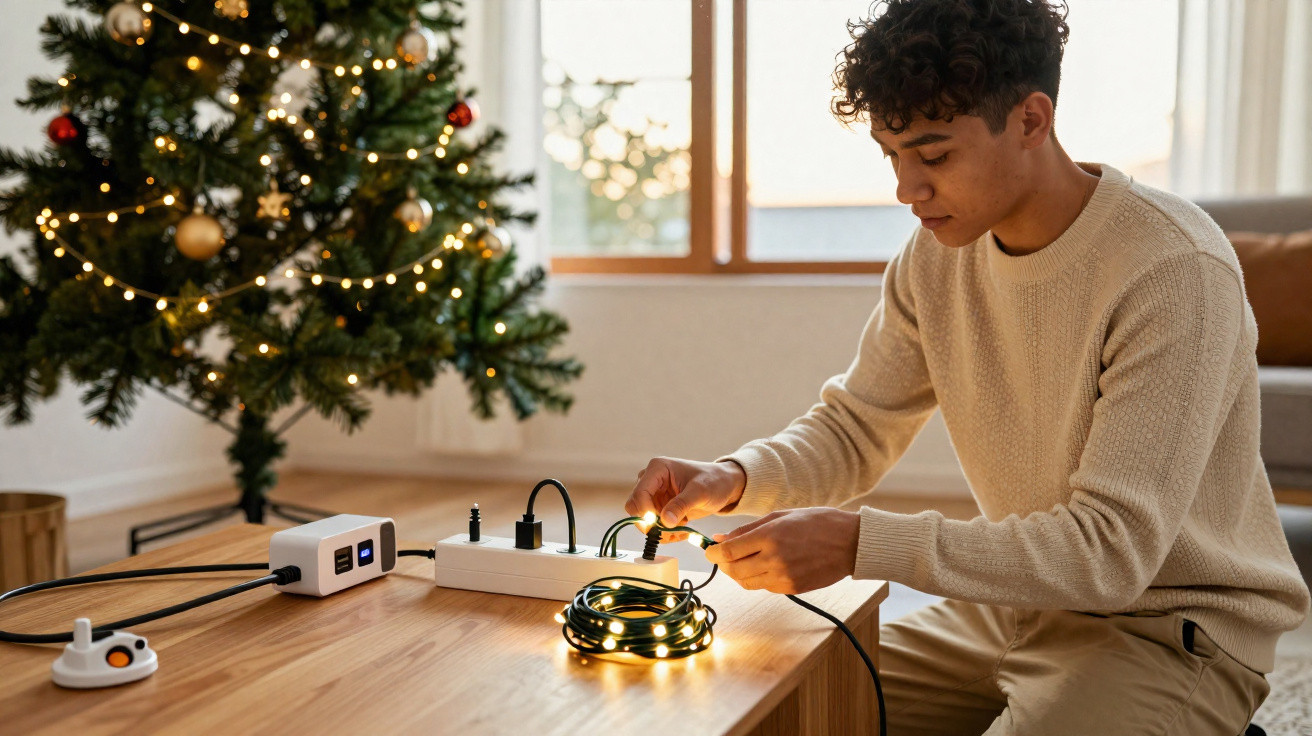
The solution begins at the socket, rather than the roofline. Fit a reliable outdoor timer or smart plug and set a firm routine: lights on at dusk and off before bed. Eight hours of magic is plenty. You may not see much difference, but your bulbs certainly will.
Keep the electrical load comfortably below the maximum rating shown on the packaging and on your extension leads. The small-print warning stating “max 216 watts” is not merely a suggestion. If you are daisy-chaining strings, stop before reaching the manufacturer’s stated limit and begin another run from a separate socket.
Think of it this way: the objective is not to discover how much your wiring can “handle”. It is to make life as easy as possible for every bulb.
How you handle and store the lights between festive seasons matters too. Pulling them aggressively from guttering, winding cables into tight tangled balls and leaving them in a hot loft throughout August all strain connections that you will end up blaming in December.
On a calm afternoon, wind each string loosely, prevent sharp kinks and keep them somewhere cool and dry. Mark the sets that performed perfectly this year, so you do not insert an old, half-worn strand into the middle of a brand-new run next year.
In a more candid moment, we all know how this tends to happen. You are cold, you have had enough, and you pull everything down in 15 minutes. Let’s be honest: nobody really does that every day. Next time, aim to be “a little less rough” rather than striving for perfection.
Electricians refer to “designing for failure”, and the principle works brilliantly for holiday lights. Assume that a bulb, socket or connector will fail eventually. Keep that failure contained. Use shorter runs, more individual plugs and RCD-protected sockets, so one faulty point does not bring down the entire display.
Give the lights gentle starts as well. Do not switch everything on simultaneously with a huge load the moment the first snowflake appears. Check every strand indoors, lightly move the connections and discard any set that flickers or becomes hot. Heat is your warning: if a plug or one section feels warmer than the others, it is being pushed too hard.
“Holiday lights fail for the same boring reasons most electronics fail,” says Mark, a residential electrician who’s been climbing icy ladders for 22 winters. “Too many hours, too much heat, too much load, and nobody ever turning anything off.”
For an easier approach, use this quick mental checklist before switching on your lights for the season:
- Set a timer or create a smart-plug schedule on the day you put up the lights.
- Keep wattage below 80% of the rating for your socket, extension lead or extension strip.
- Divide lengthy runs into shorter sections supplied by separate sockets.
- During the first evening of use, inspect connectors for looseness or warmth.
- Store strings loosely coiled rather than knotted, in a cool and dry place.
Rethinking the glow: why one small change can feel significant
There is something unexpectedly satisfying about stepping outside at 11 pm and finding your house dark and peaceful once again. The party has ended, the display is finished and the neighbourhood is asleep. Your lights have done their work for the evening and can “sleep” too.
Reducing their operating time does more than save a few bulbs and a little money on electricity. It changes your relationship with them. The lights become an evening ritual rather than permanent background noise - something you anticipate seeing come on, instead of an ever-present glow you barely register by the second week.
At a deeper level, this one adjustment - using a timer, observing load limits and allowing the system to rest - quietly rejects the “run everything flat-out until it breaks” mentality that has spread into far more than home décor.
We have all stood on the lawn, looking up at that single dead section across the front porch, and felt strangely beaten by a few pounds’ worth of plastic. It is not really about the money. It is about the effort, the tradition and the story we tell ourselves that “things don’t last anymore.”
Sometimes they do not last because they were cheaply made. Often, though, they fail because nobody taught us to treat them as small machines instead of seasonal confetti.
Picture a different December. You tap a button on your phone or programme a simple mechanical timer. Your house shines while people are awake to appreciate it. The lights rest when you do. January comes, you take everything down, and this time most of the strings return to their box still working - ready for another year rather than destined for the bin.
The glow looks identical from the street. Within your wiring, though, the story is entirely different.
| Key point | Detail | Benefit for the reader |
|---|---|---|
| Reduce the hours lights are on | Programme lights for 6–8 hours each night instead of leaving them running 24/7 | Extends bulb life and reduces electricity costs |
| Limit the electrical load | Stay below 80% of the maximum wattage for sockets, extension leads and extension strips | Prevents overheating, cascading failures and certain safety risks |
| Take care with installation and storage | Test before fitting, use short cable sections and store lights loosely in a cool, dry place | Reduces micro-damage and improves the chances that light strings will last for several seasons |
















Comments
No comments yet. Be the first to comment!
Leave a Comment