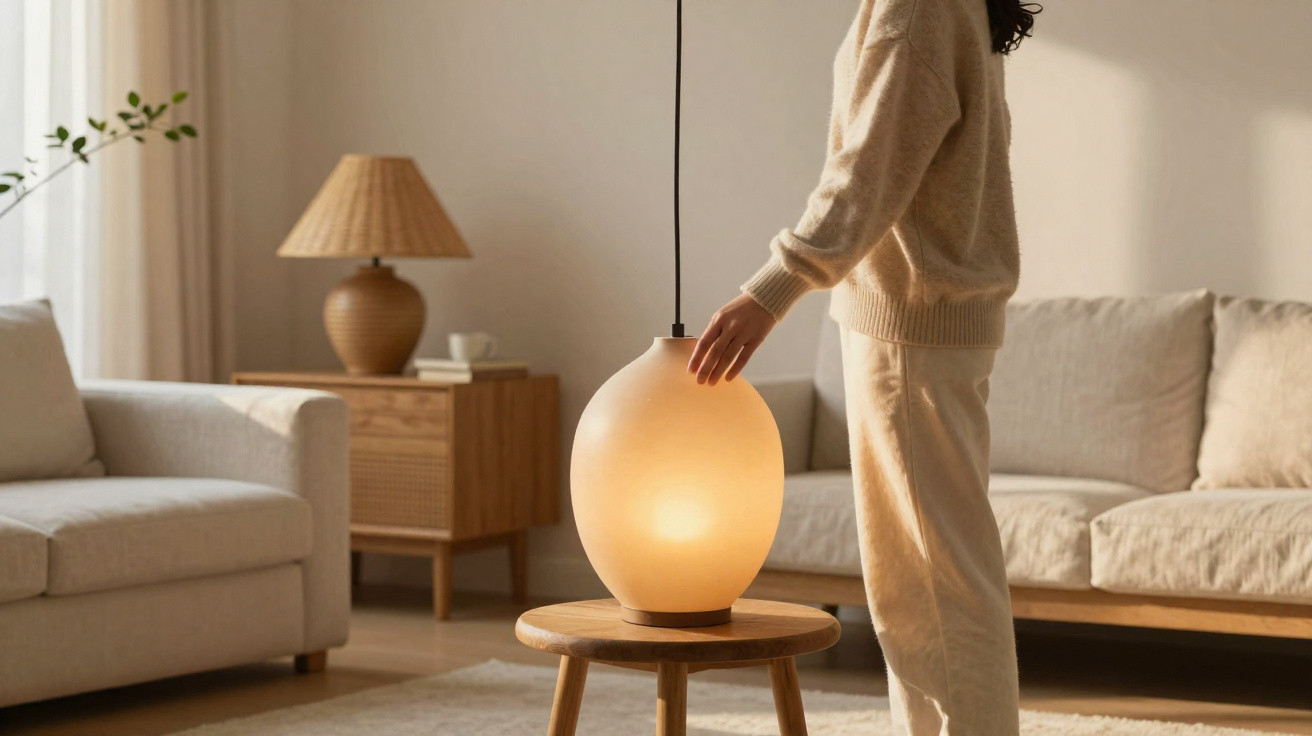
A sophisticated, unexpected lighting trend is now pushing woven classics aside.
For years, loosely woven lampshades made from natural fibres hung in almost every living room. They became the very definition of “cosy boho” and appeared everywhere, from Instagram to furniture stores. Now the mood is changing. Many interiors enthusiasts have had enough of the same familiar style and want lights that feel more premium, will last longer and genuinely transform a room. This is where a new star comes in: more understated, yet noticeably more grown-up.
Why the woven natural-fibre lampshade is losing its appeal
When a décor trend is copied too often
A few years ago, a roughly woven rattan or raffia shade still looked fresh. It brought a hint of holiday feeling into everyday life and sat perfectly alongside houseplants and pale wooden furniture. Then DIY shops, furniture retailers and online sellers followed suit, and suddenly identical lamps were hanging in rented flats, cafés, holiday apartments and concept stores.
That constant visibility has stripped the look of its individuality. What once seemed carefully chosen can now quickly feel like off-the-shelf décor. People who furnish their homes more thoughtfully, in particular, are again looking for greater personality and less catalogue-style uniformity.
“Living spaces should feel more personal today – moving away from the standard lampshade and towards lights with character and a story.”
There is another issue: woven shades absorb a great deal of light. In small or naturally dark rooms, this can soon make the atmosphere feel oppressive. Anyone wanting to read, work or simply feel alert in the evening needs a solution that remains homely without becoming gloomy.
The desire for calm, uncluttered interiors
Alongside this move away from the overused trend comes a growing wish for tranquillity. Many people are reducing their furniture, decluttering and planning their homes more consciously. Sofas are becoming more streamlined, shelving more delicate and colours more muted. Against this backdrop, a large rustic woven basket hanging from the ceiling can suddenly seem too coarse.
Instead, lighting objects are wanted that suit a pared-back style: simple silhouettes, honest materials and very little fuss. Ideally, they should still look good in five years’ time, regardless of how the rest of the room changes.
The new answer: tinted glass and handmade ceramics
Tinted glass: soft illumination and understated glamour
Rather than natural-coloured woven pieces, shades and globes made from tinted glass are now taking centre stage. They are available in warm amber, deep green, smoky grey and rich blue. The result is striking: the light remains clear, while feeling considerably softer than it does through conventional white glass.
Glass offers several advantages:
- Even brightness: Light is spread consistently throughout the room, without the harsh shadows cast by woven patterns.
- Atmosphere throughout the day: During daylight hours, the glass reflects its surroundings and available light; in the evening, it glows as a gentle point of illumination.
- A return to retro charm: Many designs recall mid-century lighting while still looking contemporary.
- Flexible pricing: Options range from affordable versions to designer pieces.
A single generous glass globe above the coffee table may be enough to give an ordinary living room an entirely new direction. For a more playful effect, group three smaller globes at varying heights to create a cluster of light.
Ceramics as sculpture: lamps that resemble small artworks
The second major alternative is less glamorous but far more personal: handmade ceramics. Whether rough, glazed or marked with visible fingerprints, each light speaks of craftsmanship rather than mass production.
Ceramics work especially well in interiors with plenty of wood, linen and natural tones. A ceramic shade does not need to be perfectly round; quite the opposite, as slight irregularities are part of its appeal. This makes the lamp feel like a suspended sculpture rather than merely a source of light.
“A ceramic pendant light can become the central focal point – like an art object that just happens to provide light.”
For those who value sustainability, this can also be a good option. Many ceramic studios manufacture locally, often in small batches. It is possible to support local workshops while choosing a light that will not appear again just around the corner.
How to showcase the new lights properly
The right height: a small adjustment with a major effect
Whether you choose glass or ceramics, the distance from the floor determines the overall effect. A few rules of thumb provide useful guidance:
- In walkways: Position the bottom edge of the lamp around 2 metres above the floor, so nobody knocks into it.
- Above the coffee table: Aim for a height of 1.50 to 1.70 metres, depending on the room and table size. This gives the light a clear central role without causing glare.
- Several pendants: Plan for different heights, with a stagger of roughly 15 to 25 centimetres. This creates depth and resembles a floating installation.
Glass pendants in particular work well with dimmers. This makes it easy to switch between “task lighting” and “after-work atmosphere” without replacing the lamp.
Combining the right colours and materials
A few straightforward combinations will prevent the new lighting object from looking out of place:
- Tinted glass + metal: Amber glass paired with brass or bronze feels warm and welcoming. Smoked glass with black metal creates a crisp, almost industrial touch.
- Ceramics + textiles: Rougher surfaces benefit from soft neighbouring materials, such as linen curtains, cotton cushions and thick rugs in sand and cream shades.
- Repeat colour accents: If the lamp’s colour appears again in a picture frame, vase or cushion, the room immediately feels more cohesive.
If you are unsure, begin with a neutral foundation: white or sand-coloured ceramics, or clear glass with a slight grey tint. Later additions can then be more adventurous.
Practical ways to make the change without a complete overhaul
Try one light first instead of replacing everything
There is no need to change every lamp in the house immediately. It makes sense to start with the room where you spend the most time, which is usually the living room.
One possible order is:
- First, replace the large rattan shade with a glass or ceramic pendant light.
- After a few weeks, assess the result: how does the light feel? Does the room seem calmer and more premium?
- Only then decide whether to add matching table lamps or floor lamps.
Renters can choose models with a ceiling rose and hook that fit existing ceiling connections without major work. The effort stays low, but the visual impact is significant.
How much texture can the room take?
One factor is often underestimated: rooms containing lots of lines, such as shelving, picture rails or exposed ceiling beams, benefit from simple lamp shapes. A smooth glass sphere or restrained ceramic cone is most effective here.
In emptier, minimalist rooms, the light can be more striking: a pronounced texture, bold colour or distinctive shape can work well. It then takes on the role that a large piece of wall art may once have filled.
| Room type | Recommended light type | Effect |
|---|---|---|
| Small living room | Light-coloured glass globe, relatively compact | Greater lightness and a ceiling that appears higher |
| Large open-plan living area | Group of several glass pendants | Creates zones and a cosier atmosphere |
| Cosy reading corner | Small ceramic pendant light or ceramic table lamp | Focused, warm light and a calm retreat |
What makes tinted glass and ceramics appealing in the long term
Light quality, care and durability
Glass pendants can be cleaned with a simple microfibre cloth, using a little glass cleaner if needed. Anyone living in an area with plenty of dust or cooking fumes should opt for matt glass surfaces, as fingerprints are much less visible on them.
Ceramics are even more robust. Dust can be wiped away dry, while glazes withstand everyday marks and dirt. Naturally, knocks should still be avoided, but fine hairline cracks and tonal variations can even add to the charm.
There is another advantage: trends come and go, but neutral glass and ceramic lights generally remain unobtrusively timeless. Furniture can be replaced and wall colours changed, while the lamps continue to fit in.
How to make safe styling choices
Anyone without a strong instinct for decorating can follow two simple principles:
- One dominant colour per room: If a glass light is selected in a strong shade, other colourful accents should sit within the same spectrum.
- One statement along each sightline: In a room visible from the doorway, one eye-catching main light is usually enough. Everything else can remain more restrained.
This gradually creates a living room that feels far more grown-up than the ubiquitous woven-lamp look, while also becoming calmer, clearer and more considered almost effortlessly.



Comments
No comments yet. Be the first to comment!
Leave a Comment