The wardrobe doors no longer shut properly. A stack of jumpers tips forwards, poised to collapse on whoever is brave enough to pull out a hanger. Down below sit a muddle of shoes, a stray sock and that dress you were sure you had forgotten about. The bedroom seems tighter and more oppressive, with every centimetre claimed by things you neither properly use nor feel able to part with.
Then, one day, you call at a friend’s flat. There is no traditional wardrobe and no weighty furniture cutting off the light. Instead, there is a low clothes rail, a tidy fabric drawer unit, baskets beneath the bed and a corner that feels both peaceful and genuinely lived in.
You return home, and your large wardrobe suddenly seems… old-fashioned.
The subtle move away from the classic bedroom wardrobe
For years, a tall, imposing wardrobe was seen as almost essential. You bought a bed, mattress, bedside tables and a wardrobe that you expected to keep for 20 years. It was considered “serious” furniture: difficult to shift and irritating whenever it came to cleaning behind it.
But homes and daily routines have changed. Bedrooms are more compact, rents cost more and lifestyles are less fixed. People relocate, change careers and move cities, sometimes splitting their lives between two homes. In that context, a huge wardrobe can begin to resemble a courteous prison for clothes rather than an efficient storage answer.
Gradually, a different way of organising bedrooms has entered our homes.
Look inside a new-build studio flat or browse interiors accounts on social media, and the same pattern is apparent. Open rails replace cumbersome cupboards. Storage under the bed takes the place of deep drawers. Modular shelving clips onto walls, expanding or reducing as circumstances require.
A recent survey by a European furniture retailer found that bedroom open-storage system sales had risen by more than 40% over three years, while conventional wardrobes with doors were stagnant. The retailer did not even present it as a revolution; shoppers had simply begun choosing other products.
The point, conveyed between scrolling, was straightforward: fewer solid blocks, more room to breathe.
There is a clear reason for the change. Conventional wardrobes were made for capacity and permanence, rather than adaptability. They presume a settled home, an unchanging quantity of clothing and one consistent lifestyle. That assumption now suits fewer people than it once did.
Open storage and modular options can be enlarged, reduced, relocated around the home or taken with you to your next flat. They accommodate new seasons, changing bodies and evolving tastes. Their visual lightness is important as well: less bulk against the wall creates a stronger feeling of space and lets more daylight through instead of allowing a dark furnishing to absorb it.
Space is not only measured in square metres. It is also the way a room feels when you wake there.
The space-saving alternative everyone is quietly choosing
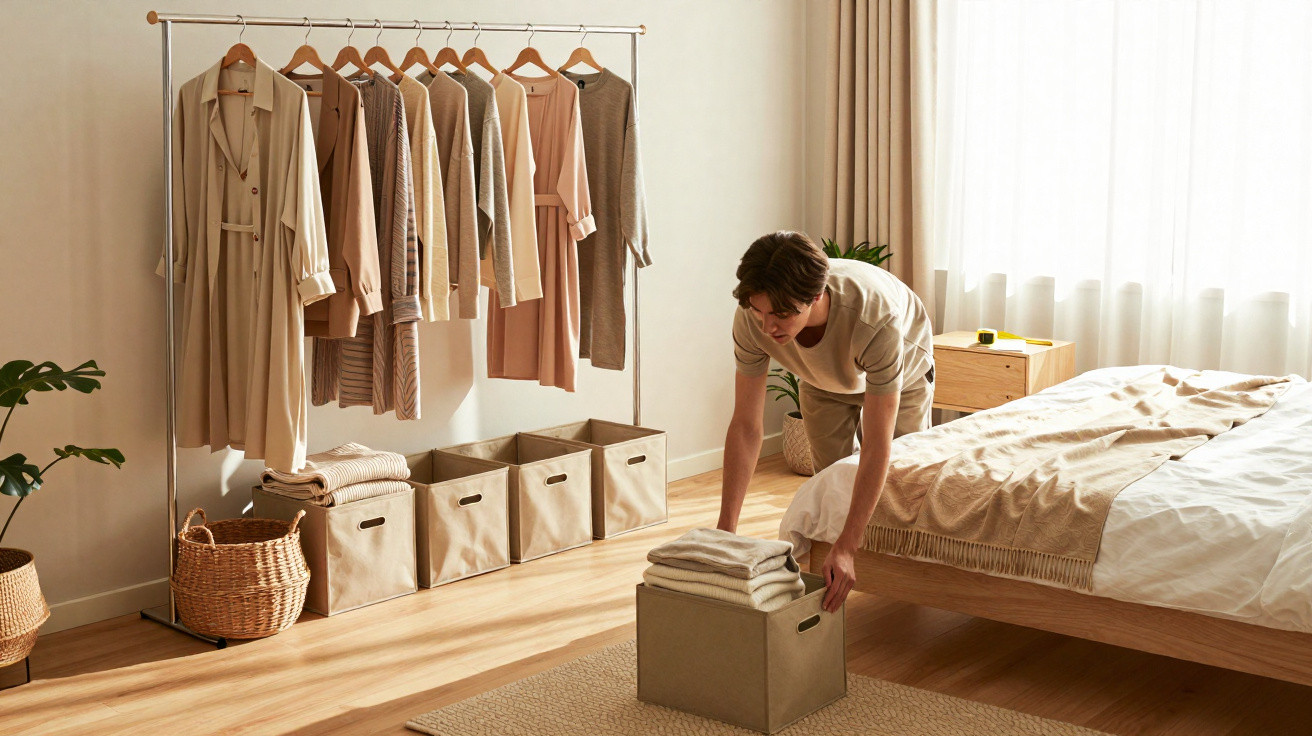
At present, the favoured alternative is remarkably uncomplicated: combine a clothes rail, a low chest of drawers and storage beneath the bed. Rather than relying on one large item, you spread storage across smaller modules that are easy to move. Use a metal rail for clothes you genuinely wear, a fabric or compact chest for folded garments, and slim wheeled boxes under the bed for seasonal or infrequently used pieces.
You reclaim wall space, and the bedroom can immediately appear larger. Your clothes are visible at a glance. Choosing an outfit starts to feel more like looking through a carefully selected boutique than struggling with a stuck sliding door.
That single change can alter the way you begin the morning.
Consider Lina, 32, who shares a 20 m² studio flat with her partner and cat. Until last year, a huge second-hand wardrobe consumed one entire wall. It was sturdy and dark, making the studio resemble a corridor. She sold it through a classifieds app and bought a basic rail, two robust lidded boxes and a fabric column with zipped compartments.
The cost was lower than the amount she received for the wardrobe, and the work took one Sunday afternoon.
“We suddenly had space for a small desk,” she laughs. “Before, the wardrobe felt like a guest we didn’t dare ask to leave.” Her clothing is now separated by use: everyday pieces hang on the rail, sportswear sits in the fabric column and seldom-worn outfits are kept in labelled boxes beneath the bed. Nothing extravagant, just a setup with more room to breathe.
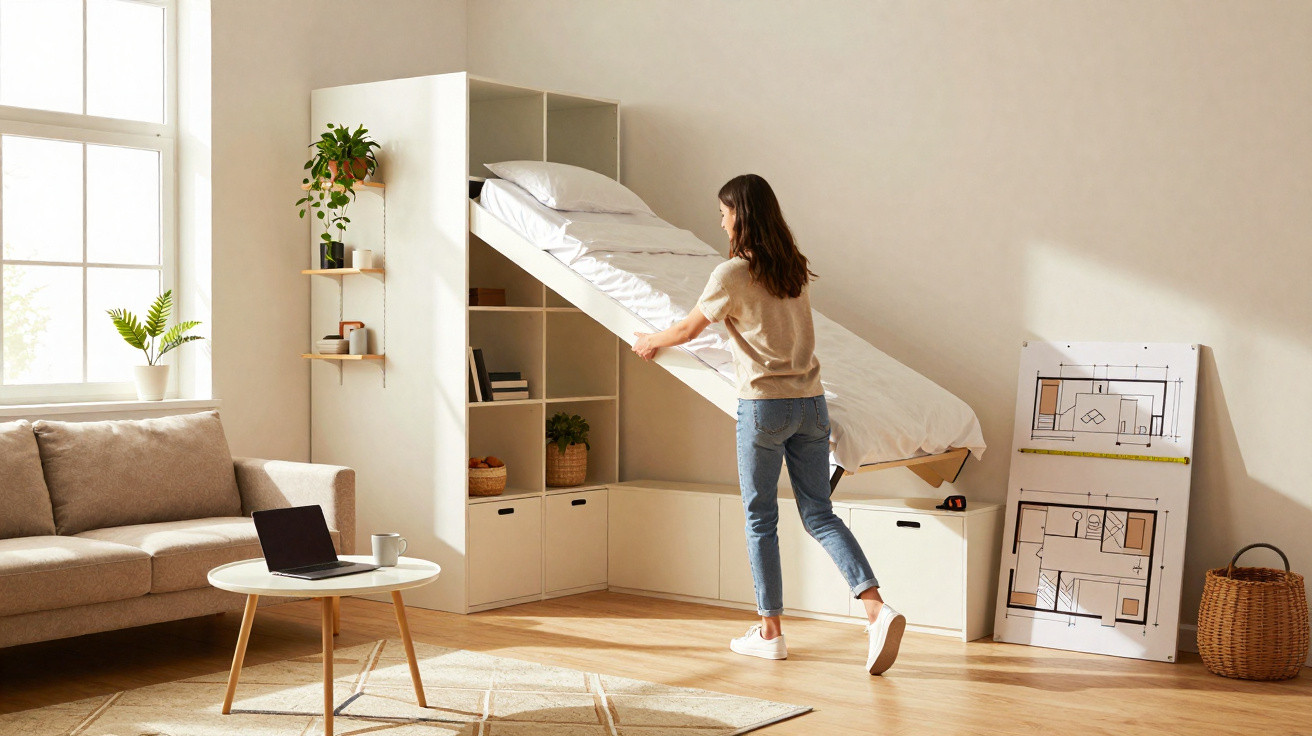
The appeal of this arrangement is not limited to the saved space; it is also about the freedom it creates. A large furniture piece fixes the room in place: bed here, wardrobe there, and that is that. Smaller units let you alter the layout whenever needed. You can make a corner into a compact workspace or shift storage to open up room for a yoga mat, a baby’s cot or an air mattress for visitors.
It can also change your mindset around belongings. When clothing is easier to see, you are more likely to wear it. You spot items that have sat untouched for months, then edit, donate or sell them. The storage system stops being a black hole where things go to disappear.
Rather than simply owning a wardrobe, you create an ecosystem that suits you.
How to replace a bulky wardrobe with flexible bedroom storage
Begin with one straightforward task: take everything out of the wardrobe. For a while, yes, the floor will vanish. Lay your clothes across the bed, a chair and perhaps even the hallway. The aim is not drastic decluttering, but seeing what you truly own.
Next, sketch your bedroom on a piece of scrap paper. Identify the window, the door’s opening path and the position where you definitely want the bed. Indicate unused corners, low walls beneath windows and the areas under the bed or sloping eaves. These spaces can become useful allies.
After that, select two or three compact types of storage to combine, rather than ten. Think in layers, not as one oversized block.
People commonly fall into the same traps. They purchase attractive boxes before taking any measurements. They overload a rail until it bends. Or they attempt to reproduce a traditional wardrobe arrangement… without having the wardrobe itself.
Try not to be hard on yourself. This is not about styling a showroom; it is about reconsidering how you use and live with your clothes every day. Distinguish between fantasy and reality: the “ideal” you who owns 12 cocktail dresses, and the real you who mainly reaches for jeans, two favourite shirts and one smart blazer.
In truth, nobody perfectly rotates every item by colour, season and fabric each day. Build a system that still functions on a tired Tuesday evening, not solely on an especially motivated Sunday.
“Once I split my storage into rails, baskets, and under-bed boxes, I stopped fighting my own room,” says Marc, 41. “I gained half a metre of space and lost that weird guilt every time I opened the old wardrobe.”
- An open rail for clothes worn each week, including shirts, jackets and dresses.
- A low chest of drawers or fabric column for folded essentials such as T-shirts, underwear and pyjamas.
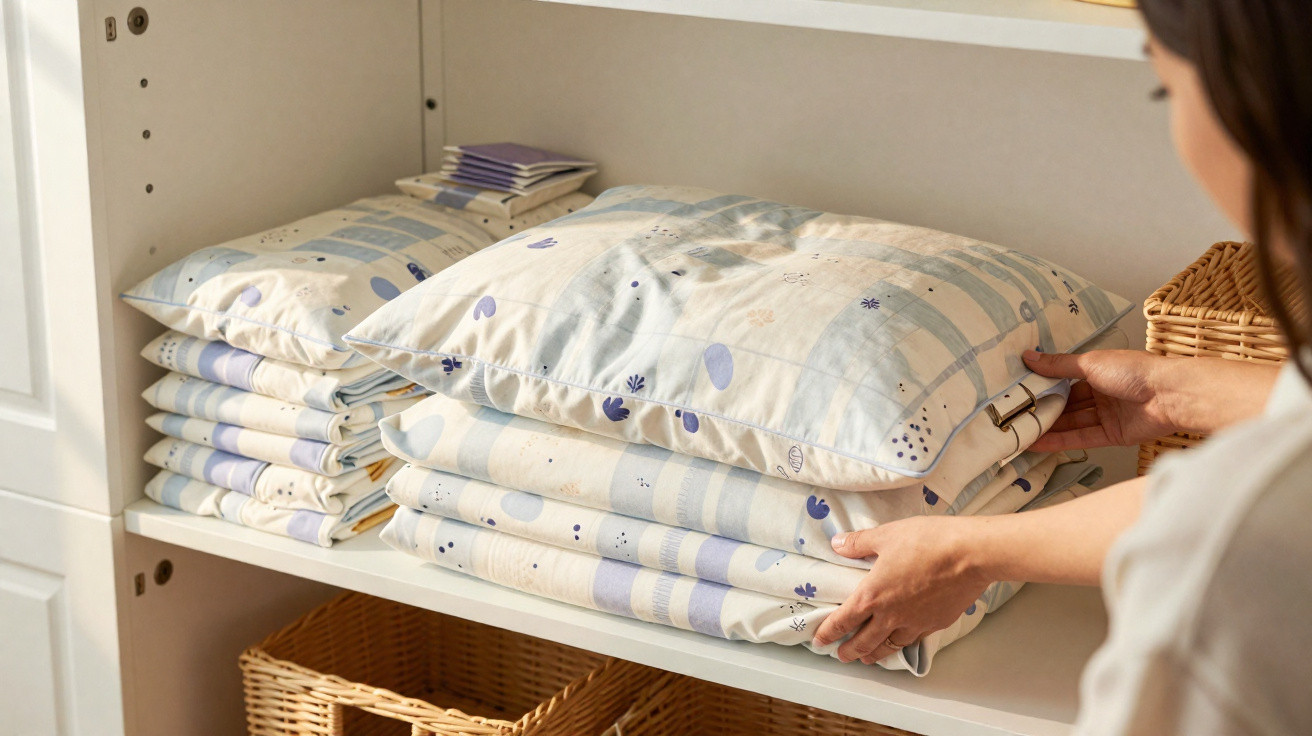
- Flat under-bed boxes for seasonal or special-occasion clothing, including coats, ski equipment and formal outfits.
- A small basket beside the door or bed for “in-between” pieces, such as yesterday’s jeans or a hoodie you intend to wear again.
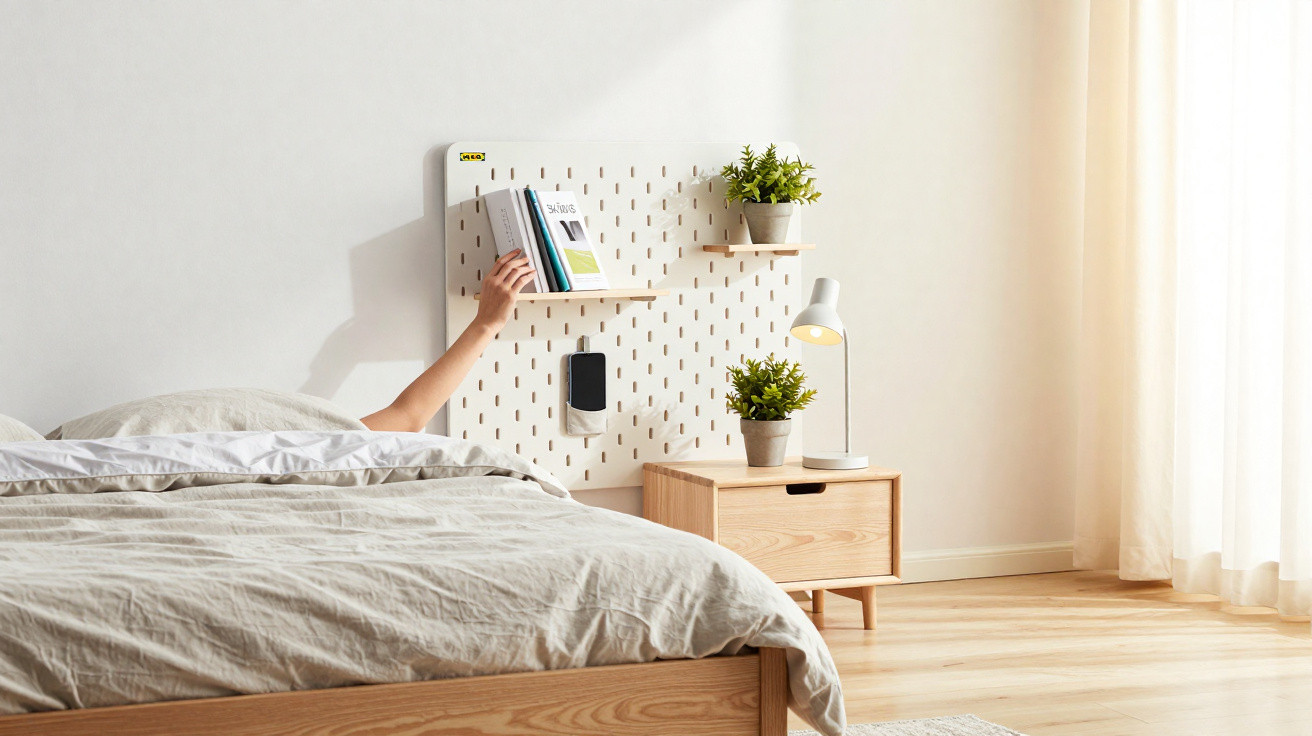
- Wall hooks or a peg rail for bags, scarves or the following day’s outfit.
A bedroom that adapts to your life rather than resisting it
The classic wardrobe will not disappear overnight. It remains suitable for some homes, families and ways of living. Still, the understated growth of flexible storage reveals something about the way bedrooms are now viewed: less as fixed showrooms and more as changing spaces for work calls, sleep, stretching, late-night scrolling and the occasional mound of laundry.
Beneath the trend lies a more personal question: how much room do we permit our belongings to occupy in our minds? Removing a heavy furniture block gives you more than additional floor space. It can offer a different relationship with your possessions, your mornings and the way you move into and out of the day.
Perhaps true luxury is not a giant wardrobe, but a room capable of changing shape as your life changes.
| Key point | Detail | Value for the reader |
|---|---|---|
| Divide up the large wardrobe | Swap one oversized unit for rails, low chests of drawers and under-bed storage | An immediate feeling of extra space and simpler room layouts |
| Organise by use rather than category | Leave weekly clothing visible, put rarely worn items in boxes and create a dedicated place for “in-between” clothes | Quicker mornings and fewer “I have nothing to wear” moments |
| Pick modular, movable pieces | Choose lightweight furniture that can slide, stack or move with you to a new home | A longer-lasting system that adjusts to moves, children or new routines |






Comments
No comments yet. Be the first to comment!
Leave a Comment