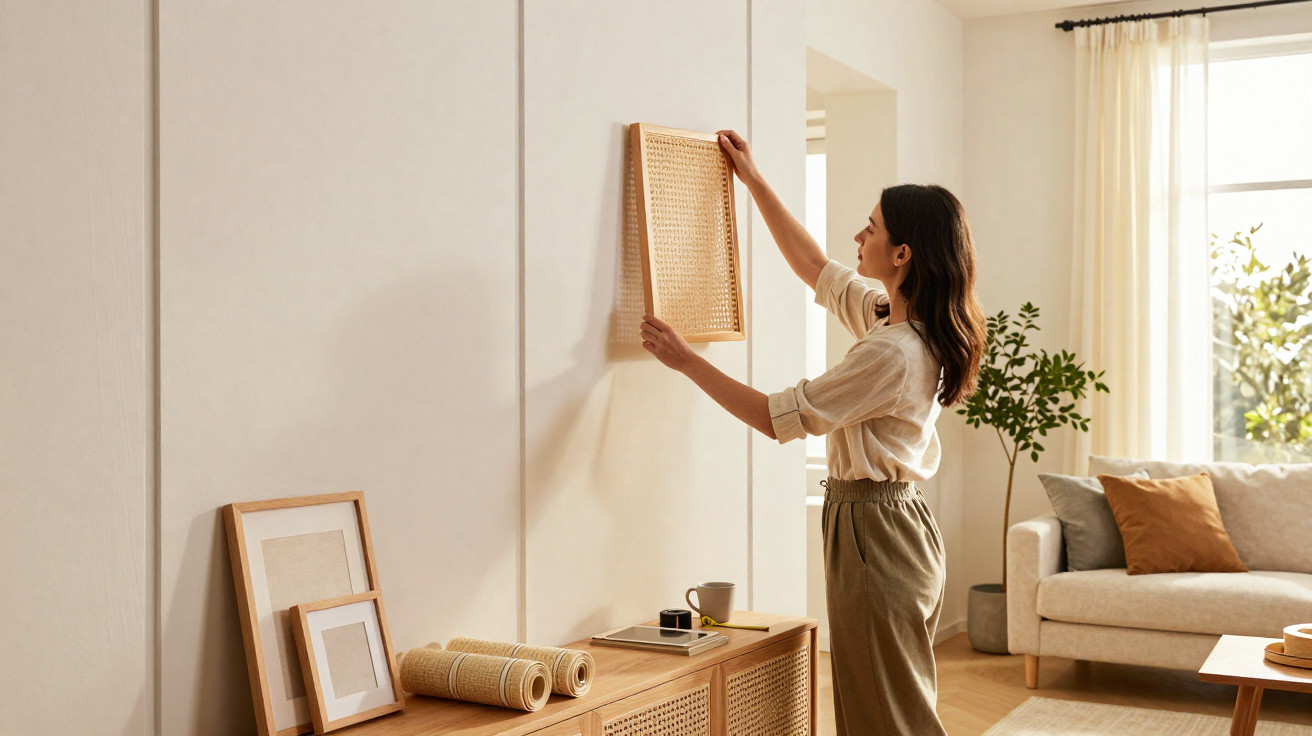
Post-Christmas living rooms can suddenly seem sparse, while last year’s “stylish” wall treatments now appear surprisingly oppressive and worn out.
Homeowners throughout Europe and North America are quietly reaching the same conclusion decorators have been voicing for months: the vertical wood slat walls that took over social media are beginning to look dated and sombre. Replacing them on 2026 moodboards is a gentler, brighter combination with an almost retro character.
Goodbye wood slats, hello woven cane and quiet mouldings
For years, timber slats and vertical battens appeared everywhere: behind television units, across headboards and down hallways. They gave rooms a strongly graphic framework, but could also look rigid, dark and demanding to maintain.
This year, designers are guiding clients towards a much softer alternative: natural woven cane alongside slim painted mouldings. The pairing is nostalgic without resembling a film set, and suits the slower, more tranquil interiors that many people now want in their homes.
Instead of solid planks that block light and trap dust, woven cane panels filter brightness and give walls a breathable texture.
Traditionally used for chair seats and generally made from rattan, cane is now turning up on sideboards, wardrobe doors and lightweight wall panels. Its woven design leaves small openings for light to travel through, meaning even a substantial surface avoids becoming a visual barrier.
Decorators offset this natural material with fine wall mouldings painted precisely the same shade as the surrounding wall. Picture subtle frames, outlines and dado-height rails rather than weighty, old-fashioned panelling. The aim is simply to introduce enough definition for a plain wall to feel deliberately designed.
Painted tone-on-tone, mouldings bring depth and shadow, not a history lesson in fake period style.
This pairing of organic cane and understated architectural detailing is gradually replacing wood slats because it provides what they never quite achieved: warmth, texture and dimension without overwhelming the room.
Why this “nature meets relief” combination works in real homes
The appeal of this new wall style reflects contemporary living as much as design forecasts. Homes are getting smaller, daily possessions continue to accumulate, and people increasingly want calm rooms that retain visual interest.
Light, transparency and reduced visual weight
Particularly when stained dark, wood slats can absorb light and make a room appear tighter. Cane has the reverse effect. Its open weave:
- allows daylight through while softening severe shadows
- brings texture without restricting the sense of perspective
- works in front of cupboard interiors without producing a “block” effect
On a wardrobe, for instance, cane-fronted doors leave storage fully functional while making the furniture seem lighter and more airy. Used as a headboard, it creates personality without the visual mass of an entire timber wall.
Mouldings that are “almost invisible” but transform a room
Painted in the wall’s own colour, delicate mouldings are emerging as this trend’s understated feature. They do not demand attention, but cast soft shadows that alter as daylight moves. A straightforward rectangular frame above a sofa, or a low rail across the lower third of a wall, can immediately make a space look more complete.
What looks like a plain painted wall at first glance becomes richer and more tactile the closer you get.
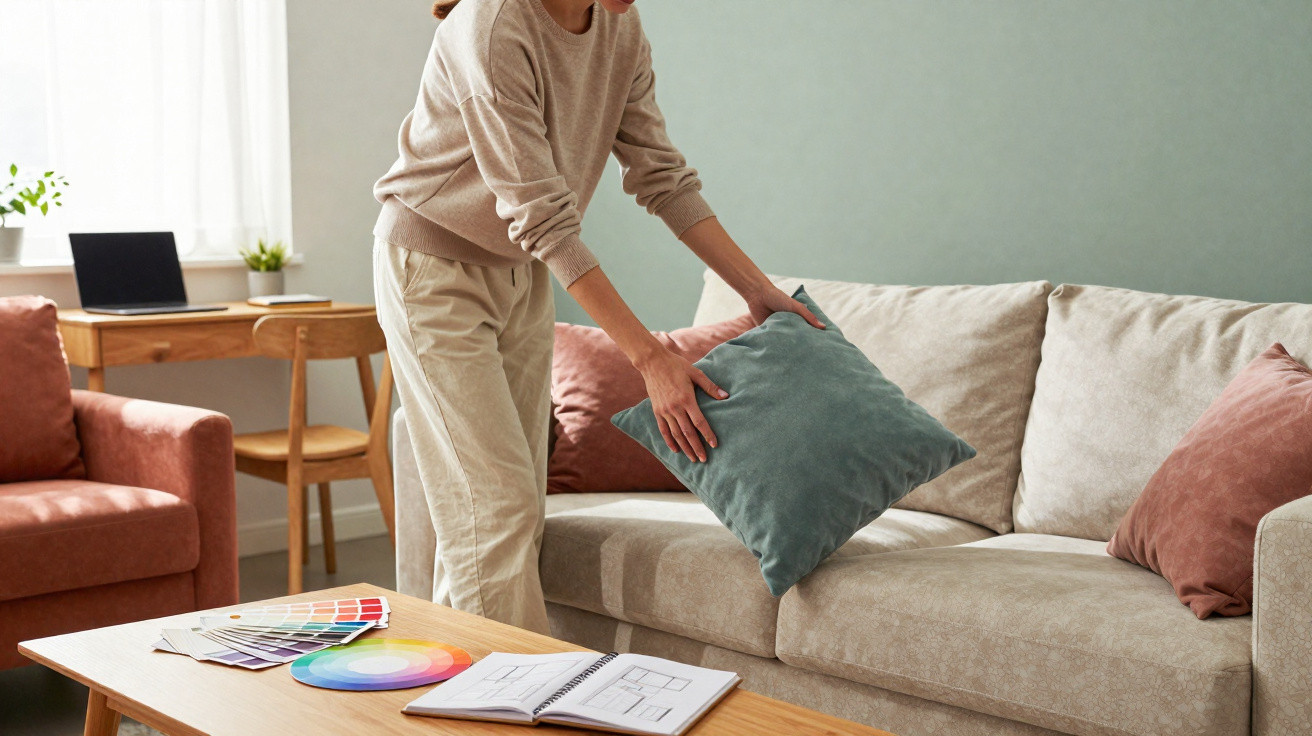
Designers commonly recommend covering the entire wall, mouldings included, in one restful colour: off-white, clay beige or soft sage. This prevents the fragmented effect sometimes caused by bold accent colours, while allowing the relief to remain visible as the light changes.
A “magazine wall” look on a post-Christmas budget
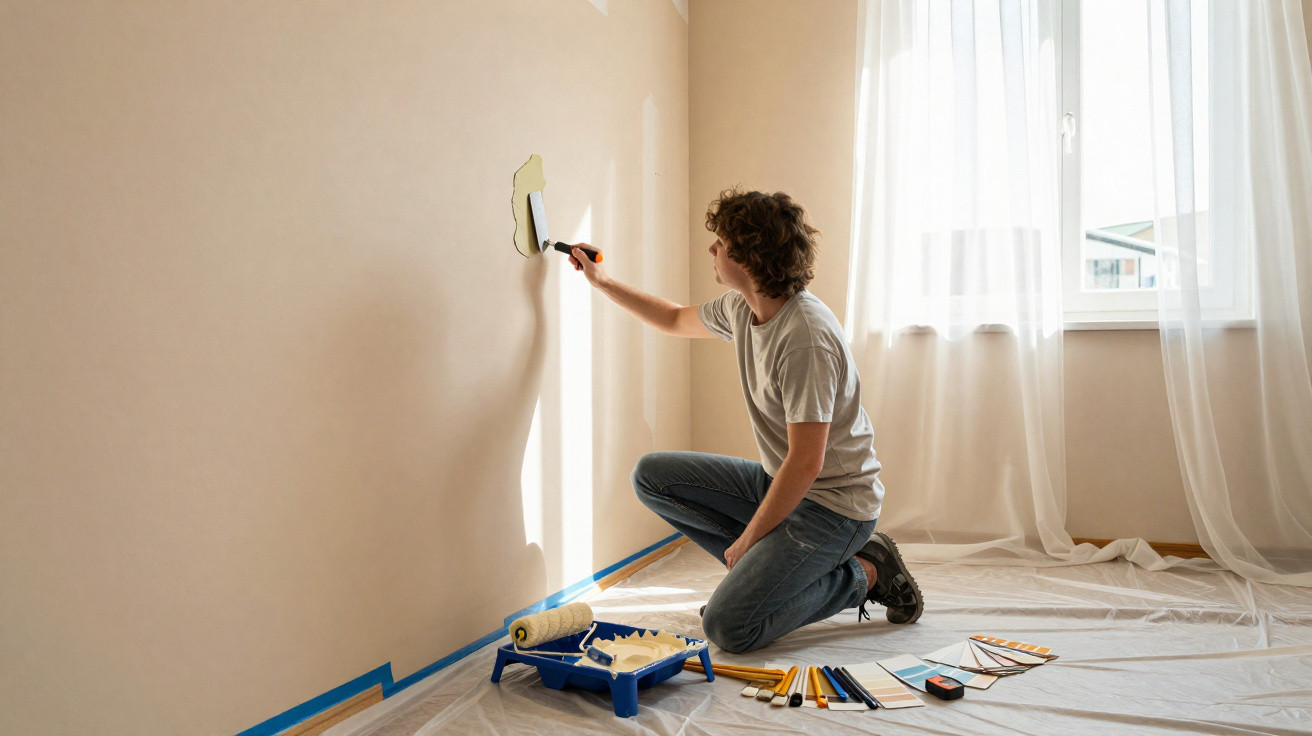
Many homeowners think wall panelling means builders, mess and an unwelcome bill. The growing cane-and-moulding approach is popular in part because it avoids all of that. Most versions can be completed with basic DIY ability and one free afternoon.
What price tags really look like in 2026
| Element | Typical use | Approximate cost* |
|---|---|---|
| Cane webbing | Doors, headboards, wall panels | £12–£35 / $15–$40 per panel or metre |
| Wall mouldings | Frames, dado rails, panel outlines | £4–£12 / $5–$15 per linear metre |
*Prices differ by country and quality, but remain far below those of solid hardwood battens.
Cane is generally sold in panels or rolls that can be trimmed with ordinary tools. It can be secured to existing doors or lightweight frames with a staple gun or strong construction adhesive. Fine mouldings made from pine, polystyrene or polyurethane are just as straightforward: cut the corners using a mitre saw, glue them in place and paint the whole surface together.
A living room wall can go from “flat rental beige” to “boutique hotel” in the space of a Sunday afternoon.
Typical 2026 weekend projects include:
- a low framed wall section behind the sofa, painted in a warm earth tone
- cane inserts fitted into an existing IKEA sideboard for a bespoke appearance
- a plain cane panel behind the bed, bordered with thin mouldings to form a light headboard
From fast trends to calmer “slow” decoration
Moving away from wood slats also reveals how interior tastes are evolving. Following years of rapid, Instagram-driven fashions, many homeowners want rooms that will age more gracefully and feel less like a performance.
Cane meets that desire because it has a handcrafted, gently imperfect quality. The weave is never entirely uniform, fibres carry slight differences in colour, and the material develops a natural patina over time. Fine mouldings, meanwhile, reference traditional craftsmanship without forcing a room into a rigid period style.
The goal is no longer to impress visitors with a statement wall, but to create a room you actually want to spend quiet evenings in.
Design psychologists often observe that natural, textured materials are associated with lower stress levels in the home. Gentle patterns and soft shadows are easier for the brain to process than intense contrast and glossy finishes. This may partly explain why the look is proving so popular after several uncertain years.
What to consider before choosing cane and mouldings
A handful of practical considerations can ensure this style lasts rather than becoming another short-lived fad.
Maintenance, durability and suitable locations
Although cane is lighter and simpler to work with than solid timber, it still requires some care. It may become brittle in extremely dry rooms and can sag in very humid conditions. Choosing furniture fronts or removable panels instead of permanent full-height wall cladding leaves you with more flexibility should any section need replacing or repairing.
With mouldings, inadequate preparation is the greatest concern. Before fitting, walls need to be fairly smooth and free from dust. Once glued and painted, mouldings become part of the room’s architecture, so taking them down will leave marks. Selecting plain, enduring profiles makes it less likely that you will tire of them quickly.
Combining cane and mouldings with existing colours and styles
This 2026 combination works comfortably with several decorative approaches:
- Scandi-inspired spaces: pair pale cane with warm white walls and very slender mouldings.
- Mid-century vibes: combine cane doors with walnut furniture and subdued mustard or olive walls.
- Coastal interiors: use cane alongside sandy beige tones, soft blues and rounded profiles.
If you already have a wood slat wall but do not wish to remove it entirely, an easy option is to soften rather than eliminate it. Paint the slats in the same shade as the wall to reduce the contrast, then introduce one or two cane-fronted furniture pieces and a framed moulding feature on a neighbouring wall. The newer materials will naturally shift attention away from the earlier trend.
For anyone unfamiliar with the expression, “cane webbing” describes sheets of rattan fibres woven into a grid. It is often known as “French cane” or “Vienna straw”. It is not the same as bamboo panels or synthetic rattan: while those options are available, neither has quite the same lightness or tactile quality.
As 2026 progresses, the trend is unmistakable: heavy slats and sharp wall lines are giving way to finishes that feel more breathable and inviting to touch. Cane and discreet mouldings meet at the point where comfort, affordability and quiet character now matter most in the home.





Comments
No comments yet. Be the first to comment!
Leave a Comment