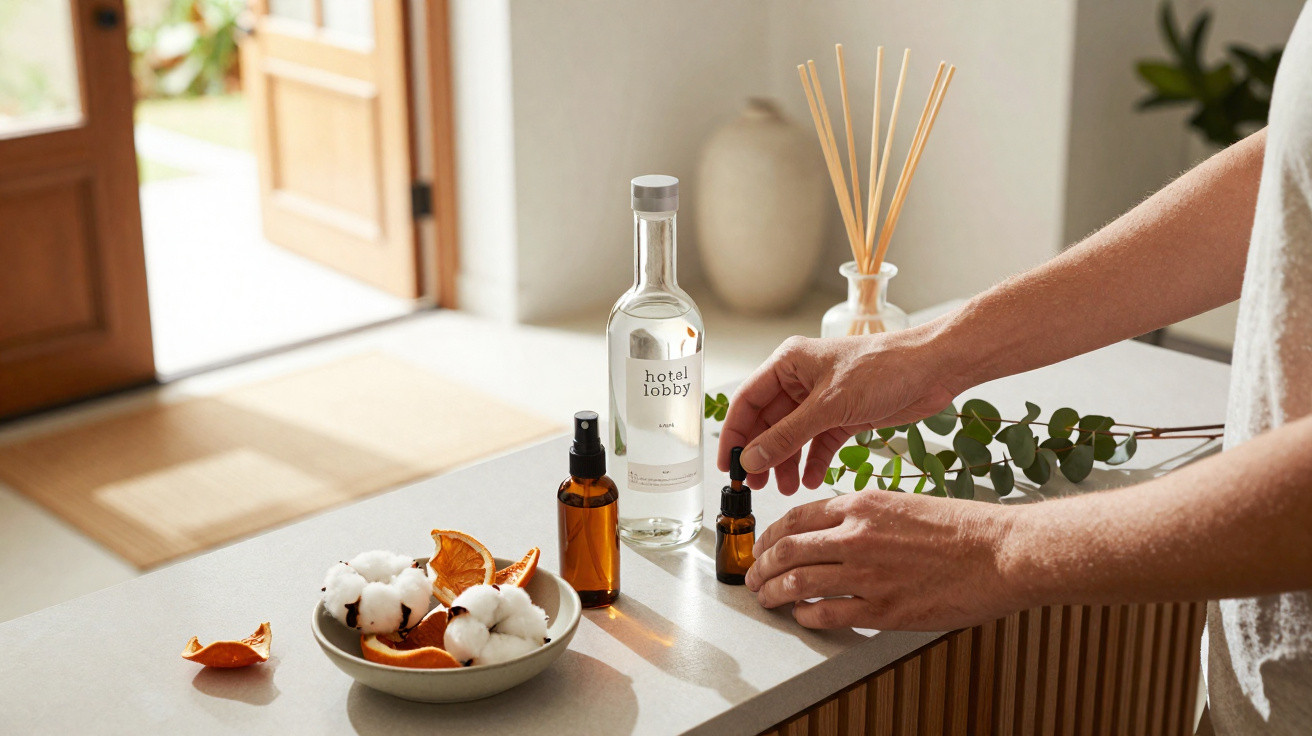
No designer diffuser sits on display, and there is no £40 artisan candle flickering in the corner. There is only a little saucepan gently simmering, releasing delicate trails of steam around the kitchen. In minutes, the flat no longer smelled of “we cooked pasta last night”; it smelled more like the entrance hall of a luxury hotel in Milan.
A visitor came in, stopped at the threshold and asked the familiar question: “What is that smell?” It was not “what did you spray?” but “what are you cooking?”. That distinction matters.
At first glance, it was almost nothing: several leftover orange peels, a spoonful of spice and tap water. Still, the atmosphere felt cosier, fresher and more deliberate, as though the home had its own character. Best of all, oranges were not the only source of the effect.
Why your home never smells like a luxury hotel (until you do this)
In an upmarket hotel, the fragrance reaches you before the furnishings do. It is neither overpowering nor synthetic; instead, it settles around you with a soft, costly feel, as if the air itself had been freshly pressed. At home, we often attempt the same result with plug-ins, room sprays and candles, only to end up with a headache and a trace of bargain perfume.
In reality, hotel fragrances tend to be nuanced and built in layers. They combine warm citrus with spice, and sometimes hints of wood or musk. They are not one forceful burst of “ocean breeze” reminiscent of the cleaning-products aisle. That is why simmering orange peels with one particular spice can come remarkably close. It is a shortcut using ingredients that are likely already on your kitchen worktop.
I tried it one rainy Wednesday evening in Manchester, in a small rented flat with paper-thin walls and a corridor that always smelled of takeaway food. After 20 minutes, even the hall outside the front door smelled different. One neighbour asked whether I had “got one of those posh diffusers”. Another simply remarked, “Your place smells… rich.” That is impressive for something rescued from the bottom of a fruit bowl.
We already spend heavily on scent marketing, even if we do not label it that way. Supermarkets direct bakery aromas towards their entrances. Fashion retailers give fitting rooms a recognisable fragrance. Luxury hotels pay for bespoke blends that make guests think of comfort and escape. Meanwhile, supermarket air fresheners usually conceal odours rather than genuinely changing the atmosphere.
Simmering orange peels with a warming spice - and yes, we are about to reveal which one - does not simply cover anything up. It alters the feel of the air. Orange brings brightness and a comforting familiarity, while the spice gives it depth and the slightly enigmatic warmth associated with elegant hotel lobbies. The fragrance feels lived in rather than sprayed around, and our brains interpret that as a sign of quality.
There is also something quietly satisfying about turning leftovers into something lovely. What might otherwise have gone in the bin can make your home smell like a five-star spa rather than yesterday’s rubbish bag. It is a small but meaningful change in the way you experience your space. Once you have smelled it, plastic plug-ins can seem rather… flat.
The simple orange peels and cloves pan trick hotels would approve of
The method is straightforward: rather than buying yet another air freshener, keep your orange peels and gently simmer them with whole cloves. Nothing more is required. There is no fiddly recipe, no exact quantity and no specialist equipment. All you need is a small saucepan, water, a couple of leftover curls of peel and five to ten whole cloves, which look like tiny brown nails when dropped in.
Half-fill the pan with water, add the orange peels and cloves, then bring it to a gentle simmer over a low heat. Avoid a vigorous boil; you are aiming for soft steam. After ten minutes, harsh cooking odours begin to lift. By the 20-minute mark, the room develops a warm citrus-and-spice fragrance, uncannily similar to an expensive lobby in Lisbon or Dubai.
Cloves provide the hidden hotel-style note. Orange on its own is pleasant but slightly one-dimensional, more like children’s sweets or a basic candle. Introduce cloves and you suddenly create depth. There is a trace of mulled wine, a suggestion of old bookshops and a subtly exotic edge without becoming a full Christmas-market scent. The peels release essential oils, cloves give off eugenol, and the steam distributes both around the room more evenly than one candle flame could.
People are drawn to simmer pots, but can be disappointed when the fragrance is either too weak or overly intense. Usually, they have used ground spices, turned the heat up too far or left the mixture until it burns. Let’s be honest: nobody really does this every day. It should feel effortless, not become one more job.
Choose whole cloves rather than ground ones. Powdered spice forms clumps, scorches and coats the pan with residue. Keep the heat low, with small bubbles around the edge rather than a raging boil. Add more water every 20–30 minutes so the pan cannot run dry. One small saucepan will scent an average flat, while a bigger home may benefit from two pans at opposite ends, both kept on a low heat.
If you are sensitive to fragrance, begin with only three or four cloves and increase the amount only if it suits you. You could also open a window briefly before simmering, allowing stale air to escape first. And do keep an eye on the pan. This is not a slow cooker to leave for hours while you go shopping. Treat it as you would making tea: brief, purposeful and a small ritual with quick results.
“I used to spend a fortune on candles that promised ‘hotel vibes’,” says Emma, 32, from Leeds. “Now I just keep a jar of dried orange peels and a bag of cloves by the stove. Ten minutes of simmering and my flat smells more expensive than my rent.”
A few easy habits can make the ritual simpler still:
- Store clean orange peels in a container in the fridge or freezer, ready to use whenever you need them.
- Keep a separate “scent pan” if you would rather not let cloves mark your favourite saucepan.
- Add a cinnamon stick or a splash of vanilla occasionally for a gentler, bakery-inspired variation.
- Simmer in short sessions of 15–20 minutes instead of all evening, helping to prevent nose fatigue.
- Leave internal doors open so the steam can drift into bedrooms and tucked-away hallway spaces.
Why this small orange peels and cloves ritual changes how your home feels
Once you have tried it, you begin to notice the influence scent has on your mood. It may be the same sitting room, the same sofa and the same partly folded washing on the chair… yet a warm citrus-and-clove mist can make the entire space seem more considered. It feels more like a home you selected and less like a place where you simply landed.
We often pursue “hotel vibes” through expensive, dramatic changes: fresh throws, oversized candles, premium diffusers and endless searches for interior inspiration. Yet the thing that makes a real difference can be much more modest. On a grey afternoon, steam carrying orange oils and the warmth of cloves through a chilly room can feel surprisingly luxurious, even in an older rental with mismatched crockery.
Psychologically, you are reminding yourself that your home deserves to smell pleasant even when nobody is coming over. That small gesture can shift your mindset. It may help you concentrate, unwind after work or feel less self-conscious when someone visits unexpectedly. Practically speaking, it is inexpensive, creates little waste and is simple to adapt. Not every social-media trend deserves repeating, but this one generally does.
You may start saving peels automatically, much like dropping spare coins into a jar. They become small, silent promises of future cosy evenings when your home smells like a peaceful, expensive corner of the world. No plug-in required.
| Key point | Detail | Benefit for the reader |
|---|---|---|
| Orange peels + cloves | Simmer leftover peels with 5–10 whole cloves over a low heat | Transform the scent of your home with kitchen scraps rather than chemicals |
| Hotel-style depth | Cloves bring warm, sophisticated notes to bright citrus | Delivers a “luxury lobby” atmosphere instead of the smell of a cheap spray |
| Simple, low-cost ritual | Short simmering sessions, water top-ups and no specialist tools | Easy to repeat, budget-friendly and kinder to the air you breathe |










Comments
No comments yet. Be the first to comment!
Leave a Comment