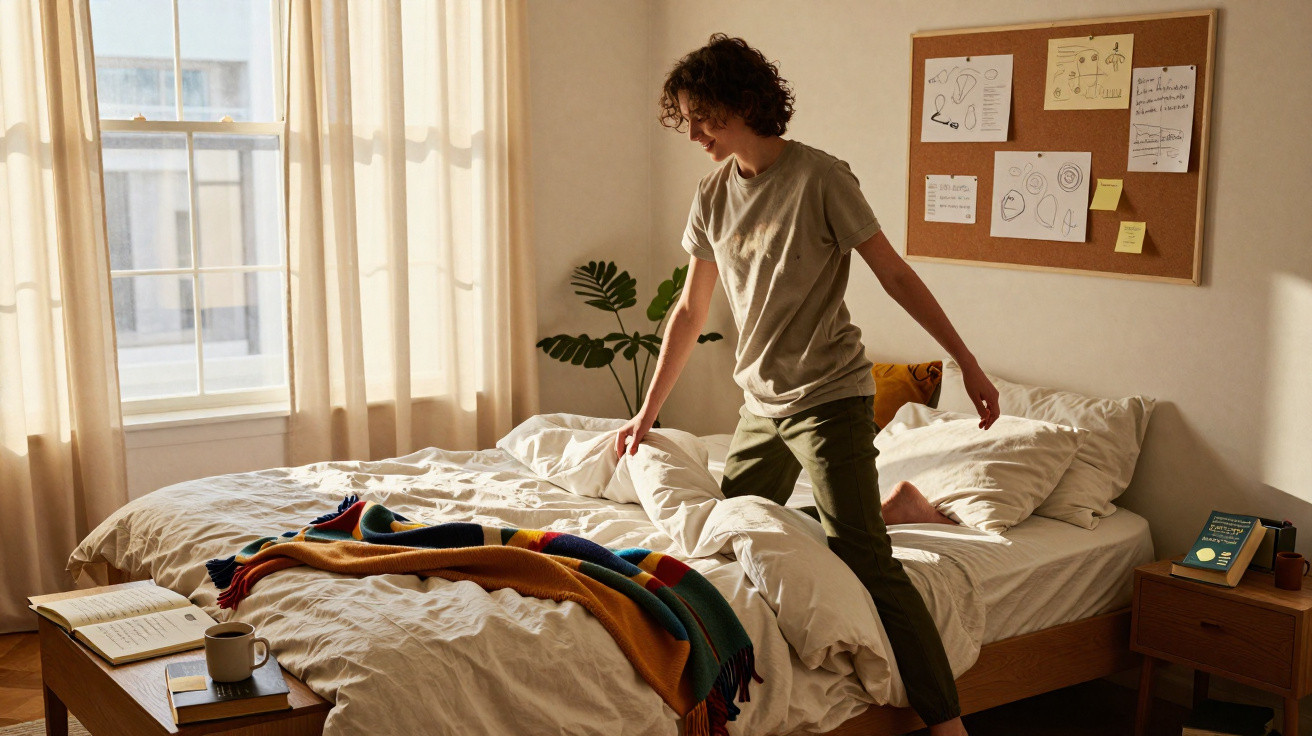
You are in a tiny studio, holding half a coffee while half a duvet lies on the floor. Your overnight guest has just used the notorious sofa bed: the one you curse whenever you open it because it squeaks, unfolds awkwardly and takes over the living room for the entire evening. Its mattress is flimsy, the mechanism is cumbersome, and folding it away costs you ten minutes of your day – along with some of your patience.
Most of us know that feeling: the moment a living room becomes a bedroom and neither purpose quite works properly.
Now picture the very same room without the unfolding performance. The bed is there when needed, gone when it is not, and the space actually feels… peaceful.
That is the idea behind Ikea’s latest small-space solution. It could quietly bring the traditional sofa bed to an end.
The sofa bed era is ending before our eyes
Visit any Ikea on a Saturday afternoon and the situation is easy to recognise. Couples, flatmates and young professionals gesture out imaginary rectangles, trying to work out how they can fit somewhere to sleep while retaining a place to sit. For years, the sofa bed has been the standard response: a necessary evil.
But among the familiar sofas and pull-out frames, another category of furniture is beginning to draw attention. There are compact modules, vertical beds and hybrid units that resemble an intelligent wall more than conventional furniture. Shoppers pause, touch them, attempt to lift them, then open and close them. Curiosity soon takes over.
One Ikea product manager recently called this trend “square-meter panic”. City homes are getting smaller, rents continue to climb, and every square metre now feels as though it has a price attached beneath your feet. In Paris, some first-time buyers are fitting their lives into 20 m². In London and New York, people can pay the cost of a holiday villa for a one-room flat with barely enough room for a double bed.
As a result, the old approach of simply squeezing in a sofa bed and calling it multifunctional is beginning to look painfully lazy. New generations expect rooms to adjust quickly and smoothly, without turning a metal frame into a daily wrestling match.
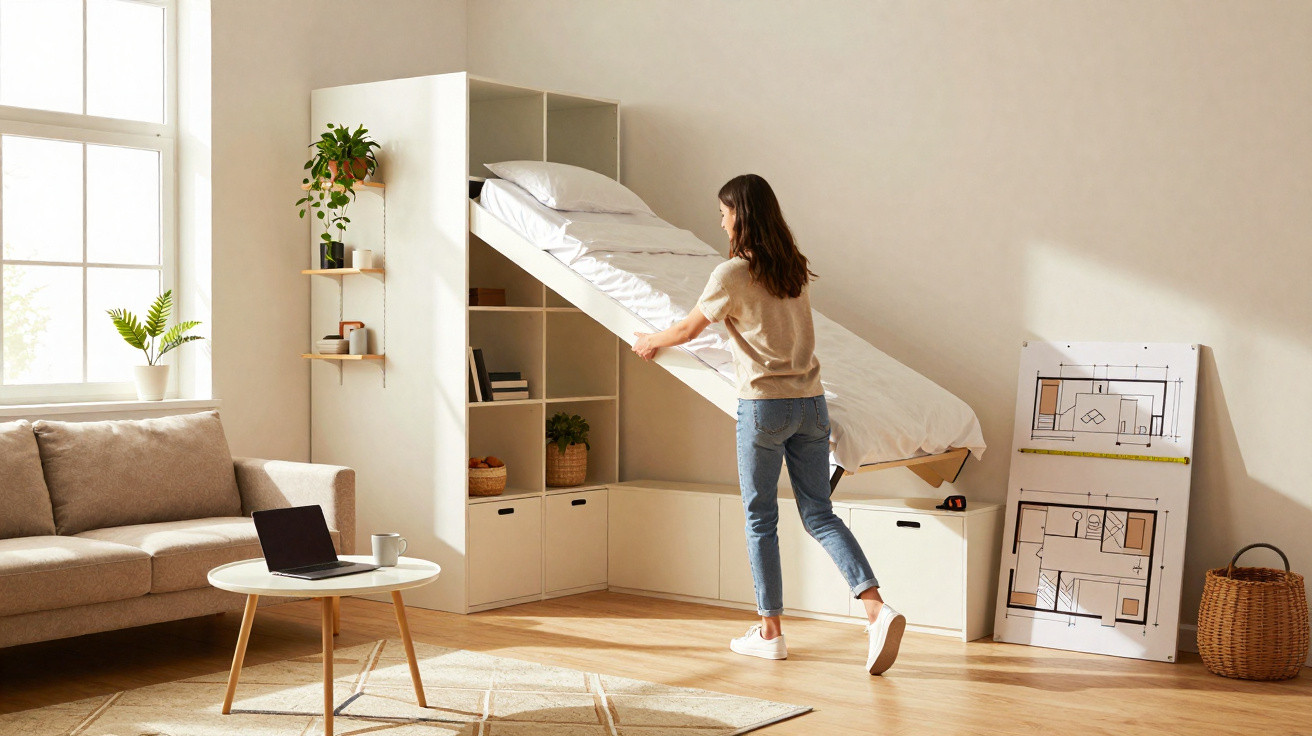
This is where Ikea’s new approach enters the picture: rather than attempting to “improve” the sofa bed, it bypasses it altogether. Imagine wall-mounted systems in which a bed folds upwards and vanishes behind a neat façade. Imagine modular storage concealing a proper mattress on slats, rather than a thin folding pad that seems to remember every guest who has slept on it.
The principle is straightforward: limited space should not mean compromising on sleep. Nor should needing somewhere for friends to stay occasionally mean surrendering your living room. Furniture is no longer simply something you sit on; it is something that choreographs life within a small footprint.
Ikea’s new small-space solution is more than a “trick bed”
At the centre of this new direction is a practical principle: the bed should function as a real bed, while the living room remains a living room. Instead of a convertible sofa, Ikea is backing systems in which a full-sized bed folds into a cabinet-style unit, sometimes combined with shelving, lighting or even a desk.
In daylight hours, the result is a tidy wall with storage and perhaps a compact workspace. At night, you pull a handle and a genuine mattress lowers smoothly on a sturdy frame. There are no cushions to put away, no acrobatics to perform and no springs threatening your spine. A single movement takes the room from office to bedroom.
Consider a 23-year-old graphic designer in Berlin. She rents a 19 m² studio on the 5th floor, with one window and a heating pipe crossing the room. Previously, a sofa bed consumed half the available space, while every work meeting at home felt like asking visitors into a partly assembled bedroom.
Once she invests in a wall-bed system, the living area begins to feel deliberate. In the daytime, she has an uncluttered wall, plants, a low table and a desk surface. At night, she lowers the bed in ten seconds and sleeps on a proper mattress. There is no longer any need to say, “sorry about the mess, my bed is also my couch and also my office”. It is one room with three genuine functions and no fuss.
In practical terms, this reflects a widespread exhaustion with pretend solutions. People are weary of acting as if a sofa bed is comfortable when everyone knows it is not. Honestly, nobody uses one every day without privately resenting it.
Ikea has recognised that reality and turned it into an accessible, almost playful piece of engineering. Rather than demanding that a sofa do everything simultaneously, the brand divides the day into distinct moments and creates furniture for each one – then layers those moments vertically against the wall instead of spreading them across the floor. The same square metres do twice the work, but your body does not. This is not magic; it is simply recognising what failed and beginning again.
Living better with Ikea’s new furniture for small spaces
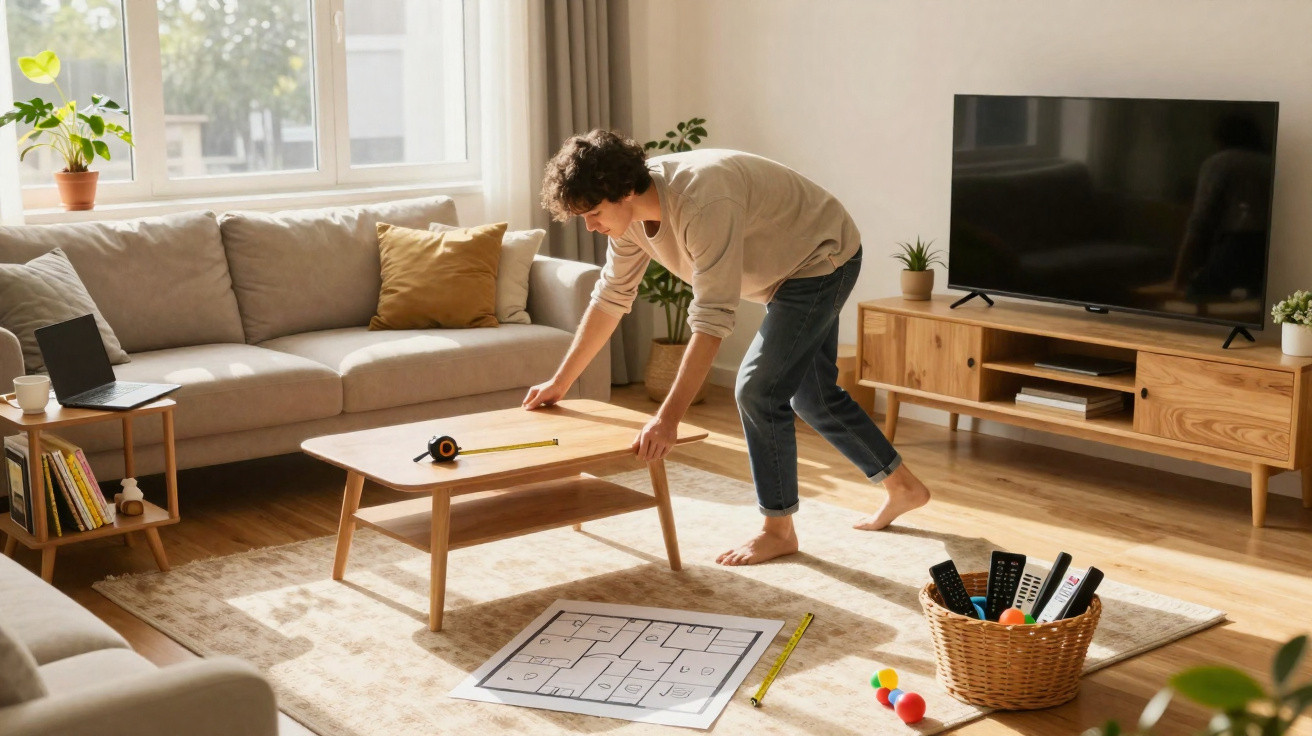
If you are considering replacing your sofa bed, your first step should not be shopping. Stand in the centre of the room and observe how you move through it. Pay attention to where you naturally walk in the morning, where you leave your bag, where the light falls at 5 pm and where you inevitably end up scrolling on your phone.
After mapping these small habits, picture the bed disappearing upwards rather than extending across the floor. Could it sit behind the area where your television currently stands? Could it take the place of a large bookcase you hardly use? The most effective Ikea arrangements respect the room’s natural movement: bed down when life slows, bed up when you are active.
A frequent error is concentrating on the transformation’s “wow” factor while overlooking daily inconveniences. A wall-bed system that covers your only window when opened, or conceals the socket where you charge your phone, will soon become infuriating. It is equally important not to choose something too narrow: a small, almost child-sized mattress may save room, but your back will complain before the month is over.
Consider the actions you will repeat each day: pulling the handle, reaching for bedding and putting away pillows. If any of these feels irritating in the showroom, it will be ten times more annoying at 11:45 pm after a long day.
This type of change also carries emotional significance. For many, the sofa bed represents their first experience of independence, student life, spontaneous parties and surprise visitors. Replacing it can feel like “growing up”, which may be exciting as well as slightly melancholy.
Ikea’s design team likes to repeat a simple mantra: “Small spaces are not a problem to hide, they’re a story to write.” It sounds like marketing, yet for anyone who has lived in 18 m² with dreams bigger than their square footage, it rings strangely true.
- Select a model with a proper replaceable mattress, so you are not tied to a thin built-in slab.
- Try the opening mechanism three or four times in the shop, using different speeds.
- Retain a lightweight, flexible sofa or armchair so the room continues to feel like a lounge during the day.
- Use the surrounding storage for everyday belongings, rather than only for “pretty” décor you never use.
- Keep at least one corner visually clear and empty, allowing the eye some breathing room.
From furniture to lifestyle: what this change really means
Behind this understated goodbye to the sofa bed lies a wider story about whether we accept or resist the realities of urban living. These new Ikea solutions are about more than clever hinges and concealed legs. They suggest that small homes need not feel like a compromise, and that flexibility can be designed into our walls rather than only into our timetables.
For some people, folding the bed away every morning will feel freeing. For others, it may appear to be another task in an already overfilled day. Both responses make sense. The more interesting question is what you want your main room to communicate about you once the bed is no longer its main feature.
Perhaps this change will reshape the way we invite friends over, replacing cramped “sleep on my sofa bed” evenings with more considered sleepovers. Perhaps it will create enough room for a keyboard, an easel, a yoga mat or a tiny dining table you never believed would fit. Or perhaps it will merely offer the luxury of taking three unhurried steps from the door without colliding with furniture.
When the bed can vanish, your priorities are revealed. That is where the real design work starts: not in the Ikea showroom, but in the quiet moment when you decide what your limited square metres are truly for and what you are finally prepared to leave behind – metal frames included.
| Key point | Detail | Value for the reader |
|---|---|---|
| New Ikea alternative to sofa beds | Vertical wall-bed systems with real mattresses and integrated storage | Greater comfort and more space without sacrificing sleep quality |
| Design around daily gestures | Placement guided by natural movement patterns in the room | Minimises friction and makes the transformation effortless |
| Mindset shift about small spaces | From “temporary compromise” to a fully embraced, flexible lifestyle | Helps readers regain control and purpose in tiny homes |
FAQ:
- Question 1 Is Ikea completely abandoning traditional sofa beds with this new solution?
- Question 2 Are these wall-bed systems safe to use every day in a small flat?
- Question 3 Can I install this kind of bed if I am renting and cannot damage the walls too much?
- Question 4 Is it not more expensive than a classic sofa bed, especially for students?
- Question 5 How do I choose between a high-quality sofa bed and one of these new Ikea systems?











Comments
No comments yet. Be the first to comment!
Leave a Comment