The cause is often lurking in the way you clean.
Homeowners across the UK and US are noticing swollen joins, lifting edges and scorch-like marks on laminate worktops. The unexpected cause is frequently not poor fitting or low-quality materials, but an everyday cleaning practice that many households carry out several times daily.
The everyday cleaning habit that damages laminate worktops
Most laminate worktops are not ruined by one major mishap, but by a series of minor assaults. Extended exposure to moisture and harsh chemicals is the chief problem, often as a result of ordinary cleaning methods.
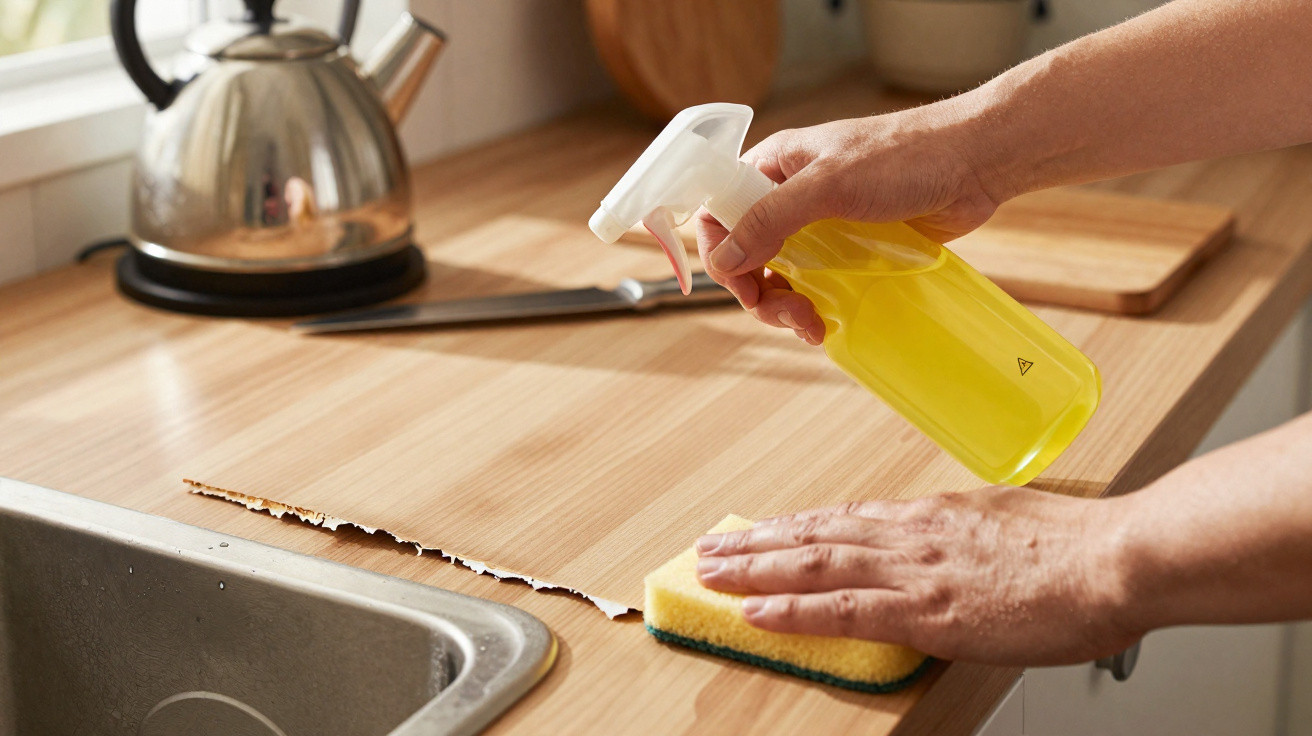
The routine is a familiar one: a liberal amount of cleaner is sprayed on, left to “work”, and then wiped away using a sodden cloth or sponge. The worktop appears clean and smells pleasant. However, water and chemicals can gradually work their way into seams, joins and exposed cut edges.
The most damaging habit for laminate counters is leaving them wet after cleaning, especially around seams, sink cut-outs and edges.
Laminate consists of paper and resin layers bonded to a wood-based core, commonly chipboard or MDF. This core absorbs water much like a sponge. When moisture reaches it, the board expands and the laminate sheet loses its bond, causing bubbles, peeling or a raised line at the join.
Where laminate worktop damage begins
Even premium laminate worktops have areas that are more susceptible to damage. Everyday cleaning decisions can either safeguard these points or hasten their deterioration.
- Sink area: Water gathers around the base of the tap and the sink rim before finding its way into cut edges.
- Back joins: The seam between two worktop sections, often behind the hob, collects splashes and steam.
- Front edges: Drips travel over the lip and beneath the profile, where adhesive lines may be exposed.
- Dishwasher zone: Steam escaping from an open dishwasher door hits the underside of the worktop.
Such areas do not usually fail in a single night. As the board expands by fractions of a millimetre, tiny splits and gaps develop. Eventually, a blister appears and may be blamed on one spill, while years of wet cloths and cleaner left sitting on the surface are overlooked.
The chemical aspect of the issue
Moisture alone is damaging, but the cleaning product chosen also matters considerably. Many people simply use whatever is available beneath the sink, including bleach sprays, multi-purpose degreasers and powerful antibacterial wipes.
These products may:
- Gradually dull the finish, leaving it more porous.
- Degrade the sealants around sinks and along joins.
- Cause darker laminate patterns to stain or fade over time.
Repeated use of strong chemicals can weaken the protective layer of laminate, turning a tough surface into a thirsty one.
After the top coating has been damaged, spills penetrate more quickly, crumbs catch more readily and stains are more difficult to lift. People then often scrub more forcefully and use stronger products, further worsening the problem.
How to clean laminate without damaging it over time
Laminate worktops do not require harsh treatment. A straightforward routine actually provides more effective long-term protection than heavy-duty sprays.
A safe daily routine
This simple method works well for most laminate worktops:
| Step | What to do | Why it helps |
|---|---|---|
| 1. Clear crumbs | Start with a dry cloth or kitchen paper. | Minimises scratching once moisture is used for cleaning. |
| 2. Use a mild cleaner | Mix warm water with a drop of washing-up liquid. | Removes grease without damaging the laminate coating. |
| 3. Use a lightly damp cloth | Wipe the worktop, taking care not to soak the joins. | Cleans away dirt while reducing water exposure at weak points. |
| 4. Rinse and wring | Rinse the cloth, wring it out thoroughly and wipe again if required. | Prevents cleaning-product residue from accumulating. |
| 5. Dry straight away | Use a soft towel, focusing on joins and edges. | Stops the core board beneath the laminate from swelling. |
It may seem somewhat old-fashioned, but many worktop manufacturers discreetly advise a very similar method in their care instructions.
Products that can cause hidden problems
Some cleaning products and kitchen practices pose particular risks to laminate, even if they are used only occasionally.
- Bleach-based sprays: These can fade colours and weaken seals, particularly on dark or textured finishes.
- Oven cleaners: They are highly caustic, and even brief contact may leave lasting marks.
- Scouring creams and powders: These scratch the surface and make it more difficult to keep hygienic.
- Steam cleaners: Heat and pressure drive moisture into seams and edges.
- Soaking cloths or pooled water: These act as a wet compress on the same vulnerable areas day after day.
If a cleaner is strong enough for ovens, grout or toilets, it is usually too harsh for laminate worktops.
Everyday kitchen habits that accelerate damage
Cleaning accounts for only part of the issue. How a kitchen is used each day also influences the lifespan of a laminate worktop.
Heat, knives and “just for a second” moments
Laminate can cope with ordinary warmth from a mug or plate, but it cannot withstand the intense, concentrated heat of oven-fresh pans and baking trays.
Regular habits that can reduce the lifespan of laminate include:
- Putting a hot pan directly on the worktop while food is being stirred.
- Positioning a slow cooker or air fryer beneath a wall cupboard, allowing steam to rise onto the rear edge.
- Slicing bread or vegetables directly on the worktop because the chopping board is “too far”.
- Leaving damp tea towels in a heap along the rear edge beside the splashback.
Heat may produce a localised blister or a glossy patch. Knife damage breaks the protective upper layer, creating new paths for water. When combined with wet cleaning practices, this minor wear speeds up swelling and peeling.
When damage has already begun
A swollen join or chipped edge can lead homeowners to think that the entire worktop must be replaced. In the short term, that is not necessarily the case.
For minor damage, several practical measures can help prevent further deterioration:
- Seal small gaps: Apply colour-matched sealant to joins and around sinks to stop new water getting in.
- Dry more thoroughly: Keep a dedicated worktop towel close to the sink.
- Reposition appliances: Pull kettles, coffee machines and air fryers slightly forwards so their steam clears the rear edge.
- Use mats: Place heat-resistant mats where hot pans or trays are regularly set down.
These measures cannot undo swelling that has already occurred, but they can slow additional damage and may prolong the life of the worktop by several years.
Why laminate responds so poorly to water
Many people think of laminate as “waterproof plastic”, but the truth is more complex. Although its decorative layer is plastic-based, most of the worktop is made from wood fibre.
Laminate worktops are water-resistant on the surface but highly vulnerable the moment moisture reaches the core board underneath.
Wood fibres swell when wet and do not fully return to their previous shape after drying. Repeated expansion and contraction puts pressure on the adhesive bond between the layers. Over time, the laminate sheet begins to lift, corners turn up and joins separate.
This is also why an older worktop can appear sound until a minor leak, such as a loose tap or poorly sealed sink, leads to severe bubbling within a few weeks. Years of damp cloths and strong cleaning chemicals may already have weakened its structure.
Planning future renovations: selecting and maintaining surfaces
For households considering a kitchen refit, laminate offers a useful reminder: every worktop material has limits that everyday habits need to respect.
Stone, solid wood and composite worktops all react differently to heat, water and chemicals. Laminate remains widely chosen because it is affordable, available in a vast choice of finishes and comparatively simple to install. With gentler cleaning and more careful drying, it can still last 10 to 20 years in a busy household.
A sensible approach is to treat a worktop more like an attractive wooden table than an indestructible laboratory bench. That change in mindset alone often alters how people clean, chop and place hot cookware, without needing to remember technical instructions.
Small habit changes with a major impact
Picture two identical kitchens fitted on the same street. In one, the worktop is sprayed with bleach cleaner several times each day, wiped using a dripping cloth and allowed to dry naturally. In the other, the owner relies on mild soap, a thoroughly wrung cloth and always follows up with a dry towel.
After ten years, the first worktop is likely to have swollen joins, a dulled finish and lifting edges around the sink. The second may show only a handful of scratches and a mildly faded sheen, while remaining structurally sound.
The contrast comes from routines repeated hundreds of times each year. For anyone now looking at a peeling laminate edge, the unnoticed cause may not be a defective product, but the reassuring spray-and-soak routine that once seemed entirely harmless.









Comments
No comments yet. Be the first to comment!
Leave a Comment