
I first understood that a candle could alter how I studied while I was revising for an exam at 1 a.m., with notebooks spread everywhere and a mug of cold coffee beside me. The flat was quiet, my mind was racing, and every page of cognitive psychology notes had begun to blur into the next. On impulse, I lit a small rosemary and lemon candle that I had picked up in a sale and then forgotten about.
Within ten minutes, the atmosphere had changed. The room seemed more defined, almost crisper, as though the air itself was prompting me to concentrate. A few days afterwards, in the exam hall, I caught a trace of somebody’s citrus perfume and whole pages of my notes returned with surprising clarity.
As I left, I kept wondering: had that candle just hacked my memory?
Why your brain secretly loves scented study sessions
Smell has a remarkably direct route to memory. The brain’s scent-processing area is closely connected to the hippocampus, which handles learning and recall. That is why the scent of your grandmother’s perfume can transport you to a childhood kitchen more quickly than an old photograph ever can.
When you revise alongside a particular fragrance, your brain gradually links that scent with the material in front of you. Aroma plus chapter becomes a single mental file. It may seem insignificant at the time, but this quiet sensory cue can help facts remain in place when stress is trying to wipe them away.
Imagine a law student called Lila, going over tort law late at night while a vanilla and sandalwood candle burns next to her laptop. Each time she revises that same part of her syllabus, she uses the same candle, evening after evening. There is no complicated technique involved, only a ritual with the faint scent of a bakery tucked inside a library.
Several weeks later, she is seated in a busy exam hall and opens a small solid-perfume stick carrying a similar, warm vanilla fragrance. Once the scent reaches her, particular cases and definitions return more readily, as if somebody had clicked “restore previous session” in her brain. That is state-dependent learning in practice, rather than merely a textbook concept.
What takes place in the background almost feels like an unfair advantage. The brain responds strongly to patterns, and scent is among the most powerful anchors available for creating them. If a particular aroma repeatedly accompanies concentrated revision, your nervous system marks it as part of the “learning state”.
Bring back that fragrance later, and your brain subtly attempts to recreate the state associated with it. Researchers call this context-dependent memory; sounds, locations and lighting can produce it too. Aroma simply tends to make a stronger, quicker impact. Your study candle stops being decoration and becomes a mental shortcut.
The practical method: how to use scented candles as a memory anchor
Begin with one candle, one topic and one reliable setting. That is all you need. Pick a fragrance that is distinct without being overwhelming: rosemary, lemon, peppermint, eucalyptus, gentle cedar or light vanilla can all work well. Choose something you register at first, then barely notice.
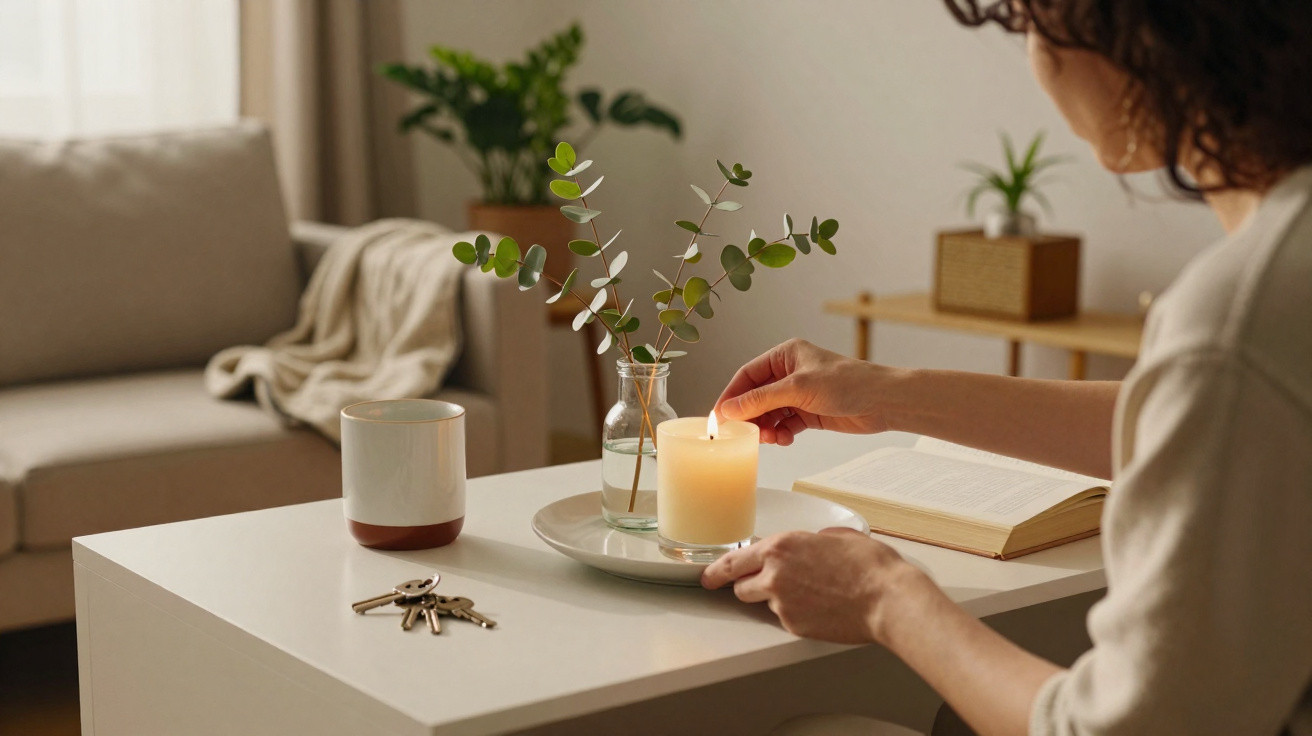
Use that precise candle only for concentrated, distraction-free revision of a particular subject or exam. Do not light it while scrolling or watching Netflix. In effect, you are teaching your brain: “This smell means we’re on, fully present.” Across a week or two, that connection steadily becomes stronger.
The main pitfall is using the candle as general background ambience for every activity. Burning the same scent while cooking, scrolling TikTok or having an argument in the kitchen weakens the mental association. Your brain cannot decide whether that aroma signals “deep focus” or “doomscrolling and snacks”.
Another frequent error is choosing a fragrance you do not really like, or one that is too intense. It may have the opposite effect, bringing irritation or headaches into your revision state. Select a scent that feels like a calm, alert version of yourself, rather than a spa-level cloud. Honestly, hardly anyone keeps this up every day. Even so, using the same candle for two or three focused sessions each week can create a helpful pattern.
“Think of scent as your brain’s bookmark,” says an imaginary study coach I wish we all had. “You’re not just lighting a candle, you’re lighting a context. That context is what your memory grabs onto when stress wipes the slate clean.”
- Choose a signature study scent
Pick one candle to reserve exclusively for serious learning sessions. - Tie it to one particular task
Pair it with a single subject or exam period so the association stays clear. - Repeat in brief, regular bursts
30–50 minutes of focused work with the same aroma is more effective than one five-hour marathon. - Recreate the scent on exam day
Use a similarly scented lotion, solid perfume or discreet inhaler instead of an open flame. - Make the ritual straightforward
Light the candle. Take one breath. Open your notes. No fuss or elaborate routine is required.
Living with your “study scent” beyond the exam
There is something unexpectedly tender about opening an old candle months after getting through a punishing exam period. One breath takes you back to that desk: partly exhausted, partly determined, highlighting sentences at midnight. The fragrance holds remnants of your effort, uncertainty and small private wins.
Learning with aroma is not only a hack; it is also a way to make revision feel more sensory and less mechanical. You are turning study into a scene that your brain can return to, rather than a collection of bullet points you once looked at.
| Key point | Detail | Value for the reader |
|---|---|---|
| Use one specific scent for study | Keep a candle for focused sessions for a particular subject or exam | Creates a strong, clear memory association with that material |
| Connect the scent with a repeatable ritual | Use the same place, candle and short, regular sessions | Helps you enter a focused state and recall information more easily under pressure |
| Recreate the aroma on test day | Apply a similar scent through perfume, lotion or an inhaler | Can trigger context-dependent memory and more relaxed recall |







Comments
No comments yet. Be the first to comment!
Leave a Comment